

There’s a quiet social contract that exists at every resort pool deck in the world. Most guests sense it exists, but few have ever read the rules out loud. The result is a recurring pattern of friction, frustration, and missed relaxation that follows travelers from one vacation to the next.
What’s striking is that the most common offenses aren’t dramatic. They’re small, habitual, and often completely unconscious. Here are ten things travelers consistently get wrong at resort pool decks, and what actually respectful pool behavior looks like in 2026.
Draping a Towel Over a Chair Before Dawn

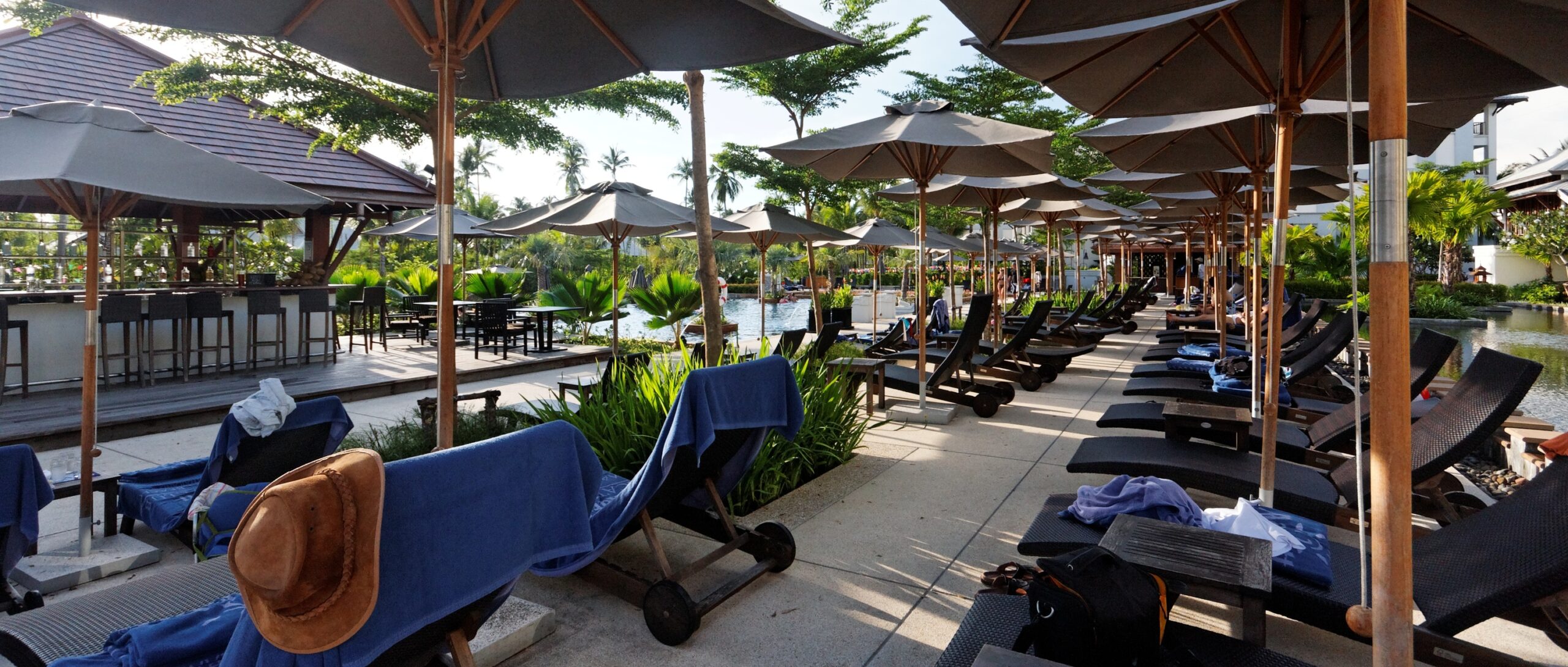
In 2024, reports emerged that guests were heading down to the pool at a Portuguese hotel as early as 1 a.m. to reserve their spots. This kind of behavior has become so normalized that it barely surprises resort staff anymore. According to TripAdvisor’s Beach and Pool Etiquette Survey, roughly 84 percent of respondents said they get agitated when others save beach or pool chairs by leaving belongings on them.
On a recent trip to an Italian resort, etiquette expert Myka Meier, founder of Beaumont Etiquette, thought she would be arriving early by getting to the pool before 8 a.m., only to find a large number of chairs already claimed with towels, with nobody sitting on them for about three hours. The towel-on-chair ritual has become a default vacation habit, but it’s one that quietly penalizes every other guest on the deck.
Treating a Saved Chair as a Territory Claim
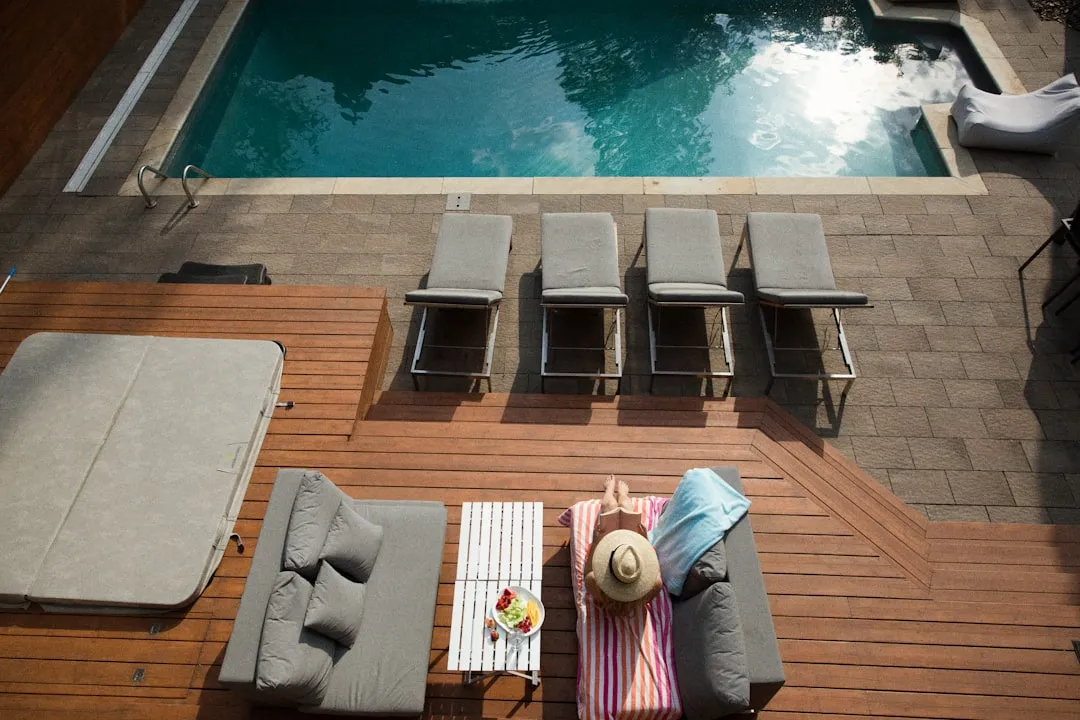
Certified etiquette coach Nadia Musayeva notes that saving a chair becomes inconsiderate when it transforms from a temporary step away into a territory claim. There’s a meaningful difference between briefly stepping away to use the restroom and disappearing for hours while your towel and sandals hold court. Pool chairs are a shared amenity, not a personal sun throne.
According to TripAdvisor’s survey data, 37 percent of travelers think there should be a strict 30-minute limit on saved seating, while only 14 percent think chair holding for longer than an hour is acceptable. The majority of guests have a clear, shared expectation. The minority who ignore it tend to dominate the experience for everyone else.
Not Knowing the Resort’s Actual Chair Policy

While many resort pools have signs informing guests that belongings used to hold sun loungers will be removed after a set period, usually 30 minutes to an hour, few have actually empowered their employees to enforce the rule. That gap between written policy and real-world practice creates confusion for guests who genuinely want to do the right thing. Hospitality professionals emphasize that the most important thing is being mindful of how long a chair sits unused, and that leaving belongings on a chair for more than 30 minutes in an urban pool setting or 60 minutes at a resort pool is generally considered inconsiderate.
At Acqualina Resort and Spa in Sunny Isles Beach, Florida, a strict policy allows personal items to remain on a chair for one hour, after which items are removed and the chair is reset for another guest. Knowing these policies before you settle in is worth the 30 seconds it takes to ask.
Playing Personal Speakers Without Consideration
Although most resort guests understand basic pool etiquette like not splashing others or hogging too many lounge chairs, one unspoken rule that some guests frequently ignore is not playing music through their personal Bluetooth speaker. Most resorts either pipe in their own ambient music or maintain intentional quiet zones for guests who want to decompress. Luxury pool decks may look like places where anything goes, but staff say the opposite is true for items like portable speakers, glass containers, and smoking or vaping.
The logic is simple: your playlist is personal, and the pool deck is shared. What feels like background music to you may be a genuinely disruptive intrusion for the person trying to read two chairs away. This one is worth leaving the speaker in the room.
Bringing Glassware Onto the Pool Deck
Luxury beach resorts often enforce pool rules that never make it into the brochure, from chair time limits to strict swimwear standards. One of the most commonly violated of these invisible rules involves glass. Staff at luxury resorts specifically flag glass containers, portable speakers, and smoking as the three items most likely to cause enforcement action.
A broken glass on a pool deck is not just a minor inconvenience. It poses a genuine safety hazard, particularly for barefoot children and staff who clean around the water’s edge. Most resorts provide plastic or acrylic alternatives at the pool bar precisely for this reason. Use them.
Applying Sunscreen While Seated on Cushioned Furniture
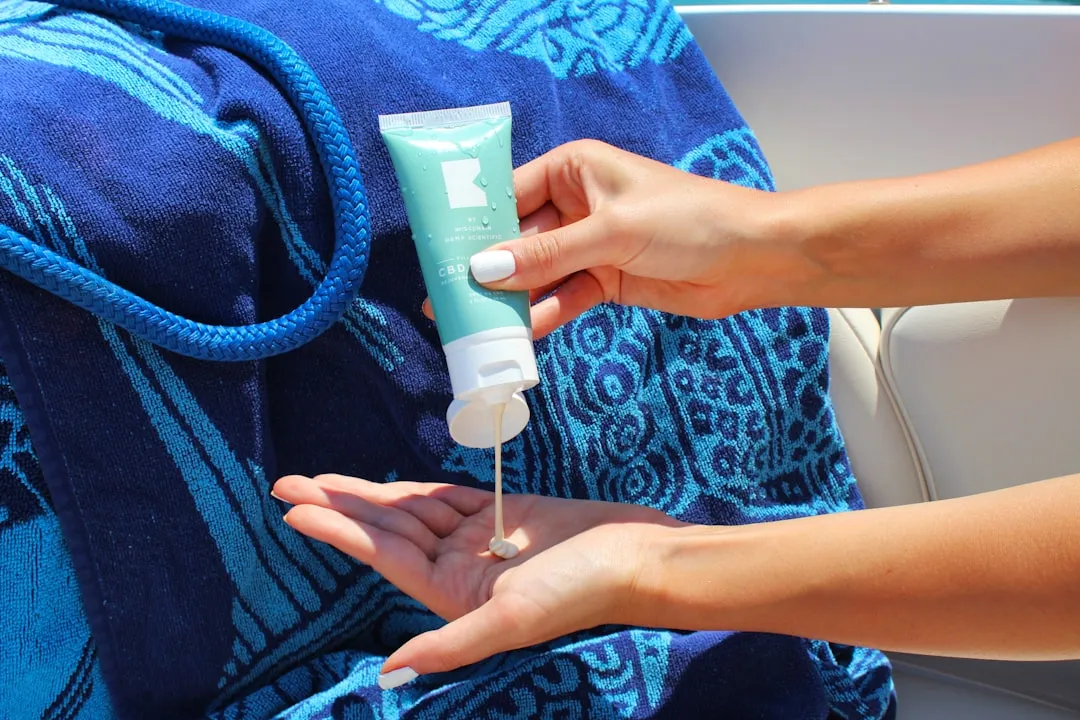
Applying sunscreen while sitting on outdoor cushions is one of the fastest ways to stain expensive furniture, and many guests don’t realize how difficult sunscreen and tanning oils are to remove. Resort lounge cushions and toweled chairs absorb oil quickly and the staining is often permanent. Ideally, sunscreen should be applied before arriving at the pool so it has time to absorb, which helps preserve both the pool water chemistry and the surrounding furniture.
Rinsing off before entering the pool is also considered good form, as sunscreen, hair products, lotion, and sweat can all affect a pool’s chemical balance. It’s a small habit that makes a real difference to water quality over the course of a busy resort day.
Hoarding Multiple Chairs for a Large Group

A major source of resentment at pool decks is vacationers who claim multiple sun beds before disappearing for hours, a problem so widespread that a number of resorts on the coast of Spain have banned reserving loungers or implemented fines. Claiming six chairs for two people while three of them stay empty all morning is the kind of thing that generates genuine anger, not just mild annoyance. The general unspoken rule is clear: you should only take as many chairs as people in your group who are actually present.
In some of the most popular Spanish destinations, guests who wander off after leaving their belongings can even face penalties and confiscation of their items by local authorities. What feels like harmless vacation planning to the offending party tends to look very different from the perspective of the family that spent 20 minutes searching for two open chairs.
Ignoring the Crackdown Policies Now in Place

In late 2025, Norwegian Cruise Line intensified its chair-hogging ban by using a sticker system, with crew members marking reserved chairs at approximately 10 a.m. and removing belongings from any chair still unoccupied an hour later. This isn’t just a cruise line phenomenon. Celebrity Cruises, Princess Cruises, and Virgin Voyages all maintain 30 to 40 minute grace periods for item removal from unattended chairs.
P&O has also tightened its approach since 2024, with the deck team placing a warning sticker on any lounger left unattended for 30 minutes, followed by item removal if the guest hasn’t returned within another 30 minutes. Resorts on land are watching these enforcement models closely, and similar systems are gradually appearing at land-based properties too. The era of soft warnings is winding down.
Misjudging the Noise Level Around Families and Quiet Pools
What might be appropriate behavior at an adults-only pool does not apply when children are in the vicinity, and etiquette professionals consistently advise guests to stay mindful of their surroundings at family resorts. Many upscale properties now segment their pool areas deliberately, maintaining dedicated quiet zones or adults-only pools. At many luxury beach resorts, not every guest has equal access to every pool.
Using an adults-only pool when you’re traveling with children, or treating a family pool like a party venue, are both forms of the same misjudgment. Reading the room, and the resort map, matters more than most travelers realize until they’ve disrupted someone else’s carefully planned vacation day.
Assuming Selective Enforcement Means No Rules Apply

Enforcement at resort pools tends to rise during peak occupancy, with items or behaviors that go unnoticed on a quiet weekday morning becoming cause for staff intervention during a sold-out holiday weekend. Staff say guests often mistake selective enforcement for inconsistency, when in most cases the deciding factor is simply how crowded the pool environment is at that moment. This misreading leads travelers to assume that because nothing was said yesterday, everything is permitted today.
Even if a resort does not post giant signs about time rules, it almost always has a quiet policy in place. Resort managers dislike the towel game just as much as guests do, because it leads to complaints and negative reviews. The rules are there. The enforcement is simply waiting for the right conditions to arrive.
The Bigger Picture

Pool deck etiquette isn’t really about rules. It’s about something more straightforward: the recognition that a resort’s shared spaces belong to everyone staying there, not just the people who got up earliest or bought the most expensive room. Practicing proper etiquette in resort life increases your own satisfaction and that of other guests around you.
Most of the friction that happens at pool decks is completely avoidable. Arrive when you’re ready to actually use the chair, keep your music personal, apply sunscreen before you sit down, and respect the enforced time limits that more and more properties are putting in place. The pool is genuinely better for everyone when the unspoken agreement holds. That’s the habit worth traveling with.
AI Disclaimer: This article was created with the assistance of AI tools and reviewed by a human editor.