
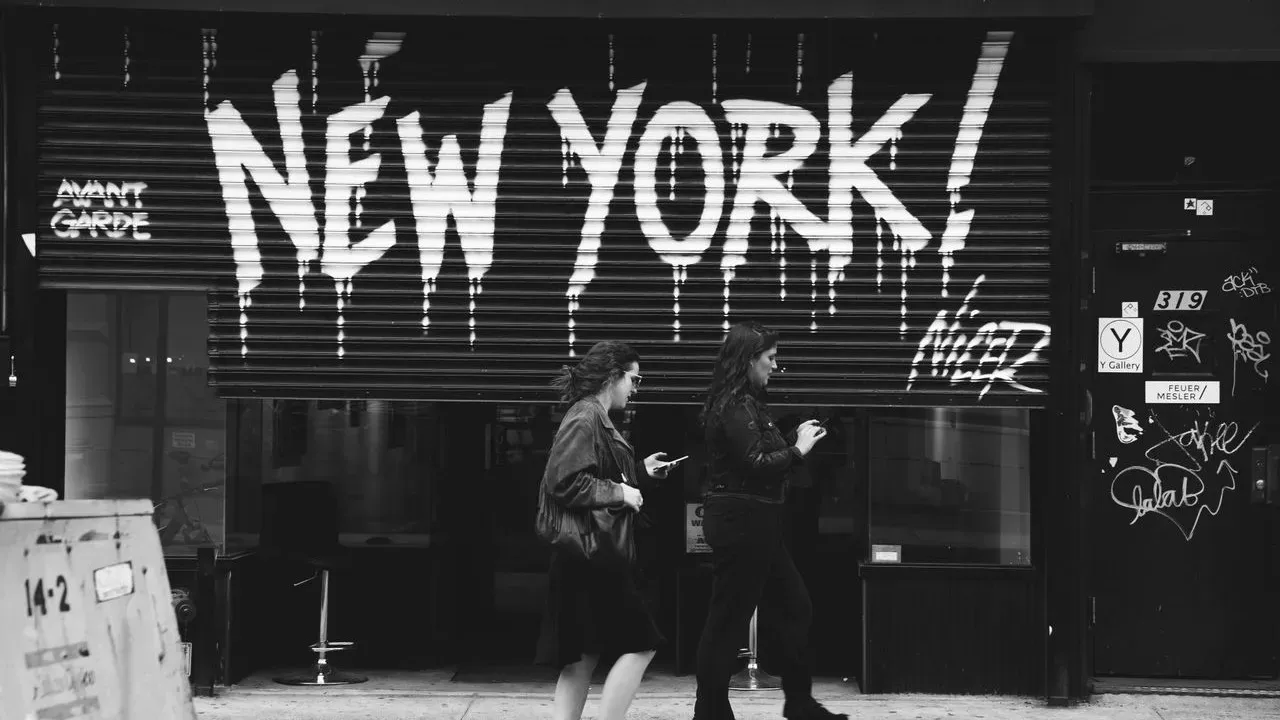

New York City holds its history in plain view for those willing to pause. Scattered across sidewalks, parks, and building facades lie physical traces of earlier eras, from the age of horses to the first days of the republic. These remnants invite travelers to experience the city not as a fixed present but as a place still shaped by what came before. One of the most striking examples sits at the southwest corner of Charles and Greenwich streets in the West Village, where small gray signs remain embedded in a building wall at roughly third-story height. They once guided passengers on the Ninth Avenue Elevated line, which began service in 1873 and ran above the streets until the modern subway system took over. ## Relics from the Age of Horses Many of the city’s stoops and small metal fixtures trace directly to the practical demands of 19th-century life. High entrances on brownstones in neighborhoods such as Greenwich Village and the Upper West Side allowed residents to step from carriages without crossing streets thick with manure. By the 1890s, more than 60,000 horses worked the city’s streets, producing hundreds of tons of waste daily. Bootscrapers, modest metal plates set beside many stoops, served the same purpose on a smaller scale. They let people clean their shoes before entering homes. These details still shape the visual character of entire blocks, even as their original function has faded. In Central Park, the Cherry Hill fountain once functioned as a watering trough for the same animals. Its Victorian design now blends into the landscape, yet it speaks to a time when four-legged traffic dominated daily movement. ## Markers from the Revolutionary Era Further downtown, an iron fence at Bowling Green has stood since 1771. It was installed to protect a gilded statue of King George III that New Yorkers had erected the previous year. Within a few years, as tensions with Britain grew, the statue was toppled and the fence remained. Small crowns once topped its posts; the rough stubs left behind can still be felt by hand. A short walk away at St. Paul’s Chapel stands another preserved link to the nation’s founding. George Washington worshipped there after his 1789 inauguration, when New York served briefly as the capital. His pew has been kept as a memorial ever since. The chapel itself survived the Great Fire of 1776 and later events, continuing to anchor Lower Manhattan’s historic core. ## Structural Clues in Everyday Walls Metal stars bolted to older brick buildings offer another layer of visible history. These are the visible ends of tie rods that run through the masonry and help hold the structures together. Common on 19th-century construction, they appear throughout former industrial areas and quietly indicate a building’s age and engineering. Central Park’s perimeter wall carries its own unexpected origin story. Built in the 1850s, it was intended in part to keep goats from wandering into the new green space from surrounding uptown neighborhoods. The animals proved agile enough to leap the barrier anyway, yet the wall endures as a defining feature of the park’s edge. These elements reward slow exploration on foot. They turn ordinary walks into opportunities to notice how the city’s past continues to inform its present character. Travelers who take time to look closely often find that familiar streets reveal new depth and a stronger sense of connection to the generations who shaped them. ([1])
AI Disclaimer: This article was created with the assistance of AI tools and reviewed by a human editor.