
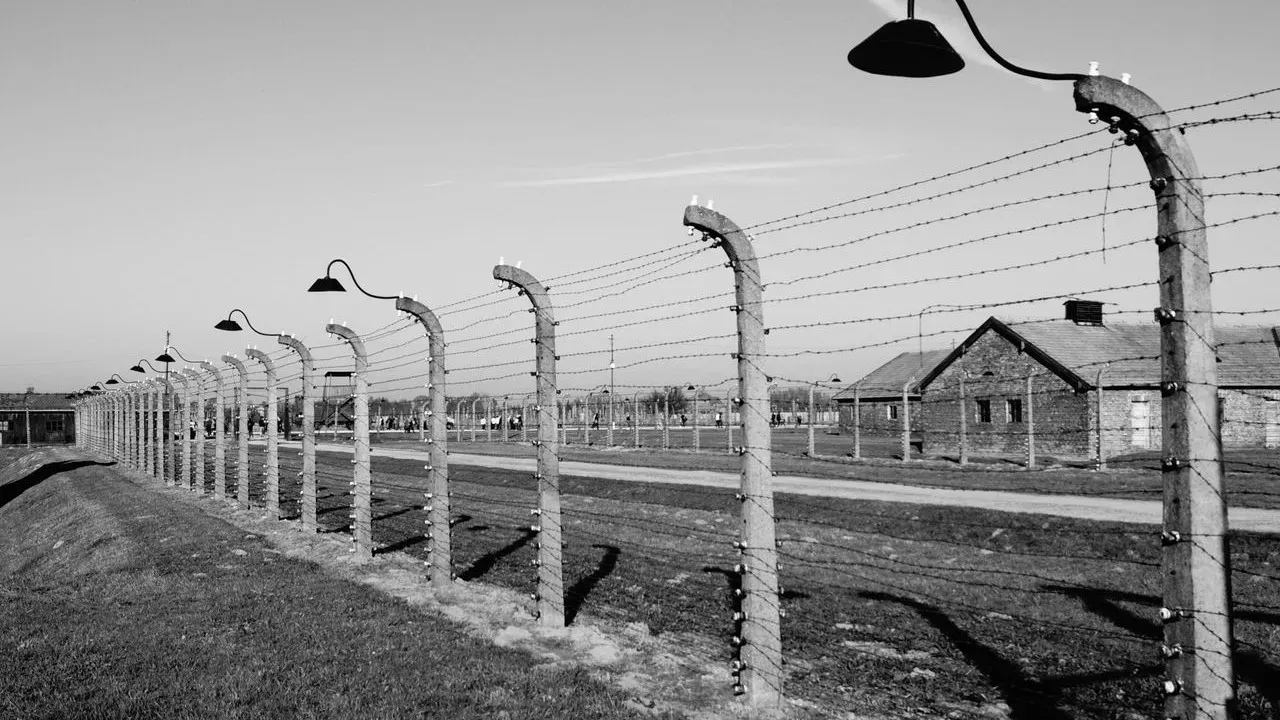

Magdeburg, Germany – In the closing weeks of World War II, American troops advancing through central Germany came upon a stalled train carrying 2,500 Jewish prisoners from the Bergen-Belsen concentration camp. The date was April 13, 1945. The location was a stretch of track near the village of Farsleben, just outside Magdeburg. What happened next remained largely unknown for decades until a high school oral history project brought the account to light. ([1]) The project began in a small town in upstate New York. History teacher Matthew Rozell asked local World War II veterans to share their experiences with students. During one interview in 2001 with former tank commander Carrol Walsh, his daughter mentioned photographs Walsh had kept from the war. Walsh then described the moment his unit encountered the train. The soldiers found the prisoners in dire condition and provided immediate aid. Walsh had rarely spoken of the episode before that conversation. **How a classroom assignment reached survivors worldwide** Rozell posted the interview online. Within weeks, messages arrived from people who had been on the train or from their families. Many had never known the precise details of their liberation. The exchanges grew into a larger effort that connected dozens of survivors with the American soldiers who had stopped to help them. Rozell later compiled the accounts into a book that documented both the soldiers’ actions and the survivors’ journeys before and after that day. The train had been part of a larger movement of prisoners as Nazi authorities attempted to relocate or eliminate evidence of the camps in the war’s final phase. Orders found later indicated plans to destroy the train on a bridge over the Elbe River. The American advance interrupted those plans. The soldiers’ decision to halt and assist the prisoners marked a turning point for those 2,500 individuals. **The site near Magdeburg and its quiet significance today** Travelers interested in 20th-century European history can visit the area around Farsleben and Magdeburg. The rail line itself remains in use, yet the surrounding landscape holds markers and memorials that acknowledge the events of April 1945. Local remembrance efforts focus on the human stories rather than spectacle. Visitors who approach the location with preparation and respect often find the experience sobering and instructive. The story also illustrates how individual choices during conflict can alter many lives. The soldiers did not have to stop. They chose to provide food, medical attention, and protection. Survivors went on to careers in medicine, education, and the arts. Their accounts emphasize the value of bearing witness while firsthand testimony remains possible. **Why the account continues to matter for purposeful travel** Rozell has noted that the episode underscores the role of education in preserving history. Without the classroom project, the details might have stayed within a single family. The same principle applies to travel. Visitors who seek out lesser-known sites connected to the Holocaust contribute to ongoing remembrance when they do so thoughtfully and with accurate context. The rail line near Magdeburg stands as one such place. Its story emerged not from official records alone but from a teacher’s persistence and a veteran’s willingness to speak. For those planning journeys centered on historical understanding, the site offers a concrete reminder of both loss and rescue in the final days of the war.
AI Disclaimer: This article was created with the assistance of AI tools and reviewed by a human editor.