
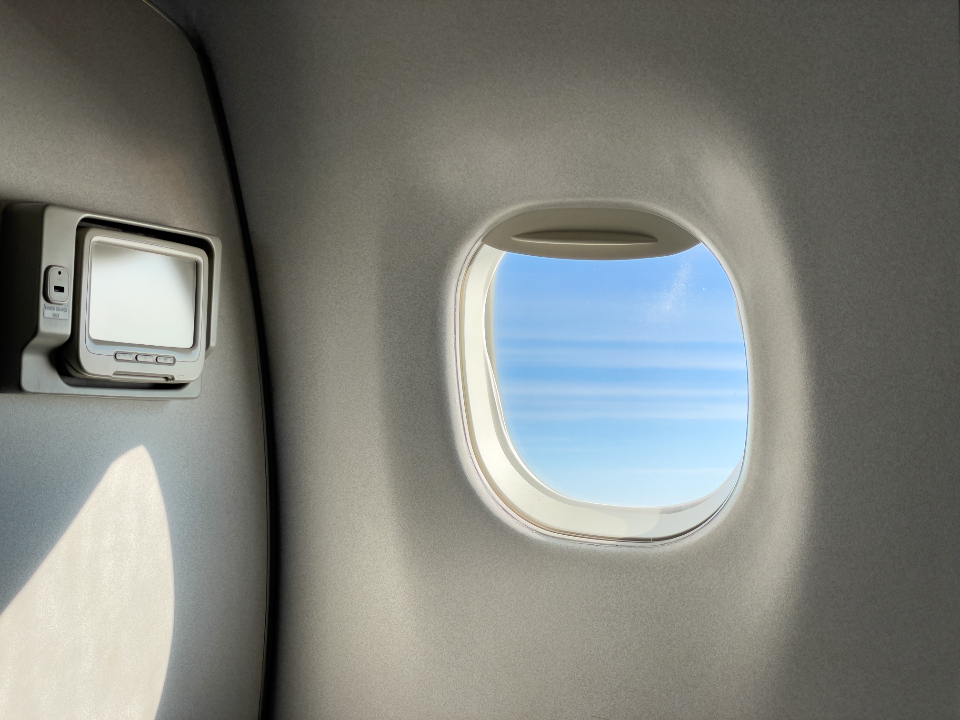

It Started with Square Windows and Confident Engineers

The Wright Brothers’ first airplanes focused solely on achieving powered flight and didn’t include windows. Back then, passenger comfort and visibility weren’t priorities. As commercial aviation grew over the following decades, windows became a standard feature of aircraft interiors.
Early aircraft windows were rectangular in shape, similar to those in cars and buildings, adding a touch of elegance to aircraft interiors. As commercial aviation grew, square windows became the standard. Engineers initially believed square windows would provide structural integrity.
During the early era of commercial jet travel in the 1950s, engineers believed square windows looked perfectly reasonable. After all, houses use square windows. Cars use square windows. Nobody, at the time, fully appreciated what happens to metal when it’s pressurized thousands of times.
The Physics of Pressurization: Why Shape Suddenly Mattered
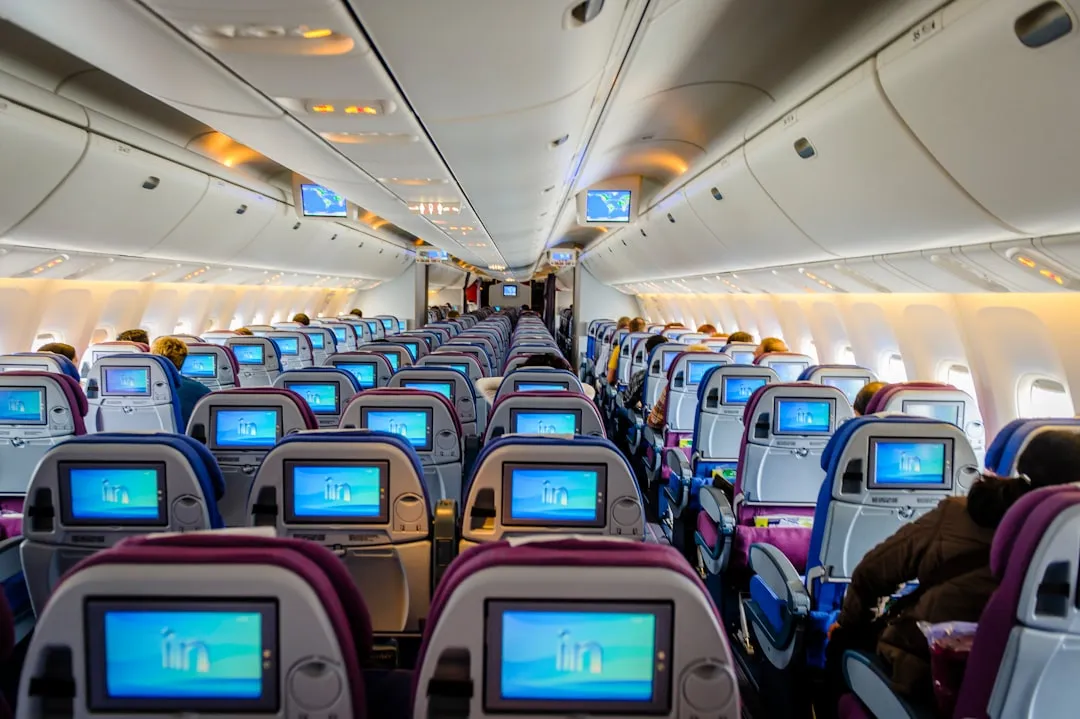
At typical cruising altitudes of 30,000 to 41,000 feet, outside atmospheric pressure drops to roughly 3.5 psi, compared to 14.7 psi at sea level. Without pressurization, passengers would experience hypoxia within minutes of reaching altitude.
At high altitudes, air pressure outside decreases, becoming lower than the air pressure inside the cabins. As air pressure inside the aircraft grows bigger relative to the air pressure outside, the aircraft’s structure is stressed, as the metal literally wants to expand.
The most important structural factor is the cabin pressure differential, the difference between the pressurized air within the fuselage and the outside atmosphere at lower pressure. For the majority of aluminum-construction aircraft, this differential will be at its highest around 8.5 psi at cruise altitude. That constant outward push, repeated on every single flight, accumulates in ways early engineers didn’t fully predict.
The de Havilland Comet: The World’s First Jet Airliner

The de Havilland Comet was beautiful. Sleek, four-engined, impossibly quiet compared to the propliners it replaced. On 2 May 1952, BOAC Comet G-ALYP departed London for Johannesburg – the world’s first scheduled jet airline service.
The de Havilland Comet cruised at about 35,000 feet and 500 mph, roughly twice the speed of the propeller airliners of its day. It cut the London-to-Johannesburg journey from four days to around 23 hours, offering passengers an unprecedentedly quiet, smooth, high-altitude ride above the weather.
One famous aircraft, the de Havilland Comet, used square passenger windows. That decision, well-intentioned and widely accepted at the time, would lead to one of the most consequential engineering investigations in aviation history.
The Crashes That Changed Everything

On the morning of January 10, 1954, a Comet flew from Rome to its destination, London. Approximately 20 minutes after takeoff, at an altitude of around 27,000 feet, the flight crashed into the Mediterranean Sea, killing 29 passengers and 6 crew.
A similar incident was reported a few months later that same year, and another aircraft crashed killing 21 people. The reason was determined to be metal fatigue around the square-shaped windows.
The Comet suffered catastrophic metal fatigue. Repeated pressurization cycles caused cracks to form at the corners of its near-square windows and rivet holes, until the fuselage tore open at altitude. Three Comets broke apart between 1953 and 1954, killing everyone aboard and grounding the fleet permanently.
What Investigators Found: The Corner Is the Killer

The Comet’s fuselage was experiencing metal fatigue, specifically at the corners of the square windows and the rivet holes around them. Every pressurization cycle put the fuselage through a stress cycle: inflating and deflating like a balloon. Over hundreds of flights, microscopic cracks formed at the window corners, where stresses were concentrated. Eventually, catastrophically, the cracks propagated and the fuselage failed explosively.
Investigative testing revealed that the relatively squarish windows were creating stress concentrations much higher than anticipated. These stress concentrations fatigued the material around the window corners, which would quickly lead to a rupture of the fuselage.
The tight corner radii of the Comet’s nearly square cutouts created stress concentrations far higher than de Havilland’s engineers had predicted. Every pressurization cycle widened microscopic cracks at these corners until the fuselage could no longer hold together.
The Water Tank Test That Proved It Beyond Doubt

Engineers conducted experiments in water tanks to simulate compression and decompression on a plane, and discovered that the airplanes came apart in midair because sharp corners, like those on the window, are ideal locations for stress concentrations.
The investigators proved this with a devastating test: they put a Comet fuselage in a water tank and repeatedly pressurized and depressurized it to simulate flight cycles. After the equivalent of a few thousand flights, the fuselage tore open at exactly the predicted stress points. The square windows were the killer.
The 1954 disasters killed 35 in BOAC Flight 781 and 21 in SAA Flight 201. After 3,057 total cycles, including 1,221 actual flights plus 1,836 simulated, the fuselage burst open – the failure starting at the corner of the forward escape hatch, a cutout with the same fatal geometry as the windows.
How Rounded Windows Actually Distribute Stress
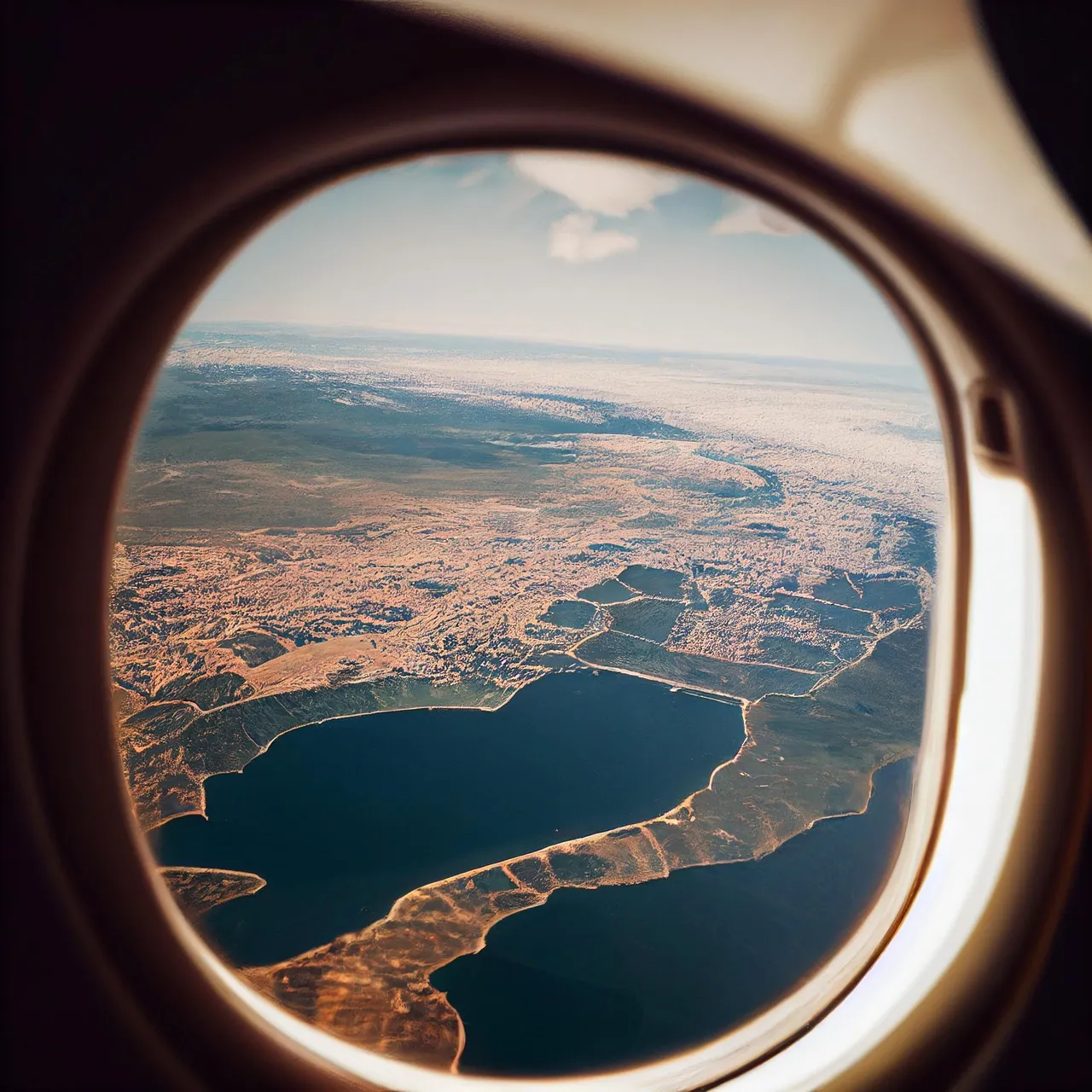
The sharp corners on square windows produce local stresses. By contrast, round or rounded-corner windows have the effect of eliminating stress concentration. They help the fuselage resist cracking under cyclic loads.
By switching to round or oval windows, the stress distributes evenly around the frame. Instead of pressure gathering at four corners, it spreads smoothly across the entire structure. In engineering terms, the round shape reduces fatigue stress.
Square windows created stress at the corners, which often led to cracks or even accidents in early aircraft. Round windows, on the other hand, distribute pressure evenly around their edges, greatly reducing the risk of structural failure. It’s a simple principle, but arriving at it cost real lives.
Why Oval, Not Perfectly Round?

Modern aircraft typically use oval windows instead of perfect circles. This shape balances structural strength, cabin aesthetics, and manufacturing efficiency.
Today, all passenger windows on aircraft are round or a form of rounded rectangle. No windows have sharper edges. The oval shape also fits more naturally within the curved fuselage structure, making it a practical as well as a structural choice.
Rounded windows actually increase the cost of fuselage manufacture because of the extra complexity involved. But safety is the top priority. That trade-off has never been seriously questioned since the 1950s.
The Legacy: A Complete Rethinking of Aviation Safety

More broadly, the Comet investigation established the discipline of metal fatigue analysis in aviation. Before the Comet crashes, fatigue was poorly understood and rarely tested. After them, every aircraft manufacturer was required to demonstrate that their designs could withstand tens of thousands of pressurization cycles without failure.
Aircraft would now undergo extensive full-scale fatigue testing to simulate many thousands of flight cycles before entering service. Engineers also developed new inspection techniques to detect fatigue cracks before they became dangerous.
Rival manufacturers heeded the lessons learned from the Comet when developing their own aircraft. Today, every pressurized aircraft from regional jets to wide-body airliners benefits from the lessons learned from the Comet.
Modern Aircraft Windows: Engineered Layers of Protection
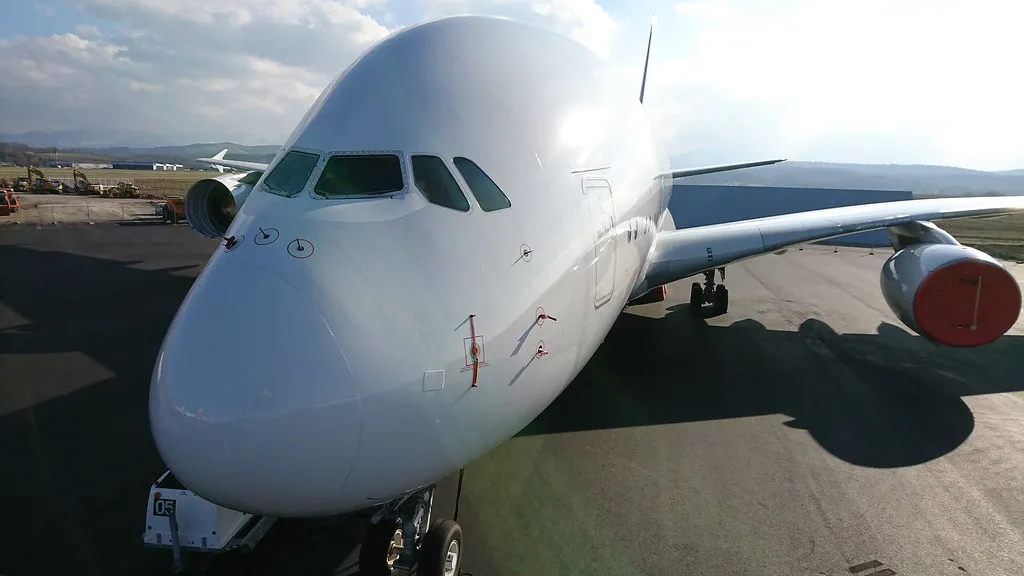
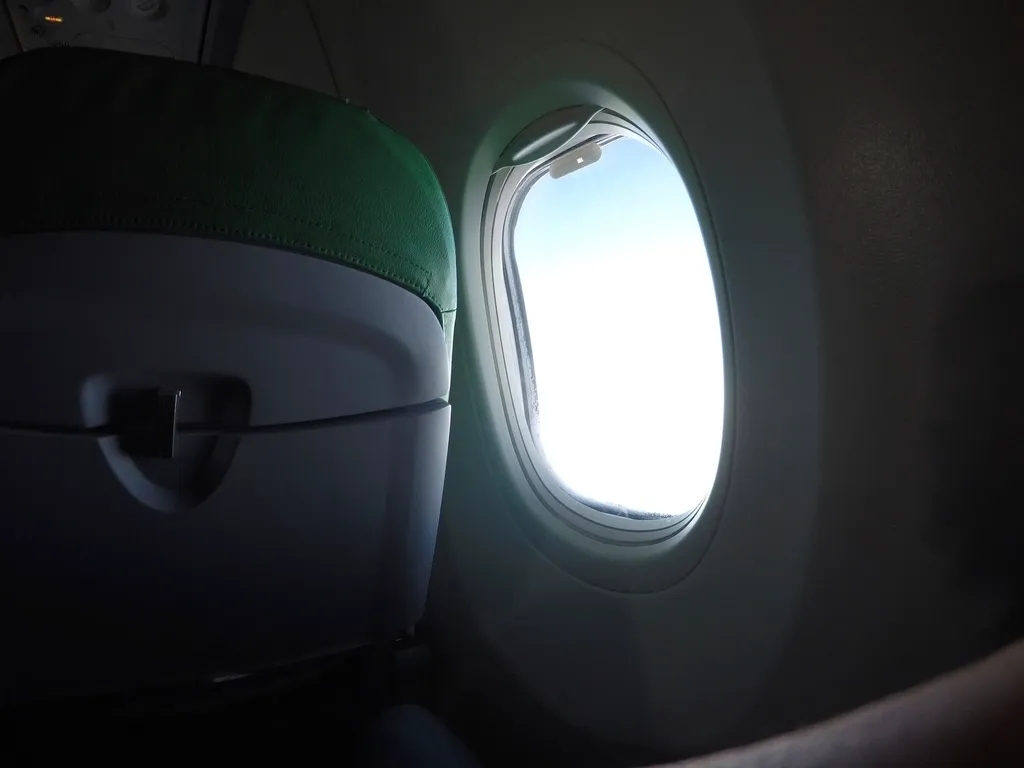
Since the Comet disasters, all aircraft windows are round (even though designed to appear somewhat rectangular), and are carefully engineered to ensure there are no sharp corners. The shape is now non-negotiable across the entire industry.
Current round or oval windows are capable of distributing air pressure and stress evenly, preventing weak points. Wherever a flight is in the air or takes off, it goes through cycles of pressurization and depressurization, and the round edges of windows handle this stress better.
Next-generation airliners, such as the Airbus A350, have a reduced cabin altitude, typically around 6,000 feet, compared to the traditional 8,000 feet, which enhances passenger comfort and reduces fatigue. The materials have changed, composite fuselages now handle pressure differentials with even greater resilience, but the rounded window remains constant.
A Quiet Detail with a Loud History
AI Disclaimer: This article was created with the assistance of AI tools and reviewed by a human editor.