

There’s a quiet but meaningful shift happening at airports across the United States. Passengers stuck at departure gates for hours are no longer simply at the mercy of airline goodwill. A sweeping federal rule now spells out exactly when airlines must return your money, in full, without you having to fight for it.
The rule didn’t appear overnight. It grew out of years of passenger frustration, a flood of pandemic-era complaints, and a federal government that finally decided uniformity mattered more than airline discretion. Here’s everything you need to know about how the rule works, what it covers, and what you can do if an airline doesn’t comply.
Where the Rule Came From
The U.S. Department of Transportation issued a final rule requiring airlines to promptly provide passengers with automatic cash refunds when owed. The rule was published in April 2024 and represented one of the most significant consumer protection shifts in U.S. aviation history. It came after years of inconsistency in how airlines handled delays and cancellations.
The final rule created certainty for consumers by defining the specific circumstances in which airlines must provide refunds. Prior to this rule, airlines were permitted to set their own standards for what kind of flight changes warranted a refund. As a result, refund policies differed from airline to airline, which made it difficult for passengers to know or assert their refund rights.
Key automatic refund requirements went into effect on May 16, 2024, when President Biden signed the FAA Reauthorization Act of 2024 into law, and the remaining airline refund protections under DOT’s rule became effective as of October 28, 2024.
What Counts as a “Significant Delay”
Under the rule and subsequent guidance, a “significant delay” now has a clear threshold. For domestic flights, a delay of three hours or more qualifies. For international routes, a delay of six hours or more meets the standard. These thresholds apply regardless of why the delay happened, whether it’s weather, mechanical failure, staffing problems, or anything else.
The new standards replaced airline-by-airline definitions of a “significant” delay with uniform national criteria. Before this change, carriers could set their own internal thresholds for when a delay might warrant a refund, leaving many customers reliant on discretionary goodwill policies rather than clear legal rights.
Automatic and in Cash: The Core Requirement
Gone are the days of navigating myriad airlines’ policies regarding delays, cancellations, or service interruptions. The new rule establishes a single source of truth all airlines must adhere to: refunds must be automatic and they must be in cash, or the original form of payment.
The rule requires refunds to be in cash or original form of payment by default. Airlines must first inform consumers of their right to a refund before offering a voucher, credit, or other compensation in lieu of a refund. This is a critical detail: an airline cannot simply hand you a travel credit and call it a day unless you actively agree to it.
Airline passengers are entitled to a refund when their flight is canceled or significantly changed and they no longer wish to take that flight or be rebooked, when their checked baggage is significantly delayed, or when extra services they paid for, like Wi-Fi, are not provided. Refunds must be automatic, prompt, in the original form of payment, and in the full amount paid.
Other Situations That Trigger Refund Rights
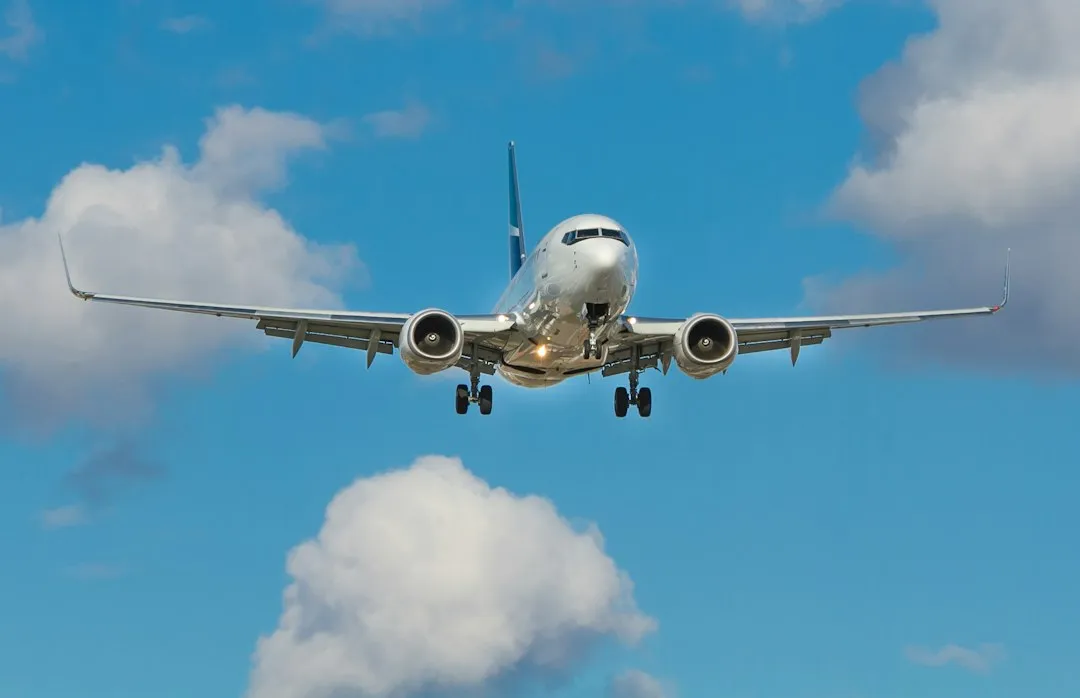
New DOT materials and Federal Register text indicate that large shifts in departure or arrival times, additional connection points, rerouting to different airports, or downgrades to a lower class of service can also trigger refund eligibility when the traveler chooses not to take the altered trip. So it’s not only about clock time: structural changes to your itinerary count too.
Passengers will also be entitled to a refund for the fee they paid for an extra service, such as Wi-Fi, seat selection, or inflight entertainment, if an airline fails to provide this service. This provision closed a long-standing loophole where airlines could charge for add-ons that were never delivered and face no meaningful accountability.
Baggage Delays Have Their Own Rules

Checked baggage fees have distinct refund rules under the DOT’s final rule, particularly concerning mishandled baggage. Passengers are entitled to a refund of their checked bag fee if their luggage is significantly delayed. The timeframes are specific and worth knowing before you fly.
For domestic flights, the threshold is a bag delay of 12 or more hours after the flight arrives. For international flights, it ranges from 15 to 30 or more hours depending on flight length. These protections apply to the bag fee itself, not the contents, so it’s a partial but still meaningful safeguard.
How Quickly Airlines Must Pay
In the final rule, the DOT required that airlines and ticket agents provide prompt refunds when due. “Prompt” is defined to mean within 7 business days of refunds becoming due for credit card purchases, and within 20 calendar days of refunds becoming due for purchases by cash, check, or other forms of payment.
DOT’s final rule also makes it simple and straightforward for passengers to receive the money they are owed. Without this rule, consumers had to navigate a patchwork of cumbersome processes to request and receive a refund, searching through airline websites to figure out how to make the request, filling out extra digital paperwork, or at times waiting for hours on the phone.
The Complaint History That Made This Rule Necessary

DOT received 89,518 refund complaints in 2020, the highest number on record, which comprised 87 percent of total consumer complaints that year. While refund complaints have decreased since this peak, they remain significantly higher than pre-pandemic levels.
Under Secretary Buttigieg, DOT issued over $164 million in penalties against airlines for consumer protection violations. Between 1996 and 2020, DOT collectively issued less than $71 million in penalties against airlines for consumer protection violations. That gap tells its own story about how long enforcement lagged behind the scale of the problem.
Enforcement in 2025 and 2026
As of April 2026, the U.S. Department of Transportation’s airline passenger protection rules are operating under full enforcement authority. According to the DOT, the agency has initiated formal compliance reviews of domestic carriers, and enforcement actions carrying civil penalties of up to $86,503 per violation are now on the table.
Smaller carriers have faced tougher scrutiny. Spirit and Frontier were hit with $2.5 million in fines in 2025 for delay-related problems. DOT’s 2026 focus includes AI audits designed to catch non-compliance faster. The regulatory environment is clearly tightening.
The Department is also engaged in a rulemaking titled “Airline Refunds and Other Consumer Protections III,” which among other things aims to reduce unnecessary regulatory burdens by modifying the definition of a flight cancellation that would entitle consumers to ticket refunds. So the rules themselves are still evolving, and passengers should stay informed.
How Some Airlines Are Going Further Than Required
Not every airline is simply meeting the federal floor. Some carriers have gone beyond what the DOT mandates, which is worth knowing when you choose who to fly with.
American Airlines refunds international delays over four hours. Alaska Airlines offers refunds for controllable domestic delays after just one hour. United Airlines added no-penalty cancellations within six hours of departure on March 15, 2025. Delta Air Lines has issued proactive credits for delays over 90 minutes. Southwest Airlines removed change fees permanently and issues automatic refunds for any controllable cancellation.
What to Do If an Airline Refuses

The U.S. Department of Transportation accepts complaints at transportation.gov/airconsumer. Every complaint is forwarded to the airline, which is required to respond. Carriers track complaint volume internally, and repeated complaints draw enforcement attention from DOT’s Office of Aviation Consumer Protection.
The DOT’s Aviation Consumer Protection Division received more than 96,000 consumer complaints in 2023, according to agency data, a post-pandemic high. Refund-related complaints accounted for a substantial share of that volume. Filing a complaint genuinely matters: it feeds enforcement priorities and creates a documented record if you need to escalate further.
The Bigger Picture for Travelers
The shift from discretionary airline policies to enforceable federal standards is a real, substantive change for passengers. DOT reports show that the vast majority of airlines met refund timelines in the first quarter of 2026, which suggests that compliance, at least in terms of timing, has largely improved since the rule took effect.
The 2024 FAA Reauthorization Act, signed into law by President Biden in May 2024, included additional passenger protection provisions and directed the DOT to report to Congress on refund rule enforcement metrics beginning in 2025. Those reports are now feeding into congressional oversight discussions that could influence staffing and budget decisions for the Aviation Consumer Protection Division.
Final Thoughts
For most travelers, the most important thing to know is simple: if your domestic flight is delayed three hours or more, or your international flight by six or more hours, and you decide not to fly, you are legally entitled to your money back. Not a voucher. Not a future credit. Your actual money, returned in the form you originally paid, within a defined and enforceable timeframe.
The rule doesn’t make delays disappear, but it does change the power dynamic in a meaningful way. Keep your booking confirmation, know the thresholds, and don’t accept a travel credit by default before asking whether you’re owed a cash refund first. That single question, now backed by federal law, is worth asking every time.
AI Disclaimer: This article was created with the assistance of AI tools and reviewed by a human editor.