

There’s a quiet shift happening on the West Coast. Fewer people are rushing to the airport for a two-hour hop between Los Angeles and Seattle. Instead, some are pulling luggage through the grand hall of Union Station, finding their seat in a sun-filled Superliner car, and letting the Pacific coastline do the convincing. It’s called the Coast Starlight, and it has been doing this for over fifty years.
The reasons travelers are choosing rail over regional air aren’t entirely idealistic. They’re practical, environmental, sensory, and increasingly, philosophical. Something about the friction of a short-haul flight – the security queue, the middle seat, the landing before you’ve had a chance to catch your breath – is starting to feel like more trouble than it’s worth.
A Route That Has Been There All Along
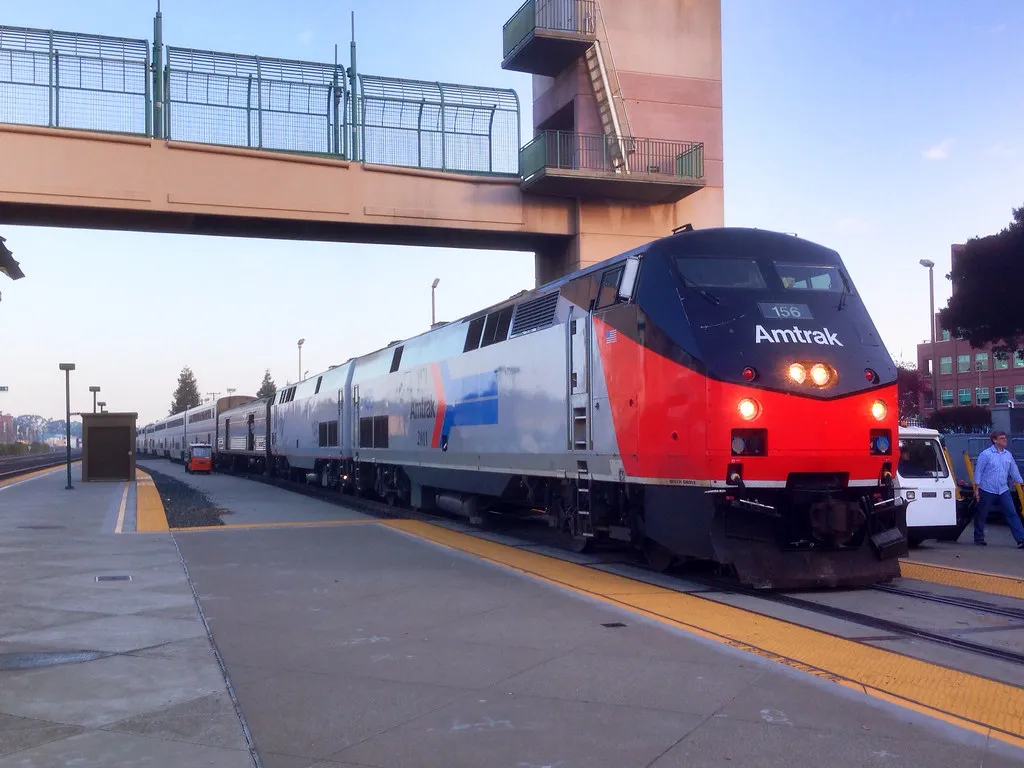
The Coast Starlight is a long-distance passenger train operated by Amtrak on the West Coast of the United States between Seattle and Los Angeles. The train has operated continuously since Amtrak’s formation in 1971 and was the first to offer direct service between Seattle and Los Angeles.
The full route covers 1,377 miles, takes about 34 to 35 hours, and runs once daily in each direction. That’s a long time, and it’s precisely the point. The journey threads through some of the most geographically varied terrain in North America, and passengers who have done it tend to describe the experience as a different kind of trip altogether.
One of the most beautiful train journeys in the US, the Coast Starlight’s route unspools along the Pacific Ocean from Los Angeles via Sacramento to Seattle. With miles of coastline, towering mountain ranges, and glistening cityscapes, this is the ultimate American slow travel experience.
The Numbers That Tell the Story
During fiscal year 2024, the Coast Starlight carried 359,432 passengers, an increase of 6.3% from fiscal year 2023. That’s a meaningful uptick, especially for a long-distance service that competes with short-haul aviation along one of the most flight-saturated corridors in the country.
Ridership on the Coast Starlight line between Seattle and Los Angeles climbed nearly 5% over the last fiscal year. At the same time, Amtrak hit an all-time record high for annual ridership, providing 34.5 million rides nationwide from October 2024 through September 2025. Amtrak Cascades, the regional corridor that runs between Eugene, Oregon and Vancouver, B.C., also hit a record high, reporting 1.4% growth and coming in just short of the million-ride mark for the year.
Along with ridership records, Amtrak also set ticket revenue records, pulling in $2.7 billion, which is 10.4% higher year-over-year. Overall, operating revenue was up 9.1%, and Amtrak says it expects to turn an operating profit by 2028. The momentum is real, and the West Coast is contributing to it.
What the Train Actually Looks Like
The train uses double-decker Superliner equipment, including a Sightseer Lounge car that has floor-to-ceiling windows to view the passing scenery. As of 2024, a typical consist includes a Viewliner baggage car, a transition sleeper, two sleeping cars, two coaches, one coach/baggage car, the lounge car, and a dining car.
Amtrak’s Coast Starlight links Seattle and Los Angeles with views of the Pacific Ocean, California valleys, Mount Shasta, and the Cascade Mountains. For many riders, the Sightseer Lounge is the best place to watch the path of the train unfold, especially on the coastline and mountain sections.
In the train observation car, described as a living room on rails, passengers seem to be moving almost silently. The views shift constantly: dense redwood forest gives way to golden farmland, then the ocean appears without warning. It’s the kind of scenery that a window seat on a commuter flight simply can’t replicate at altitude.
The Key Stops Along the Way
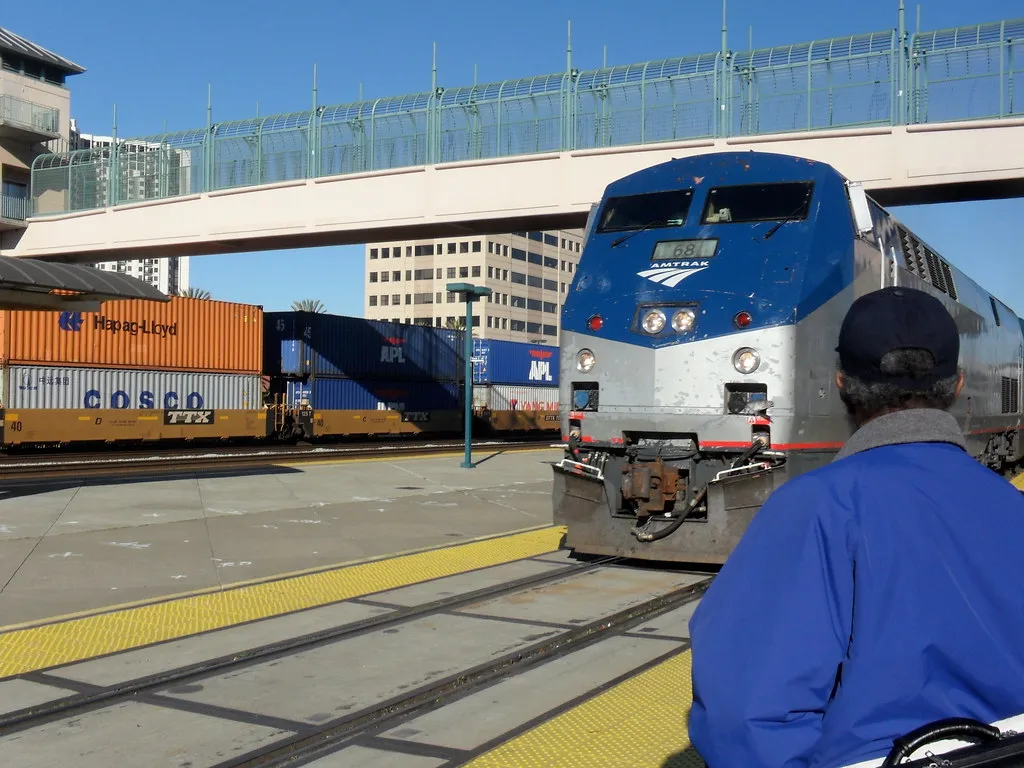
The Coast Starlight route runs north-south between Seattle and Los Angeles, linking Washington, Oregon, and California with one of the most scenic rail trips in the United States. Seattle, Tacoma, Portland, Eugene, Klamath Falls, Sacramento, the Bay Area, San Luis Obispo, Santa Barbara, and Los Angeles are among the key points on the line.
Popular stops and nearby trip ideas include wine country around Paso Robles, the California State Railroad Museum in Sacramento, ferry access to San Francisco from Oakland, and airport connections near Los Angeles, Burbank, Santa Barbara, Portland, and Seattle. The train essentially connects entire travel itineraries on its own, acting as the backbone of a West Coast journey rather than just a point-to-point transport.
According to Rail Passengers Association data, in 2024 the top city pairs by ridership included Portland to Seattle at 187 miles, and Los Angeles to Seattle at the full 1,377 miles. That range captures exactly who’s on board: commuter-style segment travelers as well as those doing the whole scenic odyssey.
The Environmental Case for Choosing Rail
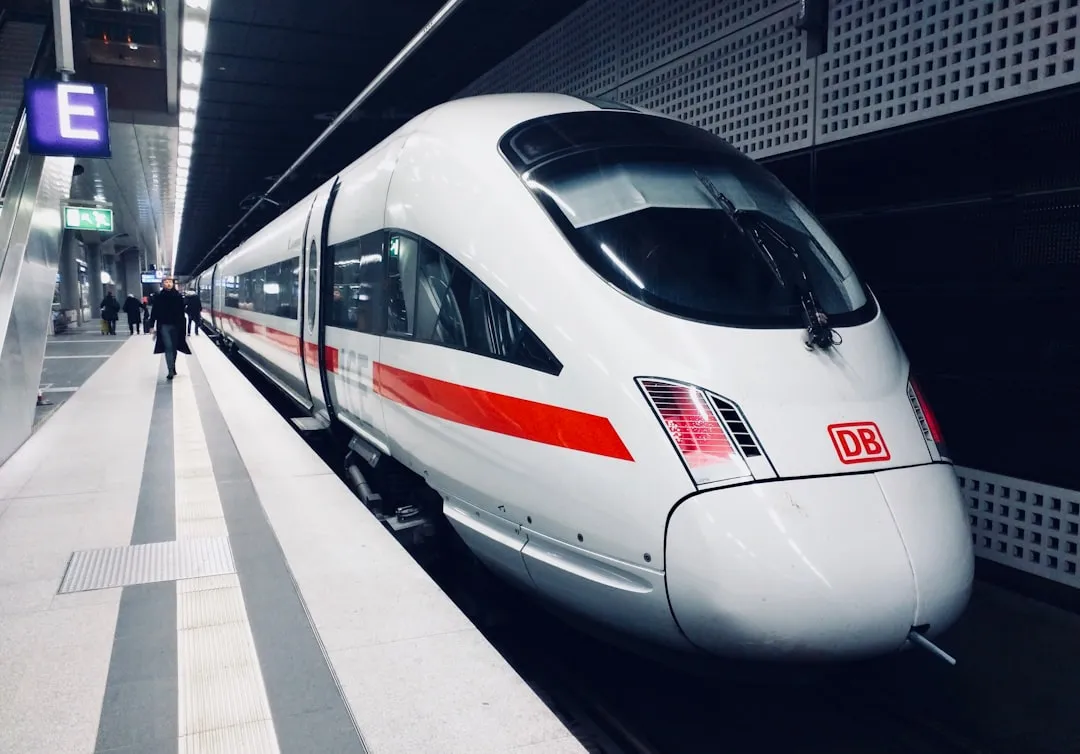
Trains are particularly low-carbon ways to travel. Using a train instead of a domestic flight would reduce your emissions by around 86%, according to data from Our World in Data. That figure carries real weight on a route like the Coast Starlight, where the flight alternative between Los Angeles and Seattle is one of the shorter and more carbon-intensive air segments available.
Trains, whether for cargo or passengers, pollute much less than airplanes, sometimes by as much as 73%, and they are more easily electrified than planes, according to research from the Kleinman Center for Energy Policy at the University of Pennsylvania.
Results from an EPA analysis show that rail travel has generally lower CO2 emissions than air travel, with substantially lower emissions for electrified segments of the Amtrak system. At flight distances of over 700 miles, air travel using single-aisle jets can, in some cases, have lower per-passenger CO2 emissions compared to diesel-powered rail travel. It’s a nuanced picture, worth understanding honestly: rail wins decisively on most shorter and medium-distance segments of the West Coast corridor.
Slow Travel Is Not a Niche Anymore
Slow travel, which often means staying in fewer places or immersing in a local culture for an extended time, is gaining popularity, according to 2025 trend reports from both Hilton and Booking.com. Listed as a top trend in the Hilton 2025 Trends Report, slow travel emphasizes a more mindful and immersive travel experience, driven by a desire to reduce speed and build genuine connections with people and surroundings.
Driven by a desire to inject the journey back into travel and increasing awareness of the carbon impact of flying, a notable 40% of Byway customers swapped planes for trains in 2024, compared to 27% the year before. That’s not a marginal shift. It reflects something genuinely changing in how travelers think about the relationship between transport and experience.
2024 was the year in which more frequent fliers than ever got hooked on overland travel, driven by a desire to rekindle the feeling of the journey and an increasing awareness of the carbon impact of flying. The Coast Starlight fits directly into this momentum: it’s not a compromise, it’s the point.
The Onboard Experience: More Than Getting There
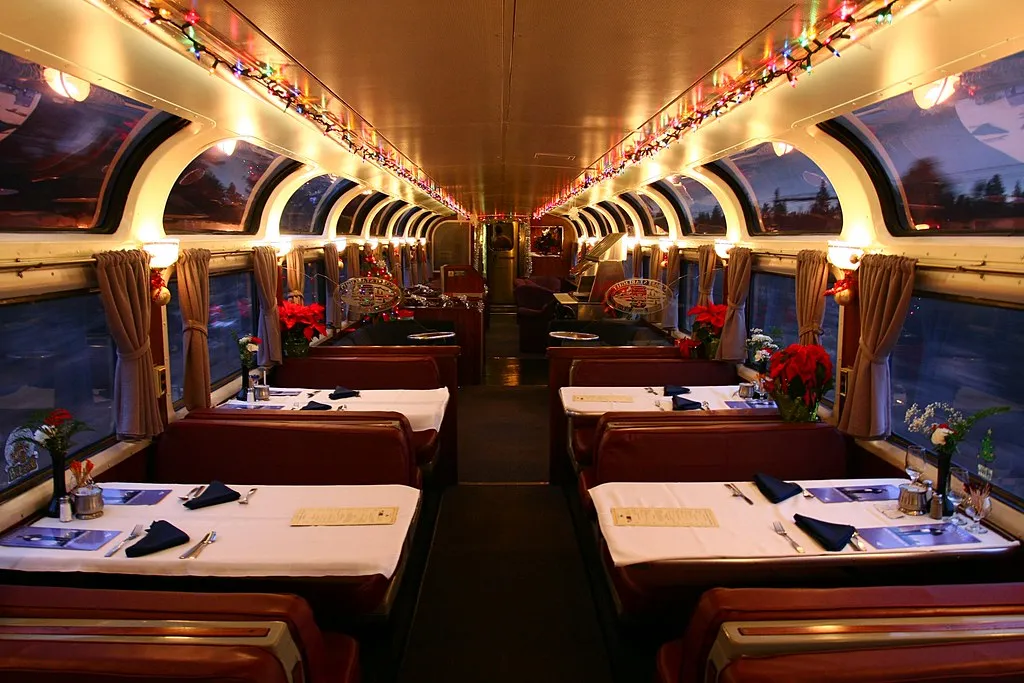
Away from the scenery, the Coast Starlight is a living community of rituals and shared stories, with staff and passengers coming together in near-communion. Conversations happen across dining tables with strangers. People share where they’re headed, why they took the train, and what they hope to find. It’s a social texture that security queues and overhead bins rarely produce.
Traditional Dining is now available to coach customers on eight long-distance trains, with service already available on the Coast Starlight, Empire Builder, California Zephyr, Sunset Limited, and Southwest Chief. The dining car has long been one of the small, reliable pleasures of a long-haul rail trip, and its return to coach passengers broadens access to the full experience.
Onboard amenities including complimentary Wi-Fi and sleeping and dining cars make these rides convenient and comfortable. For those booking a private sleeper room, the journey doubles as a hotel night – something a one-hour regional flight can’t replicate by any stretch.
What Northbound Riders See
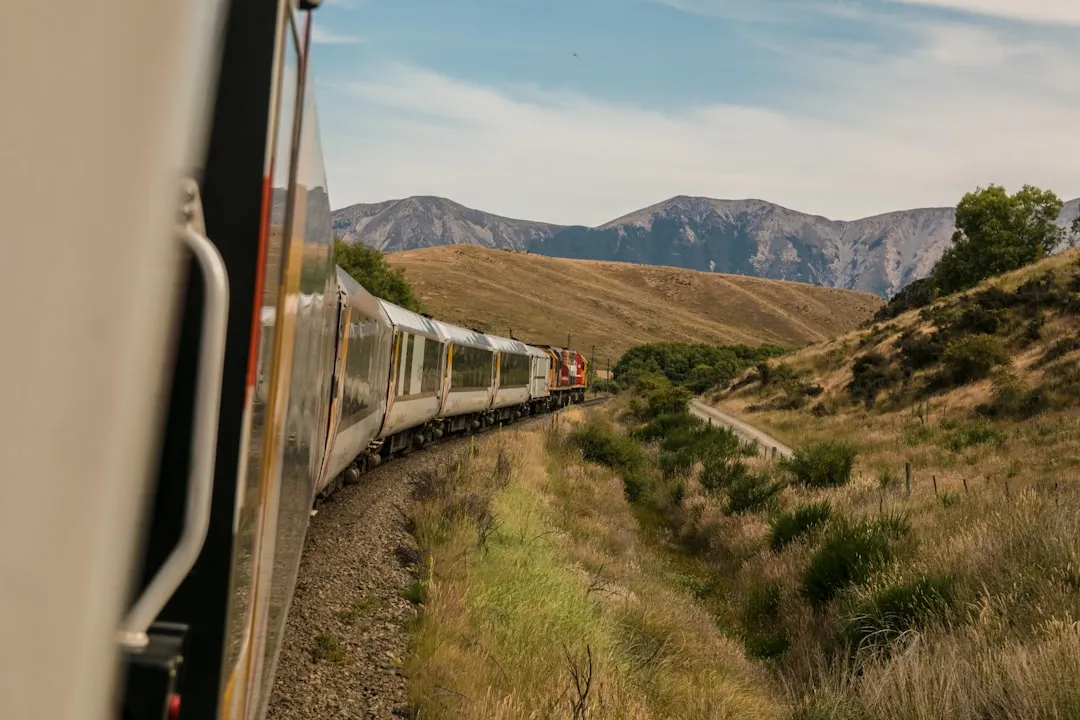
Northbound travel is often the stronger choice for scenery. The route is especially known for the Pacific Ocean views north of Santa Barbara, Mount Shasta in Northern California, and the chance to see Mount Rainier from the right side of northbound trains.
North of Sacramento, the landscape opens into dense pine forests and volcanic peaks. The high-rises fade away into thickly vegetated canyons and creeks, the San Fernando Valley and Burbank glinting in blazing sun as the train pulls clear of the city. Then, gradually, the world quiets into something more elemental.
Mount Shasta, visible for a long stretch of the journey through Northern California, is one of those natural landmarks that makes passengers stop mid-conversation. It looms into view suddenly and stays visible longer than seems possible. That kind of encounter with landscape simply doesn’t happen from 35,000 feet.
The Fleet Is Being Modernized
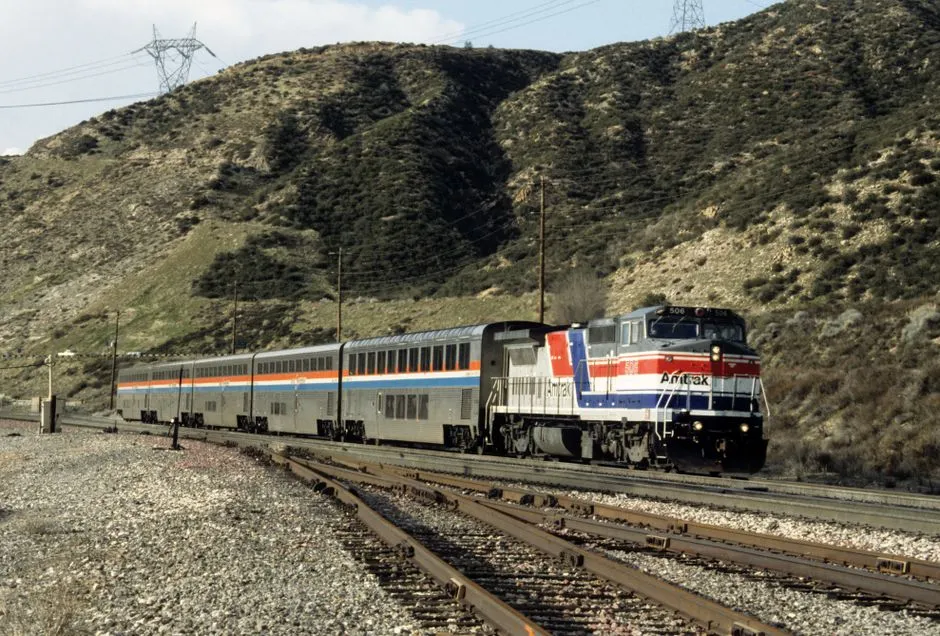
For now, the Cascades fleet is operating with Amfleet I cars pulled in from the Northeast. Amfleet I cars are also nearing retirement age, but in mid-2026, Amtrak is planning to begin rolling out its new Airo trainsets, which will upgrade capacity and service quality.
As of March 2025, Amtrak intends to add a third coach to the Coast Starlight in May 2025, a direct response to rising demand. Amtrak also cited several local improvements, including a new rail yard in Seattle to prepare for the coming Airo train fleet, as well as a new wash facility at King Street Station to boost cleanliness and turnaround times.
Amtrak’s goal is to double ridership to 66 million by 2040, encouraging consumers to reimagine their approach and “Retrain Travel,” providing an unmatched experience by attracting new riders, serving new communities, and transforming passenger rail. The investment trajectory suggests the West Coast corridor will benefit substantially from that ambition.
A Journey Worth the Hours
Railroad travel in America is to be cherished, not forgotten, as it has been by so many millions. Much of the United States is preserved along these lines. The communities the Coast Starlight serves, from the wine country towns of the Central Coast to the timber towns of Oregon, are often invisible from the highway and unreachable by air.
Slow tourism develops cultural appreciation and insight, motivating tourists to delve into the subtleties of local life, while benefiting local economies by channeling tourist expenditure toward smaller enterprises and mitigating the negative effects associated with overcrowded tourism. A train stop is different from an airport. You arrive in the middle of a town, not on its edge.
The Coast Starlight isn’t asking you to sacrifice efficiency for beauty. It’s asking you to reconsider what efficiency means when the whole point is to actually see the country. There’s something clarifying about 35 hours on a train: the coast goes by, the mountains appear and fade, and the journey stops feeling like transit and starts feeling like travel.
AI Disclaimer: This article was created with the assistance of AI tools and reviewed by a human editor.