


It starts before sunrise. Someone slips out of their hotel room, pads quietly down to the pool, drapes a towel over a lounger, and heads back to bed. By the time most guests arrive for a morning swim, the best spots are already “taken.” Nobody is there, but the towels say otherwise.
This ritual, practiced across European and Mediterranean resorts for decades, is now running into a very different reception. Resorts, local councils, and even courts are pushing back, and the consequences are getting real.
The Dawn Dash: How It All Starts

Over recent years, especially as international travel has surged, resorts in popular holiday hotspots have seen a sharp rise in early morning towel reservations. It is not uncommon for guests to arrive as early as dawn to lay down towels on multiple sunbeds, only to leave them empty for hours as they explore the area or have breakfast.
In 2024, reports emerged that guests were heading down to the pool at a Portuguese hotel as early as 1 a.m. to reserve their spots. That is not an outlier. Holidaymakers in Ibiza have reported people putting towels on beds in the middle of the night.
Many travelers find it genuinely frustrating that some people put towels on sunbeds as early as 1 a.m. and then don’t actually use them until past lunch time. The result is a shared space that feels neither fair nor relaxing for anyone who plays by the rules.
The German Tourist Who Took It to Court
David Eggert, 48, claimed his children were left lying on poolside concrete because every one of the 400 sunbeds at his luxury Greek island hotel had been reserved with towels. The pilot, who paid more than £6,200 to take his wife and two children on holiday to Kos in 2024, won a payout after successfully bringing a case against his travel firm.
He claimed he spent 20 minutes a day trying to find a sun lounger despite getting up at 6:00 every morning. Judges at a district court in Hanover granted his family a €900 (£850) refund.
In his arguments to court, he said his tour operator had failed to enforce the resort’s ban on towel reservations. The ruling reignited debate around sunbed etiquette at resorts across Europe, with many travellers sharing similar frustrations online. It sent a clear signal: this is no longer just a social annoyance. It has legal weight.
The Problem Is Bigger Than One Lawsuit

Andrew Mills, from Newcastle, said he “spent most days away from the pool” on holiday in Zante because sunbeds “were all reserved with towels by 6am.” Another holidaymaker said he had recently returned from Antalya in Turkey where the dawn reserving of sun loungers had “really taken the shine out of the holiday.”
The practice effectively blocks other holidaymakers from using sunbeds, leading to overcrowding and sparking disputes among guests. In some cases, tensions have escalated into verbal arguments and crowded scenes, detracting from the relaxing atmosphere tourists expect.
Spain attracted a record-breaking 94 million visitors in 2024. A substantial number headed to its beaches, which get very crowded in high season. One report revealed that Spain is home to eight of the top ten most crowded beaches in Europe, calculated by average towel space per person. With numbers like that, every lounger genuinely counts.
Spain Cracks Down with Real Fines

Reserving beach spots with towels or umbrellas can cost up to €750 in Benidorm and €300 in Malaga. These aren’t empty threats printed on hotel noticeboards. They are enforceable municipal laws backed by local authorities.
In Calpe, Alicante, beach hoggers are fined for placing sunbeds, towels, and umbrellas to reserve spots before breakfast. The City Council reaffirmed a local law that beach gear cannot be put down before 9:30 a.m., as it hinders beach cleaning services. Authorities have threatened to remove all such items and take them to a municipal depot where owners have to pay to retrieve them, on top of facing a fine.
In Malaga, culprits could be charged €300 for the offense plus an extra €50 to retrieve their items. Elsewhere, fines can reach anywhere between €750 and €3,000 in places like Valencia, Benidorm, Gandia, and Cullera. That is a steep price for a poolside seat.
Resorts Introducing Their Own Policies

Amàre Beach Hotel Ibiza has introduced a strict no-reservation policy for sunbeds. After 30 minutes of not using a sunbed, towels and guest belongings are removed and saved for later collection.
Hotel Garbi Ibiza and Spa states that sun beds cannot be reserved and that there is a limited number of them. Pool staff are authorised to remove towels if guests do not use the sun bed for a long period of time.
At the St George Beach Hotel and Spa Resort in Paphos, Cyprus, an allocation system is in place, described as “brilliant” by at least one guest. Upon check-in, guests are allocated a sunbed by pool attendants, taking current availability into consideration. It’s a simple, sensible approach that removes the scramble entirely.
The Horn That Changes Everything
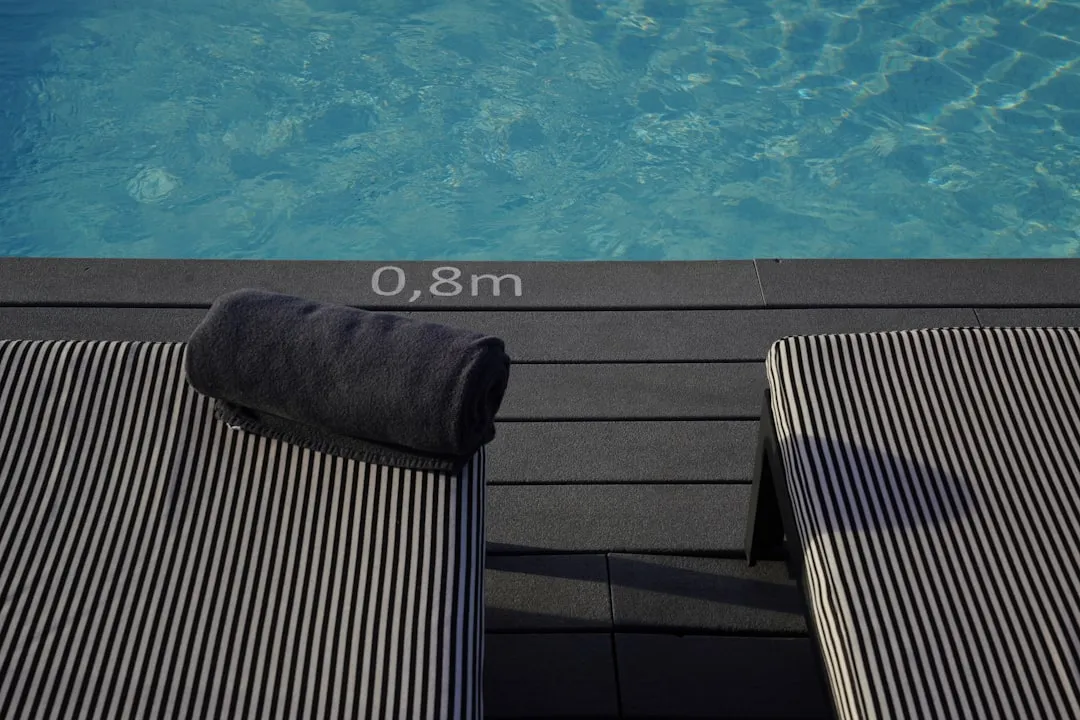
One holidaymaker visiting camps on the Mediterranean coast in France told the BBC that staff regularly check unused loungers. Twice a day they sound a horn, and if guests are not at the lounger, all items are removed to lost property.
It sounds almost theatrical, but it works. The policy removes the ambiguity that usually allows towel hogging to thrive. Many hotels have signs saying sunbeds cannot be reserved but do nothing to actually enforce their rules. The horn system closes that gap decisively.
Management at one resort near Playa del Duque in Tenerife told Travel and Tour World that staff are now removing unattended items from poolside areas after a 15-minute grace period, a policy inspired by similar rules in Mallorca and the Canary Islands. Fifteen minutes. That is how quickly the calculus has shifted.
Tenerife’s Towel Wars Go Viral

Tenerife, long known for its sunshine, beaches, and all-inclusive resorts, has found itself at the center of an increasingly frustrating tourism trend. During the 2025 holiday season, reports and viral videos emerged of tourists attempting to reserve sunbeds even before pool loungers were placed out, triggering a wave of backlash from fellow guests and resort managers alike.
In scenes more reminiscent of a social experiment than a vacation, tourists in Tenerife have been spotted placing towels, bags, and flip-flops directly on concrete floors beside empty pools, sometimes as early as 6 a.m., before hotel staff even arrive to set up the loungers.
The Canary Islands received over 13 million visitors in 2024, and the pressure on shared spaces that comes with those numbers is very visible. Several resorts have posted new signage banning sunbed reservation unless guests are physically present, while others are considering wristband allocation systems and designated pool access times to curb the chaos.
Greece Moves to Protect Its Coastline

Greek beaches are set to look noticeably different, with new regulations proposed by the Greek government aimed at making beaches more accessible to the public. They also make it harder for hotels to cover public beaches entirely with sunbeds.
Under the new framework, 70% of the space on any beach must be free of sunbeds. In certain protected areas, that increases to 85%. In ecologically sensitive areas, sunbeds will be banned completely.
This is a different angle on the same core problem: access. When commercial and personal sunbed culture dominates a beach, not everyone gets a fair share of what is supposed to be a public resource. Greece is addressing this at the regulatory level, and the direction of travel is clear.
What Guests Actually Want: Allocation Systems

One hotel in the Cypriot resort of Protaras is described as “very strict” in enforcing a policy of “sunbed tenants,” allowing guests to reserve a lounger for the whole holiday while informing the hotel if they wish to change spot. Colin Davison, 73, from Newcastle-upon-Tyne, said a similar sun lounger allocation system in place at a resort in Paphos, Cyprus, had been “brilliant” when he visited.
At one hotel in Cyprus, parasols are numbered and allocated by the hotel at the beginning of the holiday, one per two guests. A family of four receives two parasols and four sunbeds accordingly. It is transparent, predictable, and stress-free for everyone involved.
At one Cannes hotel, there are 350 rooms for a maximum of 275 sunbeds during high season, making it impossible to accommodate everyone simultaneously. The hotel prioritizes reservations and operates on a strict first-come, first-served basis. Honest capacity management, clearly communicated, turns out to be something guests genuinely appreciate.
Why This Habit Is Losing Its Social License

The optics of sunbed-hogging incidents have damaged the image of mass tourism, reinforcing negative stereotypes about entitled tourists and their lack of respect for shared spaces. Tenerife’s sunbed wars are part of a broader discussion around responsible travel behavior, especially in Europe’s most visited resort towns.
The rules in places like Barcelona and Costa Blanca were introduced following numerous complaints about sunbeds being reserved for hours with no one in sight. Public frustration, not just policy, is what is driving the change.
Hotels and resorts are stepping up efforts to stop guests reserving sun loungers with towels, and the debate around sunbed etiquette across Europe has been reignited, with many travellers sharing similar frustrations online. The conversation has moved well beyond etiquette guides and Reddit threads. Courts, councils, and hotel management teams are now setting the terms.
The Takeaway

The towel-on-sunbed habit isn’t disappearing overnight, but the environment around it has shifted considerably. What was once a universally tolerated quirk of resort culture is now meeting fines, removal policies, formal allocation systems, and even courtroom rulings.
The direction is consistent across Spain, Greece, Cyprus, France, and beyond: shared spaces require shared accountability. Resorts that treat their poolside areas as a commons worth protecting are finding that guests respond well, not with complaints, but with relief.
The early morning dash for a lounger was never really about securing comfort. It was about anxiety: the fear of missing out. Better systems remove that anxiety for everyone. And that, more than any fine or horn blast, is what makes the change worth welcoming.
AI Disclaimer: This article was created with the assistance of AI tools and reviewed by a human editor.