
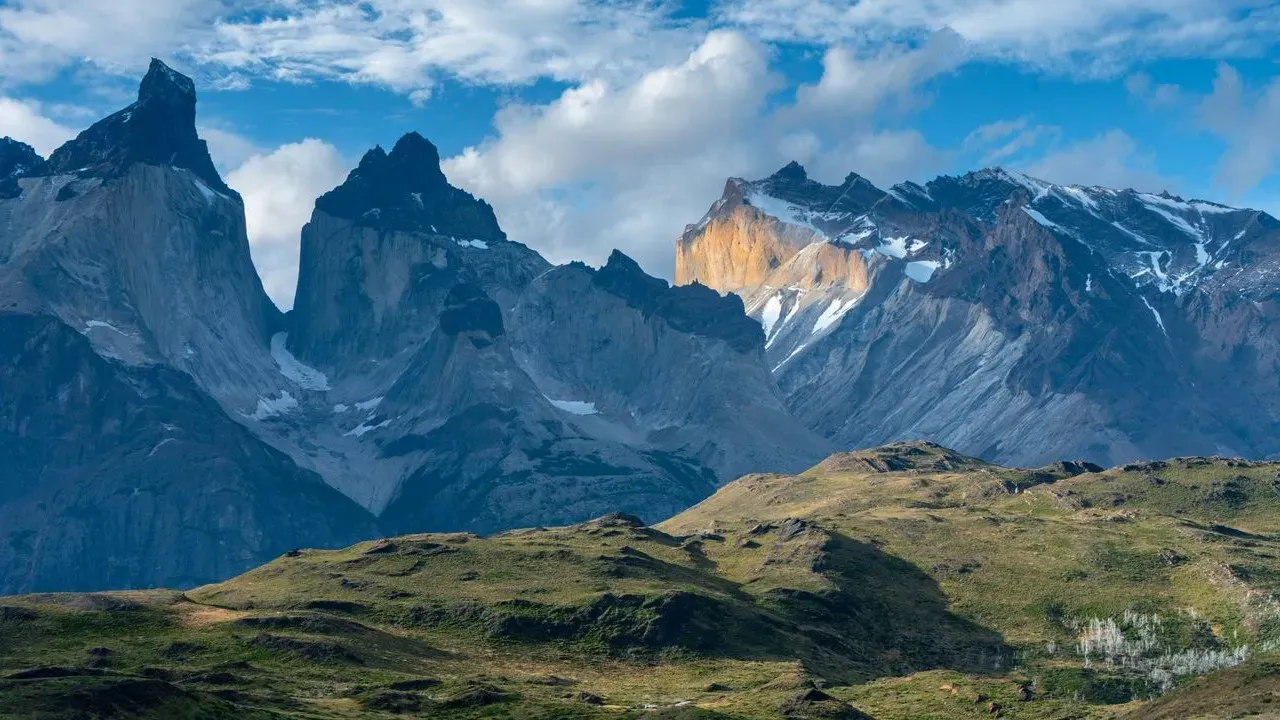

In the vast expanse of Chilean Patagonia, Torres del Paine National Park stands as a place where the landscape commands attention from the first moment it comes into view. The three granite towers that give the park its name rise sharply from the surrounding terrain, their sheer faces catching the light in ways that shift with every passing hour. Travelers often describe the initial sighting as a pause in motion, a point where the journey’s purpose becomes clear amid the windswept steppe and turquoise lakes.
The Signature Granite Formation
The three towers form the park’s most recognizable feature, sculpted over millennia by glacial activity and erosion. Their vertical profiles dominate the skyline, offering a geological record of the region’s dramatic past. Visitors who arrive by road frequently catch their first clear view from open stretches of the park’s main routes, where the towers appear framed against the sky. This sightline rewards patience. Weather in Patagonia changes quickly, and clear days reveal the full height and texture of the granite. The towers anchor the park’s identity, drawing people who seek both the scale of the landscape and the quiet that settles once the wind eases.
Accessible Roadside Overlooks
Several viewpoints require little more than pulling over at designated pullouts along the park roads. These miradors provide immediate perspectives on the towers and the lakes that reflect them, making the landscape available to a wide range of visitors. No extended walking is needed, yet the views remain expansive and unobstructed. Such stops fit naturally into a day of exploration. They allow time to absorb the surroundings without rushing, supporting a slower pace that aligns with the park’s conservation goals. Many travelers return to these same points at different times of day to notice how the light alters the color of the rock and water.
Views Along the W Trek
The W Trek offers a structured way to reach elevated lookouts that reveal the towers from new angles. Sections of the route lead to platforms and ridges where the full arrangement of peaks, valleys, and glaciers becomes visible. Access to these points typically involves multi-hour walks on well-marked trails, with some segments taking four to six hours round trip depending on starting points and pace. The trek passes through varied terrain that includes forests and open meadows, giving context to the towers’ isolation. Hikers often time their arrival at key overlooks for early morning or late afternoon, when shadows emphasize the rock formations. This approach encourages preparation and respect for the environment, including proper waste management and staying on designated paths.
Planning a Respectful Visit
Practical details matter when entering the park. Entry permits and transportation arrangements should be secured in advance, especially during peak seasons. Local operators provide guidance on trail conditions and weather forecasts, helping visitors make informed choices that minimize impact. – Carry sufficient water and layers for sudden temperature shifts.
– Follow all posted regulations regarding camping and fires.
– Support park efforts by using established facilities and reporting any concerns to rangers. These steps contribute to the long-term protection of the area’s ecosystems and the communities that border the park. The towers remain a lasting reference point for anyone who has stood before them. Their presence invites continued attention to the broader landscape and the care required to keep it intact for future travelers.
AI Disclaimer: This article was created with the assistance of AI tools and reviewed by a human editor.