
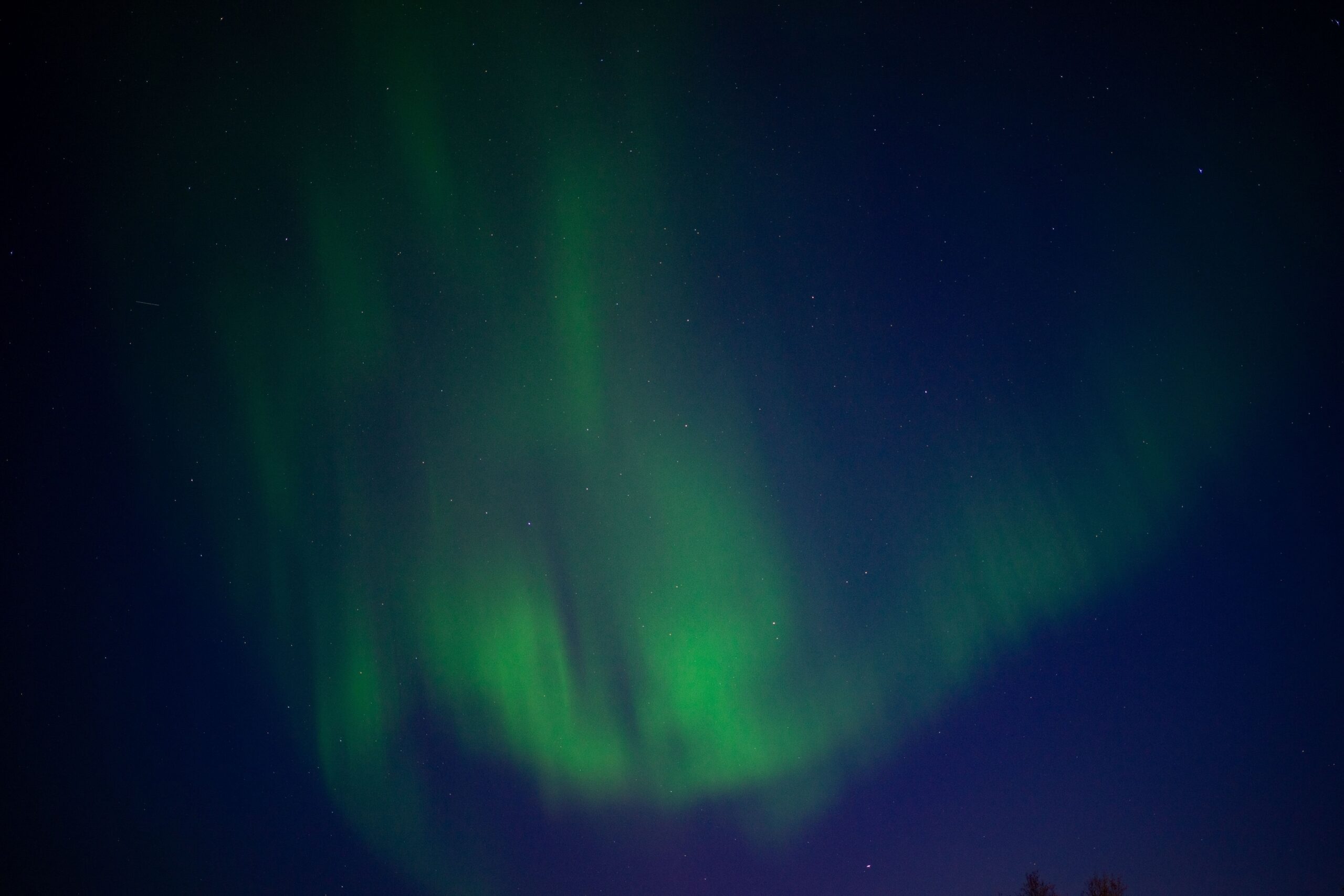

The City That Sits Under the Auroral Oval
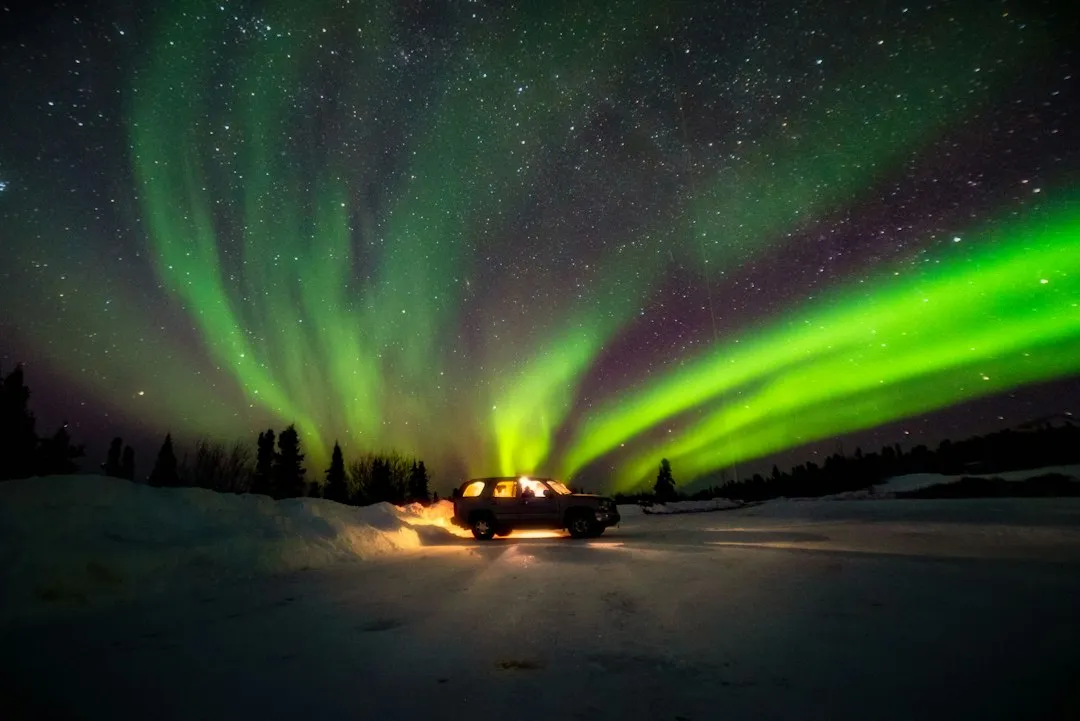
Alaska is typically considered the best place in the United States to view the northern lights, and Fairbanks sits directly under the auroral oval, a band that hugs the polar region where auroras are most concentrated. This positioning is everything. It’s the single geographic fact that separates Fairbanks from every other American city.
Fairbanks sits at 64.8°N latitude, directly beneath the auroral oval, making it the best place in Alaska, and in the continental United States, to see the northern lights. The oval is essentially the sweet spot of aurora activity, a ring-shaped zone around Earth’s magnetic north pole where charged solar particles concentrate and collide most intensely with atmospheric gases.
You need only a Kp of 2 to 3 for visible aurora overhead in Fairbanks, compared to a Kp of 6 to 7 needed for Colorado or Ohio. In plain terms, almost any moderate solar activity produces a show in Fairbanks. In most of the lower 48 states, only the most powerful geomagnetic storms ever reach the sky.
More Than 200 Aurora Nights Per Year
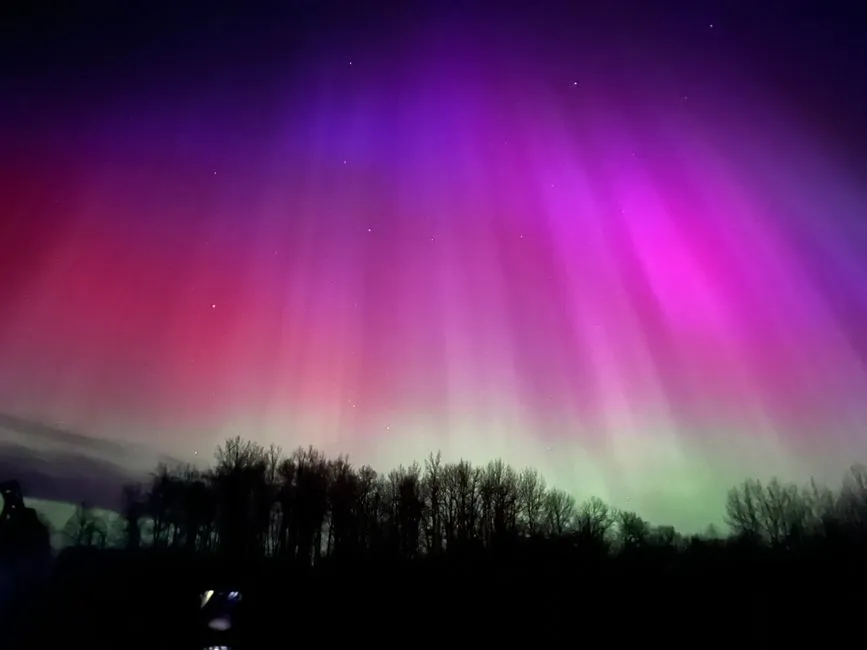
Alaska is the best place in the United States to see the northern lights, and Fairbanks is widely recognized as the global capital of aurora tourism, seeing more than 200 aurora displays per year. That number is worth pausing on. More than 200 nights in a single year where the aurora is visible, assuming clear skies.
Fairbanks is the undisputed aurora capital of North America, sitting at 64.9° magnetic latitude inside the auroral oval and seeing aurora on over 200 nights per year. No other city in the United States comes remotely close to that frequency.
Fairbanks’s official aurora season runs from August 21 to April 21, and the aurora is visible on an average of four out of five nights when the sky is clear and dark enough. That eight-month season, combined with a four-in-five clear-night success rate, is what separates Fairbanks from every other aurora destination in the country.
The 90% Statistic Explained
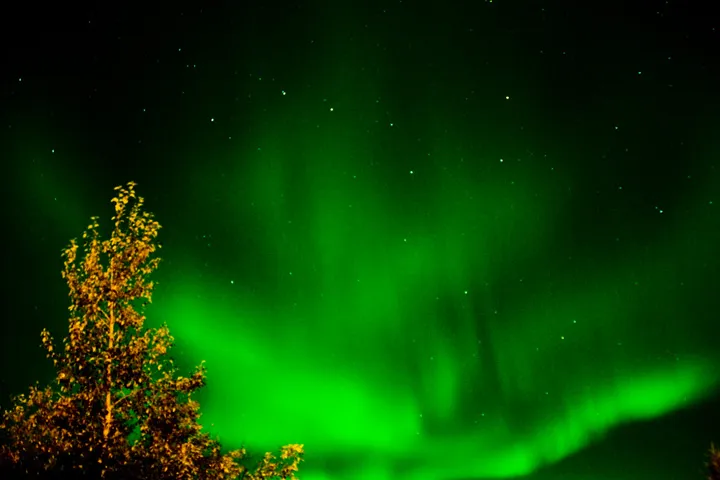
The widely cited industry statistic holds that visitors who stay at least three nights in Fairbanks and actively go out viewing each night have a 90 percent or better chance of seeing the northern lights. This is a real number backed by decades of data from the University of Alaska Fairbanks Geophysical Institute.
The three-night, 90 percent statistic is accurate for seeing some aurora, though it’s worth noting that this includes a barely visible pale green band that a camera might register but the eye struggles to capture. For a truly memorable display, longer stays pay off considerably.
Five to seven nights dramatically increases your chances of witnessing the kind of display that stops you in your tracks. Aurora visibility depends on solar activity, weather, and darkness levels, and during aurora season with clear skies and moderate-to-active conditions, some level of aurora activity is possible four to six nights out of seven.
Why the Climate Works in Fairbanks’s Favor
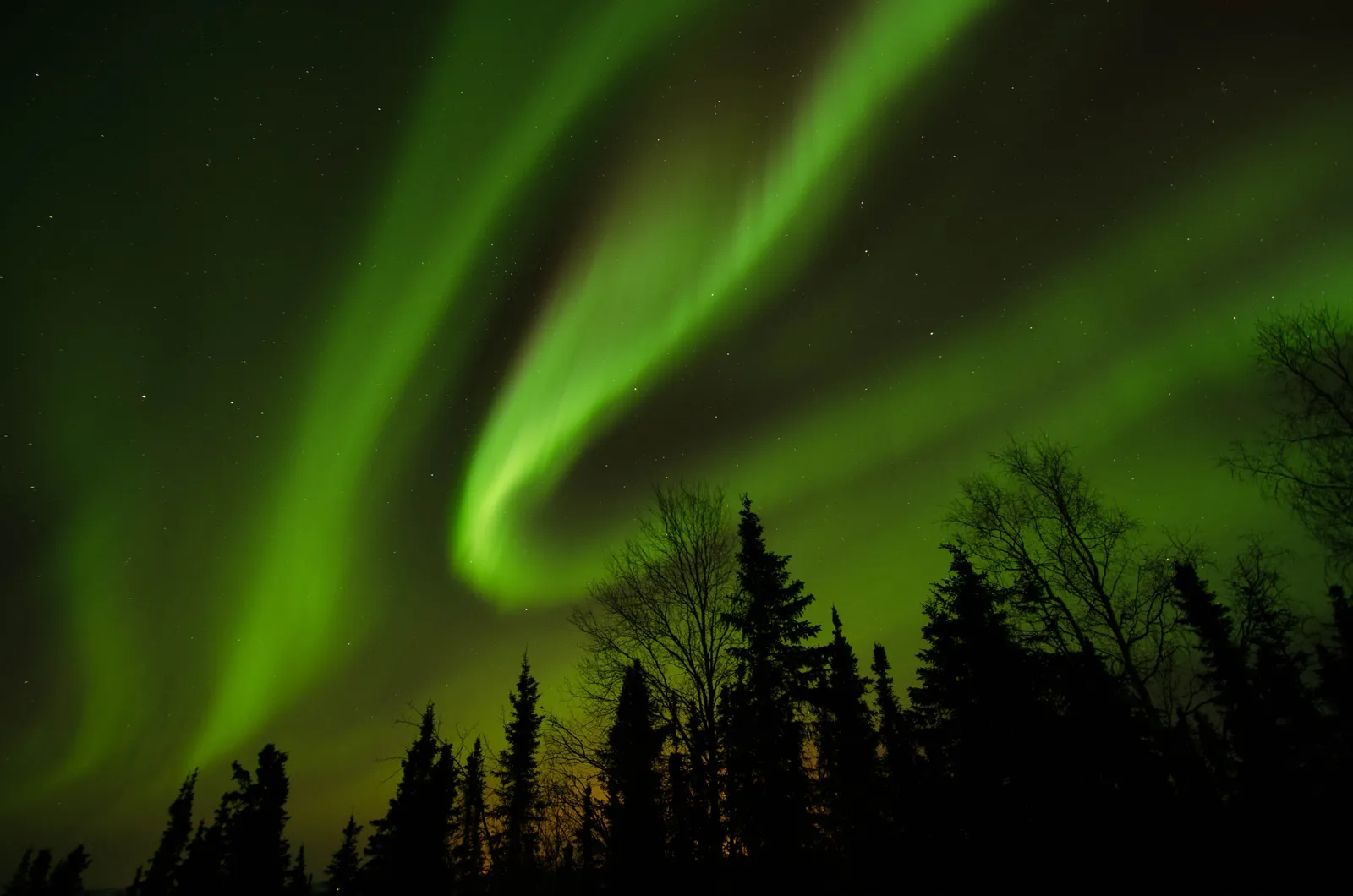
Fairbanks’s interior continental climate, shielded from Pacific moisture by the Alaska Range, produces remarkably dry conditions with only 270 mm of annual precipitation, which translates directly to clear nights, with Fairbanks averaging approximately 240 clear nights per year.
Fairbanks wins decisively over Anchorage for aurora viewing. Three degrees of latitude makes a meaningful difference when it comes to the auroral oval, and Fairbanks also has lower average cloud cover during winter than Anchorage, which tends toward overcast coastal weather.
Fairbanks offers statistically better weather for aurora viewing than Reykjavik, particularly in March, when the Alaska city experiences clear skies around 45 percent of the time, compared to about 25 percent for the Icelandic capital. That comparison matters because Reykjavik is one of the most popular aurora destinations on the planet.
January and March: The Peak Months
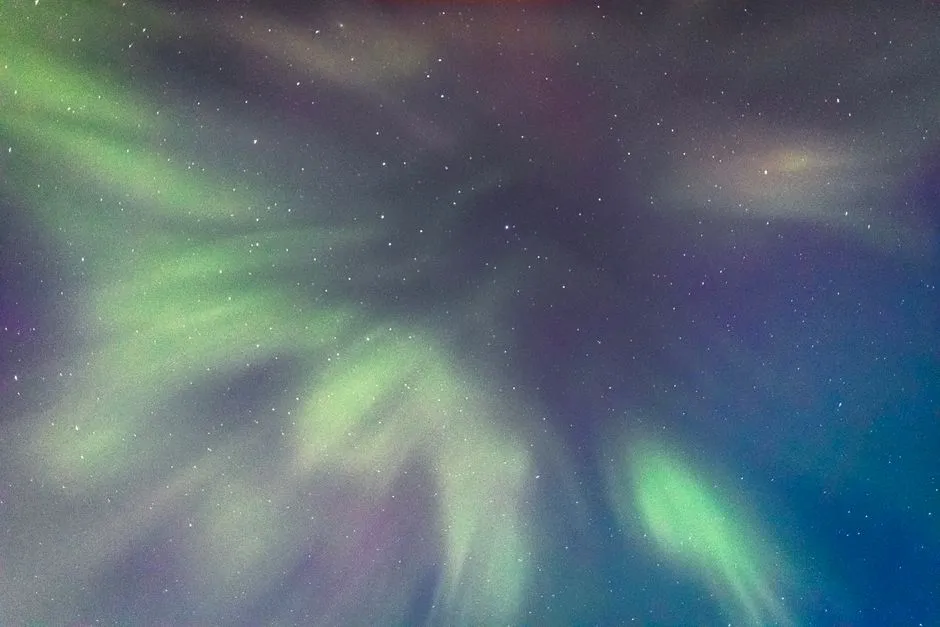
Fairbanks records aurora on roughly 44.9 clear nights in a typical year at Kp 2 or higher, with January being the best single month at 8.84 clear aurora nights. January delivers the longest nights, with well over 12 hours of astronomical darkness, giving the aurora ample opportunity to perform.
For most visitors, February and March balance aurora frequency, manageable cold, and the breathtaking snow-covered boreal landscape. The shoulder months offer a slightly more accessible experience while still delivering consistent displays.
From the end of August to the beginning of April, the auroras light up the skies, with the clearer skies of March often providing the most perfect conditions. The equinox period in March also brings a natural enhancement to geomagnetic activity, a well-documented phenomenon that aurora researchers refer to as the Russell-McPherron effect.
The Solar Cycle Advantage in 2025 and 2026
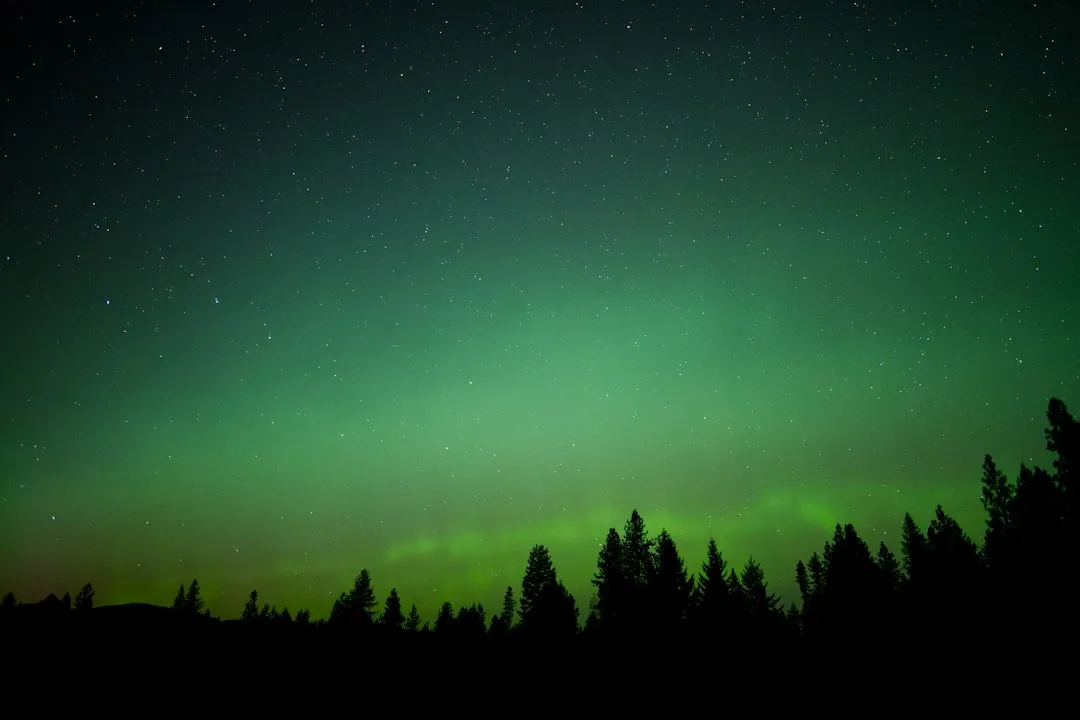
Solar cycle 25 is at or near its peak in 2026, which means the auroral oval is pushed further south than it has been in over a decade, with places like Fairbanks producing near-nightly displays in favorable conditions. This is, objectively, a remarkable window of time to visit.
Fairbanks sits under the aurora oval, so aurora activity is visible here in any year; the solar cycle affects how often the big displays come, not whether the lights appear at all. Even in quieter years, Fairbanks delivers. In an active solar maximum year, the scale of what’s possible expands considerably.
The May 2024 G5 geomagnetic storm produced visible aurora across the entire continental United States, including Florida, Texas, and southern California, and even reached as far as the Yucatán and Puerto Rico. That event was exceptional. In Fairbanks, the display that same night would have been one of the most powerful most residents had ever seen.
Cleary Summit, Murphy Dome, and the Art of Getting Dark
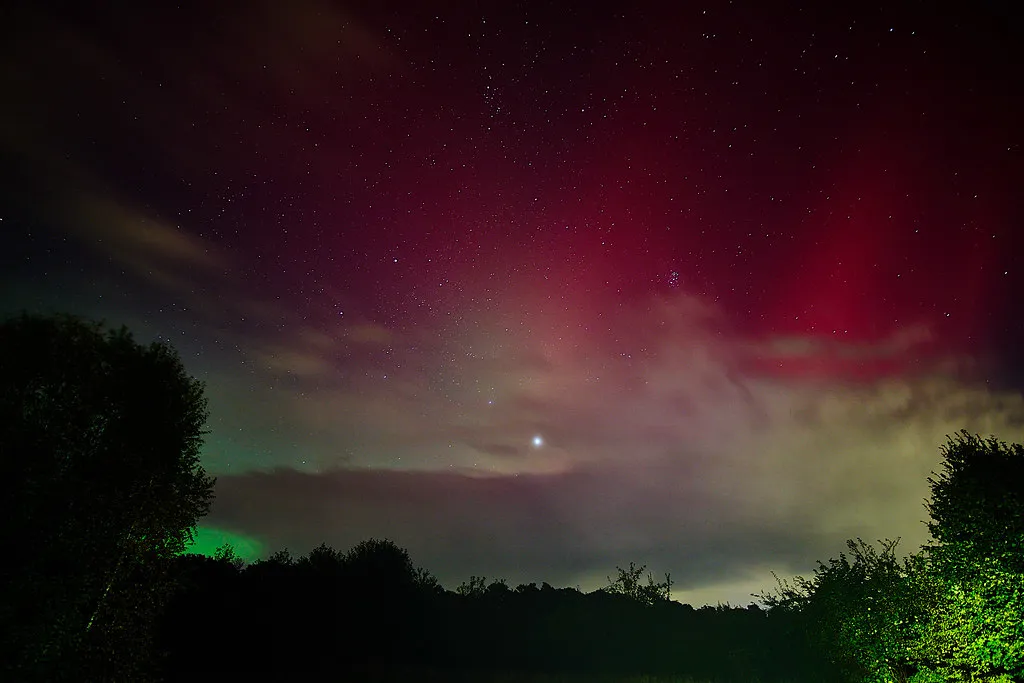
Light pollution from downtown Fairbanks competes with weaker aurora displays, so most serious viewers drive 10 to 30 miles from the city center to darker skies. Getting out of town is half the strategy, and the terrain around Fairbanks makes it relatively straightforward to do.
Cleary Summit is a long-standing favorite of Fairbanks locals because you can see aurora from horizon to horizon, including low-arc events that would be blocked by trees at lower elevations. Access is free, but it requires winter driving on a two-lane highway.
Murphy Dome Road sits at 900 meters of elevation with 270-degree open sky access, and the dome rises above the surrounding boreal forest to offer unobstructed views in most directions. Other reliable spots include North Pole, Chena River State Recreation Area, and the Dalton Highway heading north toward Coldfoot and beyond.
Chena Hot Springs: Watching the Lights in Thermal Water
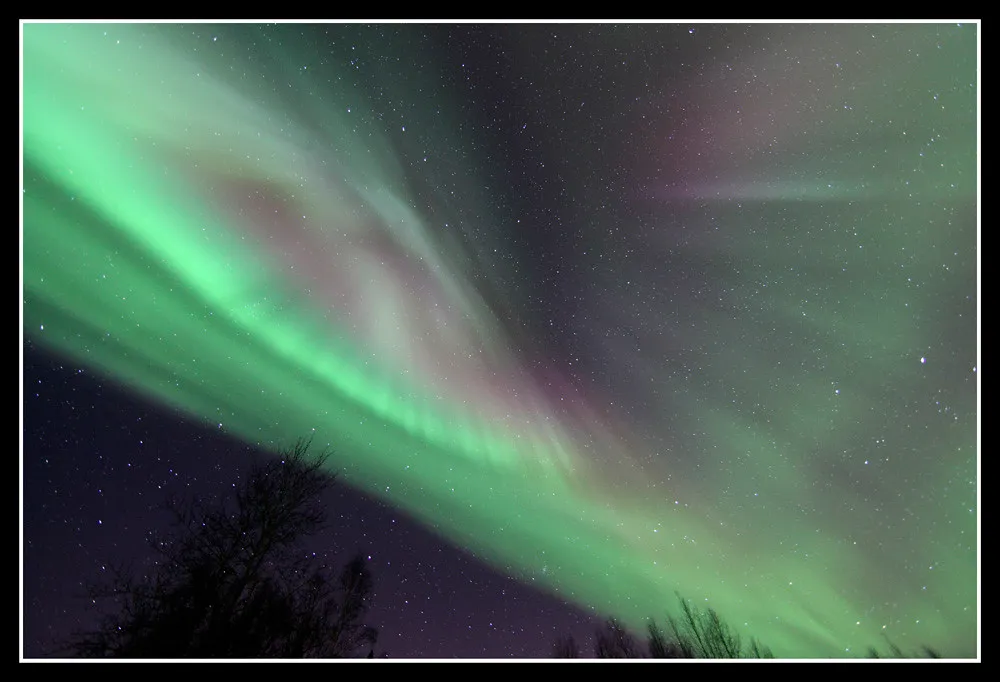
Chena Hot Springs Resort sits 60 miles east of Fairbanks and is one of the most popular overnight destinations from the city. The geothermal springs feed natural hot pools that operate year-round, and soaking in 106°F water while watching aurora overhead is one of the more memorable Alaska experiences available.
The resort’s outdoor geothermal pools, maintained at 38 to 40°C, allow guests to soak outdoors in minus 30°C air while aurora dances overhead, with an unobstructed 270-degree sky view above the open hot spring pond. It sounds theatrical, but it’s genuinely one of the most practical ways to spend a long aurora night in serious cold.
The resort also offers aurora alert services that wake sleeping guests when the lights appear, along with aurora tours, an ice museum, and dog mushing experiences in winter. For travelers who want their aurora experience to be warm, guided, and built around the natural landscape rather than despite it, Chena is the answer.
The Science Behind the Lights
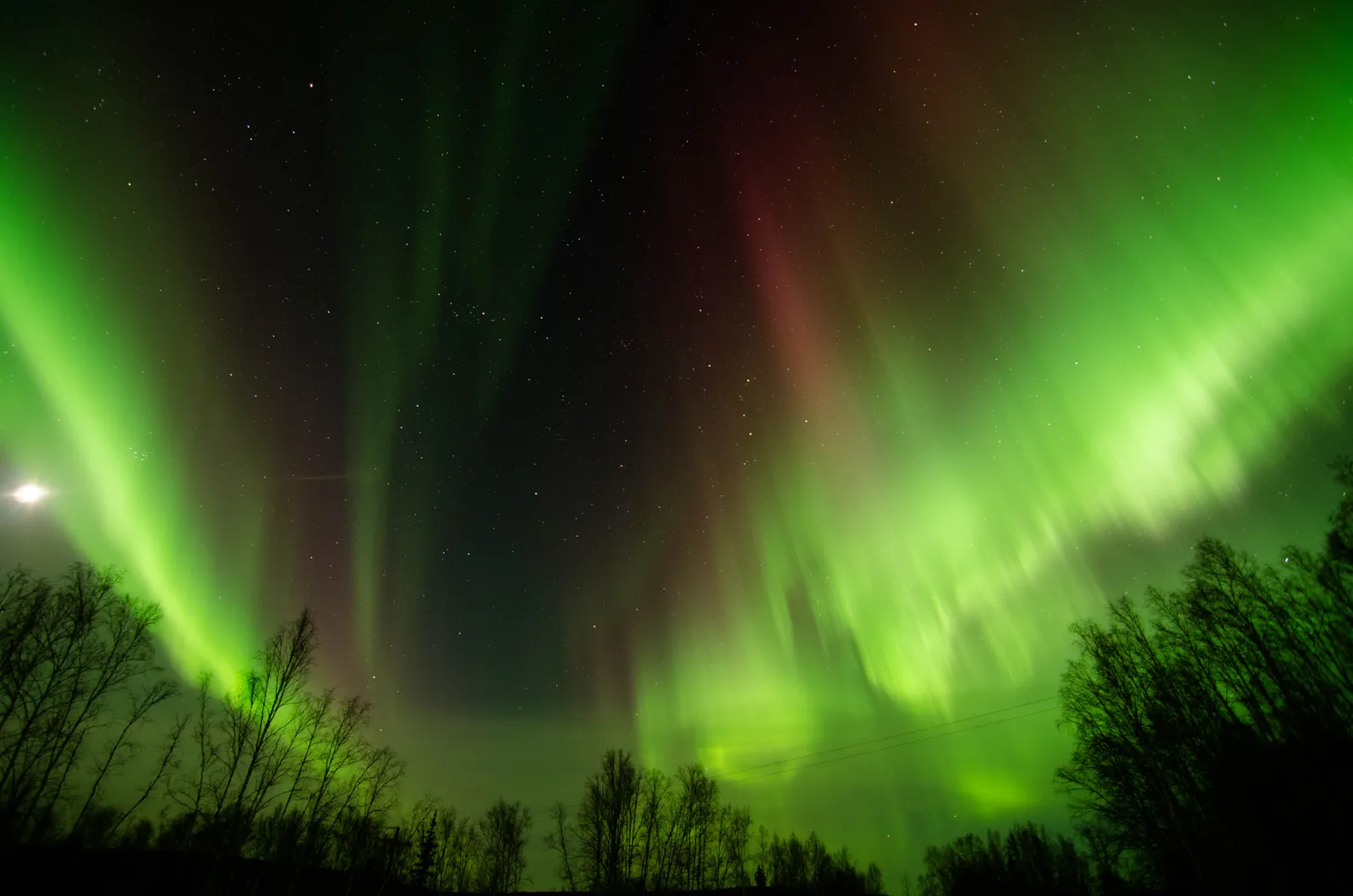
In the Northern Hemisphere, the aurora’s most active zone, the auroral oval, sits around the north magnetic pole at about 74 degrees north latitude, and the closer you are to that oval, the more often you see the lights and the brighter they appear. Fairbanks’s position at 64.8°N puts it directly within the oval’s most active corridor.
NOAA’s Space Weather Prediction Center issues three-day forecasts based on observed solar activity, and the University of Alaska Fairbanks Geophysical Institute provides aurora forecasts specific to Alaska. Real-time data from local magnetometers and cameras means visitors can plan their evening with something close to genuine precision.
The Kp index measures geomagnetic activity on a scale of 0 to 9, and in Fairbanks, a Kp of 3 or above means decent odds, while a Kp of 5 or above produces strong activity visible further south toward Anchorage. Watching that number tick up on a forecast app becomes oddly addictive after your first night out.
How Fairbanks Compares to Other US Aurora Spots
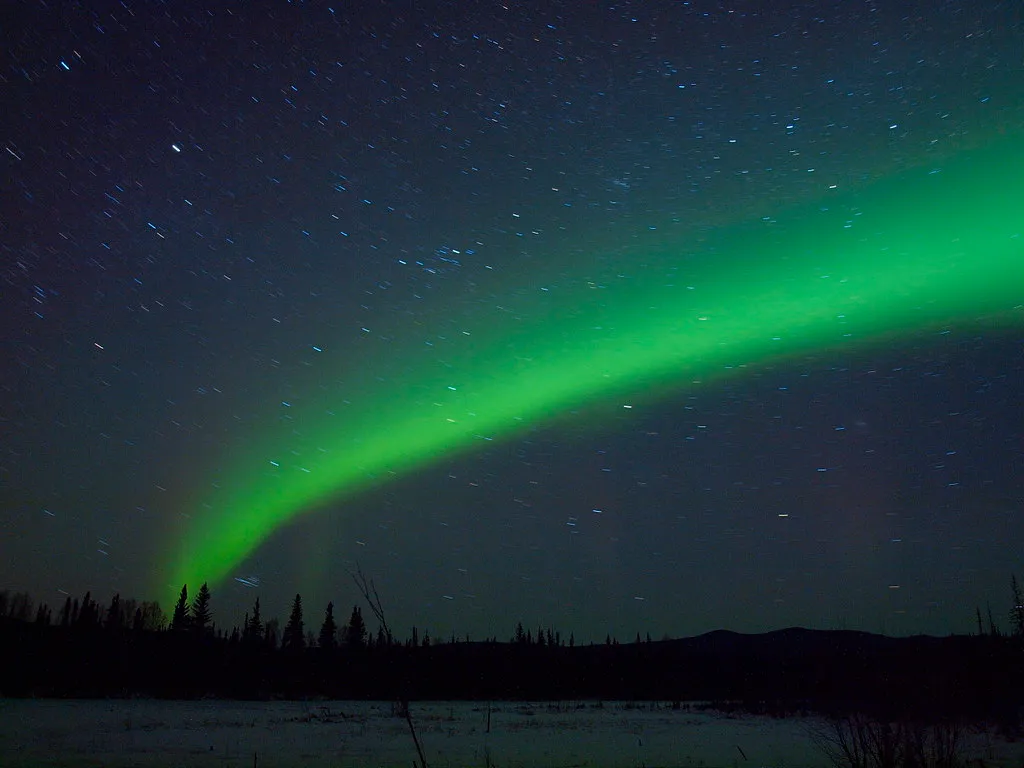
The best aurora locations in the lower 48 states, including Minnesota’s Boundary Waters, Michigan’s Keweenaw Peninsula, and Maine’s Aroostook County, require a Kp of 5 or above for a decent show and have far fewer clear nights overall. These are genuinely worthwhile destinations, especially during active solar periods.
Headlands International Dark Sky Park in Michigan is regarded as one of the top spots in the US to see the aurora outside of Alaska, sitting at the top of Michigan’s lower peninsula less than 5 miles from Mackinaw City. On a strong solar night, it delivers. It simply can’t compete with Fairbanks on frequency or consistency.
No other US location comes close to Fairbanks’s reliability. The combination of latitude, continental climate, minimal cloud cover during peak aurora months, and direct positioning under the auroral oval creates a set of conditions that simply don’t exist anywhere else in the country.
The Takeaway

Fairbanks isn’t the most famous city in America, and it’s not trying to be. What it offers is something more specific: a genuine, repeatable, science-backed opportunity to witness one of the natural world’s most extraordinary phenomena. Fairbanks is North America’s best city for aurora viewing, positioned directly under the auroral oval at geomagnetic latitude 65°N, where a Kp of just 2 is sufficient for displays.
For travelers who want the northern lights without the uncertainty that defines aurora chasing elsewhere, Fairbanks changes the calculation entirely. The cold is real, the darkness is deep, and the commute to a dark-sky site takes about 20 minutes. The season runs from mid-August through late April, longer than almost anywhere else in the world.
Spending a week in Fairbanks under a solar maximum sky in 2026 might be, quite simply, the most reliable aurora experience available on the planet right now, without leaving American soil.
AI Disclaimer: This article was created with the assistance of AI tools and reviewed by a human editor.