
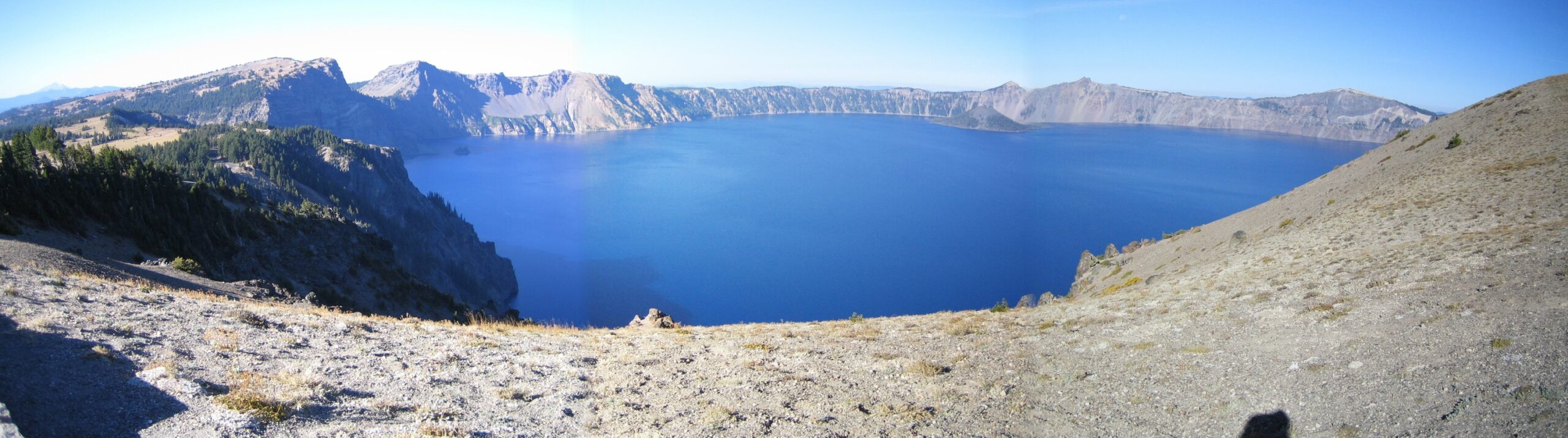
A Number That Stops You in Your Tracks
Crater Lake reaches a maximum depth of 1,949 feet, making it the deepest lake in the United States. The Grand Canyon, by comparison, attains a depth of over a mile, or 6,093 feet, from its highest rim to the Colorado River below. That sounds like the canyon wins, until you realize the comparison being made here is different.
The Grand Canyon is measured from its highest rim down to the river. But Crater Lake’s depth is measured straight down through water, below the lake’s surface. The Grand Canyon averages approximately 4,000 feet deep along its length, and Crater Lake’s 1,949-foot depth exceeds that average by nearly half again. The lake is deeper than the Grand Canyon is tall in most of the places where visitors actually stand and look down.
Born from a Catastrophe
The lake is located within a volcanic caldera in the Cascade Range and was formed approximately 7,700 years ago after the eruption and collapse of Mount Mazama. The violence of that event is almost impossible to picture from the peaceful shoreline of today.
This climactic event was more than forty times as powerful as the eruption of Mount St. Helens in 1980. The huge volume of magma removed during the eruption left a massive void in the magma chamber beneath the mountain, and soon after the initial blast, Mount Mazama collapsed, leaving an enormous crater more than 1,200 meters deep. What remained became one of the most stunning geological features on Earth.
How the Lake Filled
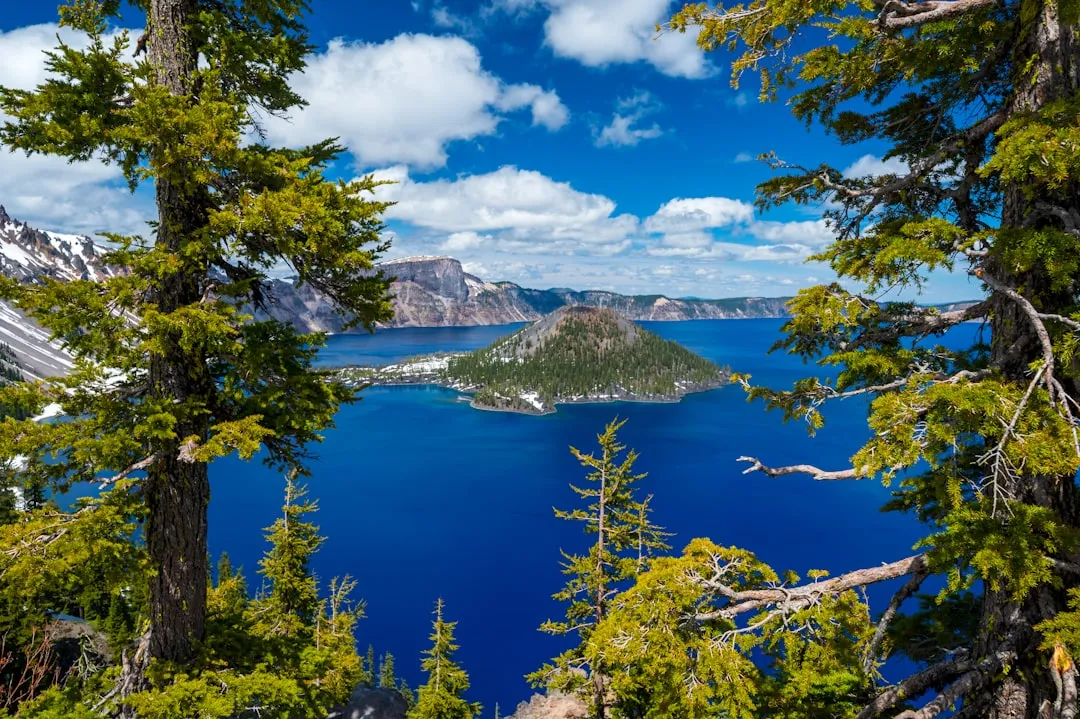
Over the next 250 years, this crater filled with rain and snowmelt to create Crater Lake. There are no rivers feeding into it and no rivers flowing out. Crater Lake has no streams flowing into or out of it, and all water that enters the lake is eventually lost from evaporation or subsurface seepage.
The yearly average snowfall on Crater Lake, as of 2020, is 42 feet with an average yearly precipitation of 67 inches. That snowfall and rain are the lake’s only source of water, which turns out to be one of the reasons the water is so remarkably pure. The total amount of water is replaced roughly every 150 years.
The Blue That Scientists Still Marvel At
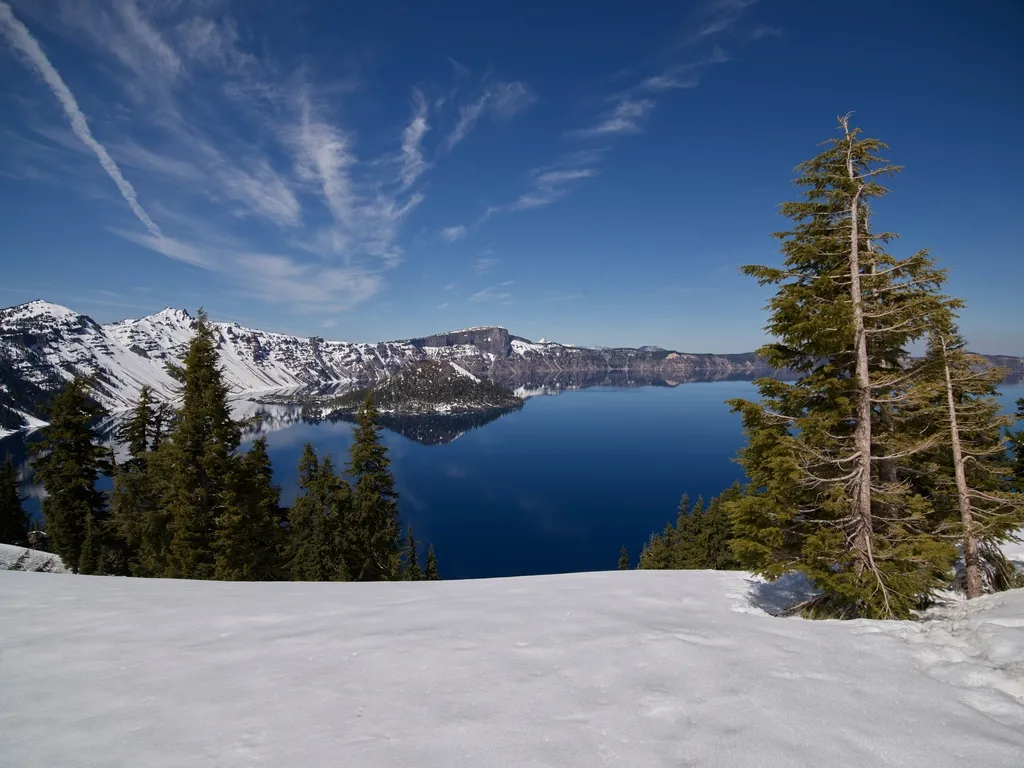
Scientists say the famous color is a combination of the lake’s depth, purity of water, 100-foot clarity, and water molecules’ interaction with sunlight. It’s not a static shade, either. The hue can vary each day depending on wind, cloud cover, and the angle of the sun.
Water molecules absorb the longer wavelengths of reds, oranges, yellows, and greens, while the shorter blue wavelengths are more easily scattered and then redirected back up to the surface where we can see them. Crater Lake has some of the purest water known due to the general lack of organic nutrients, and it holds the world record for clarity. That record is not just a poetic claim. It’s backed by scientific measurement.
Where It Ranks Globally
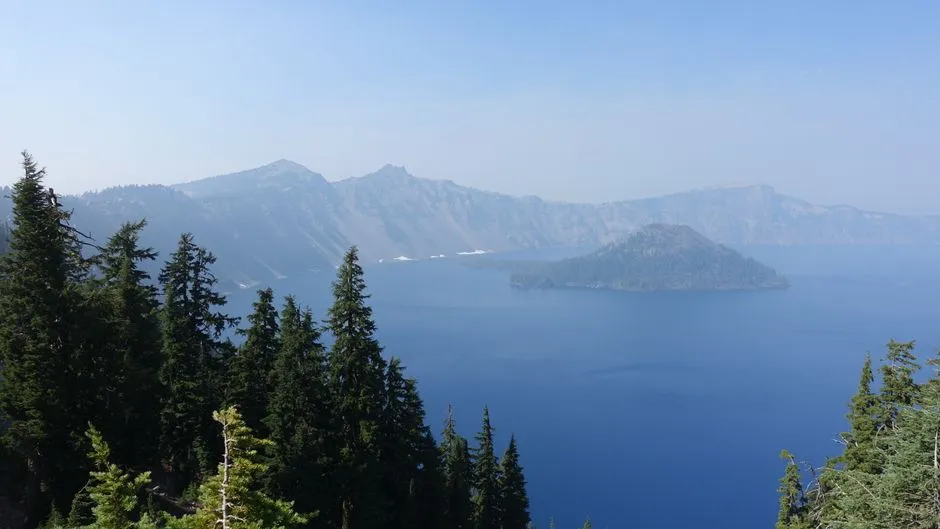
Crater Lake has a maximum depth of 1,943 feet, making it the deepest lake in the United States and the seventh deepest in the world by maximum depth measurements, depending on which survey data is used. The rankings shift slightly depending on the measure applied.
When comparing its average depth of 1,148 feet to the average depth of other deep lakes, Crater Lake becomes the deepest in the Western Hemisphere and the third-deepest in the world. That’s a remarkable distinction. On the basis of average depth, it outperforms nearly every other lake on the planet, including much larger ones that have shallower areas diluting their numbers.
The 2000 Sonar Survey That Settled the Debate
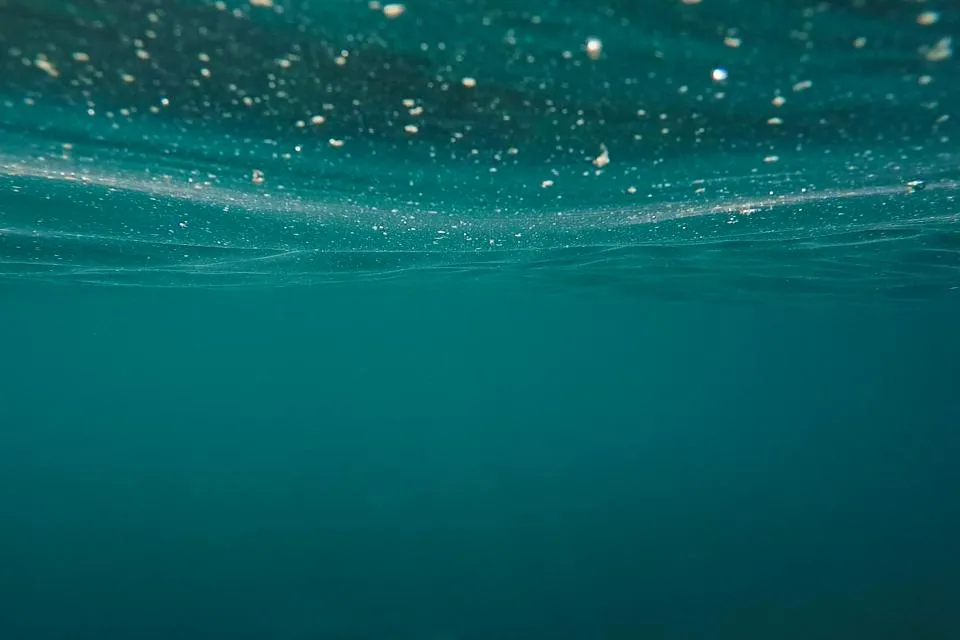
Underwater mapping of the lake in 2000 established a maximum depth of 1,943 feet. Earlier measurements had actually recorded a slightly greater depth using much cruder methods. A maximum lake depth of 1,996 feet was recorded by a group of USGS representatives in 1886 using piano wire lowered into the lake, which shows how seriously scientists took this place even in the 19th century.
The 2000 survey used multibeam sonar technology and produced a far more precise picture of the lake floor’s shape and contours. That survey remains the scientific foundation for the depth figures cited by both the National Park Service and the USGS today. It confirmed just how deep and how consistently deep the caldera truly is.
Wizard Island and the Volcanic Life Below
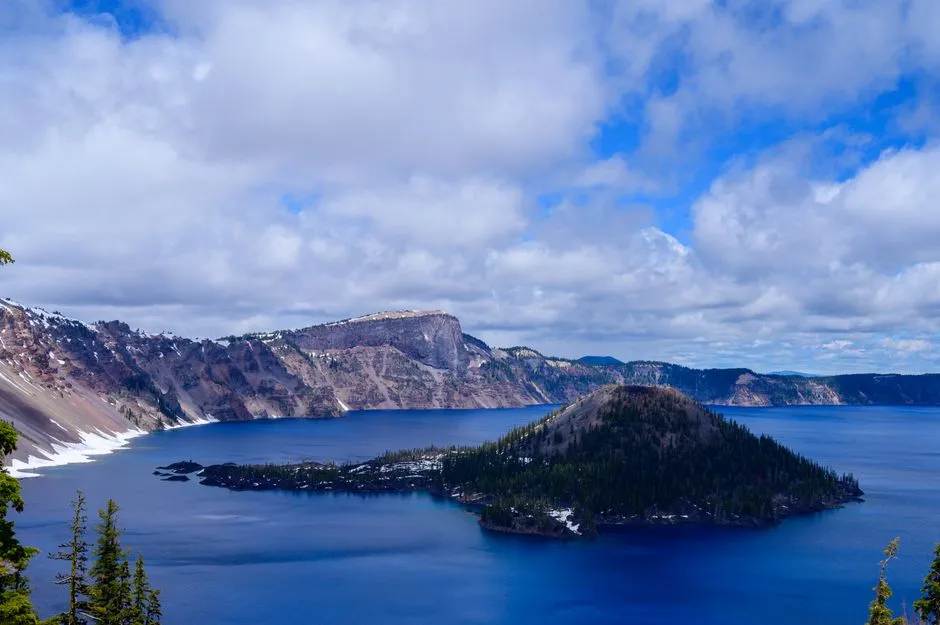
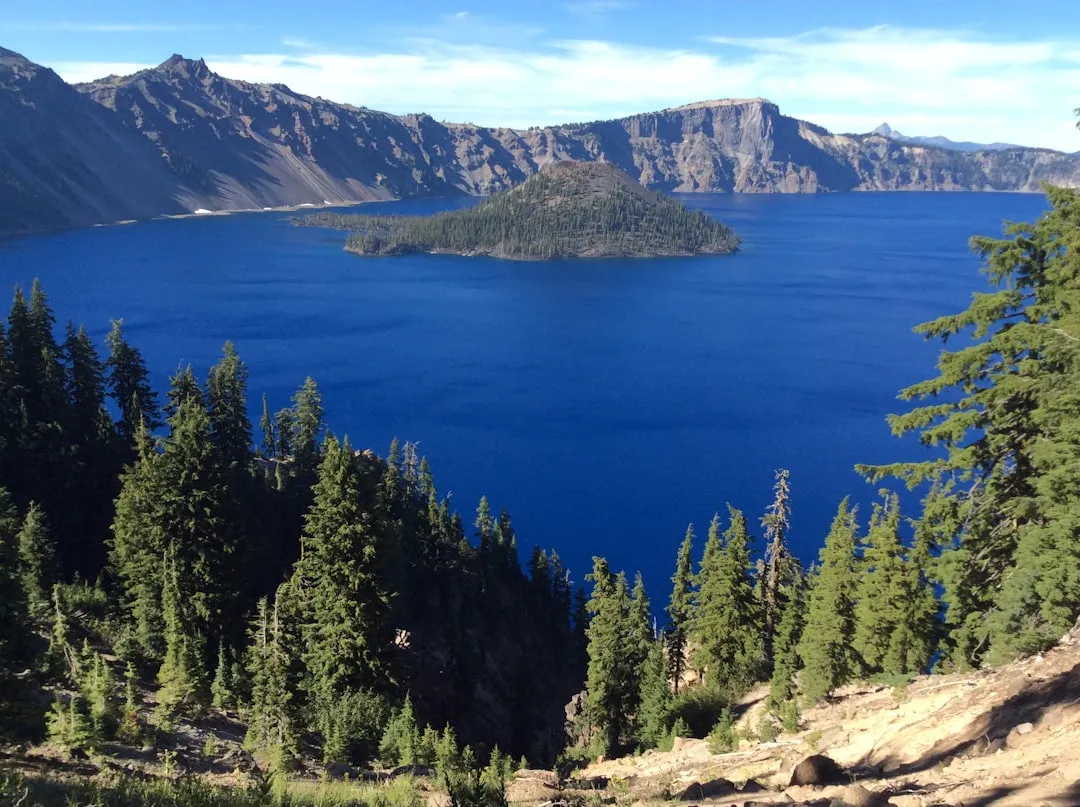
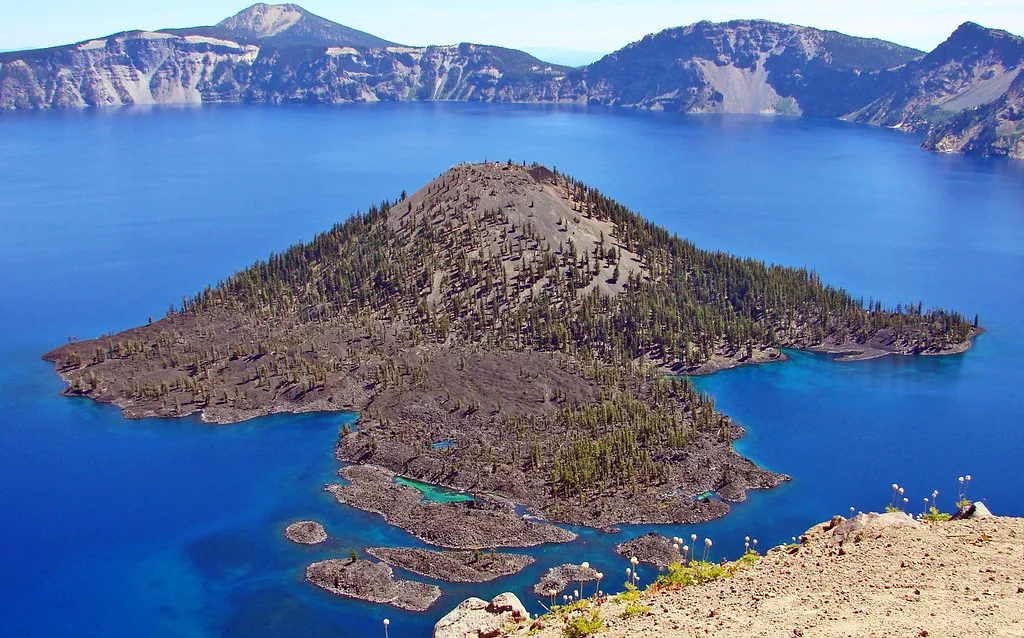
Wizard Island, a cinder cone formed by subsequent lesser volcanic outbursts, rises dramatically from the lake’s surface. This cinder cone rises 767 feet above the lake. It’s a striking reminder that the volcano responsible for all of this is not entirely finished.
Out of sight and underwater are three more volcanoes that grew while the lake was filling, the youngest of which, the Rhyodacite Dome, occurred about 5,000 years ago. Through deep dives, scientists have found at the very bottom colonies of yellow-gold bacteria growing in vast, puffy mats, and a variety of worms, insects, and tiny crustaceans able to withstand the intense water pressure. The lake floor is far from lifeless.
The Klamath People and a Memory Older Than History

Crater Lake’s clear blue waters have long been revered by the Klamath Native American tribe, whose Makalak ancestors lived near Mount Mazama and are thought to have witnessed the lake’s creation. The eruption happened roughly 7,700 years ago, placing it well within the span of human habitation in the region.
The Klamath people’s oral traditions about the lake’s formation accurately describe a volcanic eruption observed over 7,000 years ago. That’s a striking detail, that a geological event of such scale was recorded and passed forward through generations of storytelling with enough accuracy to align with modern scientific findings. The lake carries cultural weight that runs far deeper than its tourism profile suggests.
Getting There and the Current Trail Situation
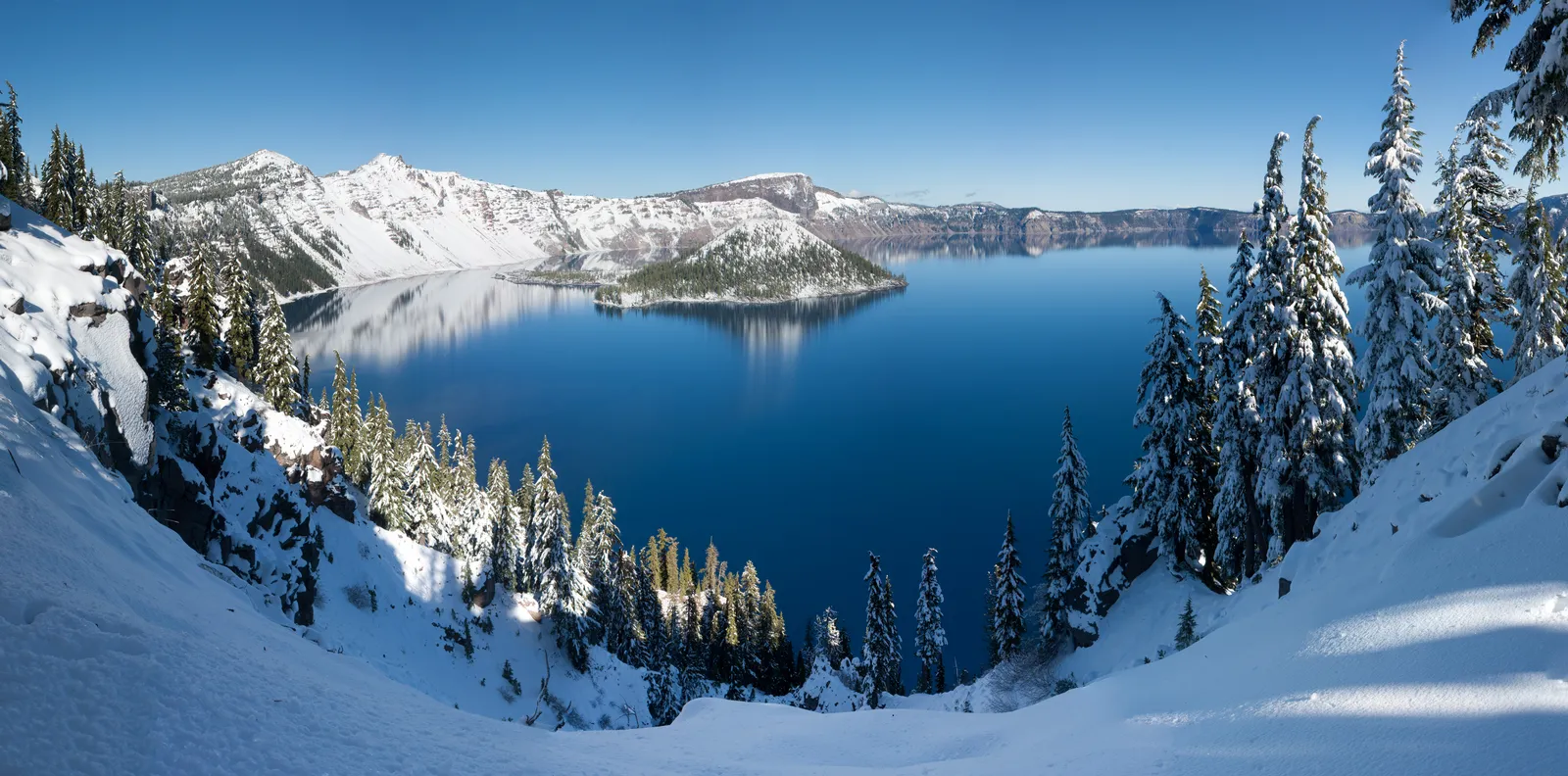
The surrounding area is a protected wilderness and became Crater Lake National Park in 1902. Crater Lake is located in southern Oregon on the crest of the Cascade Mountain range, 100 miles east of the Pacific Ocean. The park draws substantial visitor numbers each year, and the scenery from the rim road alone justifies the drive.
There is one important practical note for anyone planning a visit in 2026. The Cleetwood Cove Trail is closed through 2028 for a rehabilitation project. This steep trail is the only one at the park that leads to the lake itself, and during the closure there is no swimming, wading, fishing, or boat tours at the lake. The rim views and surrounding hiking trails remain accessible, but visitors should plan accordingly.
The Old Man of the Lake
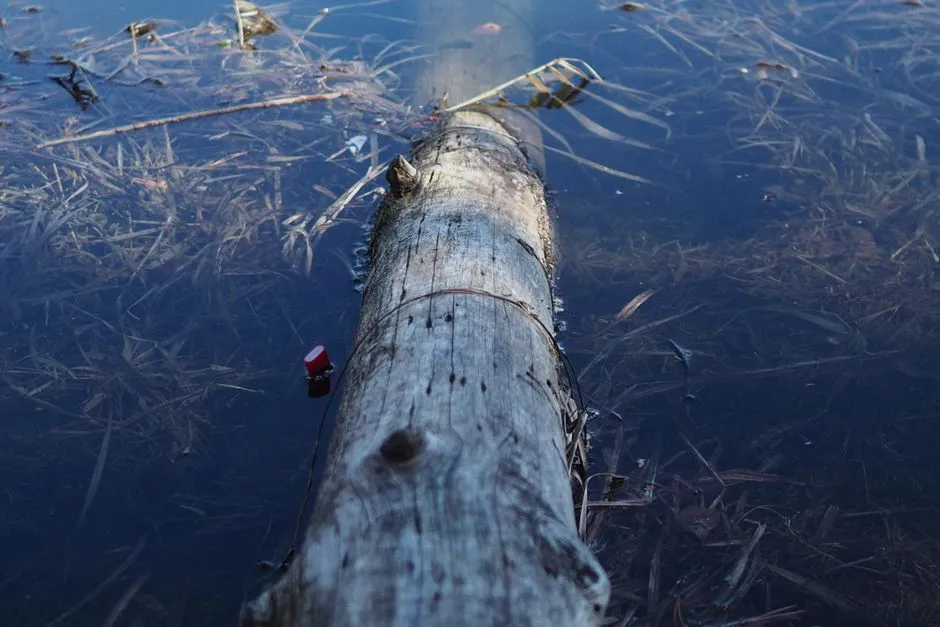
Known as the “Old Man,” a 30-foot mountain hemlock log carbon dated at more than 450 years old floats around the lake, with 3 feet exposed above water. It has been drifting across the lake’s surface for well over a century, moving with the wind and currents in an upright, vertical position. The lake’s “Old Man of the Lake” has been floating vertically since at least 1896.
Scientists believe the lake’s extraordinary coldness near the surface, combined with the buoyancy of the waterlogged wood, keeps the log from sinking. It’s a small, odd curiosity in a place defined by enormous geological drama. Still, it has captured the imagination of researchers and visitors alike for generations, and somehow it fits perfectly in a lake full of surprises.
Why This Comparison with the Grand Canyon Actually Matters
The Grand Canyon is not diminished by any of this. The combination of a 277-mile-long canyon, widths reaching 18 miles, depths approaching 6,000 feet, and major differences in elevation creates thousands of cliffs, side canyons, mesas, buttes, and remote landscapes. It is genuinely one of the most spectacular places on Earth.
The point of the comparison isn’t competition. It’s perspective. Crater Lake’s depth, measured straight down through cold, impossibly clear water, exceeds the average depth of the Grand Canyon at most of the spots where millions of people stand each year and feel genuinely overwhelmed by scale. Two very different kinds of emptiness carved by two very different forces, both of them worth a long, quiet look.
The Takeaway
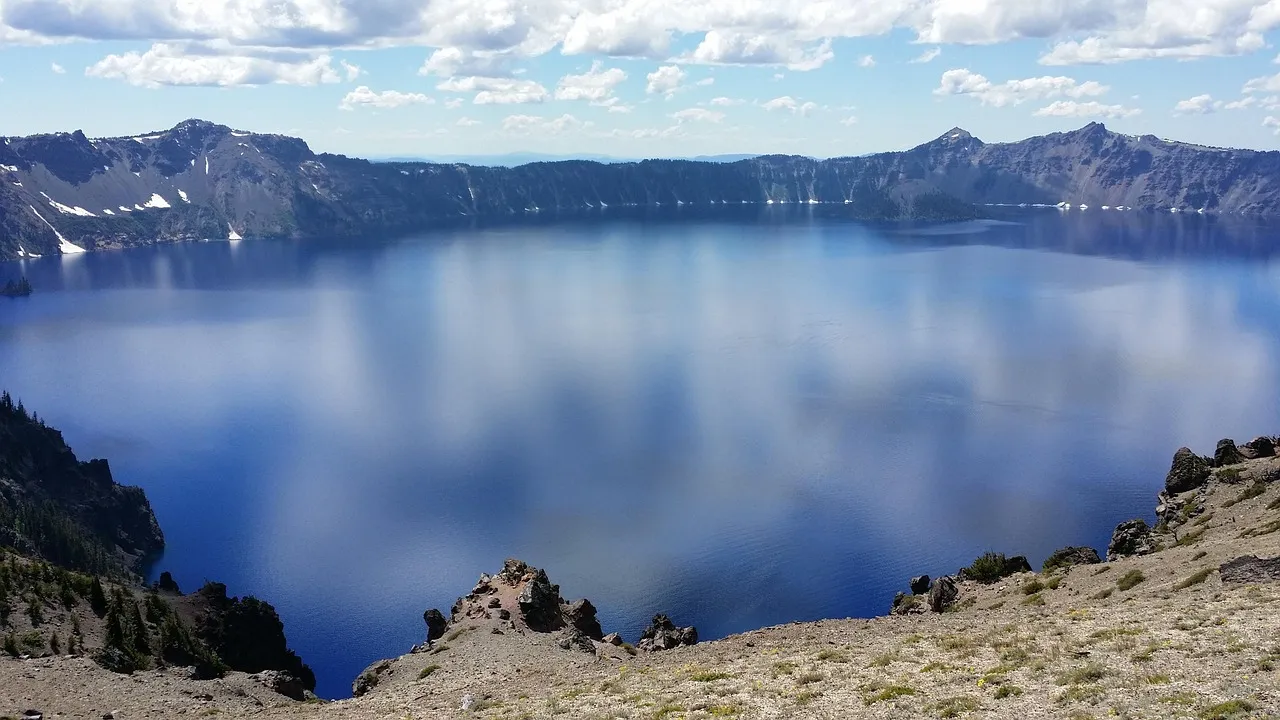
Crater Lake sits in a corner of Oregon that many travelers pass without stopping. It doesn’t have the international name recognition of the Grand Canyon, and its depth is invisible unless you know to look for it. Visitation reached 632,242 recreation visits in 2025, which is significant but still modest compared to the millions who crowd Arizona’s south rim every year.
What the lake offers is a different kind of awe, quieter, colder, and in some ways more ancient. A volcano destroyed itself here. A tribe witnessed it. Rain filled the void over centuries. And what remains is a crater of water so deep, so clear, and so strangely alive at its bottom that it continues to yield new findings to scientists who keep diving back in. Some places earn their superlatives. This is one of them.
AI Disclaimer: This article was created with the assistance of AI tools and reviewed by a human editor.