
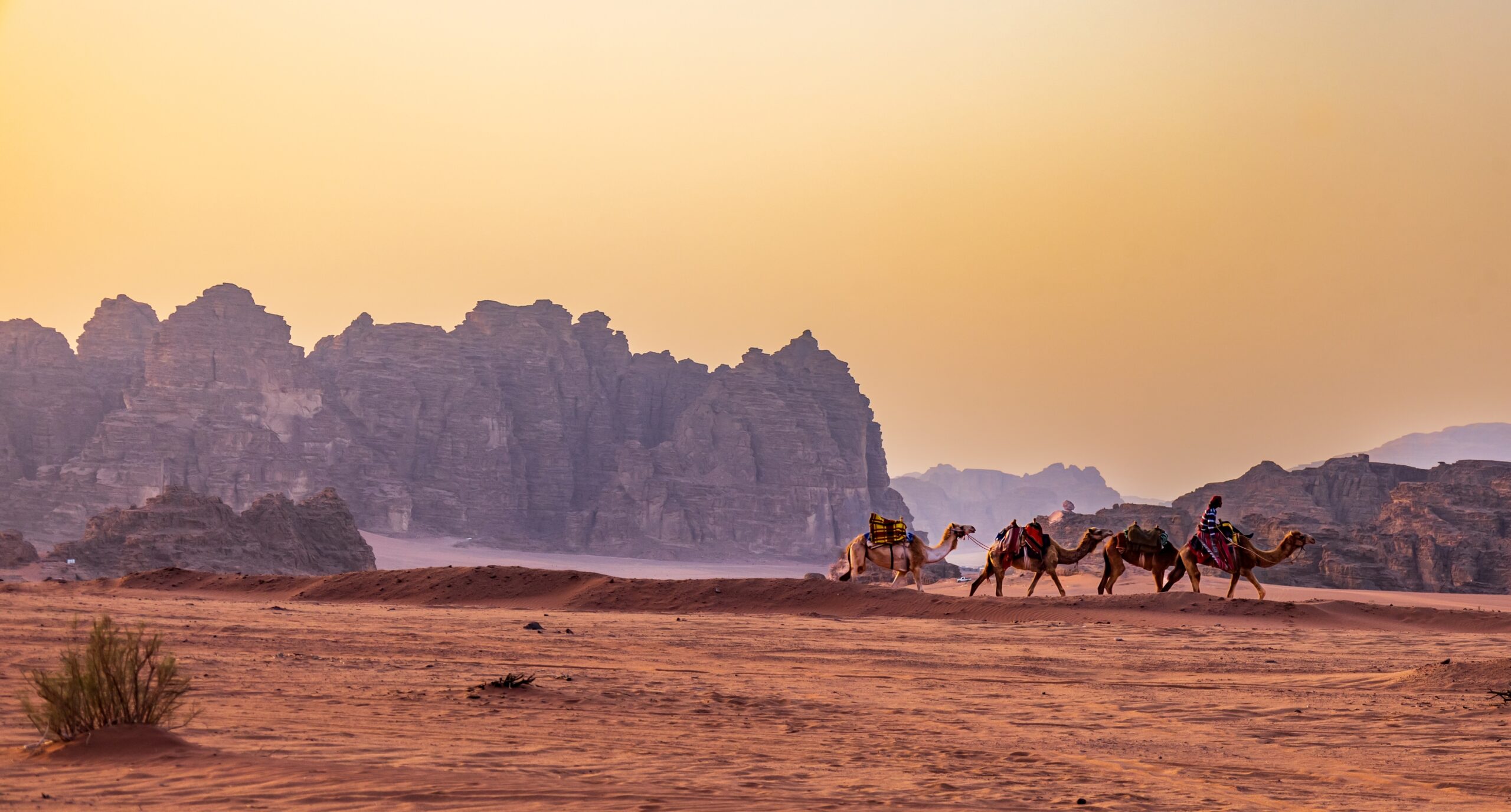

A Valley That Has Witnessed 12,000 Years of Human Life
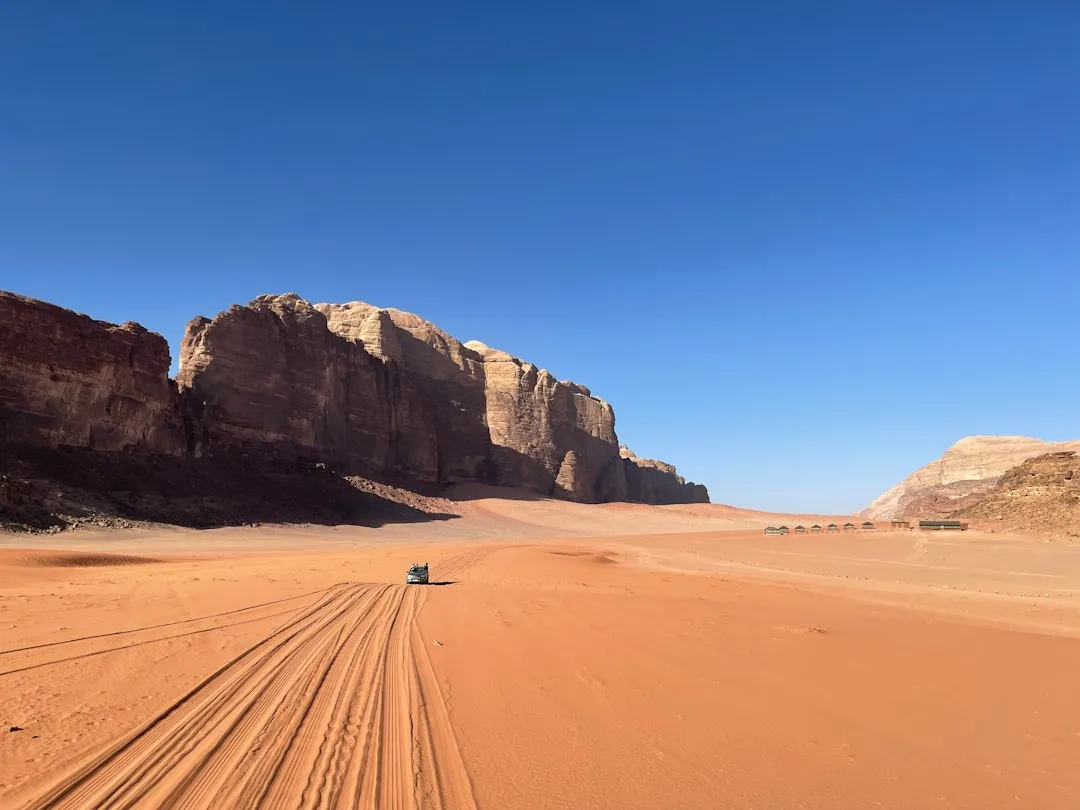
Wadi Rum is a mixed World Heritage site, occupied by Bedouin communities, where archaeological remains, petroglyphs and inscriptions provide a remarkable record of 12,000 years of human development. The sheer span of that history is difficult to absorb standing in the desert, yet the evidence is literally carved into the walls around you.
The combination of 25,000 rock carvings with 20,000 inscriptions traces the evolution of human thought and the early development of the alphabet. These are not museum pieces behind glass. They exist on open cliff faces and canyon walls, accessible to anyone willing to look closely enough.
Thamudic and Nabatean inscriptions from the 4th century BC can be found all over the area, especially in Khazali Canyon and on a wall called Anfisheyh inscriptions. Walking past them, knowing that people passed this exact point thousands of years before you, produces a feeling that no photograph fully prepares you for.
The Geography That Makes It Feel Like Another Planet
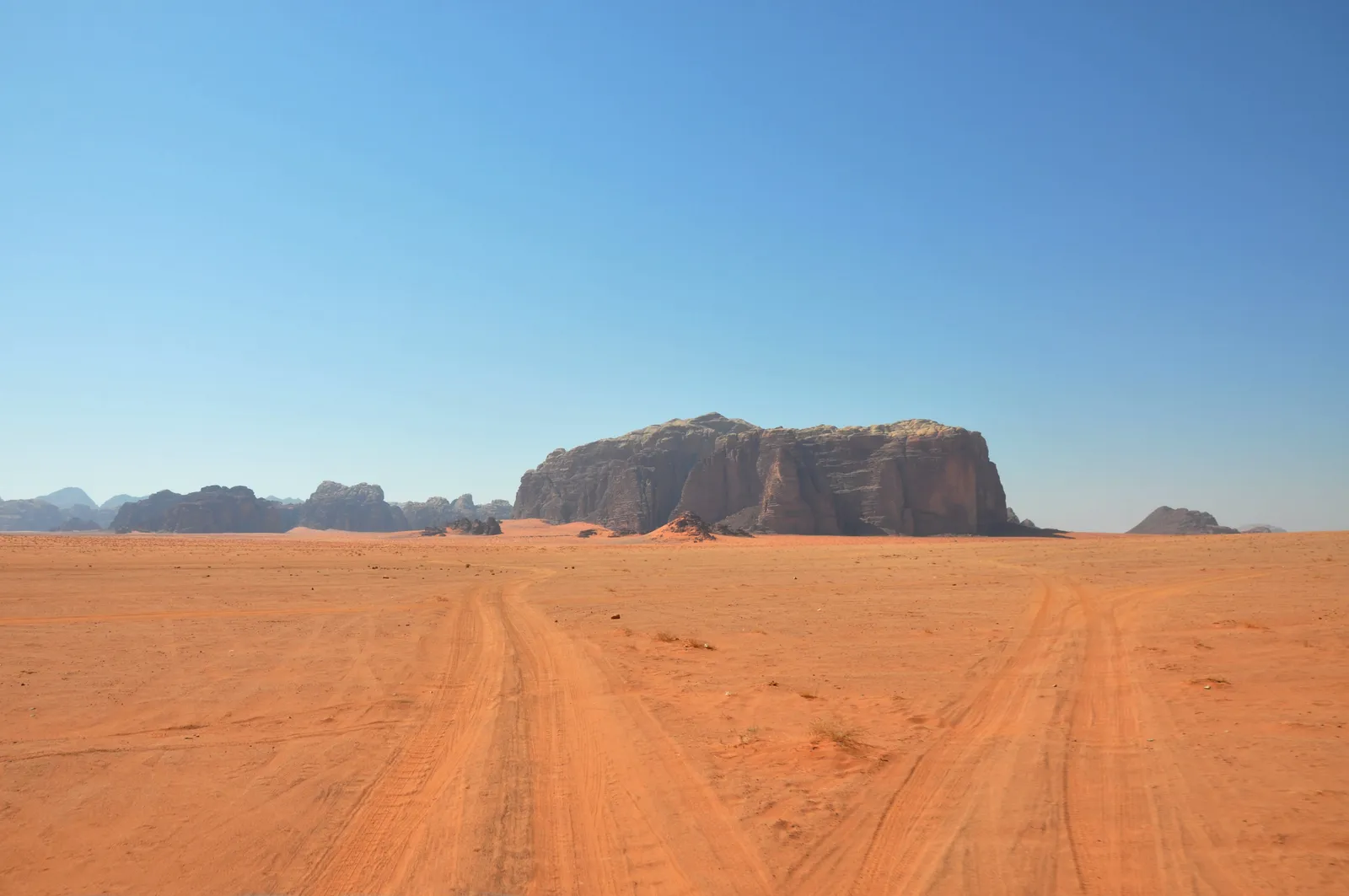
Wadi Rum, also known as the Valley of the Moon, is a desert spanning 720 square kilometres, cut into sandstone and granite rock. The scale of it doesn’t settle in immediately. It takes an hour or two of driving through the formations before the enormity begins to register.
The protected area encompasses spectacular desert landscapes, with sand-filled wadis bounded by massive towering cliffs with narrow gorges, natural arches, and other geological features. Some of these natural arches and rock bridges rank among the largest in the world.
The highest peak in Wadi Rum is Jabal Um ad Adami at 1,840 metres, which lies close to the Saudi Arabian border. Jabal Rum, at 1,734 metres, is the second-highest peak in Jordan, located right in the center of Rum and offering a scenic view of the area. The contrast between the flat sandy valley floors and these towering formations is the landscape’s defining visual drama.
A UNESCO Status That Means Something Real Here
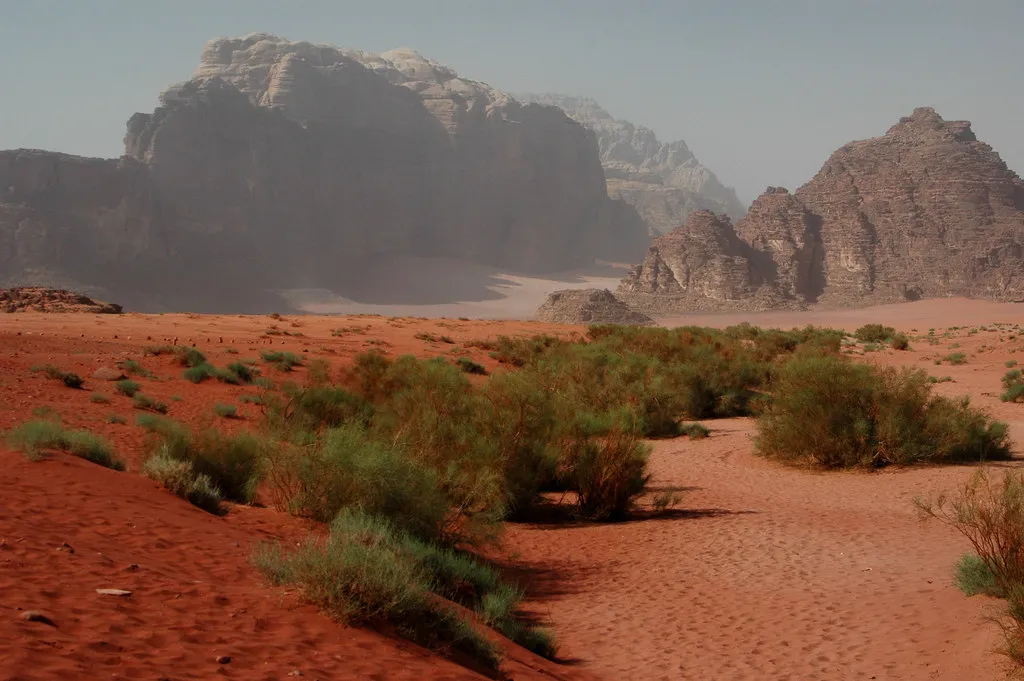
The Wadi Rum Protected Area was inscribed as a UNESCO World Heritage Site in 2011 and is considered a strict nature reserve by UNESCO. That designation carries practical weight. Entry into the protected area requires a permit, access is managed, and the number of camps operating inside the boundaries is regulated.
The protected area covers 74,000 hectares, within which the most sensitive terrain lies. The management balance between welcoming visitors and protecting a landscape this fragile is an ongoing negotiation, and one that matters deeply to the Bedouin families whose lives are rooted here.
The growing tourism industry and associated infrastructure needs to be carefully planned and managed to ensure sustainable benefits for local Bedouin communities. That’s not a bureaucratic concern. It’s the lived reality of a place where traditional life and global tourism meet daily.
The Bedouin Village at the Heart of It All
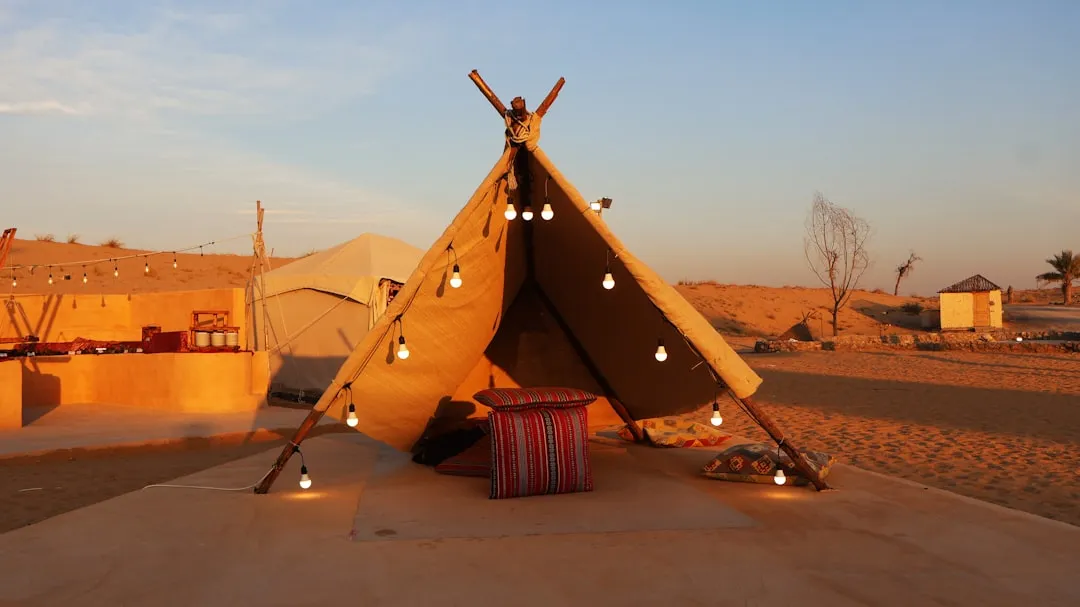
The main group of people who reside in the Wadi Rum desert are the Bedouins. These desert dwellers were throughout history nomadic tribespeople. Although most modern-day Bedouins will most likely live in a home with all modern conveniences, they still have a strong holding on their heritage.
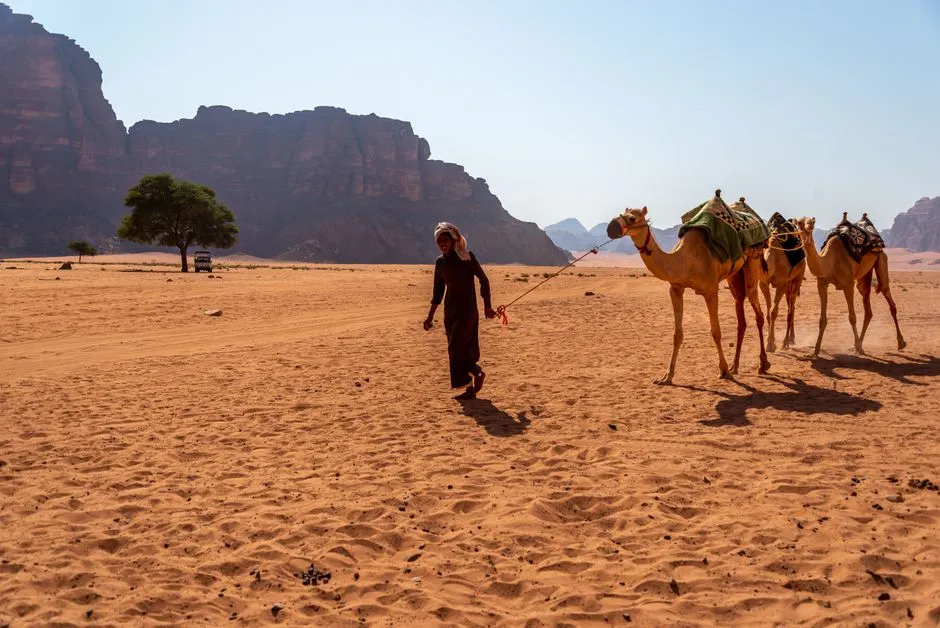
English-speaking Bedouin guides lead visitors on explorations of the desert, fostering a deeper understanding of Bedouin culture and traditions. What makes this meaningful is context. These are people whose grandparents navigated the same terrain by starlight. Their knowledge of the desert is not academic.
The Bedouin people have lived in Wadi Rum for centuries, preserving a nomadic lifestyle deeply connected to the desert. Known for legendary hospitality, they welcome visitors with tea brewed over open fires. Their culture emphasizes community, storytelling, and music. Visitors experience this through traditions like the Zarb, a method of cooking meat and vegetables underground, as well as sleeping in traditional hair tents and learning ancient star navigation techniques.
Where Hollywood Found Its Mars
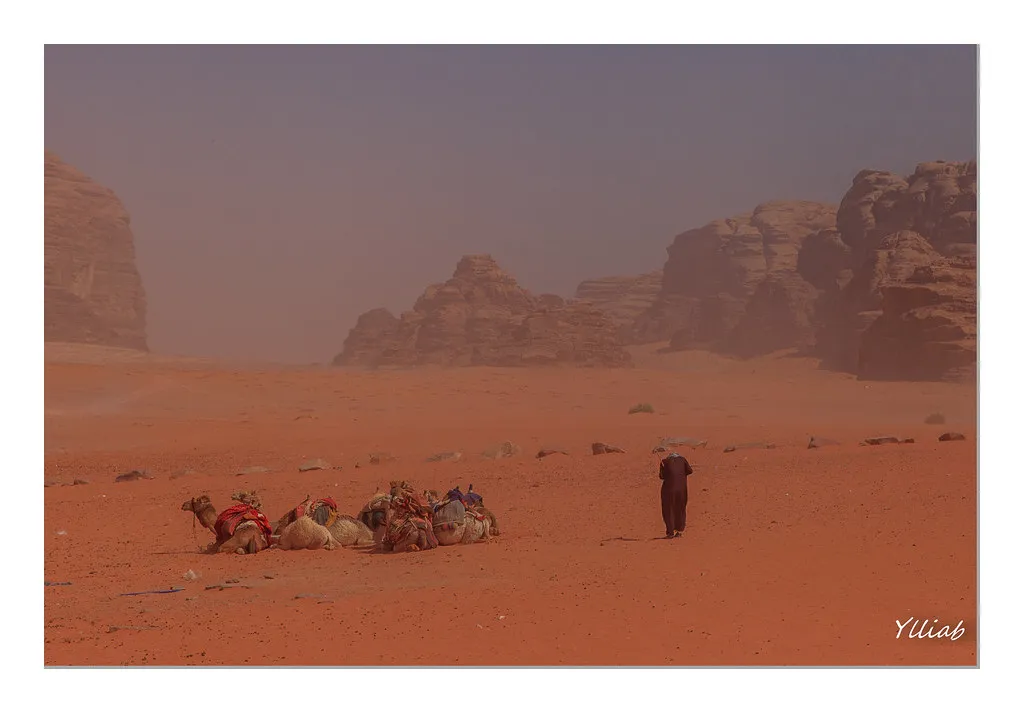
Long cherished as an ancient crossroads, Wadi Rum first gained worldwide fame with its portrayal in the classic 1962 film Lawrence of Arabia. Since then, Wadi Rum has become one of Hollywood’s favorite filming locations for sci-fi movies, including Prometheus in 2012, The Martian in 2015, Dune parts one and two, and multiple Star Wars films.
Its vast desert valley served as a key filming location for both Dune in 2021 and Dune: Part Two in 2024. The films didn’t manufacture their otherworldly quality. They simply pointed a camera at what was already there.
The remarkable thing is that the film sets are largely gone, yet the landscape looks exactly the same. What directors saw as science fiction, the Bedouin have simply called home for centuries.
How to Actually Get There
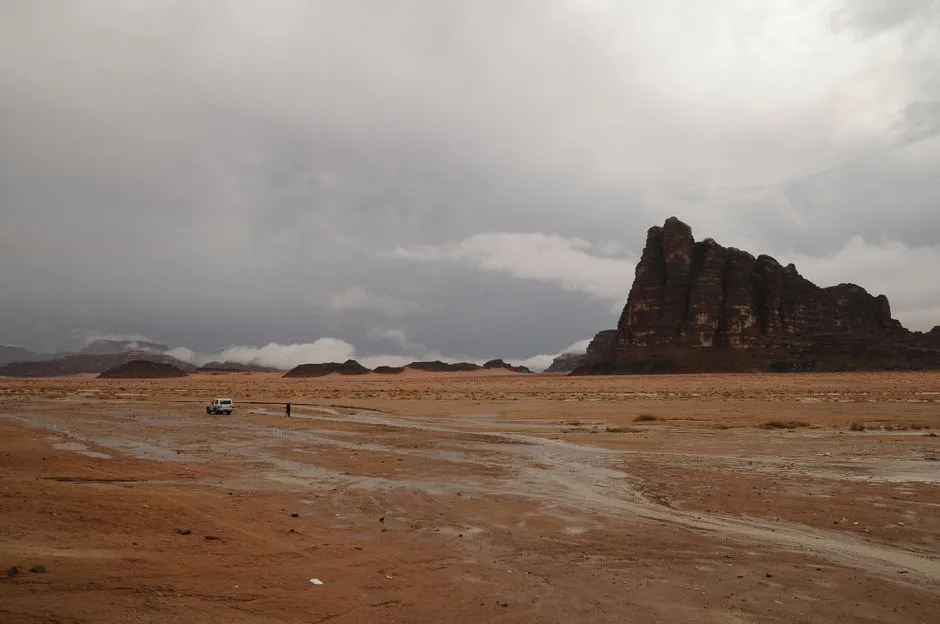
Located approximately 60 kilometres east of Aqaba and about 100 kilometres south of Petra, Wadi Rum is easily accessible by road. Most travelers fold it into a broader Jordan itinerary, pairing it with Petra or a day at the Dead Sea.
The easiest jump-off points to visit Wadi Rum are Aqaba, Petra (Wadi Musa), or Amman. From Aqaba, it’s a quick one-hour drive. Many camps include a transfer from the visitor center as part of their package, which saves the logistical headache of arranging your own vehicle into the protected zone.
The cost to enter the Wadi Rum Protected Area is 5 JD per person, though it is free with the Jordan Pass. For most visitors already planning to see Petra, purchasing the Jordan Pass makes straightforward financial sense.
Spending the Night Under the Stars
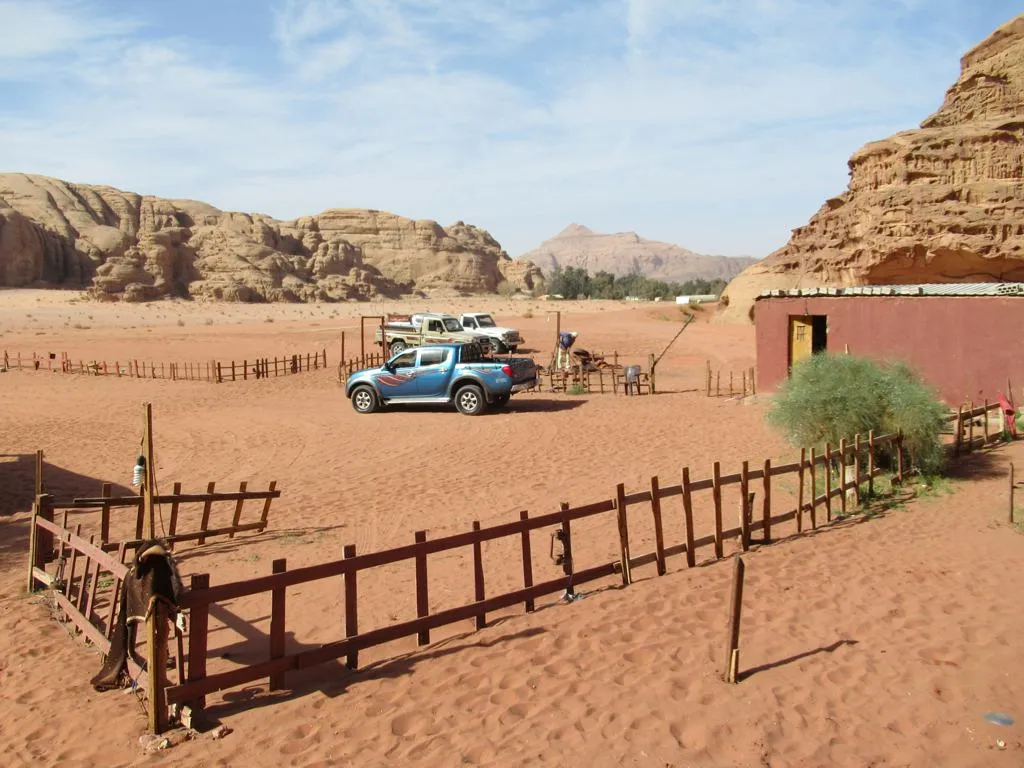
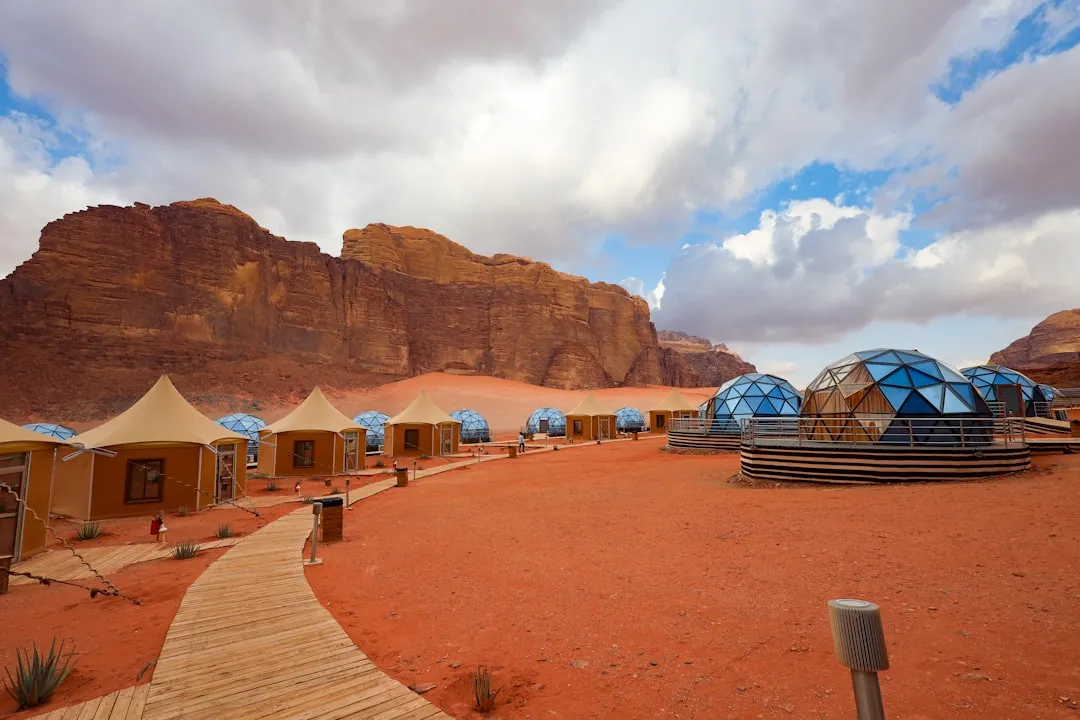
Most visitors opt for a four-wheel drive truck tour with a Bedouin driver and guide to cover maximum ground, along with an overnight stay at a Wadi Rum camp, to experience the desert at its most enchanting. The camps vary considerably in style, from basic open-air sleeping arrangements to more furnished desert tents with private bathrooms.
Some camps offer an authentic Bedouin desert experience and are operated by local tribes, featuring traditional tents and the option to sleep under the stars. They provide jeep tours, camel treks, and homemade Bedouin meals. The sky from inside the protected area, far from any city light, is genuinely staggering on a clear night.
Eco-friendly Bedouin-style camps offer traditional accommodation in furnished desert tents, with daily Bedouin meals including dinner cooked over the fire. Choosing an operator linked to the local community remains the most responsible way to make this experience count for the people who live here year-round.
A Landscape with a View from Above
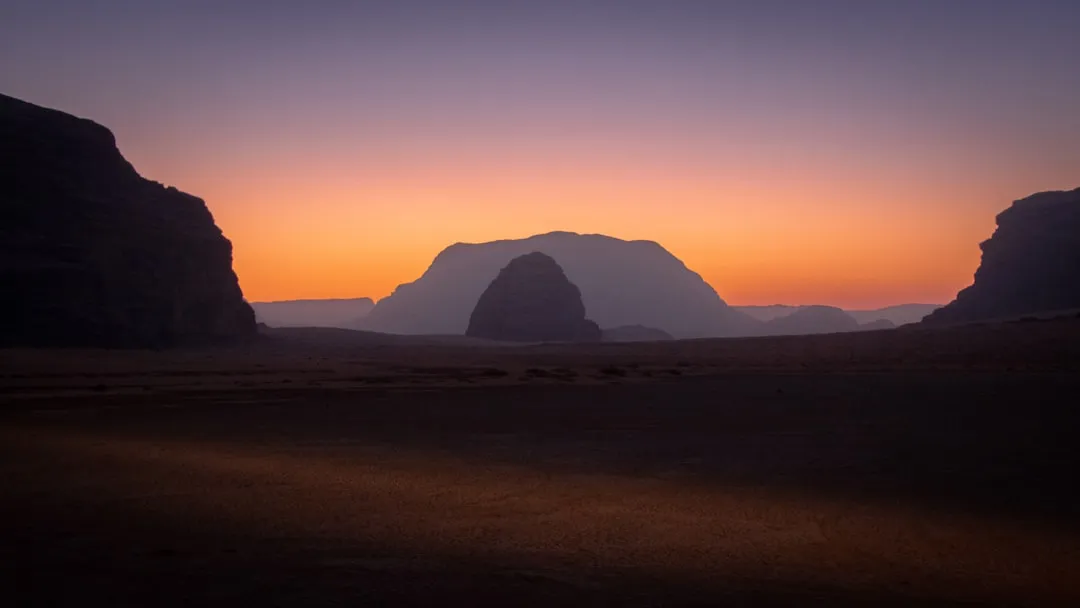
An utterly rousing perspective of southern Jordan’s otherworldly desert landscape is one from the basket of a hot-air balloon. Pick-up from Wadi Rum Village or the Visitor Center is generally an hour and a half before sunrise. The timing matters. Dawn light on the red formations is what makes balloon flights here genuinely extraordinary rather than merely pleasant.
Whisked to the launch site, visitors watch with coffee or tea in hand as a gas jet flame lights the sky. After the safety instruction, they lift off the sand to be greeted with a sunrise view that is difficult to forget. Few travel experiences in the Middle East match it for quiet drama.
Jordan’s Tourism Recovery and What It Means for Wadi Rum
The number of visitors to Jordan rose by 18 percent in the first half of 2025, reaching 3.292 million compared to 2.786 million during the same period in 2024, according to data released by the Ministry of Tourism and Antiquities. That recovery, after years disrupted by regional tensions, is meaningful for the communities at Wadi Rum whose livelihoods depend on visitors returning.
Jordan’s tourism revenue jumped 7 percent year on year over the first 11 months of 2025, reaching $7.2 billion. Jordan maintained its positive tourism performance into 2026, with official data showing continued visitor demand, welcoming 1.094 million international visitors during January and February 2026 alone.
The highest growth rate in overnight tourist arrivals during the first half of 2025 was recorded from European markets, which rose by 82 percent. Wadi Rum, alongside Petra and the Dead Sea, continues to draw international interest, with heritage and natural experiences including Wadi Rum attracting visitors from worldwide markets.
Visiting Responsibly in a Place This Precious
Tours and activities at Wadi Rum increasingly emphasize cultural immersion and sustainable tourism practices. That shift reflects a broader awareness that a landscape as rare as this one requires more than admiration. It requires restraint.
Hiring Bedouin-owned operations, staying within designated camp boundaries, and avoiding removing rocks or touching ancient inscriptions are not just polite conventions. They are the practical conditions for the place to remain as it is. The inscriptions carved into the canyon walls have survived thousands of years. The responsibility falls on every visitor not to be the generation that undoes that.
Don’t expect name-brand resorts and touristy stores, but do prepare to be wowed by the dramatic natural beauty and rich Bedouin culture that make Wadi Rum the ideal place to experience real slices of authentic Jordanian life. That directness is exactly right. Wadi Rum offers something increasingly rare in travel: a place that asks something of you in return for what it gives.
The Takeaway
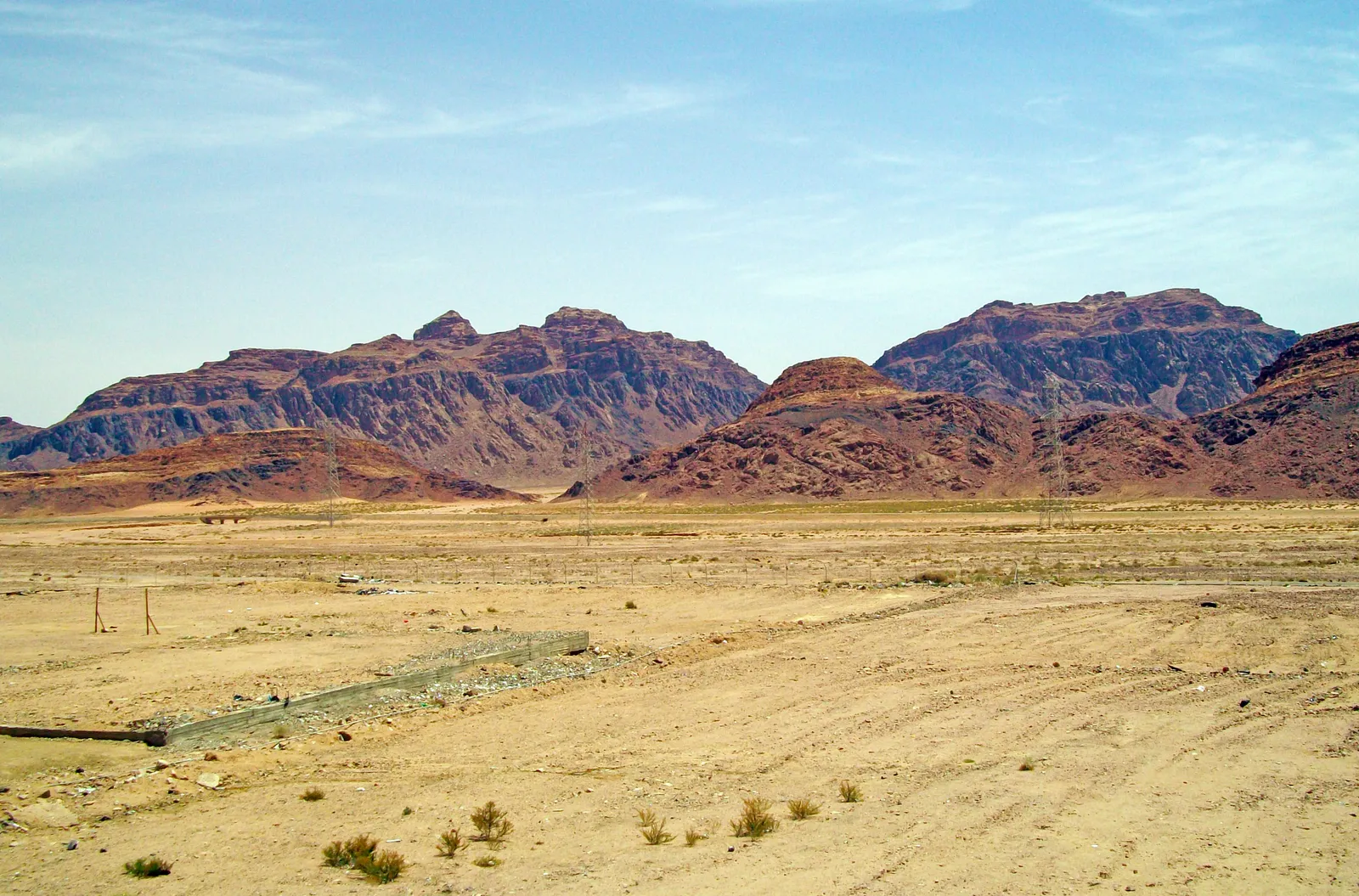
Wadi Rum doesn’t announce itself. There’s no grand gateway or dramatic reveal. You round a bend in the road and the landscape simply opens into something vast and red and ancient, and your frame of reference quietly rearranges itself. That adjustment, the sense of being genuinely somewhere else, is what travelers keep returning for.
The Bedouin people have tended this desert for centuries. The petroglyphs go back thousands of years before that. Against that kind of depth, a single night under these stars feels simultaneously insignificant and unforgettable. That tension, between humility and wonder, is the truest thing Wadi Rum offers any traveler willing to sit still long enough to feel it.
AI Disclaimer: This article was created with the assistance of AI tools and reviewed by a human editor.