
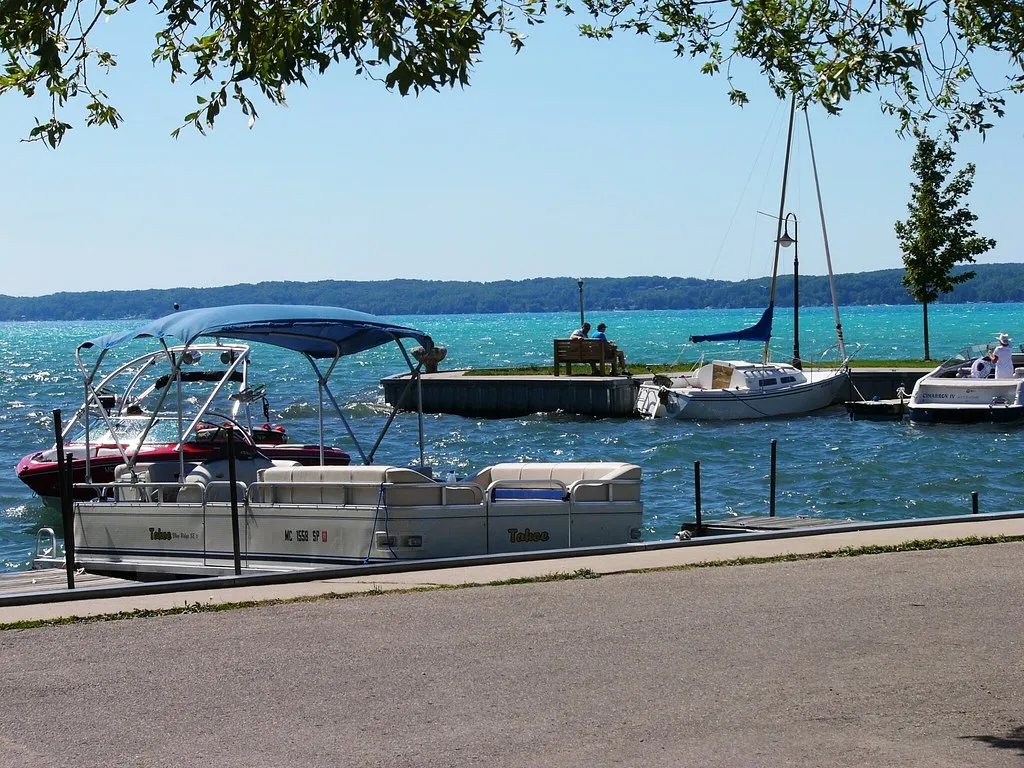

There’s a particular shade of blue that stops people mid-sentence on Michigan’s northern shoreline, the kind that looks photoshopped until you’re standing in it. Locals here have known about it for generations, but state monitoring data has only recently put hard numbers behind what visitors have always suspected with their own eyes. The lake in question sits in Antrim County, and the small village on its edge has quietly become one of the more understated destinations in the Great Lakes region.
Meet Alden, the Village on Torch Lake’s Shore
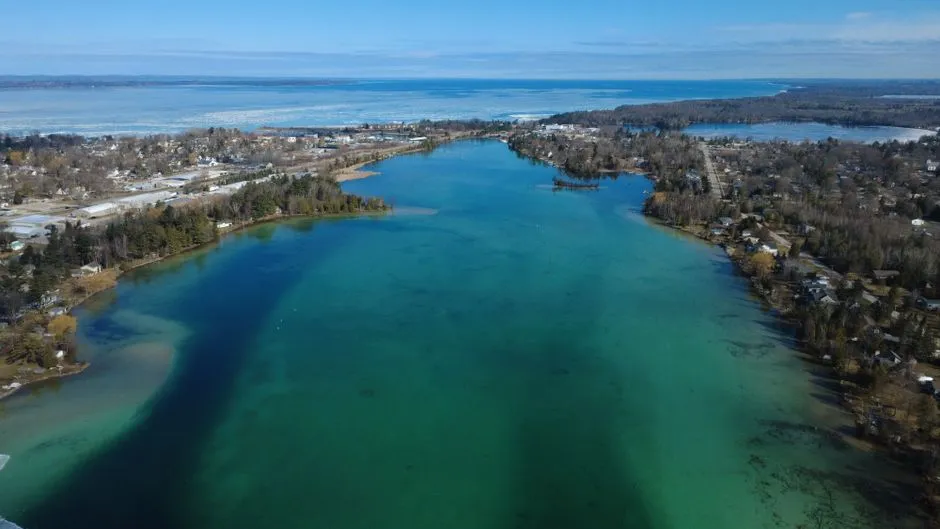
Alden is easy to miss if you’re not looking for it, a small unincorporated community tucked into Helena Township with a population that hovered around 123 residents at the 2020 census. It sits on the southeast shore of the lake it’s named alongside, a spot travel writers have described as a hidden gem nestled along the sparkling shores of legendary Torch Lake, often said to be the third most beautiful lake in the world. The village itself keeps things simple: a walkable downtown, a working harbor, and a slower pace than you’ll find in busier Up North towns. What draws people here, though, isn’t the shopping district. It’s the water just past the marina.
What Makes Torch Lake’s Water So Clear
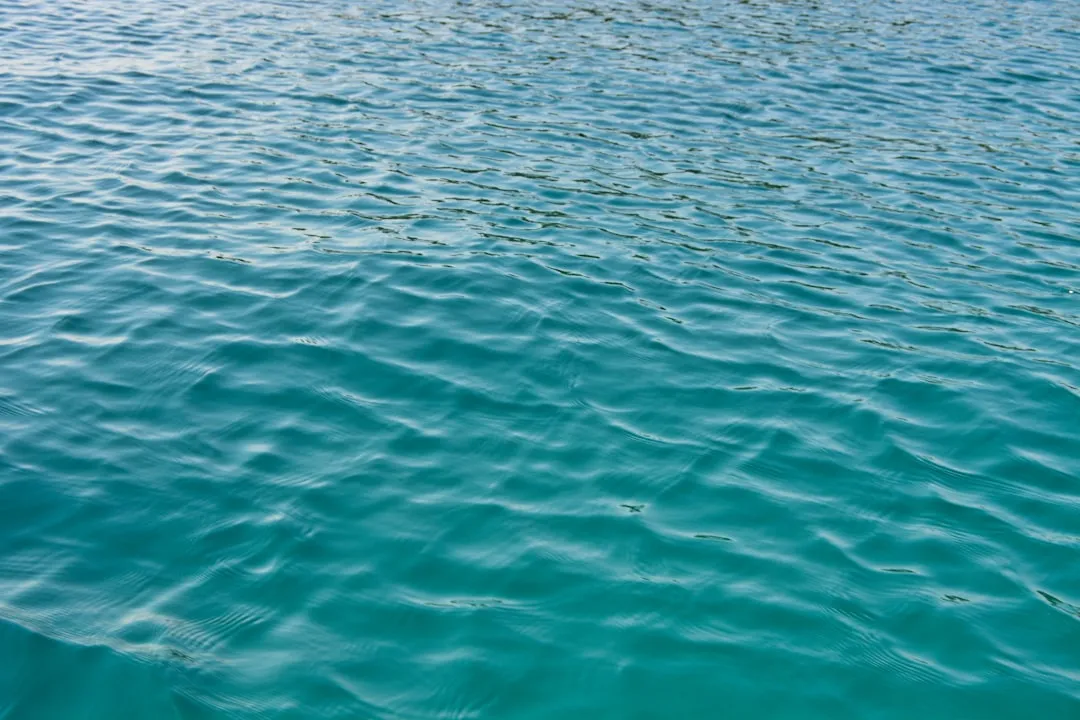
Clarity in a lake comes down to what isn’t in the water as much as what is. Torch Lake benefits from an oligotrophic status, low nutrient levels, limited algae growth, and calcium-rich limestone deposits that help create its famous turquoise appearance. Fisheries data collected by state biologists back this up on a chemical level, recording a total phosphorus concentration of just 0.0036 mg/L in the lake, a remarkably low figure that keeps algae blooms from clouding the water the way they do in more nutrient-rich lakes. Without excess phosphorus feeding algae growth, sunlight penetrates far deeper than it does in most freshwater bodies, which is exactly what a Secchi disk measures.
State Records and the Water Clarity Dashboard
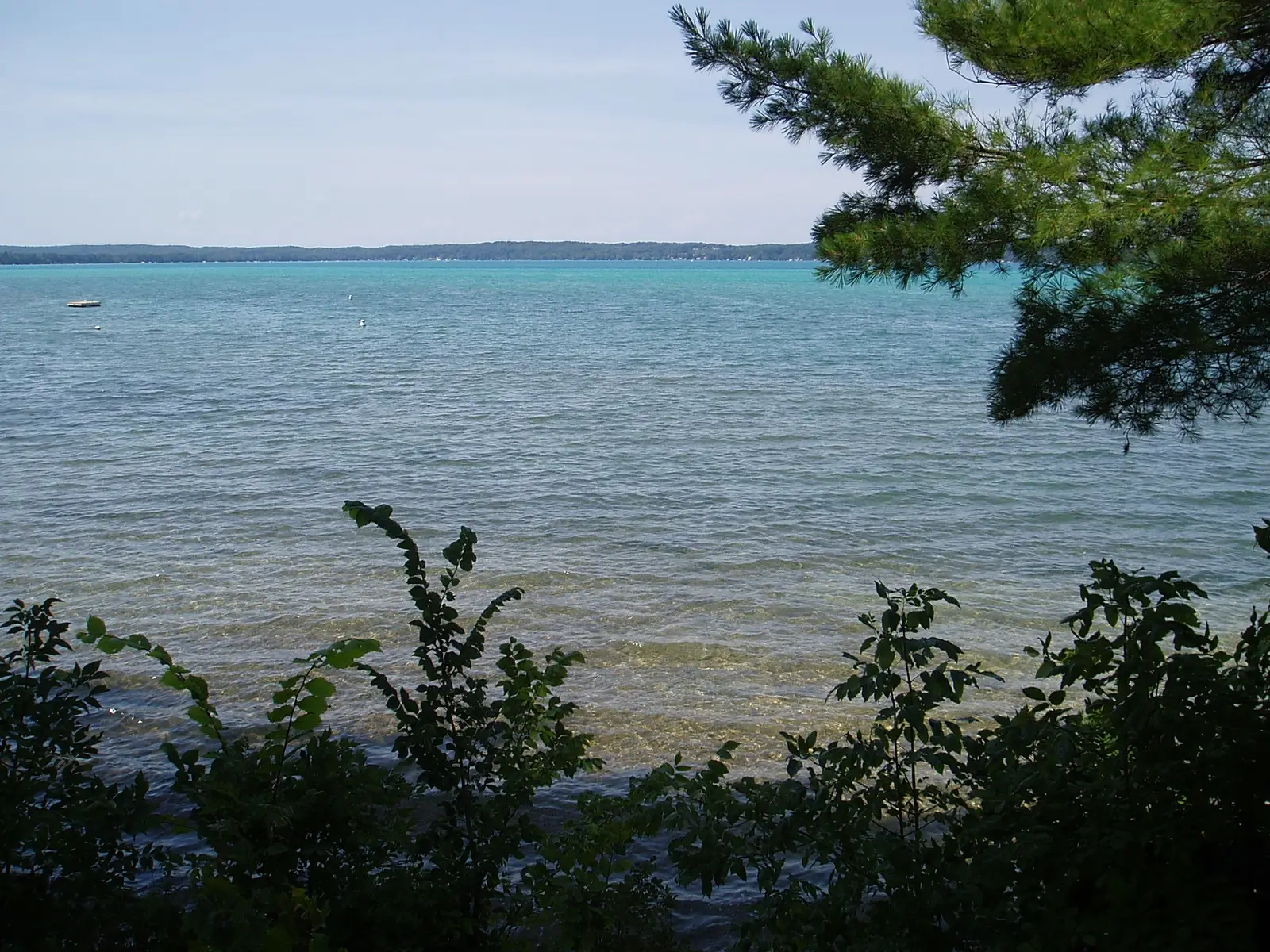
Michigan doesn’t just rely on postcard photos to make claims about its lakes. In 2025, EGLE launched an updated Lake Water Clarity Dashboard offering satellite-derived insights into lake clarity, algal biomass, and lake color, key indicators of inland lake water quality. That dashboard pulled together data collected from 2018 to 2023 from over 6,000 inland lakes larger than 20 surface acres, giving researchers and curious residents alike a statewide baseline for comparison.
Direct measurements taken by the Three Lakes Association have shown Torch Lake’s water clarity continuing to be outstanding with Secchi depths of 22 feet in the North Basin and 19 feet in the South Basin. Those numbers place it among the clearer large lakes documented anywhere in the state’s monitoring records.
The Deepest Inland Lake in Michigan
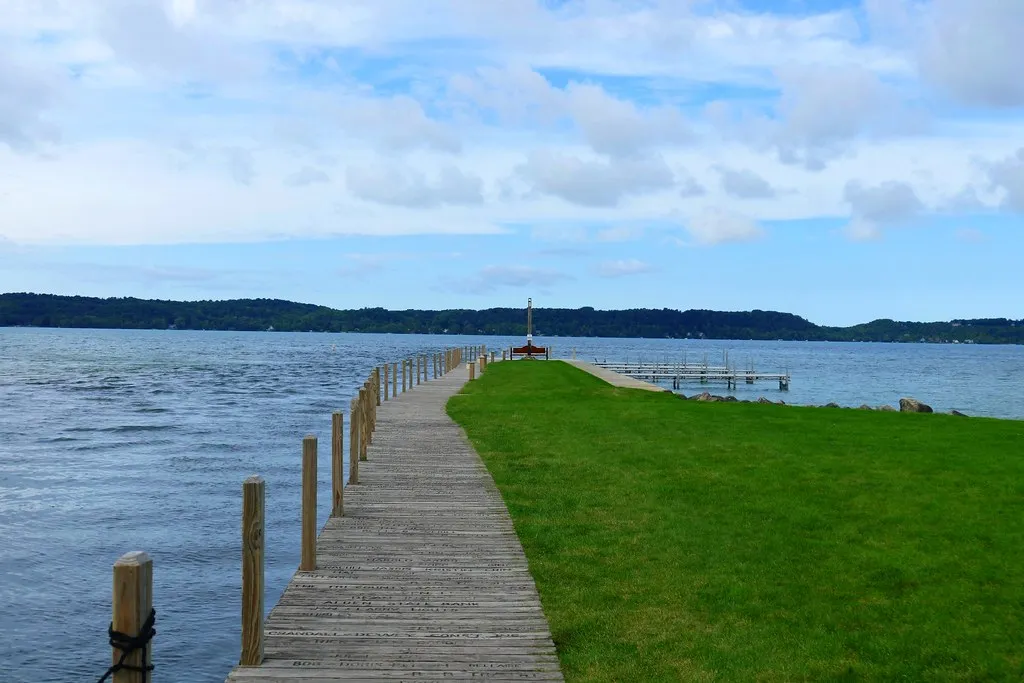
Depth and clarity often go hand in hand, and Torch Lake has both in abundance. Stretching roughly 19 miles, it holds the title of Michigan’s longest inland lake, and at approximately 29.3 square miles, it is Michigan’s second largest inland lake, after Houghton Lake. It also reaches a maximum depth of 310 feet and an average depth of 111 feet, making it Michigan’s deepest inland lake, as well as the state’s largest by volume.
Fisheries surveys have even found richly oxygenated water extending far below the surface, with richly oxygenated water down to 150 feet with exceptionally low levels of phosphorus, and super-saturated oxygen levels down to 260 feet. That oxygen saturation matters more than it might seem, since it prevents phosphorus trapped in bottom sediment from leaching back into the water column and clouding it over time.
A Color That Rivals Warm-Water Destinations
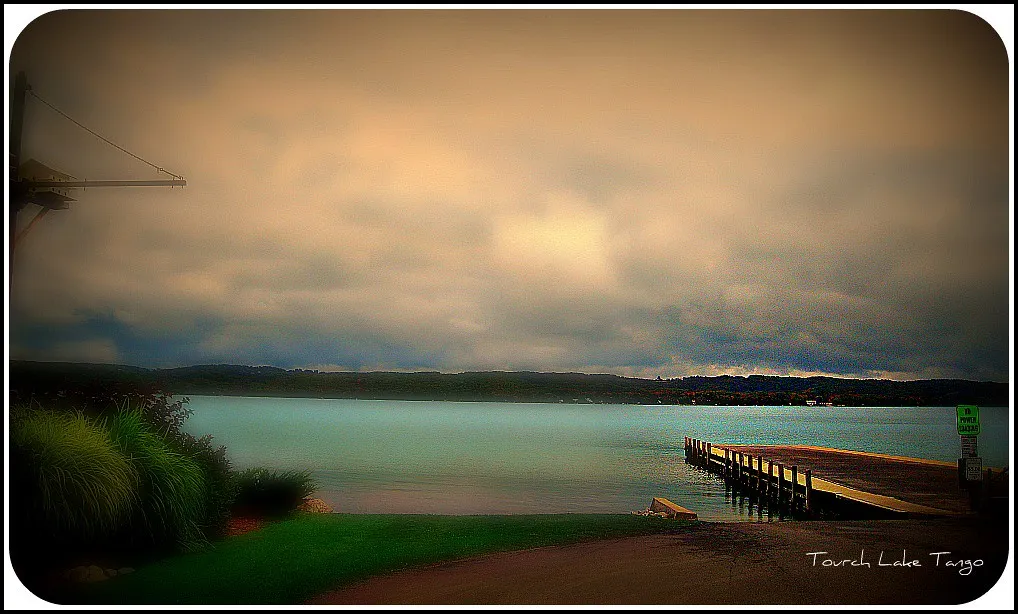
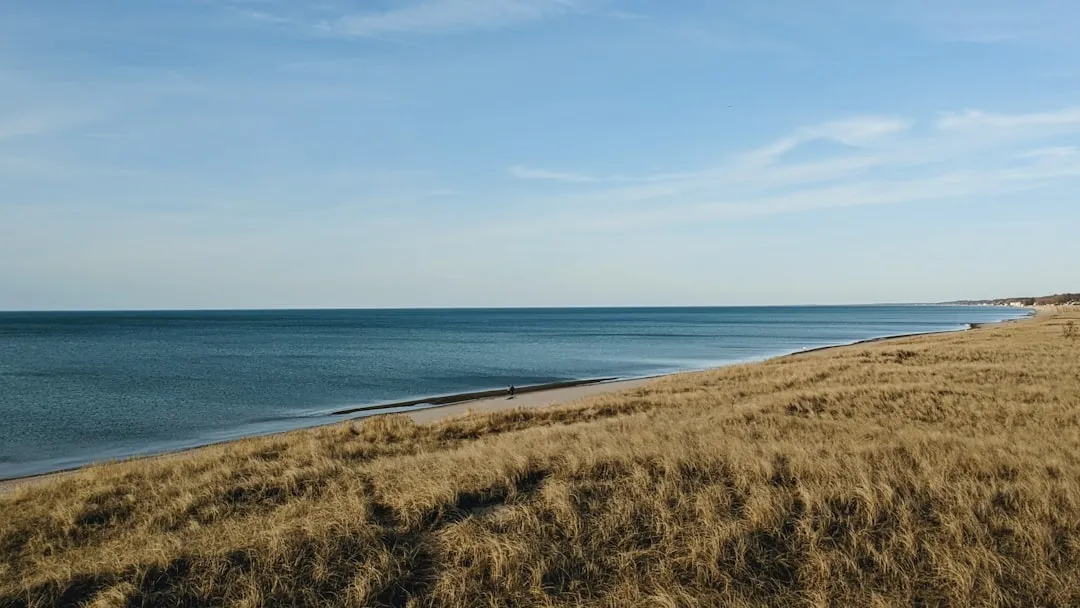
People reach for Caribbean comparisons almost reflexively when they first see Torch Lake, and the nickname has stuck for a reason. The lake carries the nickname ‘Caribbean of the North,’ known for its incredibly pure turquoise waters, white sand, and its 2-mile sandbar at its south end. Geologists point to the lakebed itself as the source of that color, since its appearance is one to be desired due to the underlying calcium carbonate limestone submerged at the lake’s bottom.
Depth adds another layer, too. With a maximum depth that makes it the deepest of the state’s inland lakes, its clarity makes it great for kayaking in a clear-bottom boat, an experience that lets visitors watch the lakebed slide by beneath them in real time.
From Logging Camp to Lakeside Village
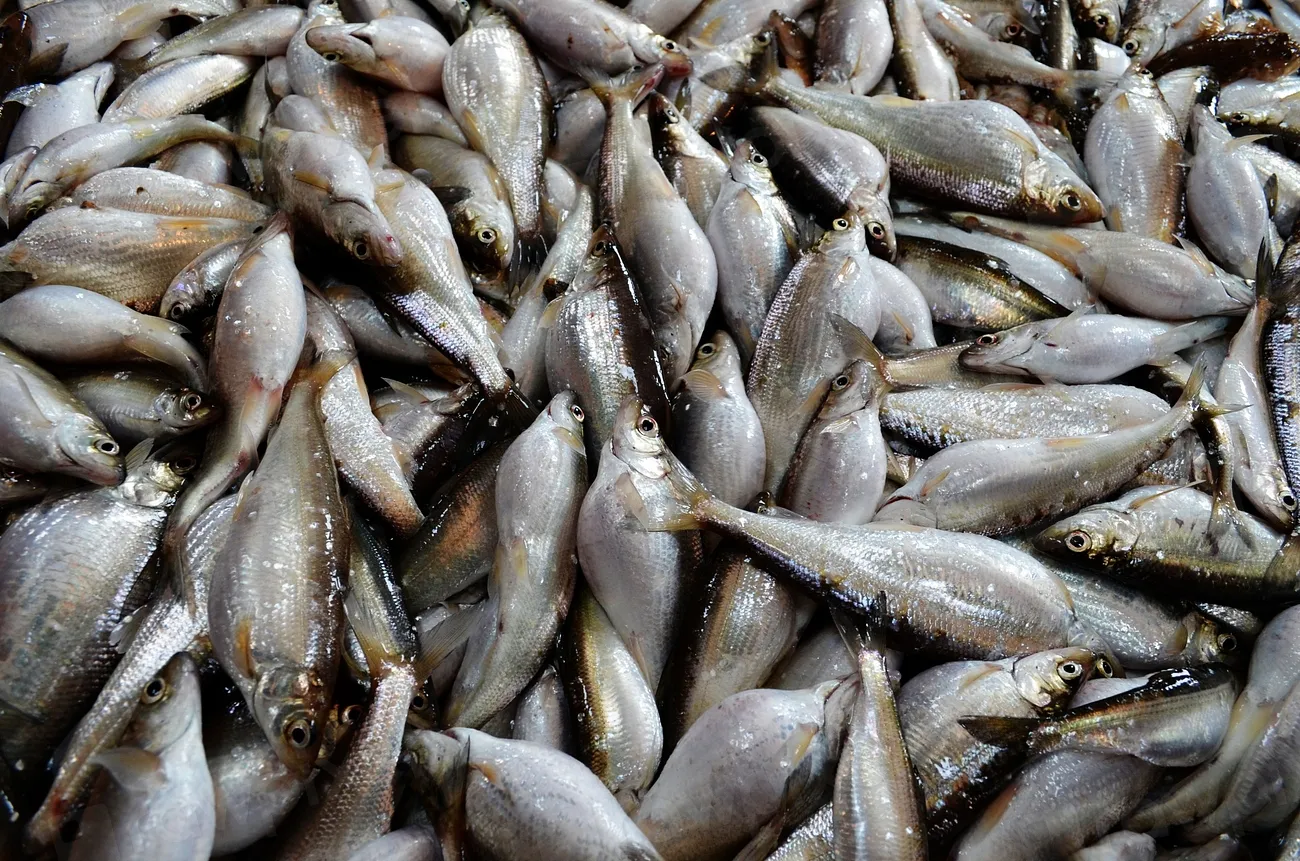
Alden’s story starts long before tourists arrived with kayaks. The Ojibwe were here first, and they called the lake Waswaaganing, “lake of the torches,” for the way men fished at night with birch-bark torches, drawing whitefish and trout toward nets and spears. Logging camps followed in the mid-1800s, and the settlement that grew up around Spencer Creek eventually took its modern name after railroad attorney William Alden Smith championed the route, and when the line opened, local residents renamed their village Alden in his honor. The old depot still stands today, restored as a museum after Helena Township reached an agreement to buy the building from the railroad in 1986, later restoring it as the Alden Depot Park and Museum.
Ongoing Conservation Efforts Protecting the Clarity
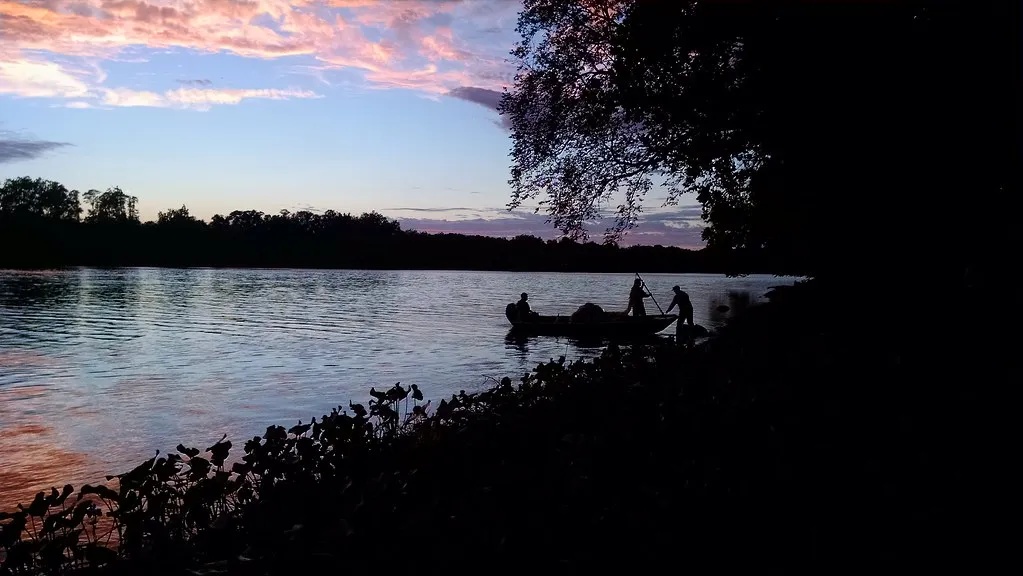
Clear water like this doesn’t maintain itself without attention, and local groups have taken that seriously for decades. The Three Lakes Association has tracked water chemistry on Torch Lake for years, and volunteer-driven monitoring continues through the MiCorps Cooperative Lakes Monitoring Program, which uses volunteer water quality monitors alongside satellite imagery to support a highly accurate predictive water transparency model. There have been challenges along the way. Zebra mussels have made their way into the lake, though as of recent surveys they have invaded this lake also but have not yet entered the explosive growth phase. Watershed groups continue tracking phosphorus inputs from surrounding land use, a quiet but essential part of keeping the lake’s chemistry in the range that supports such deep visibility.
Things to Do in and Around Alden
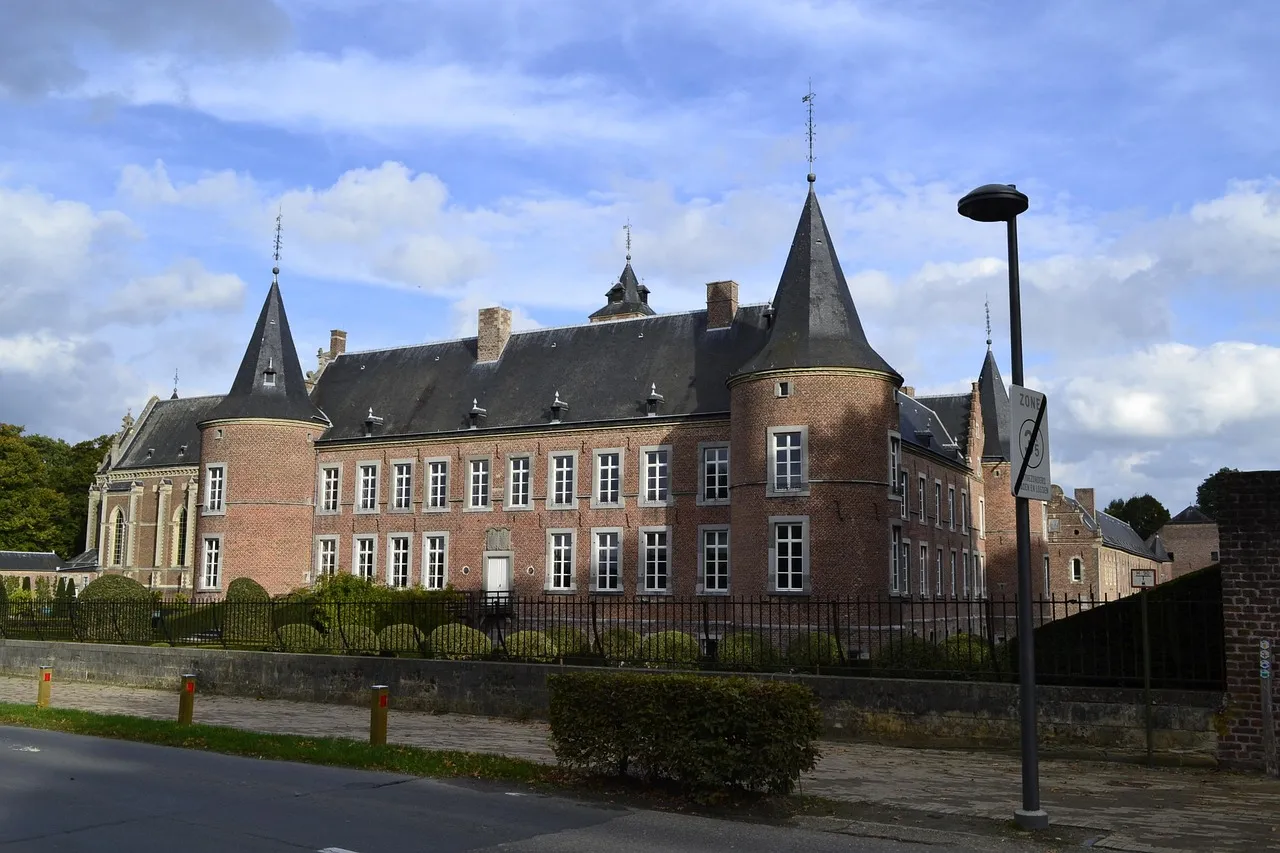
Once you’re actually in town, the pace matches the scenery. Visitors can spend an afternoon strolling through town with an ice cream cone in hand, watching boats drift through the marina, or taking a leisurely walk to the beautifully restored Alden Depot Park and Museum. On the water itself, options range from quiet paddling to faster pursuits, since the area supports canoeing, kayaking, windsurfing, paddle boarding and fishing, ski boats, and jet skis.
Anglers in particular have plenty to work with, as the lake is known for fishing, featuring lake trout, rock bass, yellow perch, smallmouth bass, muskellunge, pike, ciscoes, brown trout, steelhead, rainbow trout, atlantic salmon and whitefish. Downtown Alden rounds things out with small shops and galleries that feel more like discoveries than tourist stops.
Nearby Natural Areas Worth the Detour

Alden makes a good home base, but it’s also close to several worthwhile side trips. The Grass River Natural Area sits a short drive away, a 1,325-acre preserve with 3 miles of boardwalks and wood-chipped trails, including a Perception Pathway for the visually impaired that’s also wheelchair and stroller accessible. Torch Lake connects into a broader network of waterways too, part of what’s known locally as the Chain of Lakes Water Trail leading through another five lakes and the connecting rivers. For anyone who wants a full day on the water without repeating the same stretch of shoreline twice, that connected system offers a lot of room to explore.
Visiting Alden: Practical Notes for Travelers
Alden works well as either a weekend escape or a longer stay, and it rewards visitors who slow down rather than rush through. Summer remains the obvious high season for swimming and boating, though the surrounding region stays active well into fall with hiking and orchard visits nearby. Michigan’s broader lake network makes casual exploration easy too, since the state’s official site notes you’re never more than 6 miles from a body of water or 85 miles from a Great Lake. Anyone planning a visit should check current water quality advisories before swimming, a routine precaution recommended across the state’s lake destinations, and treat the shoreline with the same care that’s kept it this clear for so long.
A Lake Worth the Quiet Reputation
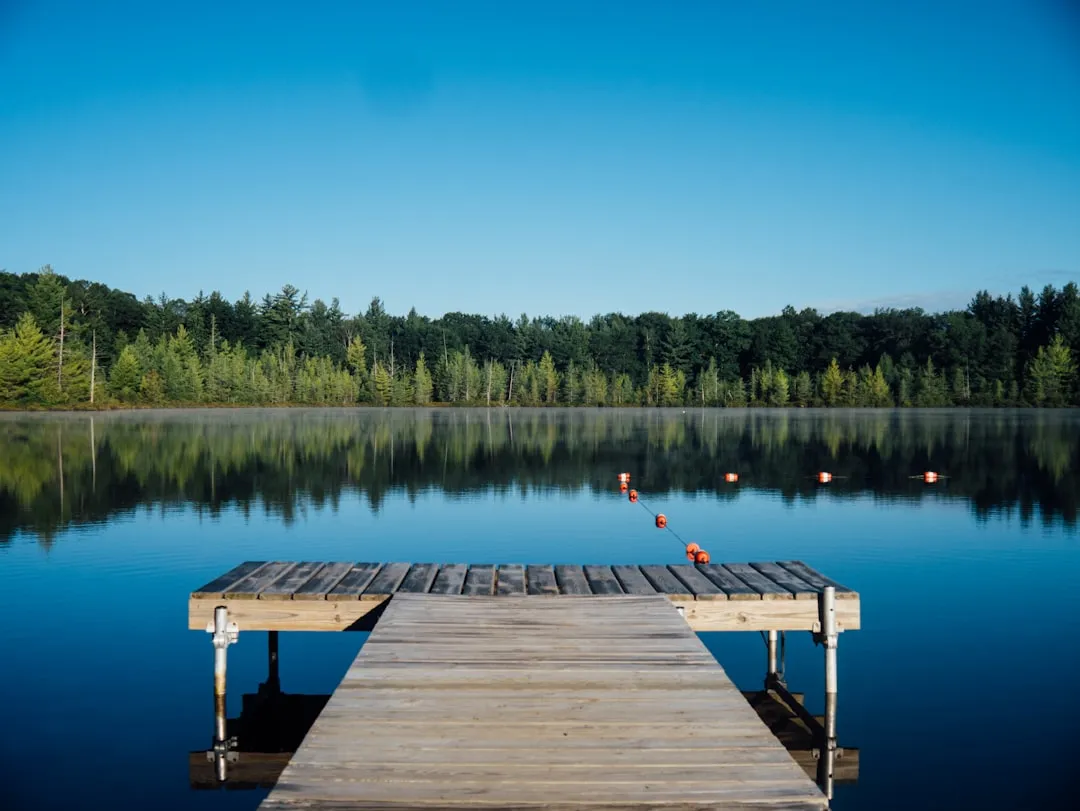
Torch Lake and the village of Alden don’t need exaggeration to make their case. The clarity is documented, the depth is verified, and the color is exactly what photographs suggest it is. What stands out most, though, is how unhurried the whole experience feels, a reminder that some of the country’s most striking freshwater doesn’t come with crowds or fanfare attached. For travelers willing to head north past the more heavily marketed stops, Alden offers a rare kind of payoff: water clear enough to see the bottom, and a town small enough to actually enjoy it.
AI Disclaimer: This article was created with the assistance of AI tools and reviewed by a human editor.