
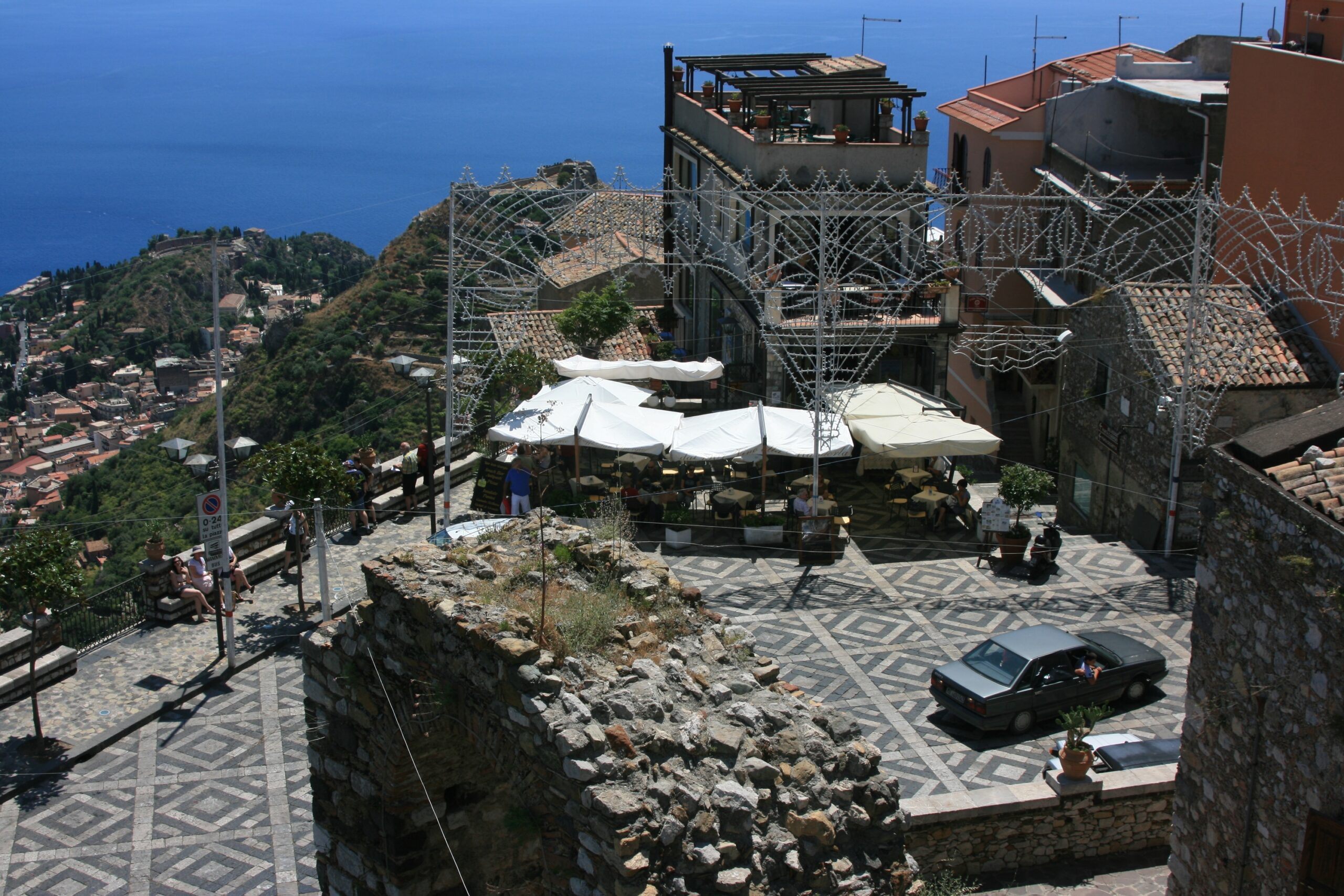
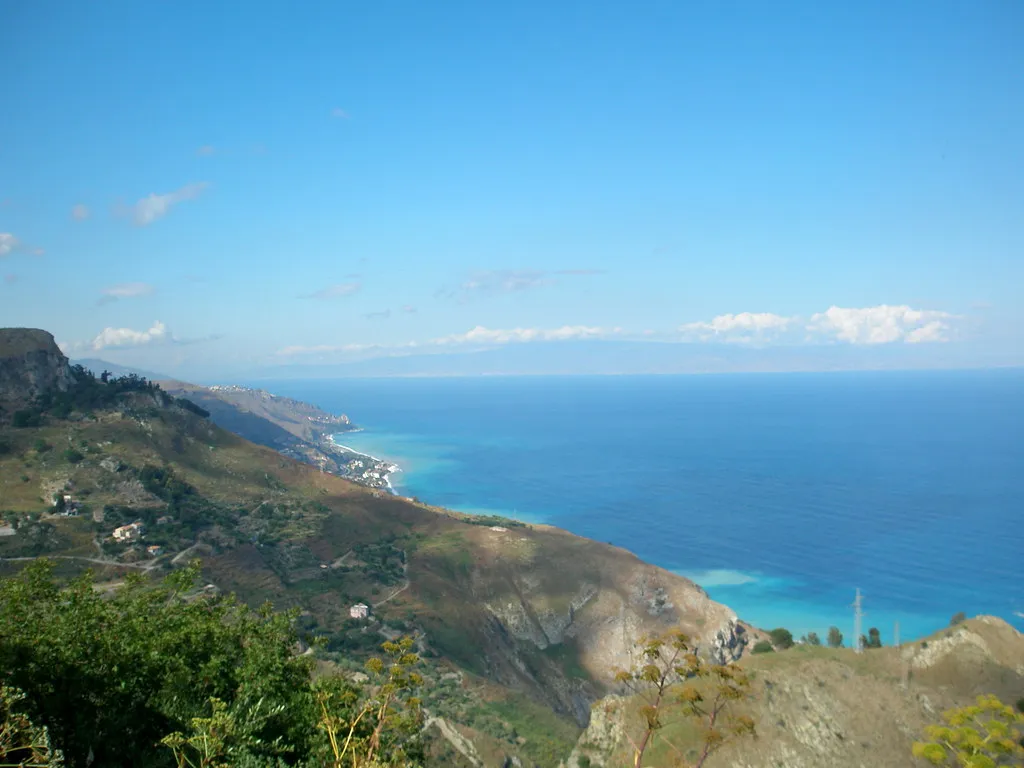
There’s a small village perched above the Ionian coast of Sicily that doesn’t announce itself loudly. No major highway sign, no sprawling tourist infrastructure. Just a winding road that climbs steadily until the sea appears below you, vast and impossibly blue, and a medieval skyline sits suspended in the morning haze.
That village is Castelmola. Recognized as one of the most beautiful villages in Italy through the prestigious “I Borghi più belli d’Italia” designation, Castelmola is a small hilltop commune in the Metropolitan City of Messina, renowned for its stunning panoramic views of Mount Etna, the Ionian Sea, and the Gulf of Naxos. It’s the kind of place that makes you wonder how something so extraordinary remained so quietly itself.
Perched at the Edge of the Sky
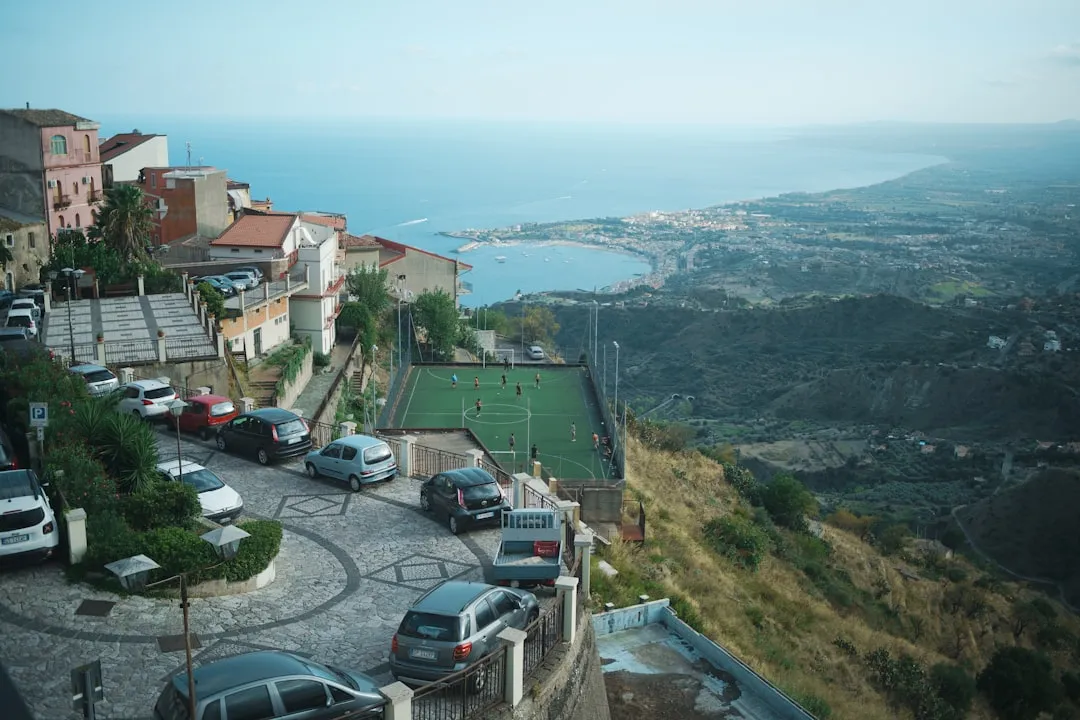
Castelmola sits at an elevation of approximately 529 meters above sea level, covering an area of just under 17 square kilometers, with a population of around 1,073 residents as of early 2025. The scale of what you see from up here is difficult to absorb all at once.
Its houses cluster around a rocky summit, with steep lanes, terraces, and panoramic viewpoints overlooking the sea, Mount Etna, and the sweeping curve of the coastline below. On a clear day, you can even make out the faint outline of Calabria on the Italian mainland across the water.
It is considered one of the most beautiful villages in Italy, with breathtaking views, thanks to its altitude of over 500 metres. That altitude is not just a number. It fundamentally shapes everything about how the place looks, feels, and breathes.
A Village Built on Centuries of Conflict
With origins tracing back to the 9th century, when local leader Costantino Caramalo fortified the site against Arab incursions, Castelmola evolved as an acropolis overlooking ancient Taormina during Greek times and later played a key role in medieval conflicts between French and Spanish forces.
The compact historic centre, built from pale stone and lava rock, reflects the town’s medieval origins and its strategic role as a natural lookout over the eastern approaches to Sicily. Every narrow lane here was, at some point, a military calculation.
The castle has very ancient origins, and a marble plaque near the church dates from the 10th century and refers to the castle, so it is assumed the castle was built in the 9th century, with some experts believing it may have existed here in Roman times. History in Castelmola is not behind glass. It’s underfoot.
The Castle Ruins That Crown the Summit
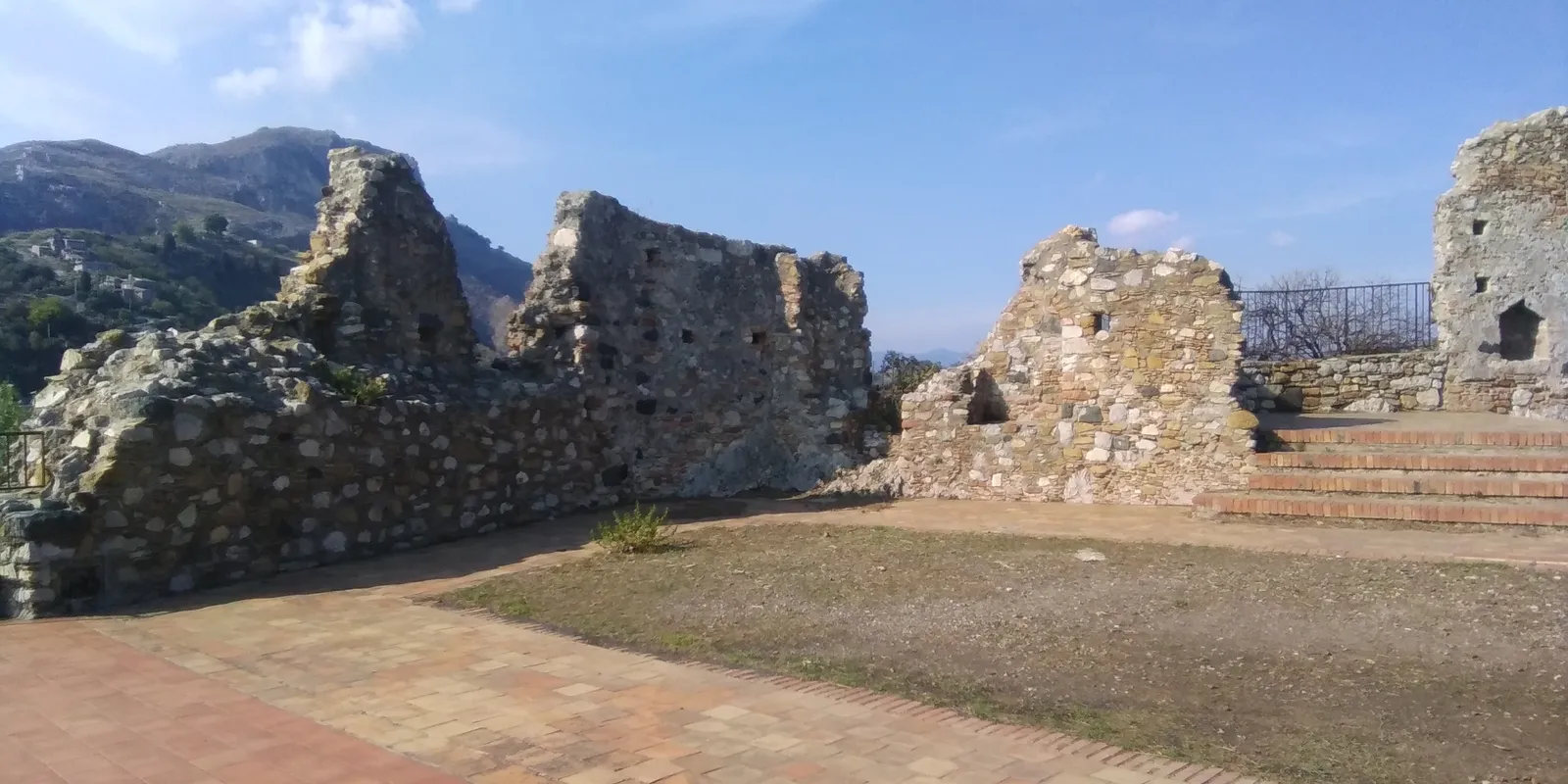
The remains of the Castello di Castelmola crown the highest point, recalling the centuries in which the town served as a defensive stronghold. Today, the ruins are open to those willing to climb a little further beyond the main piazza.
Castelmola takes its name from the Norman castle it was built atop, and alongside its Norman ancestry, the village also holds remnants showcasing its Greek and Byzantine heritage. Layers of civilization are stacked here like geological strata.
From the castle’s heights, the panorama embraces Etna, the bay of Giardini Naxos, and the stretch of coast to the south. It’s one of those viewpoints where you genuinely stop talking for a moment.
Piazza Sant’Antonino and the Famous Mosaic Floor
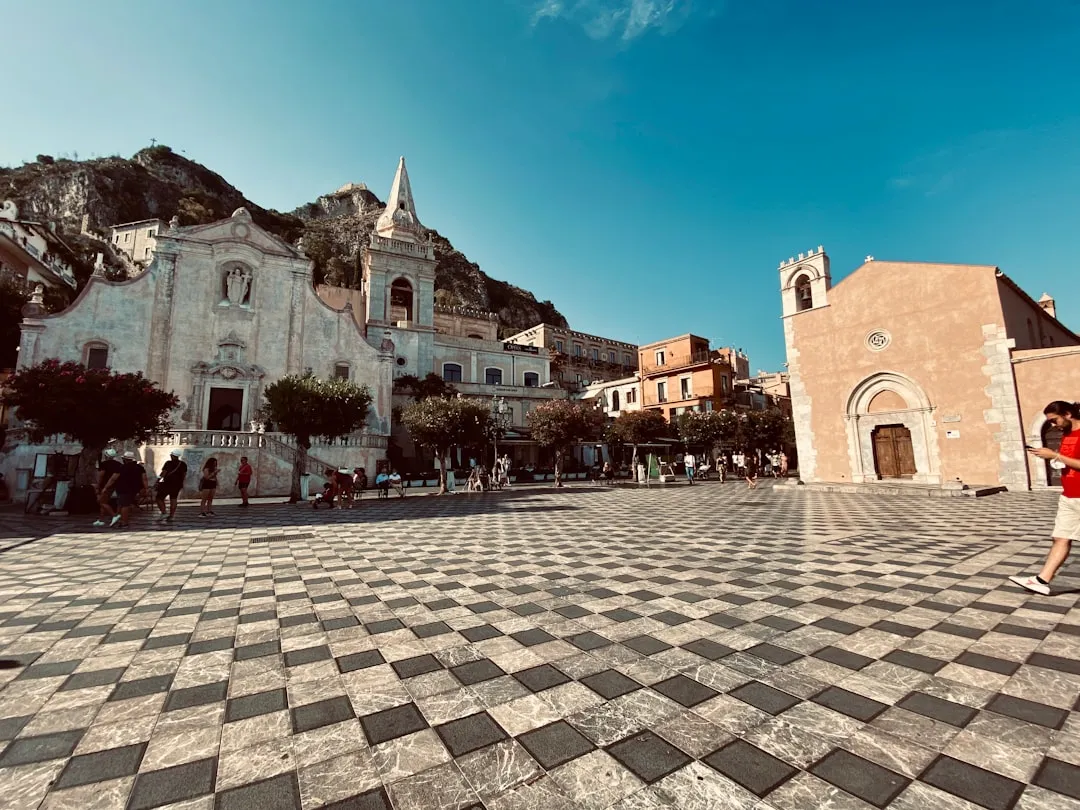
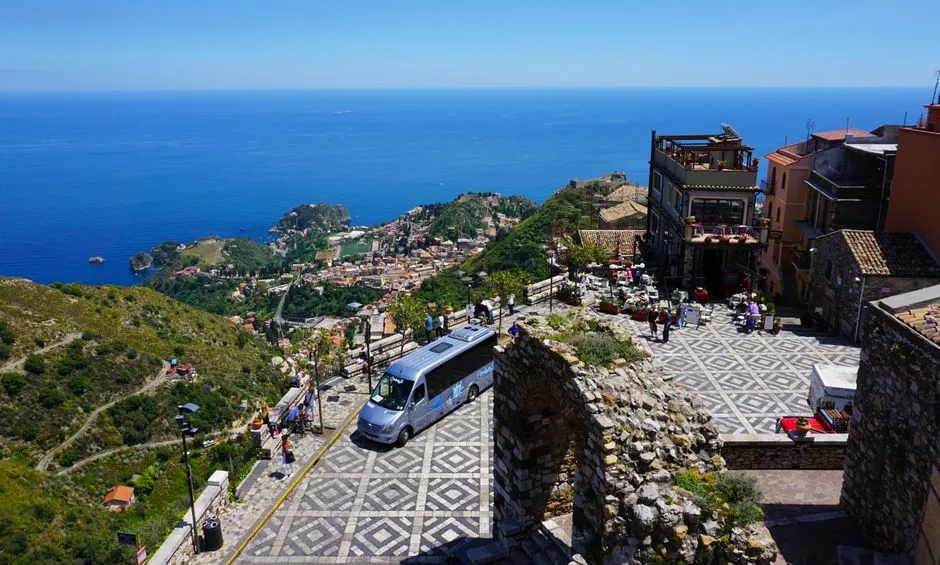
Piazza Sant’Antonino is unmissable, with its mosaic flooring in white stone and lava stone, and a viewpoint from which to admire the splendid Taormina below, as well as part of the Ionian coast and Calabria.
Before moving on, look at the ancient stone arch that represented the entrance to the village and has been moved to a corner of Castelmola. It’s one of those quiet details that rewards the careful observer.
The piazza itself functions as the social and visual heart of the village. Locals gather here in the cooler hours of the day, and the view from the balustrade shifts color from hour to hour as the sun moves across the water below.
The Churches and Spiritual Architecture
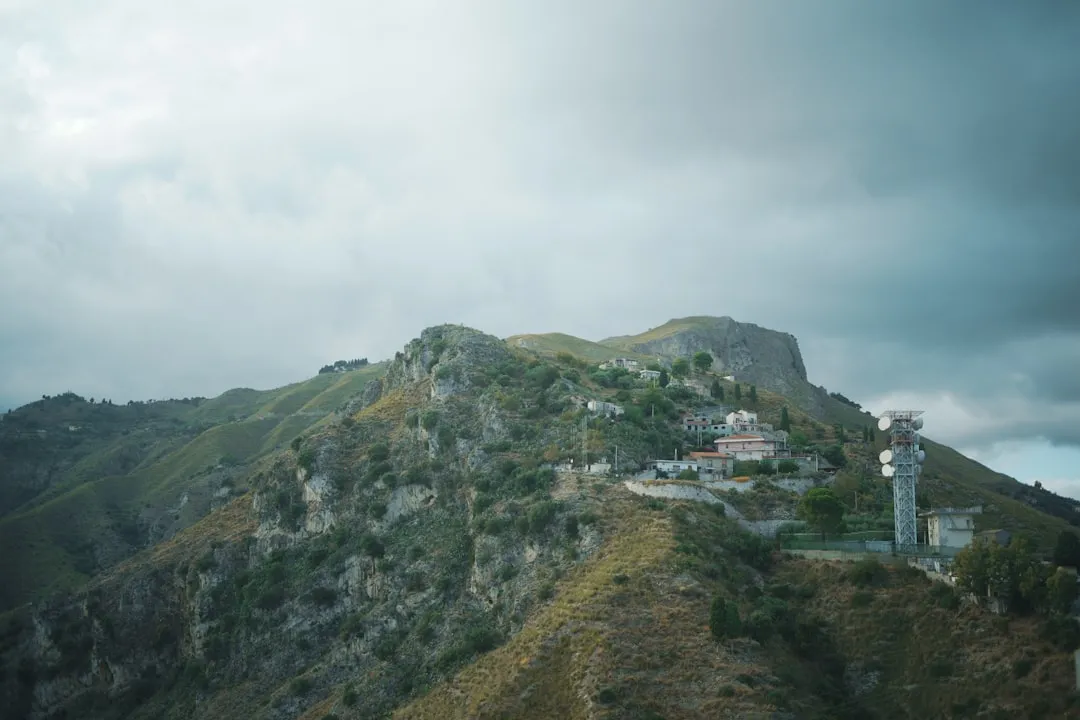
The Mother Church of Castelmola is named after St Nicholas of Bari and overlooks a beautiful square, where visitors can pause before continuing to discover the most hidden glimpses of the village.
The oldest religious temple in the village, founded after the arrival of San Pancrazio in Taormina for his evangelisation mission, is the Church of San Biagio. The church of San Biagio also contains an eighteenth century fresco.
Small churches, traditional houses, and scenic piazzas give the settlement its distinctive character, while local crafts and long-standing traditions continue to shape cultural life. Religion and daily life here have never been fully separate things.
Bar Turrisi and the Taste of Almond Wine
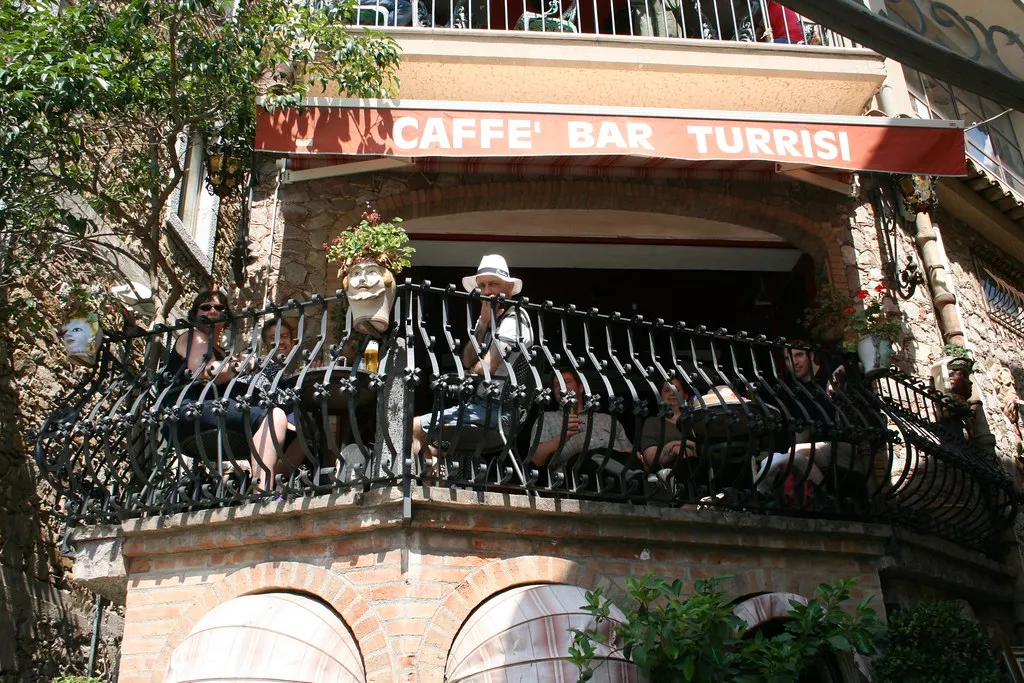
Bar Turrisi is a well-known local bar housed in a multi-level building filled with carved wood, ceramics and mosaics reflecting ancient fertility themes. While the bar is famous for its eccentric decor, it also offers views from its balconies and rooftop terrace. The menu includes almond wine, a Castelmola speciality, and it has become a quirky but iconic part of the village’s identity.
The white wine flavoured with almonds, orange essence and herbs was historically given out by a local figure to welcome visitors to the village. That tradition of hospitality through food and drink has never really left.
Stopping for a glass of almond wine while looking out over the rooftops of Taormina far below is one of those simple travel moments that quietly becomes a memory you carry home.
Getting There: The Practical Reality
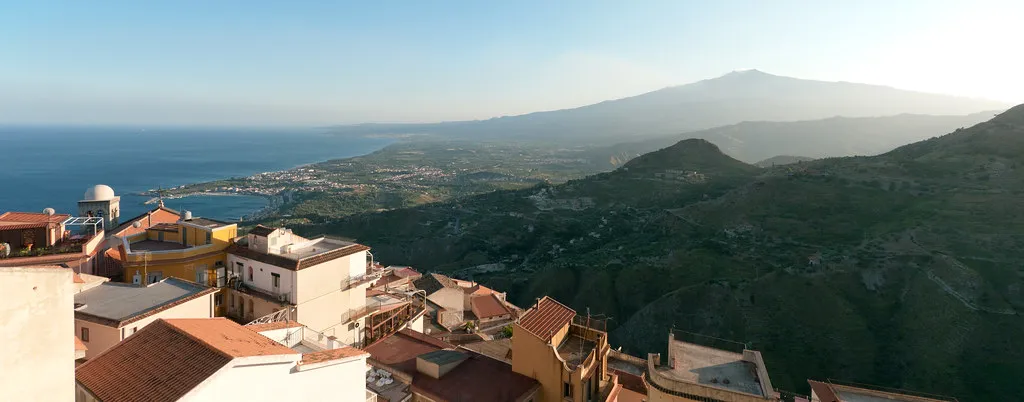
From near Taormina on the east coast of Sicily, it is an easy 35-minute drive to reach Castelmola. Given the size of the village, only residents are able to enter Castelmola with their small vehicles, and an ample parking area is provided for visitors.
To reach Castelmola from Taormina, the local bus is a cheap and easy option. The ride itself is part of the experience, winding past terraced hillsides and glimpses of sea.
The best advice is to visit anytime apart from summer. Early September, for instance, offers perfect weather with far fewer visitors. The village rewards those who arrive with a little patience and comfortable shoes.
Castelmola Within Sicily’s Wider Tourism Surge
Sicily had a notable year in 2024, hosting over 21.5 million tourists, up roughly four percent from the year before, with foreign arrivals jumping by a solid eleven percent. Smaller hill towns are increasingly benefiting from this momentum as travelers look beyond coastal resorts.
Tourism is growing in Sicily, but in a profoundly unequal way. Between 2015 and 2024, arrivals increased by more than a quarter and presences by nearly a fifth, exceeding seven million arrivals and twenty-two million overnight stays.
The Sicilian Region has launched initiatives like “Experience Sicily All Year Round” and “Sicily in Winter,” targeting visitors during quieter months to spread the benefits of tourism more evenly across the island. For villages like Castelmola, that shift matters enormously.
Sicily’s Recognition as a Culinary Destination
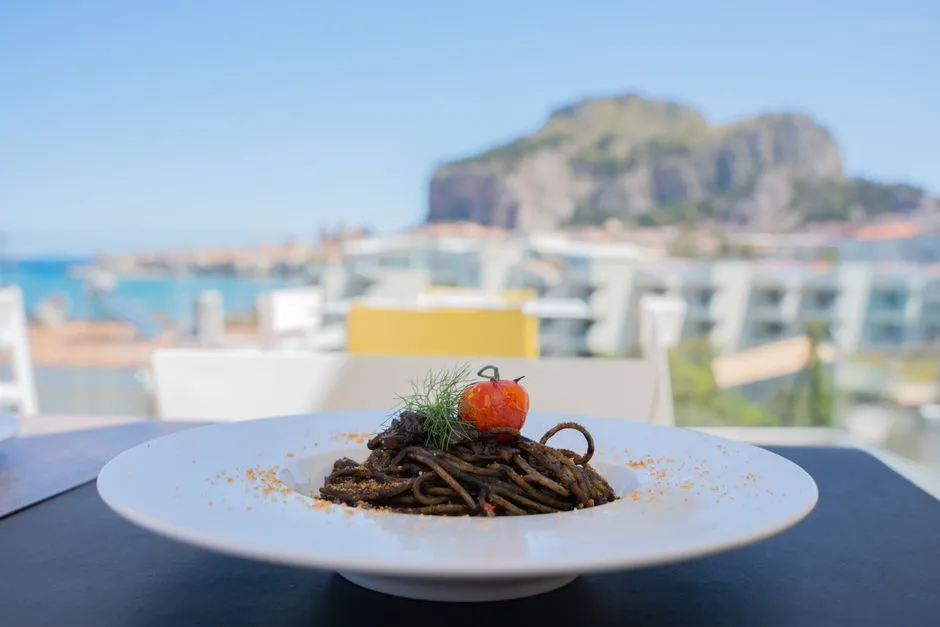
In 2025, Sicily became the first Italian region to be recognized as a European Region of Gastronomy by the International Institute of Gastronomy, Culture, Arts and Tourism. That recognition elevates the entire island, including its smallest hilltop communities.
Castelmola has always had its own culinary identity, anchored in almond products, local herbs, and the stone-fruit orchards that climb the slopes below the village. The gastronomy here is quiet and specific rather than performative.
From exploring ancient castles and churches to wandering through narrow streets lined with traditional houses, Sicily’s beautiful villages offer unique windows into the island’s past, and are also known for their stunning natural surroundings. The food is simply part of that larger inheritance.
The Village That Time Didn’t Forget, Just Slowed Down
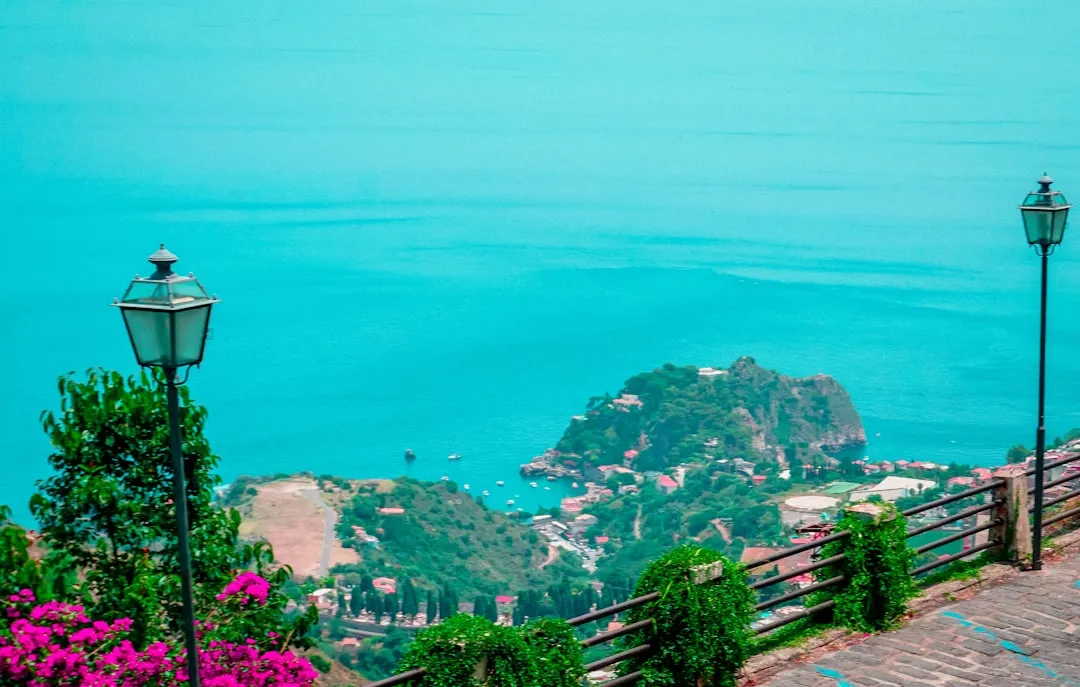
With its stone houses, flower-filled balconies and small, traditional cafés, Castelmola retains an authentic charm, making it the perfect destination for those seeking history, stunning views and local traditions away from mass tourism.
Provisional data show the village population has declined steadily in recent decades, a trajectory driven by rural-to-urban migration as younger residents sought employment opportunities in larger cities like Messina or Catania. The quiet that defines Castelmola today is partly a product of that history.
In Castelmola, your gaze will be lost in a palette of colours that makes it one of the most picturesque corners of Sicily. There is something rare here: a place that has held its shape despite everything that has changed around it.
The Takeaway
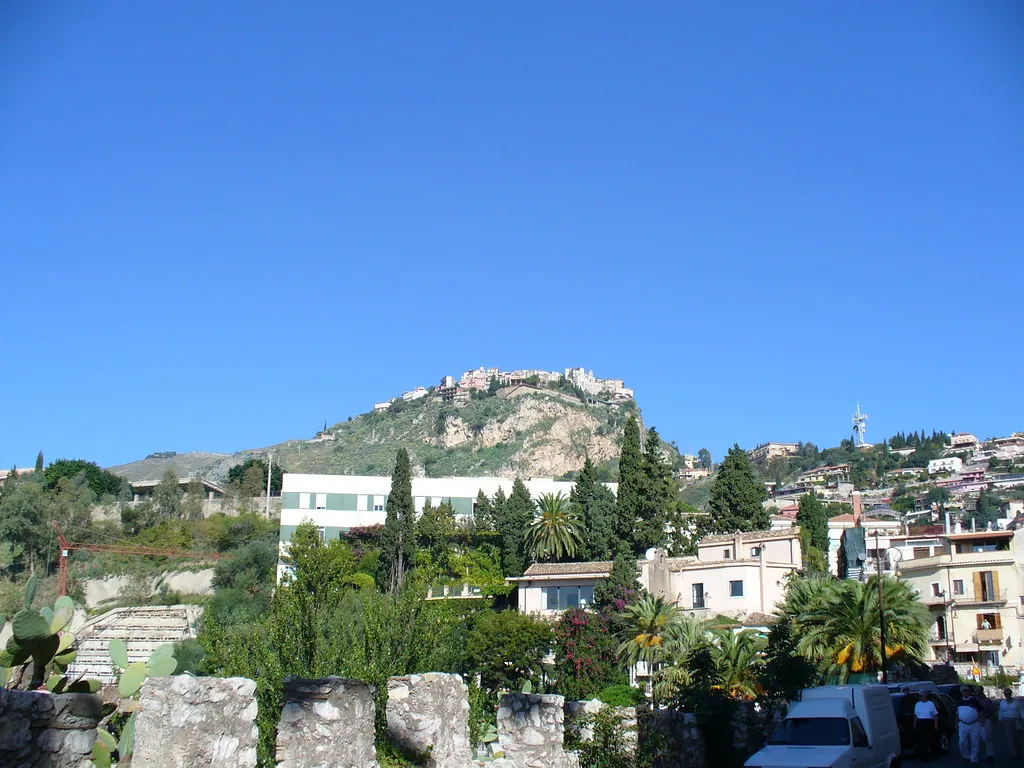
Castelmola doesn’t need to be discovered. It has been there for over a thousand years, watching the sea, watching Etna, watching Taormina grow busier below it while it stayed still.
What it offers to a visitor is proportionate and honest. The views are real. The streets are genuinely medieval. The almond wine is poured without ceremony. Positioned directly above Taormina, Castelmola forms part of one of Sicily’s most visited areas, linked by panoramic roads and walking paths that connect the coastal resorts with the mountain landscapes.
It takes perhaps two hours to walk the whole village. That’s enough time to understand why people who have been there once tend to find reasons to go back.
AI Disclaimer: This article was created with the assistance of AI tools and reviewed by a human editor.