
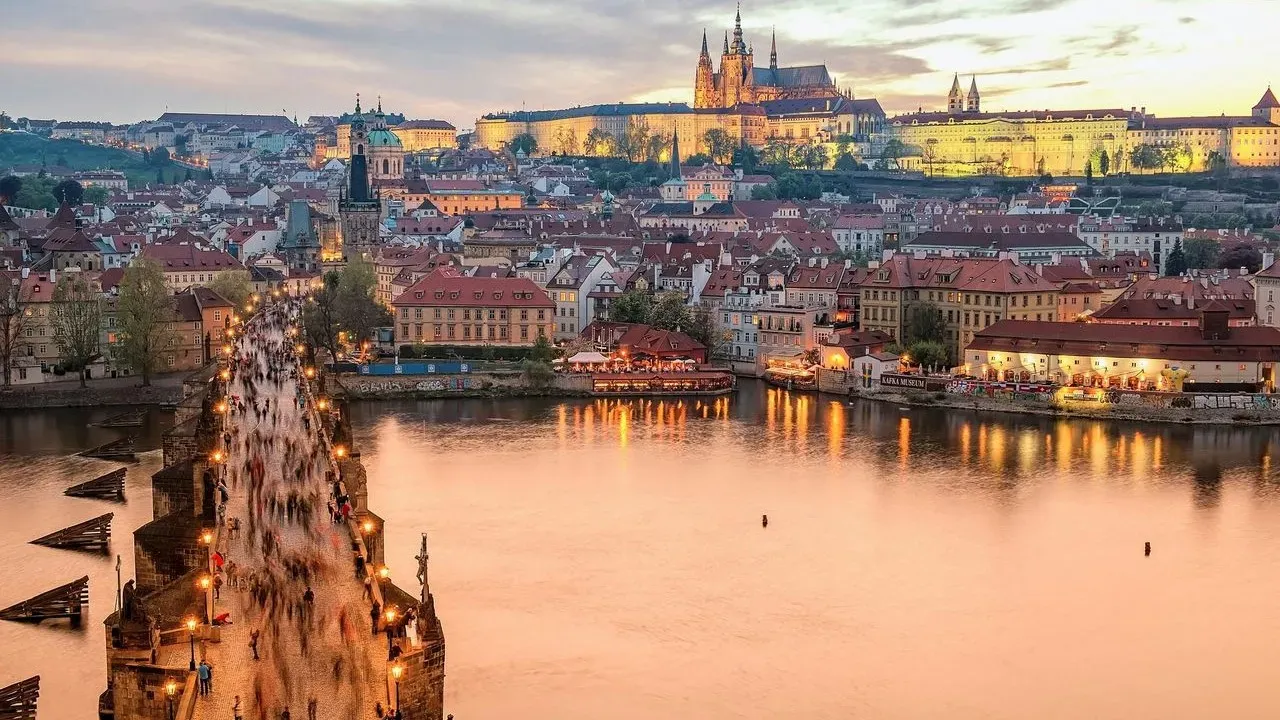

Prague rewards visitors who approach its compact historic core with intention rather than haste. A recent return visit in September 2026, shared with a companion experiencing the city for the first time, confirmed that three well-sequenced days allow newcomers to absorb the Old Town, cross the Charles Bridge, explore the castle heights, and wander the Jewish Quarter without missing key experiences or running into avoidable closures. ([1])Five nights based in the Old Town provided the perfect base for four full days of walking that felt unhurried yet complete.
The Value of Thoughtful Sequencing
Prague’s calendar of openings and closures shapes any efficient plan more than crowds alone. The Jewish Quarter sites close on Saturdays, certain museums observe Monday closures, and St. Vitus Cathedral begins its Sunday schedule later due to services. Placing the castle district on a Monday or the Jewish Quarter on a Saturday can turn an afternoon into a series of closed doors, while the right order keeps momentum alive from morning light through evening strolls.
The city’s walkable scale supports this approach. Most points of interest lie within five to fifteen minutes of one another on foot, with only the castle ascent eased by a short tram ride. This layout lets travelers linger over details such as the Astronomical Clock’s hourly performance or the layered views from the Old Town Hall tower without feeling the pressure to rush between distant sites.
Day One: Settling Into the Old Town Core
Begin in Old Town Square, where the Astronomical Clock draws its hourly audience and the surrounding pastel facades and Týn Church towers set the tone for the visit. An early ascent of the Old Town Hall tower offers an immediate orientation, revealing the square below and the castle silhouette across the river. The Klementinum’s guided tour follows naturally, revealing the Baroque library and astronomical tower in a timed slot that rewards advance reservation.
Afternoon hours can include the Museum of Medieval Art at St. Agnes Convent before an evening paternoster ride at the City Hall and a crossing of the Charles Bridge at golden hour. The bridge’s statues and the Old Town Bridge Tower frame the river views that have drawn travelers for centuries, creating a gentle close to the first full day.
Day Two: Rising to the Castle and Beyond
The second day shifts upward to the castle district, where the complex of palaces, St. Vitus Cathedral, and Golden Lane unfolds at a measured pace. Circuit tickets allow flexible pacing across two days if needed, while the Lobkowicz Palace and nearby gardens provide quieter moments amid the historic architecture. A visit to the Strahov Library adds a contemplative note, even without the visitor pass coverage.
From the castle heights, the descent toward Petřín Lookout Tower and the funicular offers sweeping perspectives back across the city. This sequence balances the grandeur of the castle with the more intimate scale of Malá Strana’s streets, leaving energy for an evening return to the riverfront.
Day Three: Layers of Culture and Contemporary Prague
The final day turns to the Jewish Quarter and New Town, where synagogues, the Old Jewish Cemetery, and the Spanish Synagogue reveal centuries of layered history. The Powder Gate and House at the Black Madonna introduce Cubist architecture, while the Dancing House provides a striking modern contrast along the river. A self-booked cruise included with the Prague Visitor Pass offers a relaxed vantage on the city’s bridges and skyline.
This ordering respects the practical realities of opening hours while allowing time to absorb the distinct character of each neighborhood. The compact distances mean the day flows naturally from quiet courtyards to lively squares without exhausting transitions.
Extending or Adjusting the Plan
Travelers with only two days can combine the Old Town and castle elements, while those with four or five nights might add a day trip to Kutná Hora or Karlštejn. The Prague Visitor Pass, activated upon arrival, covers transport and most ticketed sites across the three core days, making the sequence even more seamless for first-time visitors who prefer to focus on experience rather than logistics.
Reservations for timed entries and popular restaurants further smooth the journey, especially during busier seasons. The result is a visit that feels both comprehensive and personal, grounded in the city’s enduring appeal and the quiet satisfaction of moving through it at the right rhythm.
AI Disclaimer: This article was created with the assistance of AI tools and reviewed by a human editor.