
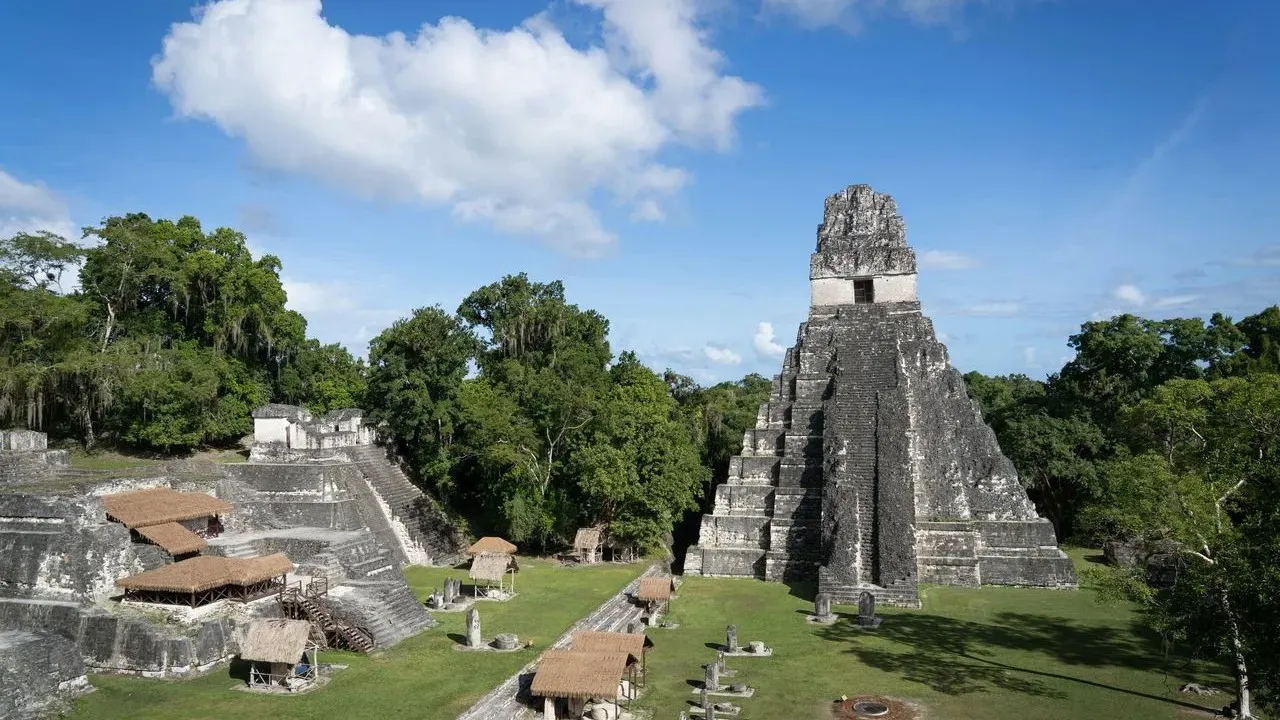

Few ancient cities still feel as far from the modern world as Tikal. Deep in the lowland forest of northern Guatemala, its stone temples emerge above the treetops, and the surrounding jungle shapes the experience as much as the ruins do. For travelers planning a trip this year, the site offers both archaeological depth and a rare sense of isolation, along with a responsibility to protect the people and the ecosystem that keep it intact. ([1])
A City That Rises From the Canopy
The defining feature of Tikal is its remoteness. Tikal National Park is located in Northern Guatemala’s Petén Province within a large forest region often referred to as the Maya Forest, which extends into neighbouring Mexico and Belize. Visitors who arrive expecting a roadside ruin are often surprised by how much of the landscape remains wild. Wildlife moves through the park, and the temples appear without warning over the green roof of the forest.
That sense of discovery is part of what makes the place memorable. The ruins are spread across a wide area, so the walk between complexes becomes a part of the day rather than a delay. Many visitors find that the forest sounds, the humidity and the shifting light give the stone structures a quieter presence than they would have in an open field.
Heritage Protected on Two Fronts
Tikal’s protected status is unusual. In 1979, Tikal National Park was designated a UNESCO World Heritage Site for both its cultural and natural significance, making it one of the few locations in the world recognized under both criteria. UNESCO lists the property as a mixed site, and it is recognized for its archaeology as well as its biodiversity.
The park’s history reaches back further than its World Heritage listing. Tikal was declared a National Monument in 1931, gazetted as a National Park in 1955, and its regulations and borders were defined in 1957. The park also sits inside a much larger conservation landscape. The Maya UNESCO Biosphere Reserve covers 2,112,940 hectares and surrounds the park. For visitors, this means the forest is not simply a backdrop to the ruins. It is a living system that the park is designed to keep intact.
What matters now: Tikal is both an archaeological monument and a protected forest. Responsible visits support the stewardship of the ruins and the wildlife that depends on the surrounding habitat.
Planning a Visit for 2026
Most travelers reach Tikal from Flores, the lakeside town on Lake Petén Itzá. From Lake Petén Itzá, the drive to the ruins takes about 90 minutes, depending on the starting point, road conditions and stops. Staying on the lake rather than rushing straight through can give the trip more depth, since the region has its own communities and landscapes to explore.
A few practical points shape a thoughtful visit:
- Two seasons in Petén: dry (November to April) and wet (May to October). Dry months are generally easier on trails, while the wet season brings greener forest and fewer visitors.
- Tikal National Park is open daily from 6 AM to 5 PM.
- Many guides recommend at least half a day, though a full day allows a slower pace.
- A guide makes the historical context much more meaningful.
- Mosquitoes are a real concern in the Petén jungle, so strong repellent and long sleeves on trails are advisable.
Entrance fees and tour prices change, so travelers should confirm current costs with the park or a reputable operator before booking. Tour arrangements also deserve care. Visitors are advised to use an established tour operator, organized shuttle or reputable private driver rather than arranging transportation with someone they do not know.
Visiting With Respect for Maya Heritage
Tikal is a Maya heritage site, and the people of the Petén are part of its living story. The Petén region has indigenous Q’eqchi’ and Itza Maya communities. Travelers who visit nearby villages can make a meaningful difference by approaching them with courtesy and patience.
Simple habits go a long way. Asking permission before photographing people is a basic courtesy, and buying directly from artisans at fair prices supports local livelihoods. Learning a few words of Spanish also helps, since greetings are a respectful way to open a conversation. Guides from the region can add context that no signboard fully captures, and choosing them is one of the most direct ways to share the benefits of tourism with the community.
Respect also extends to the forest. The park belongs to a wider reserve that protects wildlife and plant life, and visitors can honor that by leaving the ruins and the habitat as they found them.
A Measured Way to Experience Tikal
Tikal rewards travelers who slow down. The temples, the wildlife and the silence of the forest are best absorbed over several hours rather than a rushed afternoon. Visitors who plan carefully, hire knowledgeable guides and treat the region’s communities with consideration tend to leave with a fuller understanding of what the site means to Guatemala and to the Maya people whose ancestors built it.
AI Disclaimer: This article was created with the assistance of AI tools and reviewed by a human editor.