
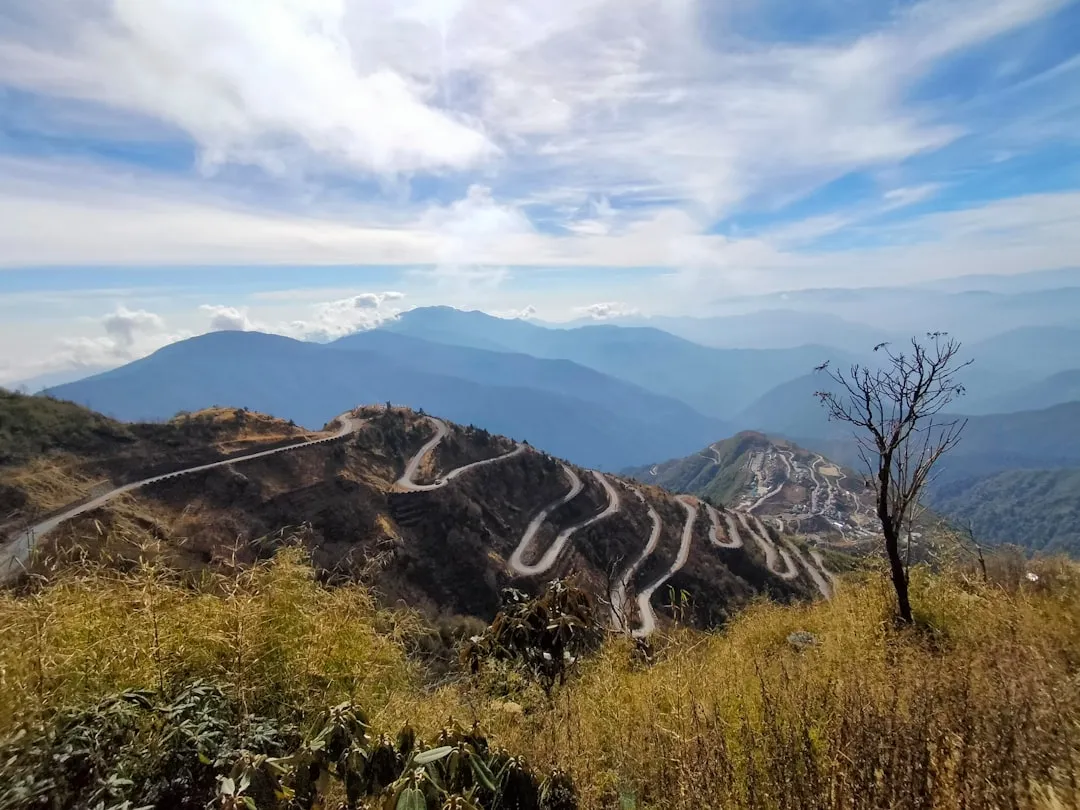

Few places on earth carry the weight of history as quietly and visibly as Uzbekistan. The country sits at the geographic center of what was once the world’s most consequential trade network, and its cities still bear the marks of merchants, scholars, and conquerors who passed through over more than two millennia. Walking through Samarkand, Bukhara, or Khiva today, it’s hard not to feel the cumulative depth of it all.
The architecture here is not merely decorative. It documents a civilization that was simultaneously trading silk, advancing astronomy, and building mosques with engineering precision that architects still study today. This is a visual journey through ten defining chapters of that story.
Samarkand: The Crossroads of Civilizations
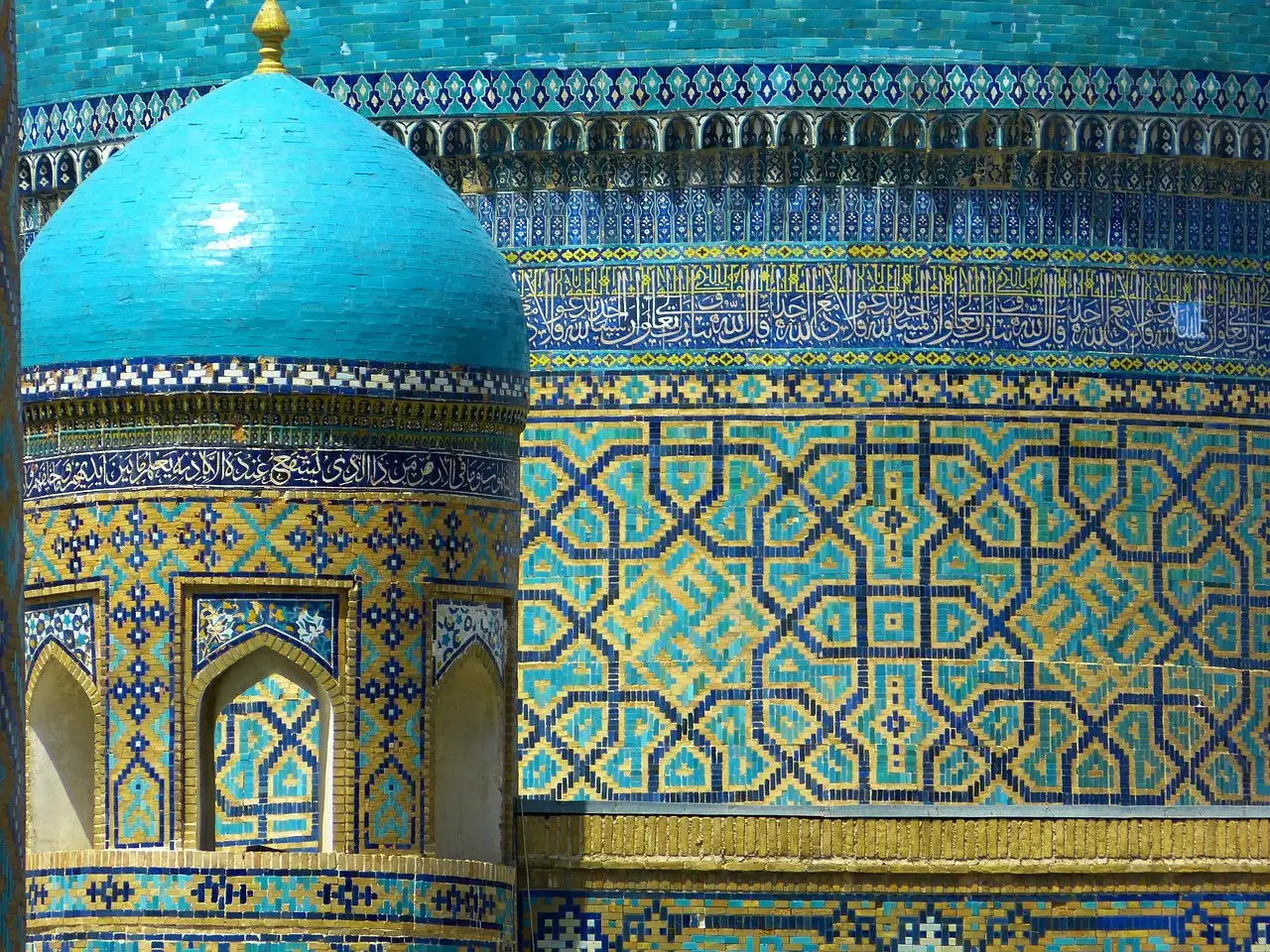
The historic town of Samarkand is a crossroad and melting pot of the world’s cultures, founded in the 7th century BC as ancient Afrasiab. It had its most significant development during the Timurid period from the 14th to the 15th centuries. That layering of time is part of what makes it so extraordinary. Different empires left different fingerprints, and the city absorbed them all without losing its own identity.
Samarkand is one of the oldest continuously inhabited cities in Central Asia and is among Uzbekistan’s most iconic UNESCO-listed sites, inscribed as “Samarkand: Crossroads of Cultures.” Researchers presenting at an international conference in late 2025 shared recent archaeological findings from the Afrasiab site, Registan Square, Shakhi-Zinda, and Bibi-Khanum, revealing continuous urban development over many centuries across successive cultural and historical phases.
Registan Square: The Architectural Heart of the Timurid Empire
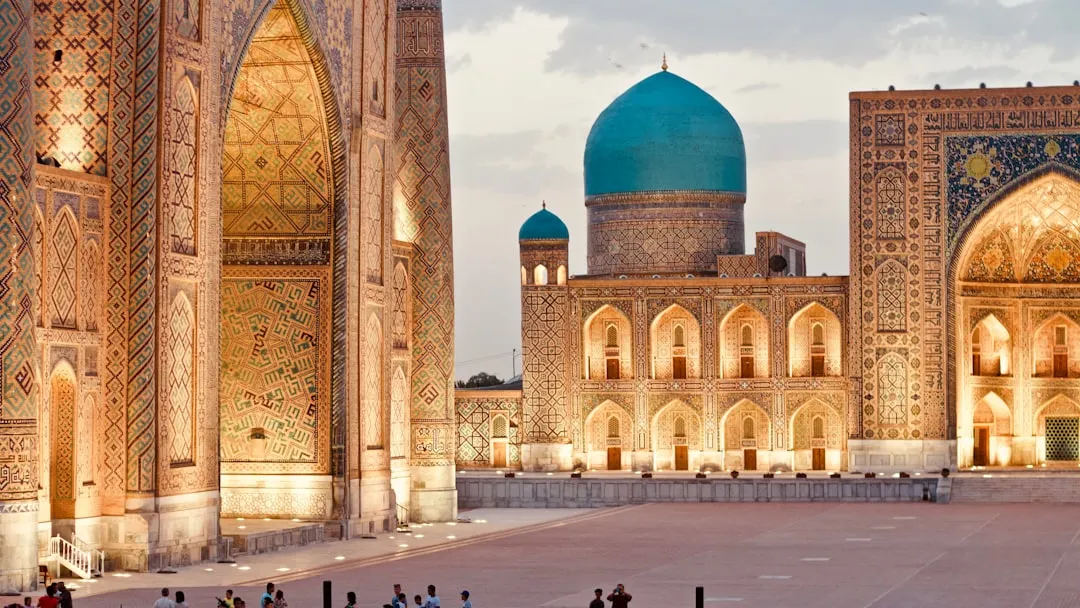
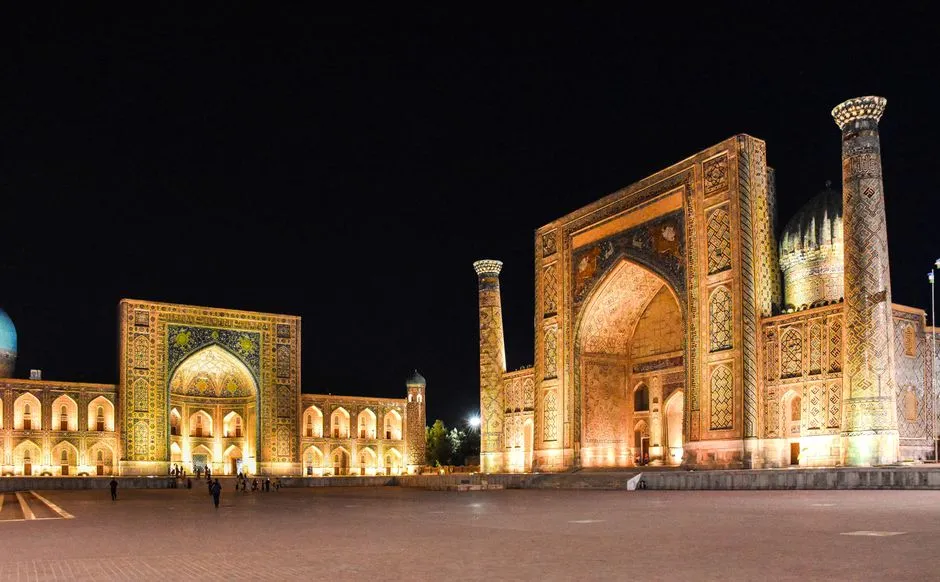
Samarkand’s Registan Square is among the greatest Islamic architectural achievements, symbolizing the architectural and cultural victory of the Timurid dynasty. The square consists of three colossal madrasahs: Ulugh Beg, Sher-Dor, and Tilya-Kori, together symbolizing the splendor and the scientific success of the era. Each of the three structures was built in a different century, yet they form a visually unified ensemble that has no real equivalent anywhere in the Islamic world.
The original Ulug Bek Madrassah dates to 1420 and was named for the brilliant mathematician, astronomer, and Timurid sultan, with its tiled portal depicting the sky and stars. The integration of geometric exactness, celestial symbolism, and urban planning skill in its design is testimony to the scientific genius of the era.
The Bibi-Khanym Mosque: A Monument Built at Imperial Scale
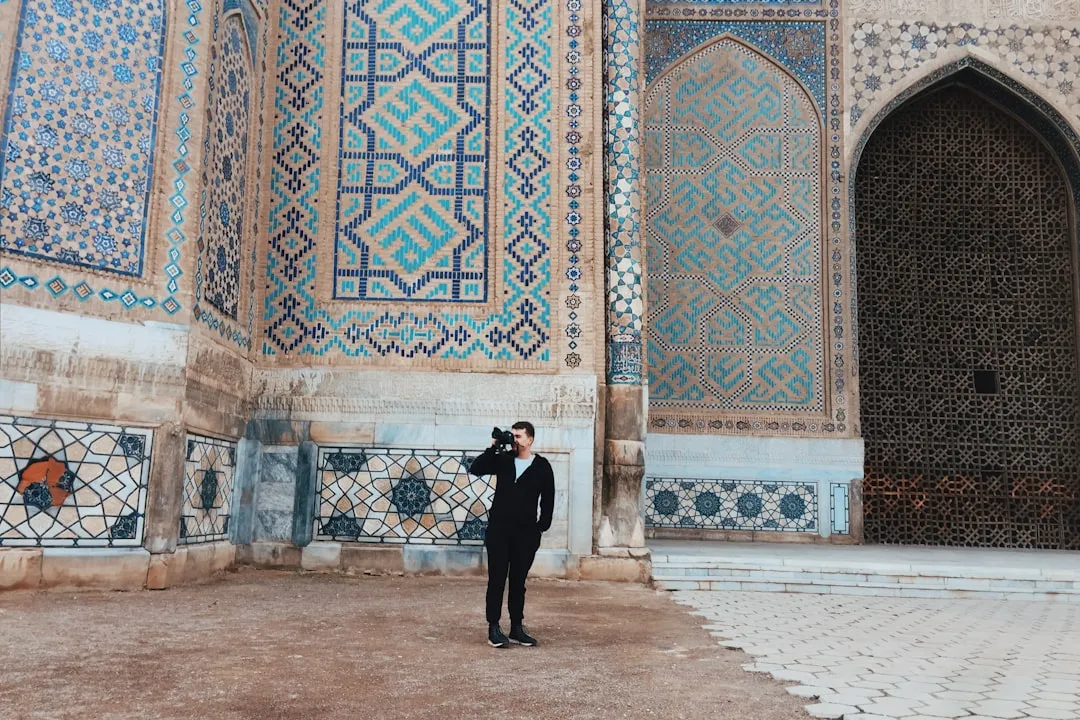
After his military campaign in India in 1399, Amir Timur ordered the construction of an immense congregational mosque in his capital. The construction was overseen by his wife Saray Mulk Khanum, known as Bibi-Khanym. The project was nothing short of extraordinary in its ambition.
It is said that 95 elephants transported the marble and other materials used to build Bibi-Khanum Mosque. More than 10,000 artisans and stone masons shaped its vast domes and soaring archways, and at the center of the mosque sits a massive marble stand believed to have been used as a Quran lectern. The mosque collapsed partially in later centuries, but restoration work has given visitors today a vivid sense of its original overwhelming scale.
Shah-i-Zinda: The Avenue of the Dead and the Living
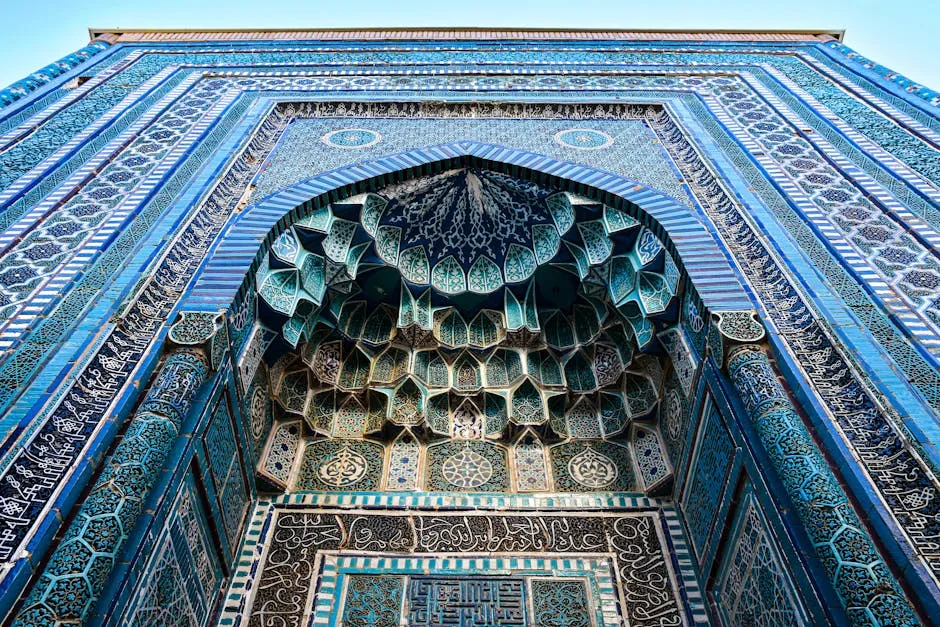
The Shah-i-Zinda ensemble includes mausoleums and other ritual buildings from the 11th through 15th and 19th centuries. The complex was formed over eight centuries and now includes more than twenty buildings. Walking through it feels less like visiting a monument and more like passing through accumulated centuries of grief, devotion, and artistry.
The site contains rare 11th-century graves, though most date to the 14th and 15th centuries, including tombs of Tamerlane’s family members and high-ranking officials. “Shah-i-Zinda” translates to “Living King” and reflects local reverence connected to an ancient legend. The mausoleums line a single narrow street, each displaying unique designs yet forming a unified composition. The hallmark of the complex is the use of glazed tiles in vibrant blue and turquoise, with intricate Arabic inscriptions beautifully contrasting with the earthy, burnt-brick walls.
Ulugh Beg’s Observatory: Where Science Met the Stars
Located near the city of Samarkand, Ulugh Beg Observatory was built in the 1420s by the Timurid ruler Ulugh Beg, grandson of emperor Timur the Lame, also known as Tamerlane. Ulugh Beg, who ruled Transoxiana from 1409 to 1449, had been interested in astronomy from childhood. In 1420 he established a school in his capital where mathematical sciences were taught, and after four years he built his own observatory, one of the largest in the pre-modern era.
In the 15th century, Ulugh Beg recorded 1,018 stars in his Zij-i Sultani, a star catalogue used for centuries after his death. Compiled almost 200 years before the advent of telescopes, the remarkably thorough catalog almost perished with the observatory but escaped into the hands of astronomer Ali-Kushji, who went on to publish the great work. The observatory represented a unique synthesis of Islamic, Persian, and Indian scientific traditions.
Bukhara: The Living Museum of the Silk Road
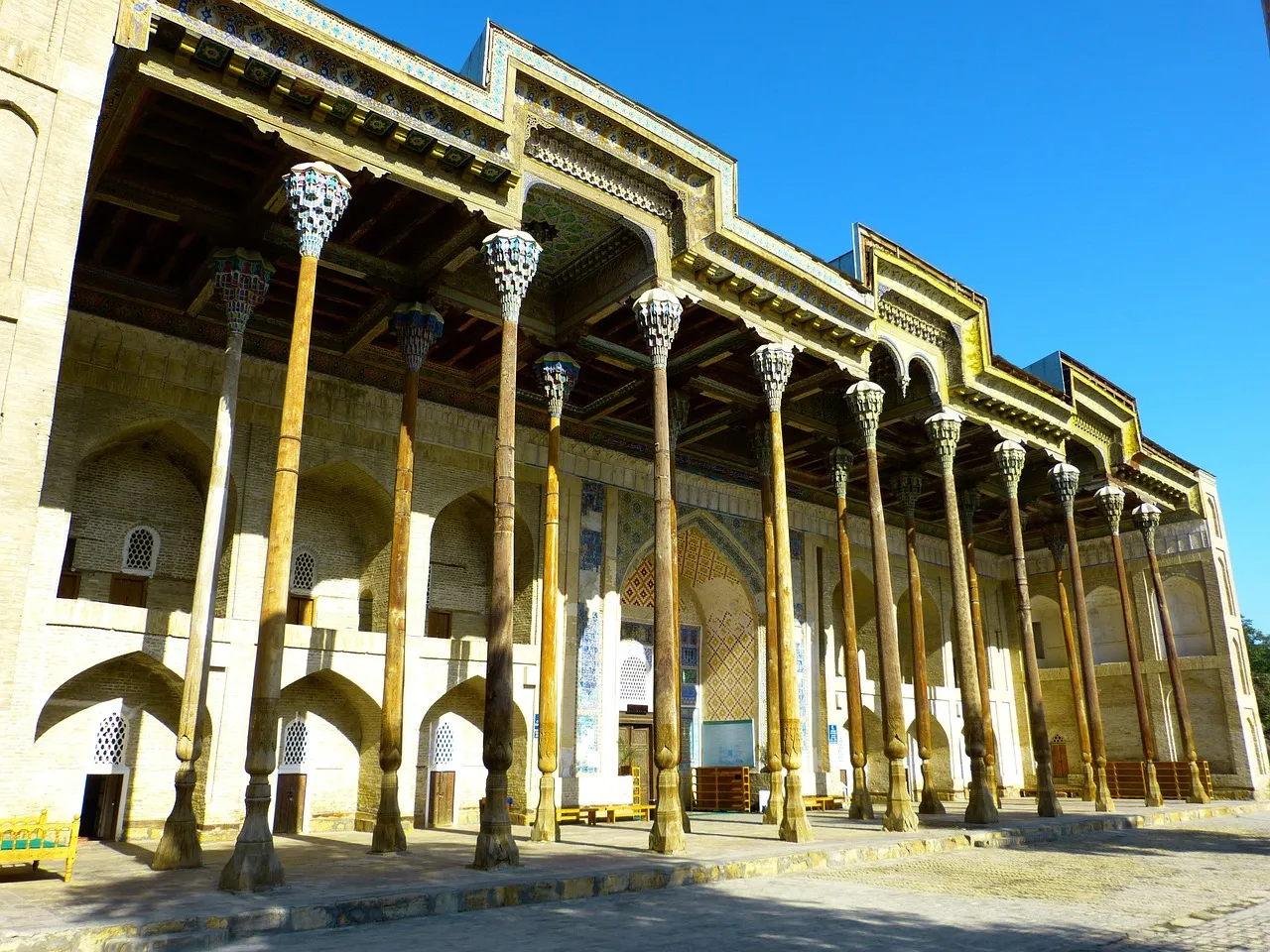
Bukhara is located on the Silk Road and has long served as a center of trade, scholarship, culture, and religion. UNESCO has listed the historic center of Bukhara, which contains numerous mosques and madrasas, as a World Heritage Site. The city is often called a living museum, and it earns that description honestly. Two-thirds of the stories in the more than 400-year history of the Bukhara Khanate took place here, where nearly 170 various styles of Islamic buildings from the Middle Ages are distributed across the old city.
During Bukhara’s growth and increased traffic along the Silk Road, markets and trading spilled into the public crossroads and intersections. Four of the original trading domes still survive today: the Toki Sarrophon, Telpak Furushon, Tim Abdullah Khan, and Toki Zargaron. These modest covered markets have outlasted empires and remain some of the most intact examples of medieval commercial architecture in Central Asia.
The Kalyan Minaret: Bukhara’s Tower That Survived Genghis Khan
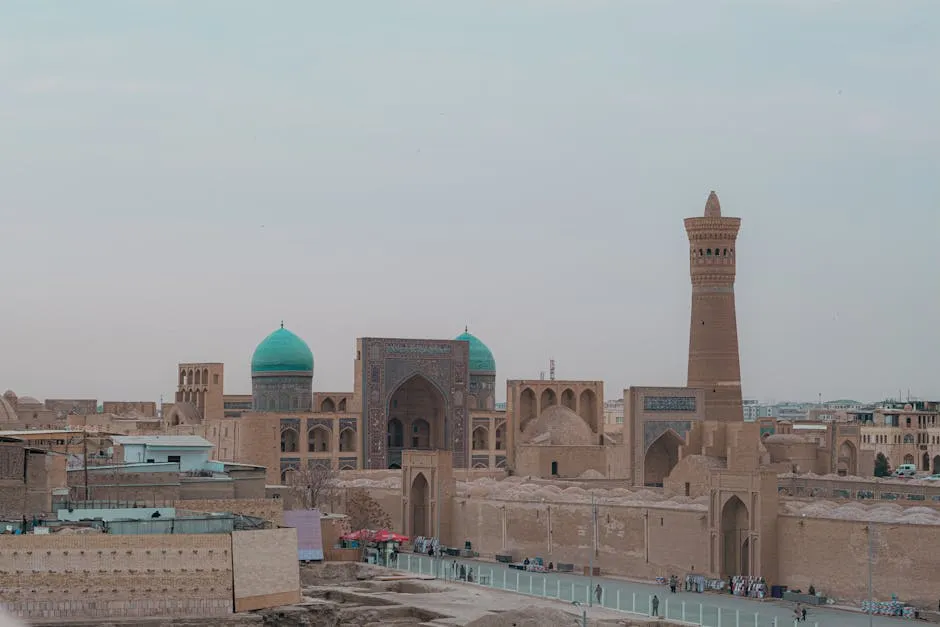
Constructed by the Qarakhanid ruler Mohammad Arslan Khan in 1127, the Kalyan Minaret remains a remarkable architectural monument symbolizing the city’s significance in Central Asia. The architect, known as Bako, carefully designed the structure and took precautions before construction started. The foundations were dug to a depth of at least 10 meters, then filled with mortar and left to settle for two years. The shaft itself was designed to add lateral stability as a measure to protect against earthquakes.
Of particular artistic value are the 12 ornamental bands encircling the minaret’s shaft, each decorated with a unique pattern created through masterful brickwork. The grand structure is crowned by a rotunda with 16 arched openings and magnificent stalactites. Remarkably, over nine centuries, the minaret has remained almost unchanged. Even during Genghis Khan’s siege of the city, when much of Bukhara was destroyed, the conqueror was so struck by the tower’s grandeur that he ordered it to be left untouched.
Khiva and Itchan Kala: The Walled City Frozen in Time
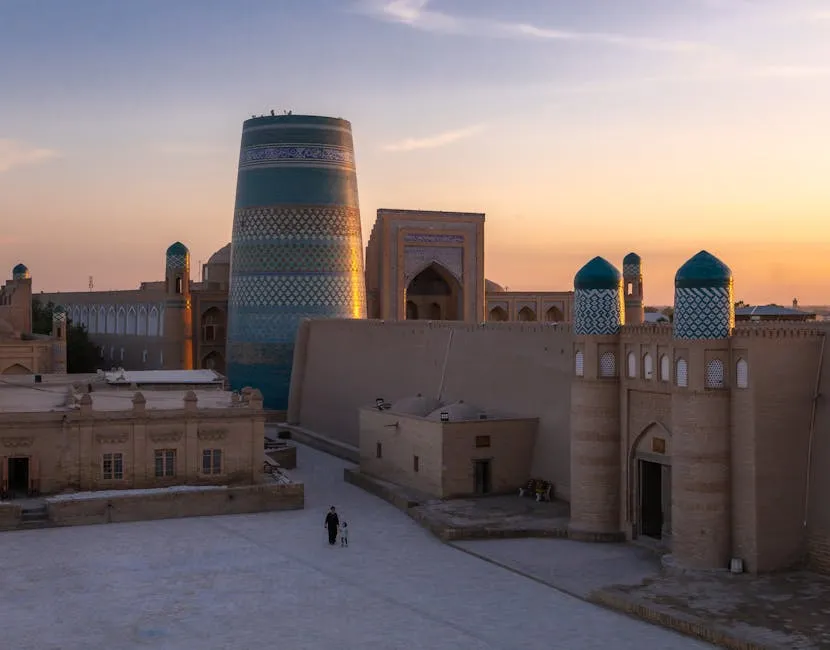
Located in Khiva in northwestern Uzbekistan, Itchan Kala is a UNESCO World Heritage-listed old city known for its well-preserved medieval architecture. In the 17th century, Khiva was an Islamic holy city protected by double fortification walls. Itchan Kala, meaning “Inner Fortress,” refers to the old city within the inner walls, and among all the fortified cities in Central and Western Asia, it stands out as the best-preserved.
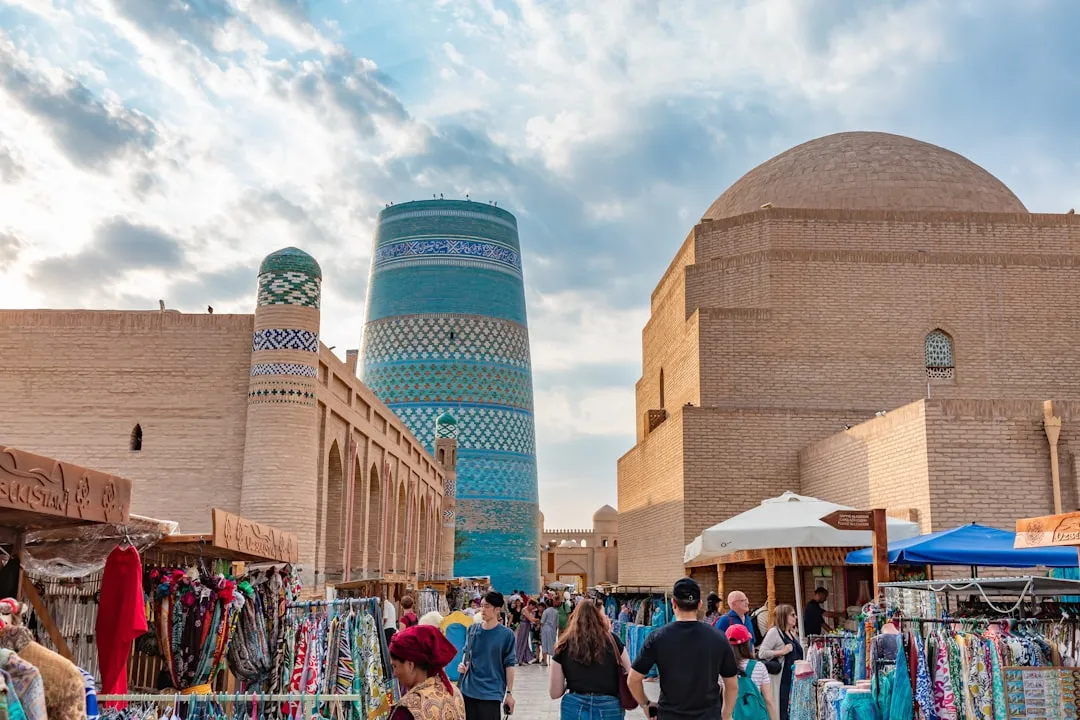
Khiva’s ancient core is often compared to an open-air museum. Surrounded by fortified walls and filled with palaces, minarets, and distinct turquoise-tiled structures, Khiva remains a vivid testament to Uzbekistan’s role in connecting cultures and trade routes across Asia. Its timeless atmosphere appeals to visitors who seek an authentic and well-preserved example of Silk Road architecture. It was recognized as Uzbekistan’s first UNESCO World Heritage Site in 1990.
The Zarafshan-Karakum Corridor: A Heritage Network Recognized in 2024
An 866-kilometer corridor spanning parts of Tajikistan, Turkmenistan, and Uzbekistan recognizes a network of routes rather than a single monument. Navoi, located along the Uzbek section of this corridor, was a significant historical hub. Goods were traded extensively along this route, making the region key to the movement of commodities, ideas, and people between distant cultures.
The Silk Roads: Zarafshan-Karakum Corridor, nominated by Tajikistan, Turkmenistan, and Uzbekistan, joined the World Heritage List with its 33 component sites. Along these historic pathways, the Deggaron Mosque reflects centuries of architectural ingenuity. Clay jars embedded within the walls create natural resonance, allowing even soft voices to carry clearly through the prayer hall. The engineering intelligence behind such details reveals just how sophisticated the builders of this region truly were.
Modern Tourism and the Preservation Challenge
According to preliminary data from the World Tourism Organisation, Uzbekistan experienced unprecedented growth in tourist arrivals in 2025, with visits from 4.2 million travellers, up nearly half compared to 2024, with the highest increase recorded in the second quarter of 2025. The 11-month trajectory suggests that Uzbekistan is on track to hit its goal of between 7 million and 10 million visitors annually by the late 2020s.
The Art and Culture Development Foundation under the Cabinet of Ministers of the Republic of Uzbekistan is leading a renewed effort to preserve, reinterpret, and expand the country’s cultural legacy. The Foundation’s Tashkent Modernism XX/XXI project brings together local and international experts to document, evaluate, and safeguard buildings, several of which are now being considered for UNESCO World Heritage status. Discussions at international research forums have highlighted the importance of integrating heritage preservation with education and community empowerment, while addressing contemporary challenges such as climate change, urban transformation, and tourism pressures.
Conclusion
Uzbekistan’s architectural landscape is not a relic waiting to be archived. It’s a living record of how knowledge, trade, devotion, and craft once converged at the center of the known world. The tilework on a Timurid dome, the acoustic design of a 9th-century mosque, a star catalogue compiled before the telescope existed. These are not curiosities. They are evidence of a civilization that understood its moment and built accordingly.
What’s particularly striking in 2026 is that the conversation around Uzbekistan’s heritage has shifted. It’s no longer only about preservation. It’s about how a nation reconnects its past to its present without reducing either to a performance for visitors. That balance, honestly, is the hardest architecture of all.
AI Disclaimer: This article was created with the assistance of AI tools and reviewed by a human editor.