
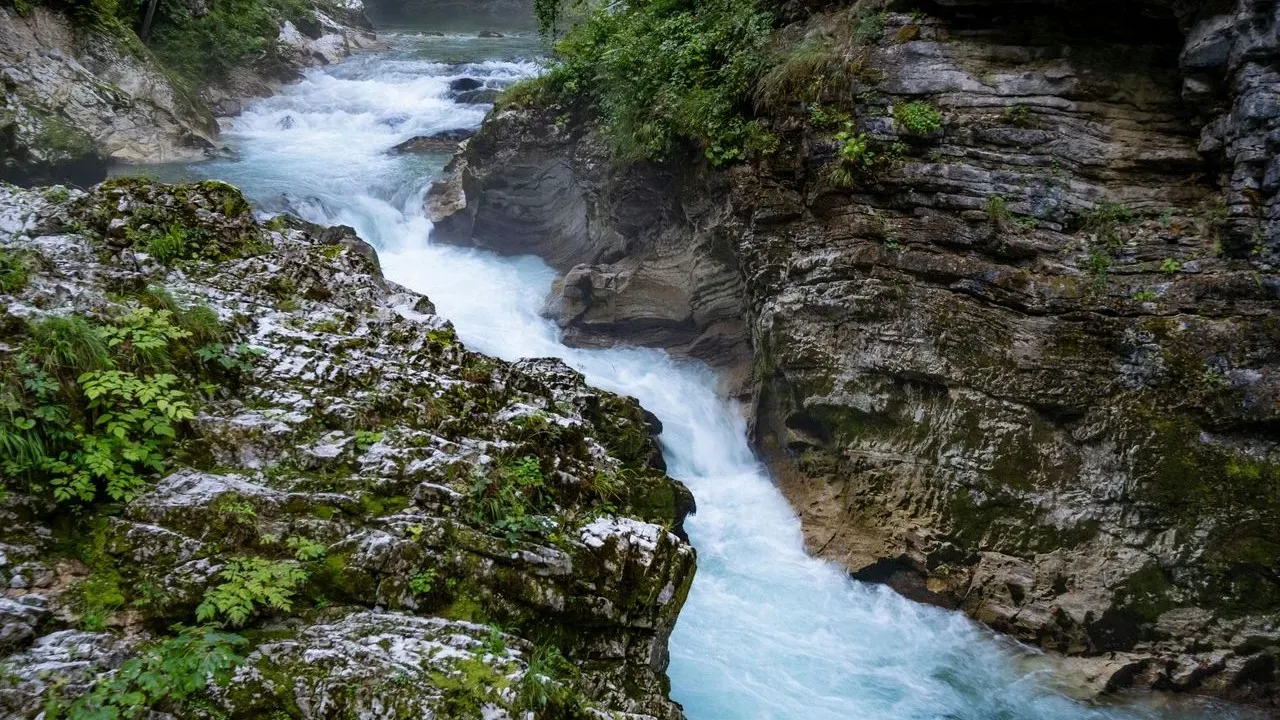

Slovenia’s Vintgar Gorge draws visitors with its narrow limestone canyon and the vivid green-blue flow of the Radovna River below. Boardwalks cling to the rock walls, offering close views of pools, rapids, and the occasional waterfall as the path winds for 1.6 kilometers. The experience feels both intimate and timeless, yet many travelers discover that the journey continues well beyond the gorge itself.
The Canyon and Its History
The Radovna River carved this passage through Triassic limestone between the hills of Hom and Boršt. Over centuries the water shaped walls that rise 50 to 100 meters high, with slopes extending farther above. Boardwalks bolted into the rock face allow passage through sections so narrow that galleries were built in the 1890s to make the route possible. Local figures Jakob Žumer and Benedikt Lergetporer first explored a viable path in 1891. Within two years a committee had raised funds, installed the initial walkways, and opened the gorge to the public on 26 August 1893. The route has welcomed visitors ever since, its wooden planks still carrying people above the changing river that shifts from quiet pools to white-water stretches and back again.
One Direction Through the Gorge
The boardwalk runs only one way, from the Podhom entrance to the Šum waterfall at the far end. This design prevents crowding on the narrow planks and keeps the experience orderly. At the waterfall, roughly 13 meters high and one of the few true river falls in Slovenia rather than a karst spring, the trail ends and visitors must choose how to return. Two marked paths lead back to the starting area. The Path of the River of Trees covers about 2.7 kilometers through shaded forest and takes roughly an hour and a half. The Path of King Triglav stretches 4.1 kilometers, passes the Church of St Catherine with its valley views, and offers open farmland vistas toward the Julian Alps and Lake Bled. Both routes wind through pastures and woodland within the Triglav National Park, rewarding walkers with changing light and quiet countryside.
Planning a Visit
Timed-entry tickets became standard in 2026, with daily numbers limited to protect the site. Adults pay €15 and children under 15 pay €5. Reservations are recommended at least 48 hours ahead during peak summer months, available online or at the central parking area near Bled. Hard hats are provided at the entrance and collected at the Šum exit. The gorge operates from roughly April through November, with hours adjusted seasonally. Early morning or late afternoon slots often bring softer light and fewer people. Allow at least three hours total on site, including the gorge walk of about 45 minutes plus the chosen return trail.
Reaching the Gorge from Lake Bled
Many visitors base themselves at Lake Bled, roughly four kilometers away. A convenient shuttle system runs from the central bus station to the main parking hub and then onward to the entrance. The short rides keep the focus on the landscape rather than logistics. Walking the signed pedestrian route or renting an e-bike for the gentle countryside ride are additional options for those who prefer to travel under their own power. Once the return trail is complete, shuttles wait to carry visitors back to their vehicles or onward connections. The entire outing fits comfortably into a half-day excursion while leaving time to linger over views or a simple picnic. The gorge rewards preparation with an unhurried immersion in one of Slovenia’s most striking natural features. Choosing the return path in advance turns the full loop into a balanced day of water, rock, and open countryside that lingers in memory long after the visit ends.
AI Disclaimer: This article was created with the assistance of AI tools and reviewed by a human editor.