

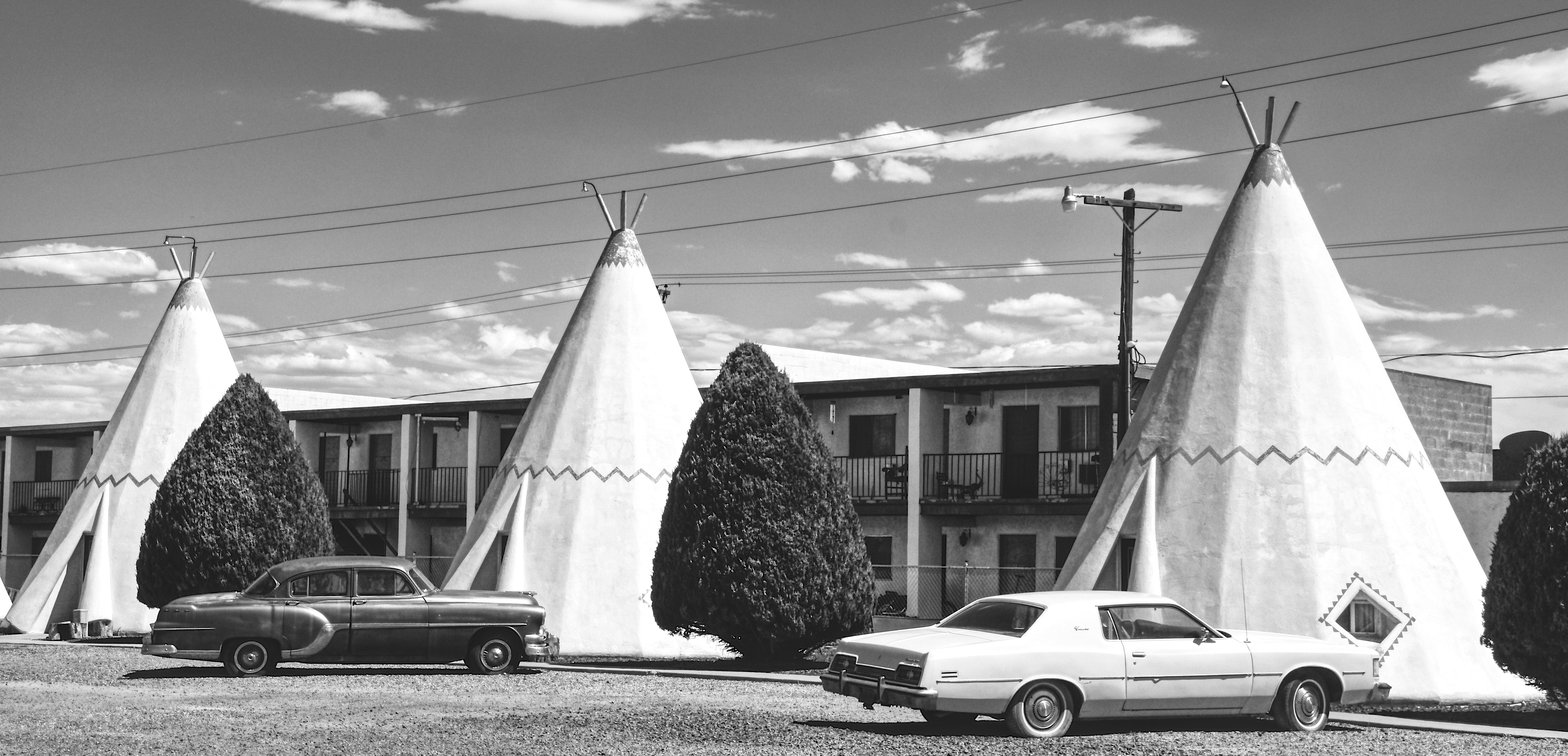
Somewhere between the glow of a neon sign and the crunch of gravel under a family station wagon, American road travel became something more than transportation. It became a ritual. And nothing captured that ritual quite like pulling off the highway to sleep inside a giant concrete teepee.
The roadside teepee motel belongs to a very specific chapter of American life, one built on two-lane highways, long summer drives, and the belief that where you slept was just as interesting as where you were going. Most of those teepees are gone now. A few, improbably, still stand.
The Man Who Built a Teepee and Wondered If You’d Sleep In It
The Wigwam Village story begins with Frank A. Redford, a Kentucky entrepreneur who drew inspiration from a teepee-shaped stand he saw while traveling in California. Back home in Horse Cave, Kentucky, he opened a teepee-shaped lunch counter and gas station in 1933. Customers asked if they could sleep in one, and Redford, wisely, heard opportunity knocking.
He expanded the idea into tourist cabins, patented the design, and in 1937 opened Wigwam Village No. 2 in Cave City, Kentucky, near Mammoth Cave. It had 15 individual teepee-shaped sleeping units arranged around a central lawn, along with a large teepee-shaped building used for dining, gifts, and services. It wasn’t just a place to rest. It was a roadside performance.
He applied for a patent on the ornamental design of the buildings on December 17, 1935, and was granted Design Patent 98,617 on February 18, 1936. Seven Wigwam Villages were built between 1933 and 1949.
Not Wigwams at All: A Terminology Worth Knowing
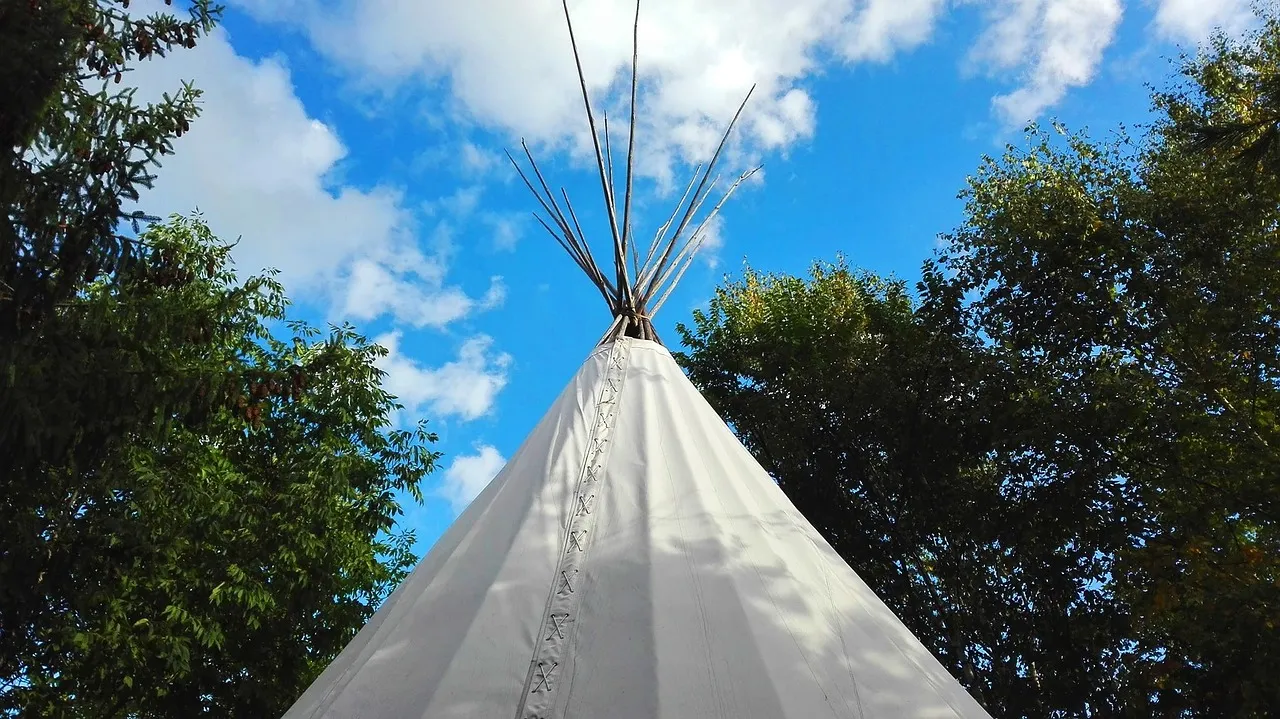
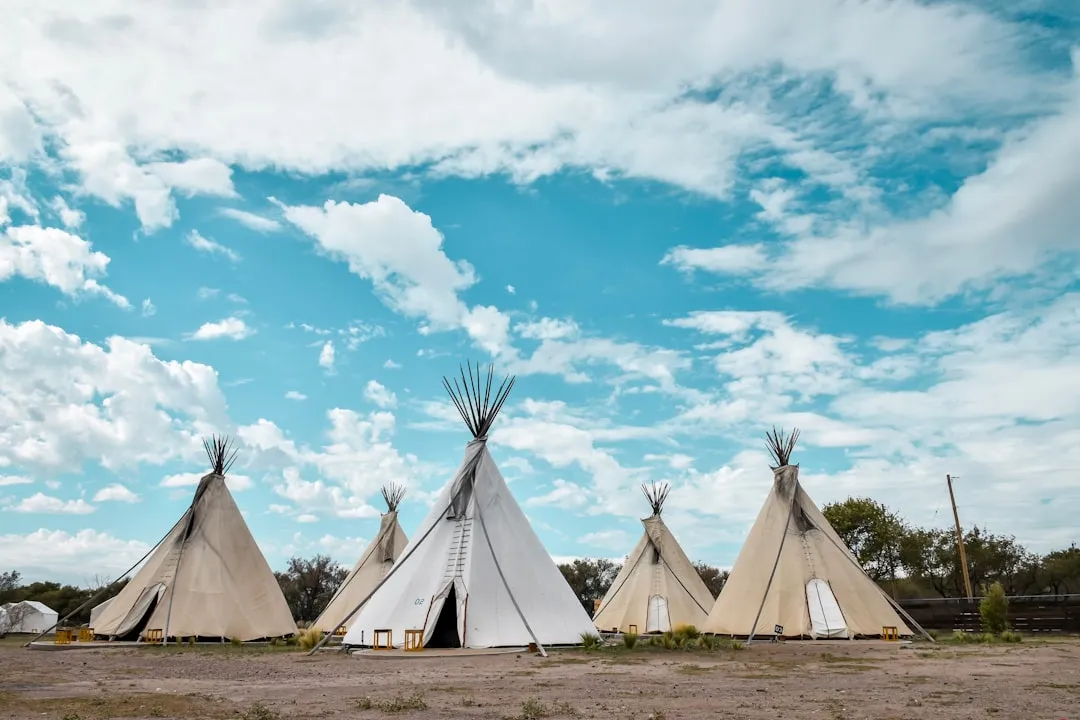
Technically, they were not wigwams. They were shaped more like tipis, the conical dwellings historically associated with Plains tribes. A wigwam is traditionally a domed or arched structure associated with other Indigenous cultures. Frank Redford, however, preferred the word “wigwam,” and the name stuck.
An astute observer will see that the Wigwam Village is not composed of wigwams but of teepees. Redford, who patented the wigwam village design in 1936, disliked the word “teepee” and, ignoring cultural accuracy, used “wigwam” instead.
Another of Redford’s missteps was the use of the wigwam motif in the first place. It was cultural appropriation: the use of an element or elements of one culture or identity by members of another culture or identity. Certainly, decades later, we as a society recognize this was just plain wrong. The current caretakers of Wigwam Village No. 2 in Kentucky acknowledge this openly on their own website.
The Architecture of Attention: Why Giant Teepees Made Sense in 1937
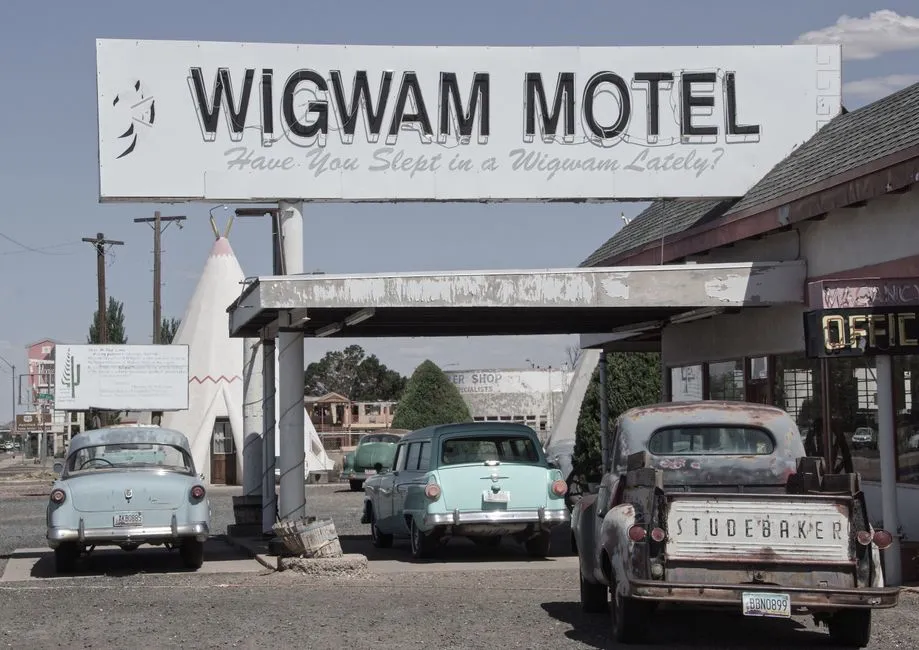
This kind of architecture flourished in the early automobile age, especially from the 1920s through the 1950s. As middle-class Americans bought cars and vacation travel expanded, roadside businesses had to compete for attention. The car created freedom, but it also created speed. Buildings had to become louder.
That world gave us giant oranges, coffee-pot cafes, duck-shaped stores, windmill restaurants, airplane diners, and some of the most recognizable roadside lodging in America: teepee-shaped motel cabins called Wigwam Villages. Because motels catered to a car culture, the primary form of advertising was roadside advertising, with eye-catching features such as distinctive architecture, neon signage, and in later years, swimming pools strategically positioned near street view.
Imagine driving along a two-lane country road when suddenly up ahead you see Wigwam Village’s white teepees and distinct neon sign: “Sleep And Eat In A Wigwam.” That combination of spectacle and simplicity was the whole strategy, and it worked.
Seven Villages Across America: The Original Chain
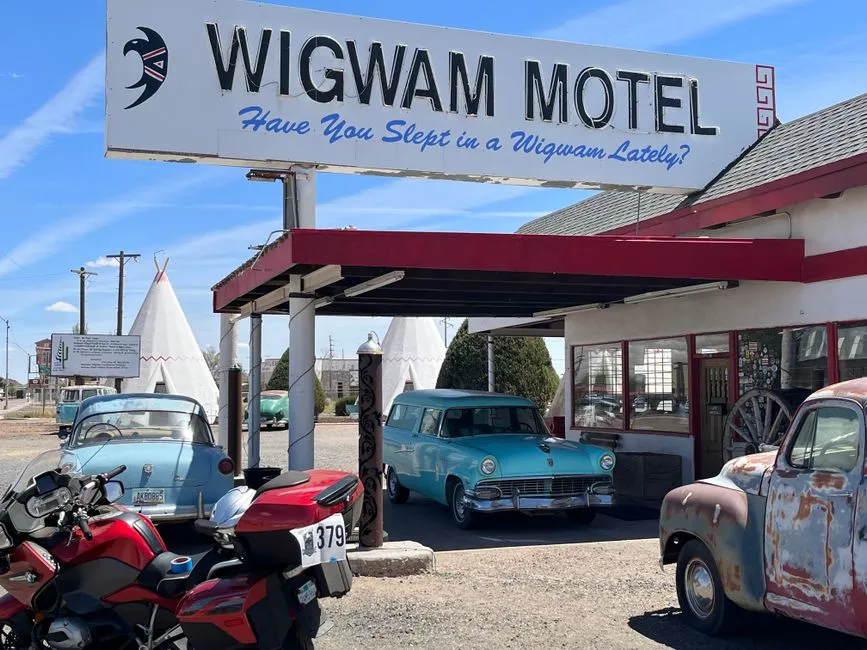
The Wigwam Motel chain originally had seven different locations: two in Kentucky and one each in Alabama, Florida, Arizona, Louisiana, and California. This roadside hotel architectural style quickly captured the popular imagination and spread westward across the country along the growing federal highway system, especially Route 66.
One village was built in 1940 on U.S. Route 61 in Metairie, a suburb of New Orleans, Louisiana. It included a restaurant, cocktail bar, souvenir shop, and Esso service station. Village No. 3 went out of business in 1954, leaving little documentation behind.
Wigwam Village No. 4 was built in 1948 and was located in what is now Edgewood, Florida. This relatively large wigwam village consisted of 27 guest rooms, each in a separate wigwam constructed to resemble a horseshoe shape, with four additional wigwams likely housing offices and a restaurant. A pool was located in the middle of the lot. Village No. 4 claimed to be “Orlando’s largest and finest Motel.” It was razed in 1974 and replaced with a Days Inn.
What Killed Most of Them: Interstates, Land Value, and Changing Tastes
In high-growth areas like New Orleans and Orlando, the land beneath the wigwams became more valuable than the structures on top. Redford’s grand project began to lose its relevance as the 1960s arrived, primarily as a new generation of travelers evolved. What was “kitschy-kool” in the 1930s through the 1950s lost its luster as a completely new era of roadside attractions emerged.
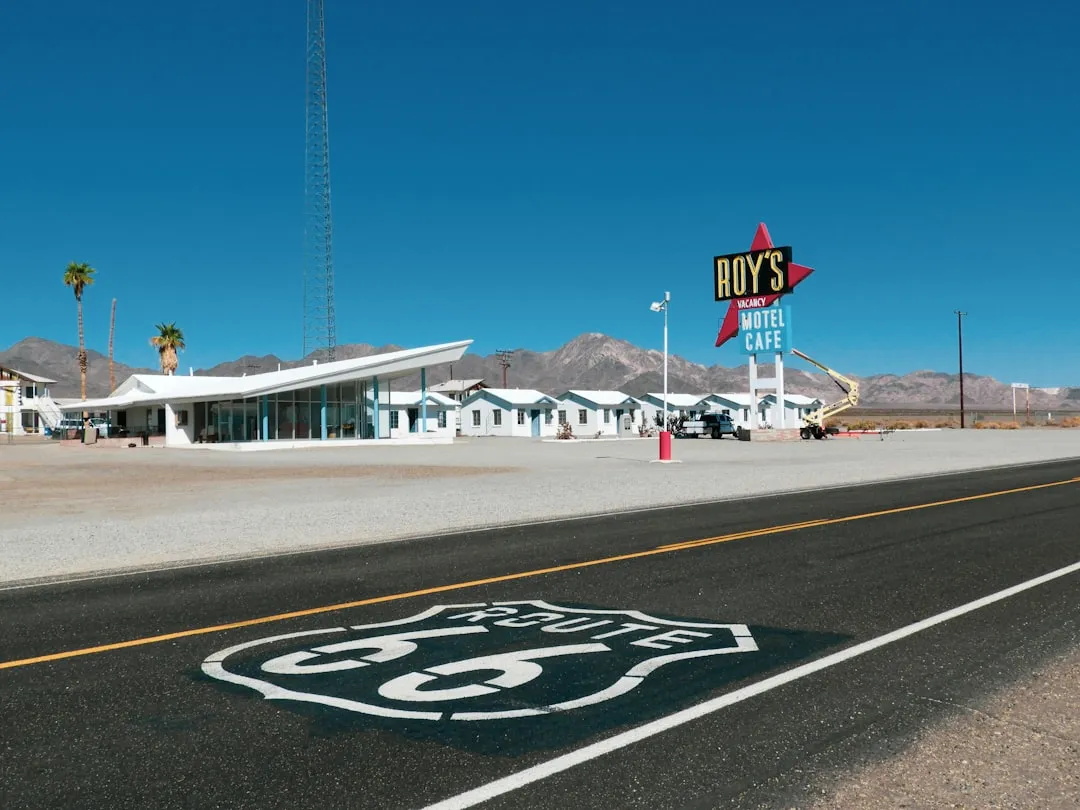
Starting in the mid-1950s, freeways were built to replace sections of Route 66, which led to fewer and fewer travelers driving the older route and visiting the roadside motels and other businesses. Route 66 would be officially decommissioned in 1985, but it had been largely bypassed well before then.
Each teepee was about 154 square feet in area, while standard rectangular motel rooms were trending ever larger, now averaging 325 square feet today. Another reason for the decline of the independent motels was increased competition from chain motels and hotels. Travelers increasingly wanted the convenience and sameness of chains like Holiday Inn, Howard Johnson, Motel 6, and Hilton. Most independent motels could not compete with the newly built properties which often offered more amenities, had larger advertising budgets, and developed brand loyalty with their customers.
The Three That Survived: Kentucky, Arizona, and California
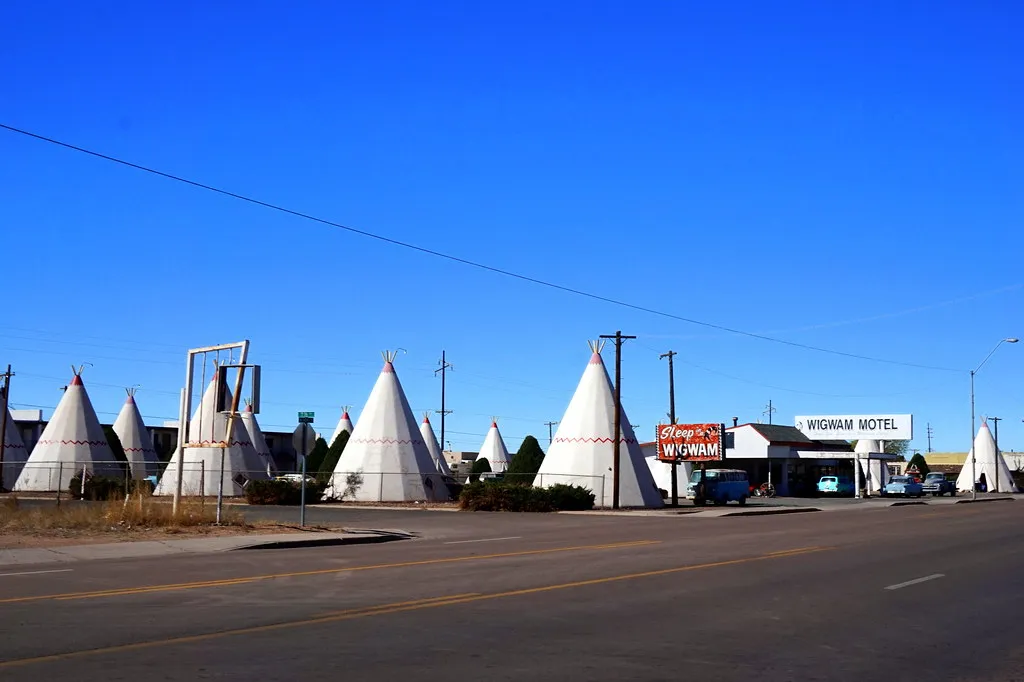
There were once seven Wigwam Motels serving road-tripping families across America. Today only three of these must-see roadside attractions remain. Two are on Route 66.
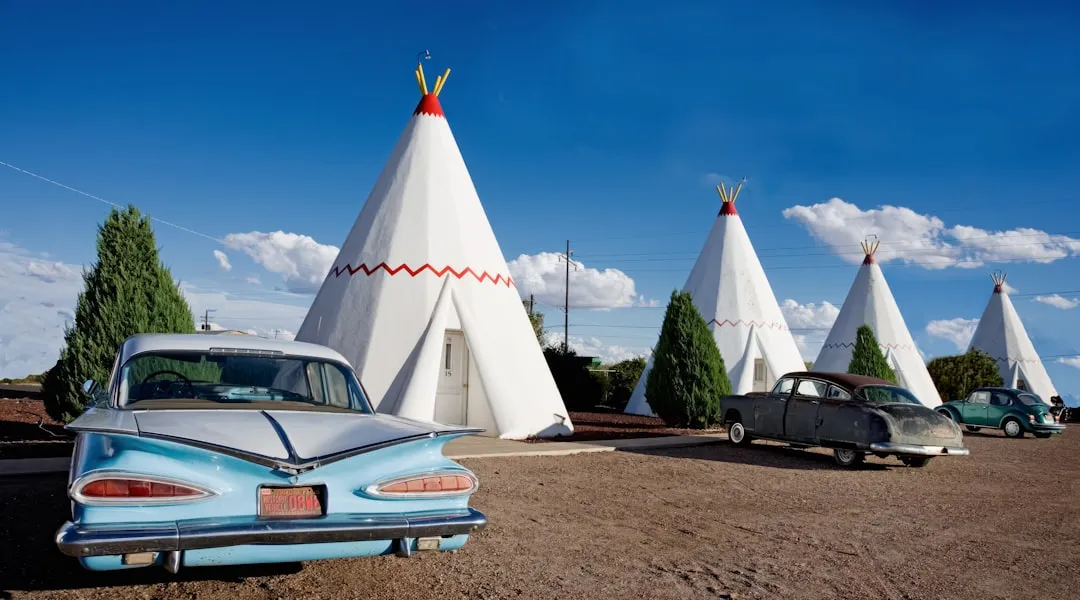
In Holbrook, the Wigwam Motel has been welcoming Route 66 travelers since 1950. Each of its 15 wigwams is a 32-foot-tall concrete and steel cone, decked out with a bold red zigzag and handmade hickory furniture inside. The layout is modest, no-frills but full of character. Parked vintage cars flank the property, and the classic neon sign out front makes nighttime feel like a scene from a mid-century movie.
The Cave City, Kentucky location, Wigwam Village No. 2, is the oldest survivor, dating to 1937. The lunch counter and gas station closed in the 1970s, but the 15-wigwam motel remains an enduring testament to an earlier time, with all of the modern conveniences you would expect and want, including private bathrooms, air conditioning, coffee pots, and free WiFi and cable television. In November 2020, the No. 2 location was purchased by Keith Stone and Megan Smith to restore the motel.
The Arizona Location: Closed, Saved, and Listed
Chester Lewis successfully operated Wigwam Village No. 6 until the late 1970s when Interstate 40 bypassed downtown Holbrook, leading to a decline in business. The motel closed in 1974, but the story didn’t end there. After Chester’s passing in 1986, his children, Clifton, Paul, and Elinor, renovated the property and reopened it in 1988.
They removed the gas pumps and converted part of the main office into a museum, which is open to the public. The museum holds Mr. Lewis’ own collection of American Indian artifacts, Civil War memorabilia, Route 66 collectibles, and a petrified wood collection.
Wigwam Village Motel No. 6 was listed in the National Register of Historic Places in 2002. In 2003 and 2007, the motel received Cost-Share Grants from the National Park Service Route 66 Corridor Preservation Program. That federal recognition helped ensure the property could afford ongoing maintenance and restoration work.
The California Location: A Fall From Grace and a Family Revival
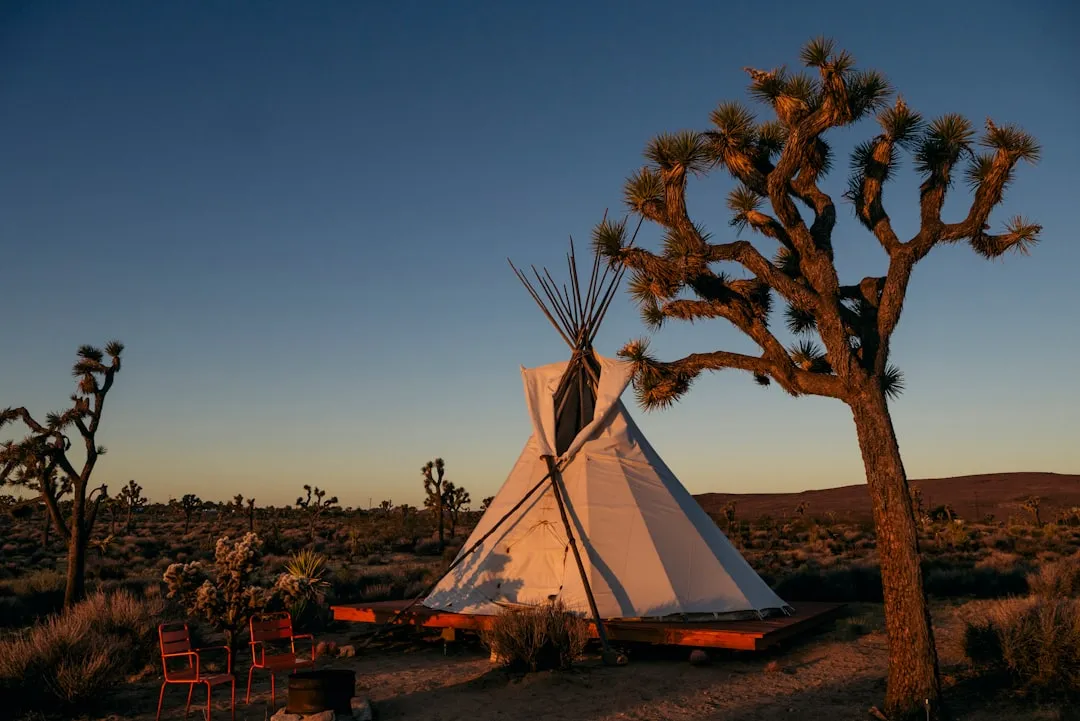
Built in 1949 as the last of Frank Redford’s Wigwam Villages, its rows of towering concrete teepees have been catching the eyes of travelers for decades. Redford, who first patented the wigwam-shaped motel design in the 1930s, went on to construct seven of these villages across the country.
Redford grew too ill to continue operating the property, and his old friend Paul Young once again took over the Village, although he died a few years later in 1961. Ensuing owners, for the most part, did not maintain the property sufficiently, and over the years it developed a rather seedy reputation. Like many Mother Road businesses, the motel struggled after Route 66 was bypassed by the interstate, and by the 1980s it had gained a reputation for cheap hourly rentals.
The Patel family, immigrants from India who had operated a nearby motel since the mid-1980s, purchased the property in 2002. Despite its poor condition, the Patel family worked diligently to restore the property to its former glory. The property was included on the National Register of Historic Places in 2012. Nineteen 32-foot concrete wigwam-shaped rooms now surround a kidney-shaped pool on Foothill Boulevard.
Pixar, Pop Culture, and the Teepee’s Second Life
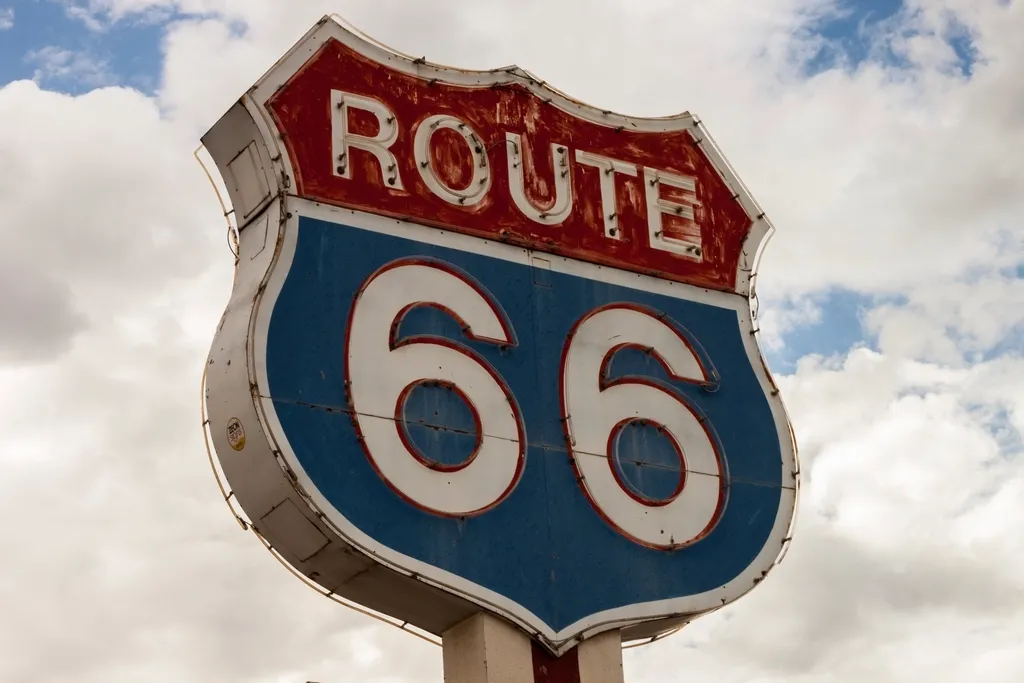
Its location on the famous Route 66 has made it one of the more famous roadside attractions in the US, and it is even featured in the Pixar film Cars. Pop culture fans may also recognize the Wigwam Motel as the inspiration behind Sally’s Cozy Cone Motel in Pixar’s Cars, further cementing its legacy as a roadside legend.
That cinematic cameo introduced a whole new generation to the idea of sleeping in a concrete cone. It was accidental marketing on a scale Redford could never have imagined. The national prosperity and the Baby Boomers of the 1950s and 1960s often choked Route 66 with traffic during the summer vacation months, including eager youngsters who cried if they didn’t get to sleep in a wigwam. Many of those youngsters, now aging, return in the 21st century to experience once again one of their childhood delights.
They turned lodging into a photograph. Long before Instagram, they understood the power of the family snapshot. That instinct proved remarkably durable.
The Route 66 Centennial and What It Means for the Surviving Teepees
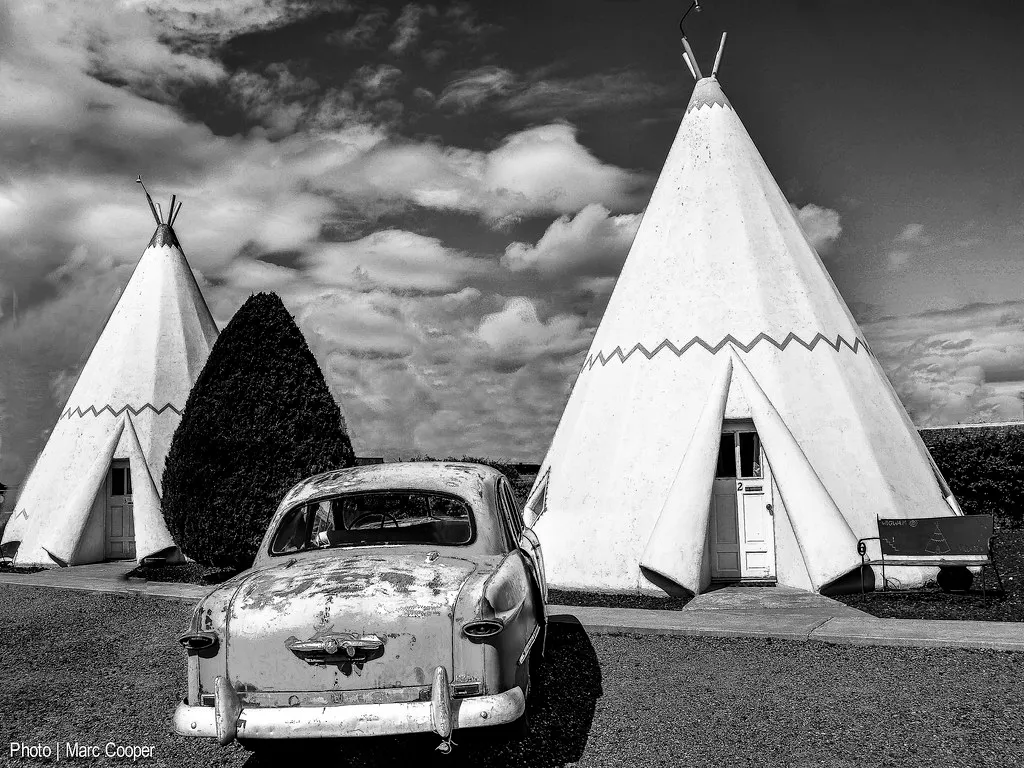
Route 66 Centennial: 2026 marks 100 years since Route 66 was created in 1926. As Route 66 is set to turn 100 years old in 2026, a multi-state coalition is trying to educate people on the history and significance of the roadway while preparing to celebrate its centennial. The Road Ahead Partnership, comprised of representatives from eight states through which Route 66 runs, hopes to revitalize the roadway by boosting tourism and attracting businesses.
Classic motor courts, wigwam motels, and historic lodges near major event hubs are already filling up. The Blue Swallow Motel in Tucumcari has 14 rooms. The Wigwam Motel in Holbrook has 15 teepee units. The Wagon Wheel in Cuba, Missouri, has been booked months in advance.
As Route 66 turns 100 in 2026, these buildings deserve another look. Not simply as kitsch, but as artifacts of a time when architecture, commerce, fantasy, and the open road all shared the same two-lane strip of asphalt. Demand for the surviving teepee units during the centennial year is strong enough that booking well in advance is genuinely necessary.
What They Actually Look Like on the Inside Today
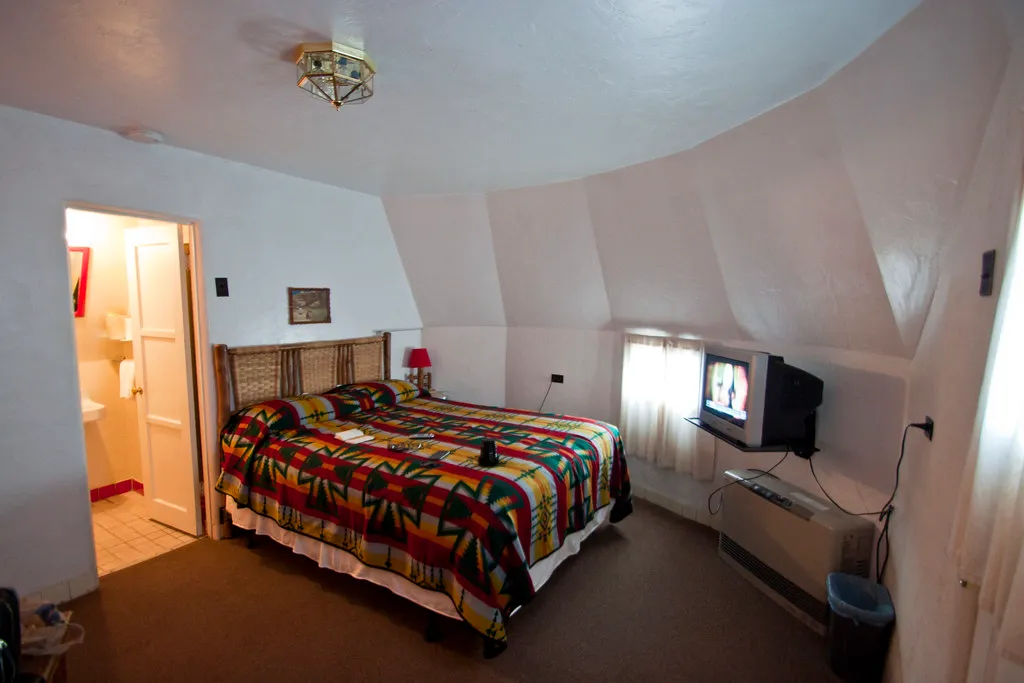
Each wigwam is about 14 feet wide and nearly 30 feet tall, featuring either a queen bed or two doubles, private bathrooms, air conditioning, and cable TV. There’s no in-room Wi-Fi, phones, or ice machines at the Arizona location, but the charm lies in the simplicity and the nostalgia.
Inside, the wigwams blend the past and present beautifully. The original handmade hickory furniture has been retained while modern amenities such as satellite TV and air conditioning are offered. In keeping with historic authenticity, you won’t find telephones or ice machines in the rooms.
The California location, on the other hand, has modernized more thoroughly. Modern amenities there include room-side parking, free WiFi, a modern bathroom with a shower, TV with premium cable channels, a mini-fridge, and air conditioning. Each surviving location has found its own balance between preservation and practicality, reflecting the different communities and ownership histories behind each property.
A Living Relic Worth Preserving
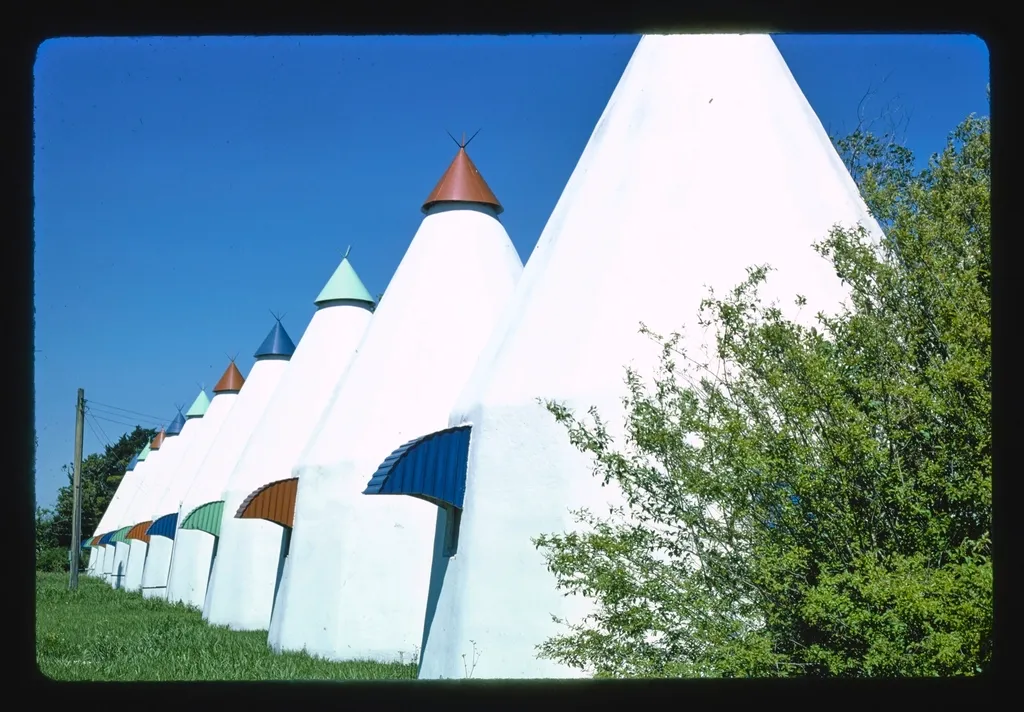
The three remaining teepee motels don’t survive by accident. Each one required someone willing to pour real effort and money into a structure that, on paper, made little commercial sense. Each has remained in operation and still connects visitors with a famous themed-lodging concept. Inside, the accommodations have been adapted for modern use, yet the overall experience still depends on the original idea. That matters because it preserves a real piece of roadside imagination rather than a later imitation of it.
Your patronage helps pay for ongoing restoration of the property in accordance with federal historical renovation regulations. When you stay at Wigwam Village No. 2, you are helping preserve a beloved piece of Americana. That framing, the idea that a night’s sleep is also an act of preservation, is something no chain hotel can offer.
The teepee motel was always a slightly absurd idea, and that was the point entirely. It asked you to slow down, smile, and let the road be strange for one night. The fact that three of these concrete cones are still standing, still welcoming guests, still generating genuine delight, says something quietly reassuring about what people are willing to protect when it matters enough to them.
AI Disclaimer: This article was created with the assistance of AI tools and reviewed by a human editor.