
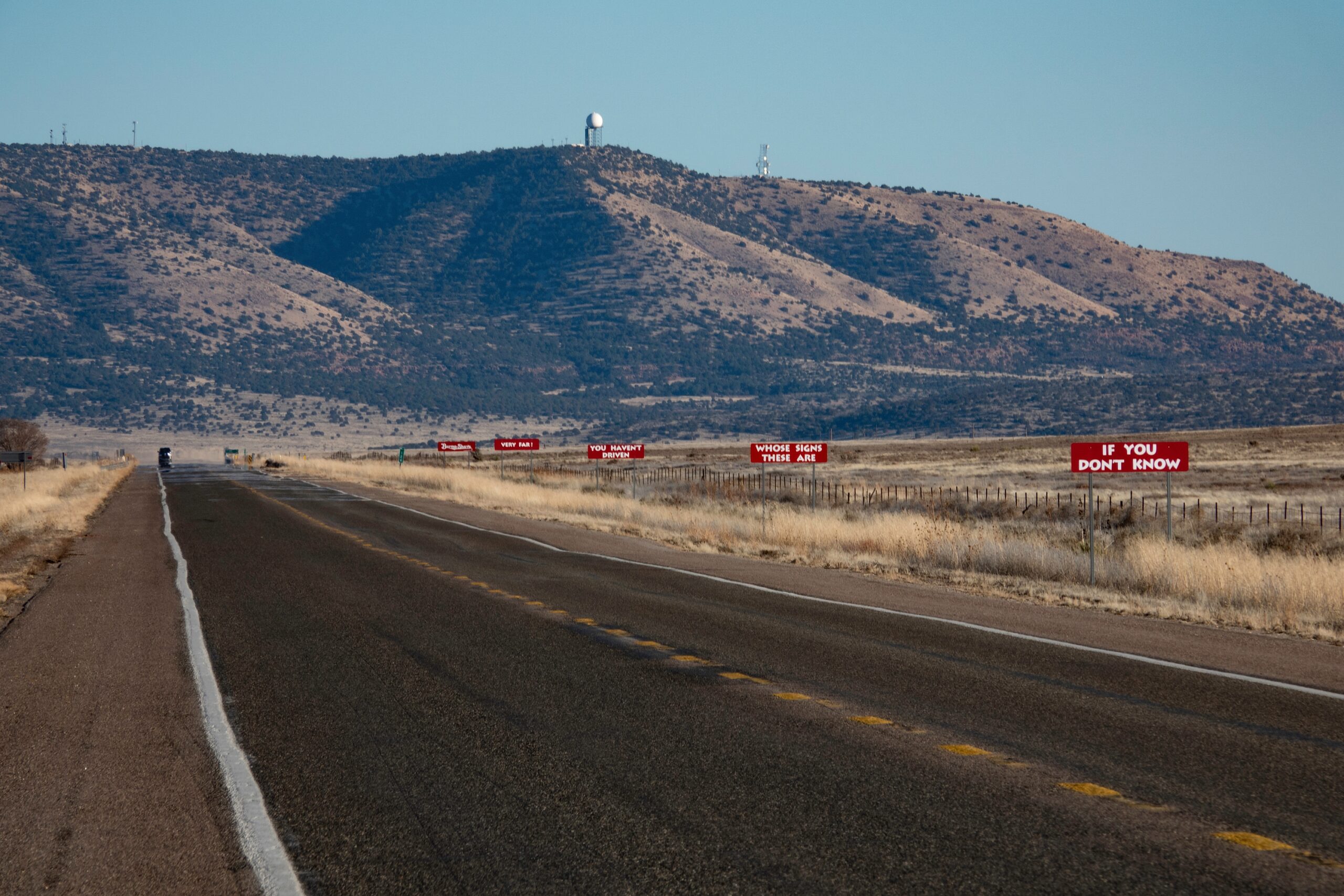

There’s something almost impossible to explain to someone who never experienced it. You’re cruising down a two-lane highway in the American heartland, the windows down, corn fields stretching to the horizon, and then you spot the first small red sign. Then the second. Then the third. By the time you hit the fourth, everyone in the car is leaning forward. That was Burma-Shave, and it made millions of ordinary drives feel like a small celebration.
The Burma-Shave signs were a staple on American highways from 1926 to 1963, serving as a marketing bonanza for the company and becoming part of the allure of car travel in that era. They were never grand or flashy. Their genius was entirely in their simplicity, and for nearly four decades, that simplicity worked beautifully.
A Shaving Cream Company with a Big Idea and Almost No Money

Burma-Shave was introduced in 1925 by the Burma-Vita company in Minneapolis, owned by Clinton Odell. The company’s original product was a liniment made of ingredients described as having come from the Malay Peninsula and Burma. Sales were sparse, and the company sought to expand by introducing a product with wider appeal.
A chemist named Carl Noren was enlisted to create a brushless shaving cream. The 143rd formula, when aged, resulted in a stable cream that supplied a fine shave. They called it Burma-Shave. The product was solid. The challenge was getting anyone to notice it.
Young Allan Odell pitched his great sales idea to his father Clinton: use small wooden roadside signs to promote their product. Dad wasn’t wild about the idea but eventually gave Allan $200 to give it a try. It didn’t take long for sales to soar.
How the Signs Actually Worked
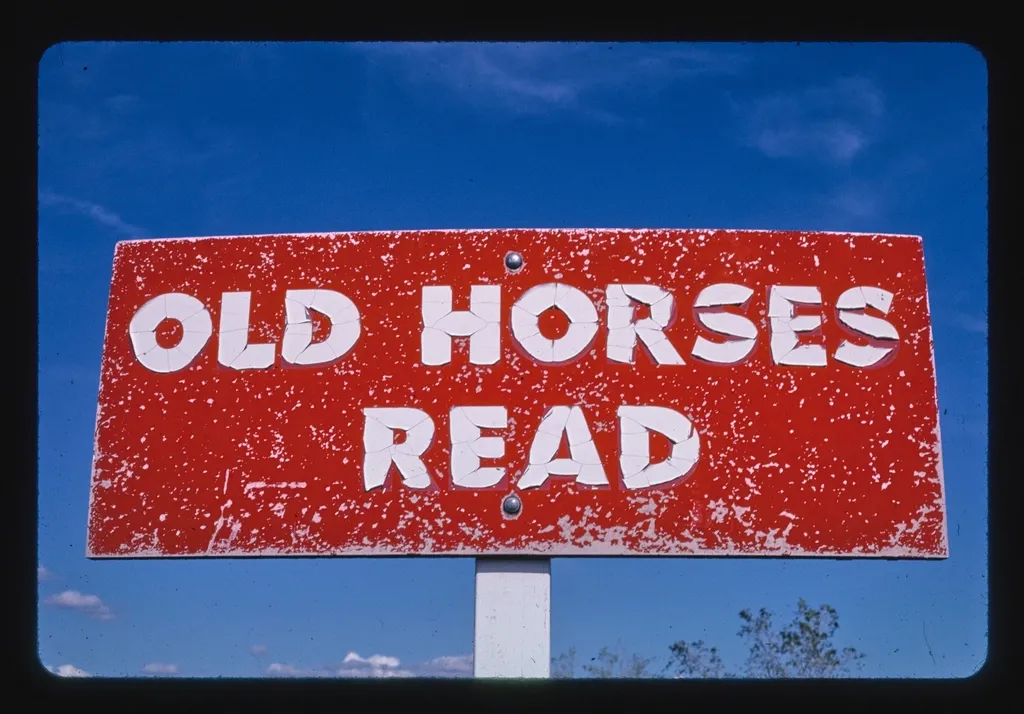
A series of six signs, each spaced about 100 feet apart to give travelers time to read each sign, included a humorous rhyme verse that told a minor story. The arrangement meant that travelers had exactly three seconds to read each sign while driving at a rate of 35 mph.
Typically, six signs were erected, each of the first five containing a line of verse and the sixth displaying the brand name. The last sign in each series usually bore the words “Burma Shave,” which evolved into the last line of the rhyme.
The jingles used a mix of folk humor and wit, wordplay and pun, slang and colloquialism. The corny humor was much needed in the post-Depression era, and the public associated the comfortable style with friendly business folks. It was advertising that didn’t feel like advertising. That distinction mattered enormously.
Where It All Began: Minnesota’s Open Roads
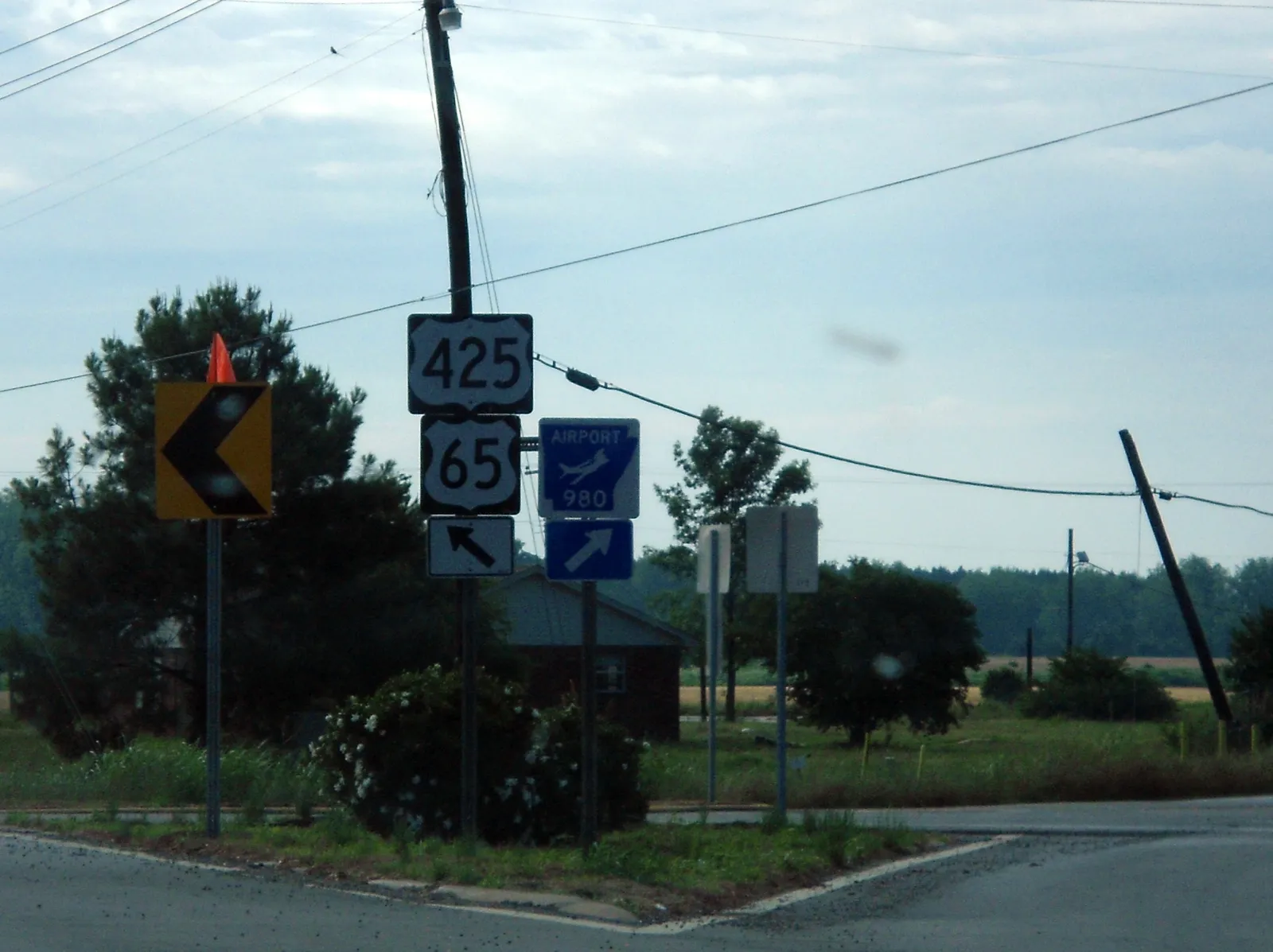
The very first Burma-Shave sign series appeared on U.S. Highway 65 near Lakeville, Minnesota, in 1926. The signs were made using second-hand boards cut into 36-inch lengths. There was nothing polished about the debut. It was essentially a cash-strapped family’s improvised gamble on the roadside.
The first sets were put on U.S. Highway 65 from Minneapolis to Albert Lea, Minnesota, and U.S. Highway 61 from Minneapolis to Red Wing, Minnesota. Orders from drivers on those roads started coming in. The following year, Allan and his brother Leonard set up more signs, spreading across Minnesota and Wisconsin, spending $25,000 yearly on signs. Orders poured in, and sales for the year hit $68,000.
The Jingle Contest That Brought America In
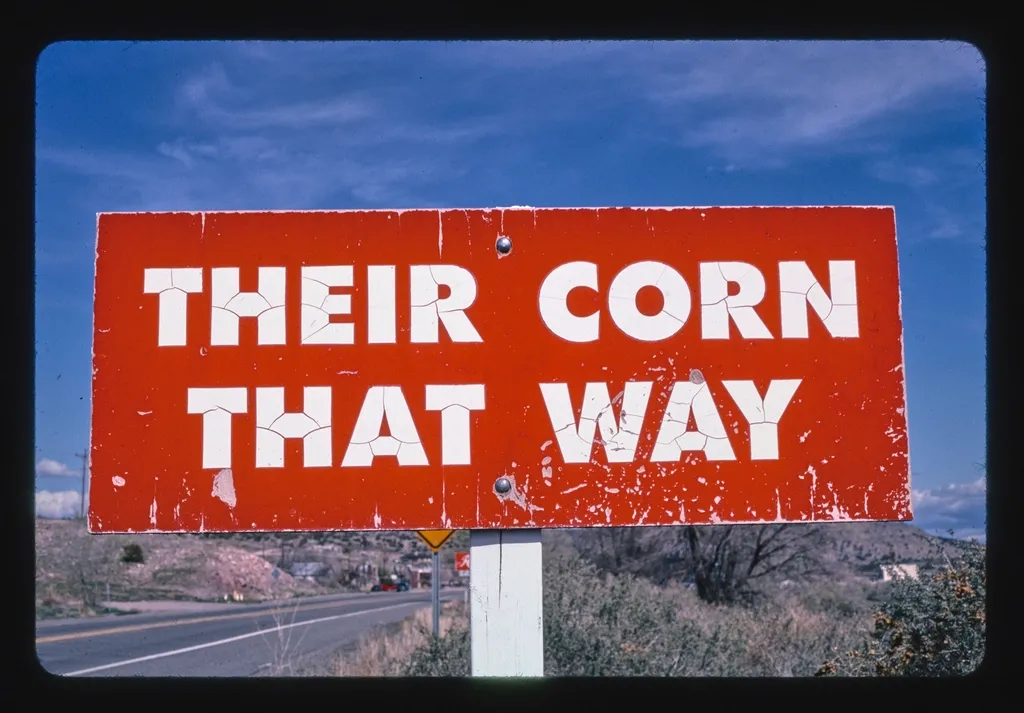
Initially written by Clinton and Allan, by the 1930s the jingles were selected from annual contest entries, paying $100 for selected jingles. This was a smart move that transformed a private marketing campaign into a kind of national game. Ordinary people began submitting their own verses, giving the whole enterprise a grassroots energy that money couldn’t manufacture.
Over 50,000 entries were received in some years. The Odells were careful not to use potentially offensive jingles. The result was a catalog of verses that felt wholesome, witty, and genuinely human. Through the years, the signs featured as many as 600 rhymes.
Safety Messages Hidden Among the Laughs

Some of the signs featured safety messages about speeding instead of funny poems. This was particularly important to the company during a time when the traffic accident rate began to climb as more people traveled by car. Blending road safety into comedy was genuinely ahead of its time as a public communication strategy.
Burma-Shave advertising signs, with their humorous serial jingles, made sense only to someone traveling at 35 miles per hour. From the 1920s to the 1960s, motorists had fun piecing the rhymes together, one phrase at a time, reaching the wry, witty punchline. They memorized favorite verses and looked forward to the entertainment value, especially during long trips.
Peak America: 7,000 Signs Across 45 States
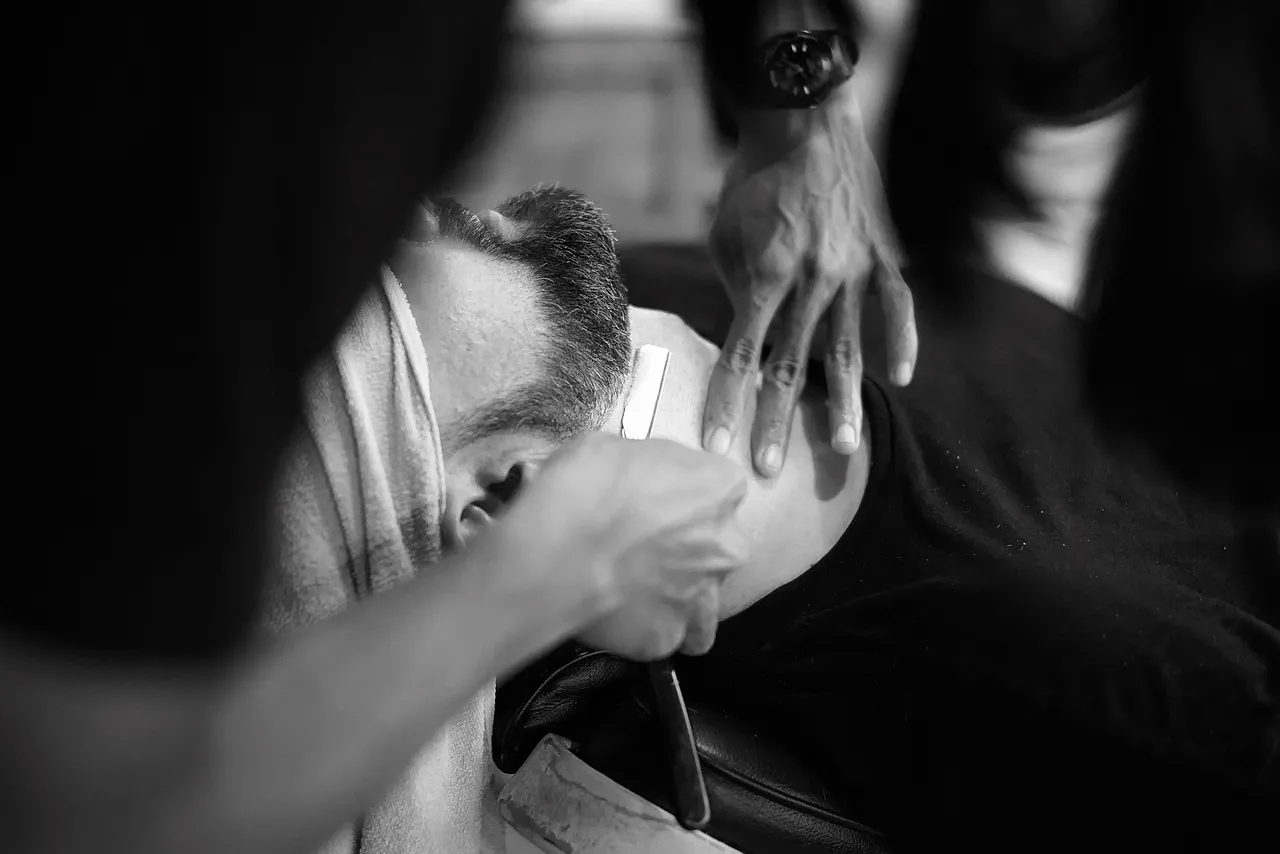
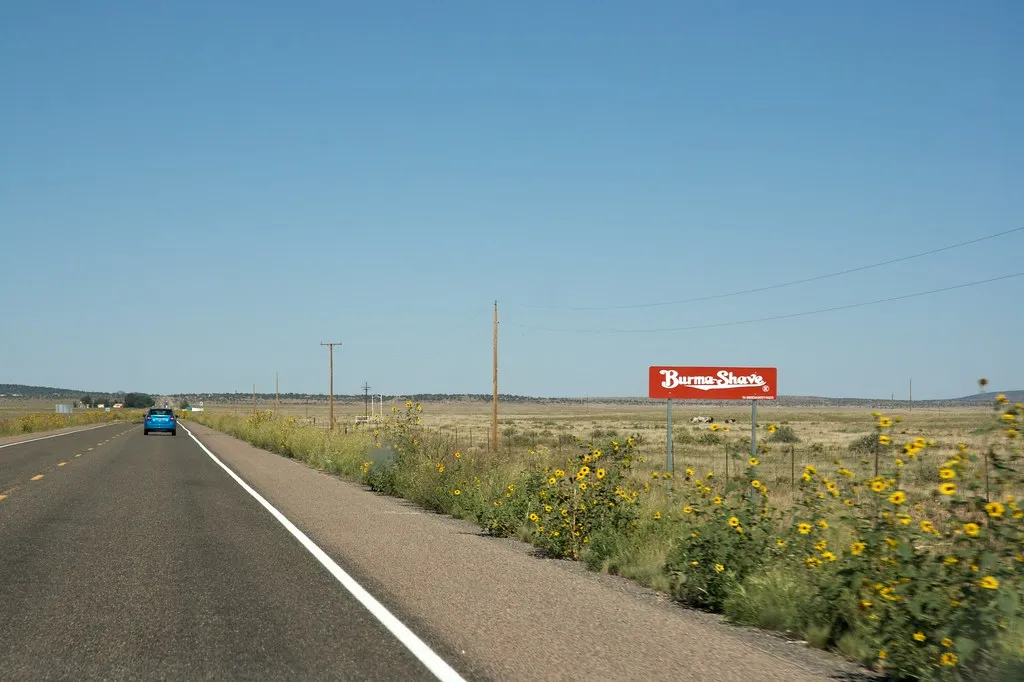
The signs reached their peak in the early 1950s, when 7,000 sets were on display in 45 states. They delighted motorists with their wry, winsome way of peddling Burma-Shave in rhymed couplets, appearing in clusters of six, spaced 100 feet apart on straight stretches of road in rural America.
At its peak, Burma-Shave was the second-highest-selling brushless shaving cream in the United States. By 1947, the company was selling over $6 million in products, but sales were flat for the next seven years before declining.
Burma-Shave sign series appeared in all lower 48 states except New Mexico, Arizona, Massachusetts, and Nevada. The original signs were produced in two color combinations: red and white, and orange and black. The orange and black signs were eventually removed, and a special white-on-blue set was developed for South Dakota, as the state had a restriction on the color red for road signs.
The Interstate Highway System Changed Everything
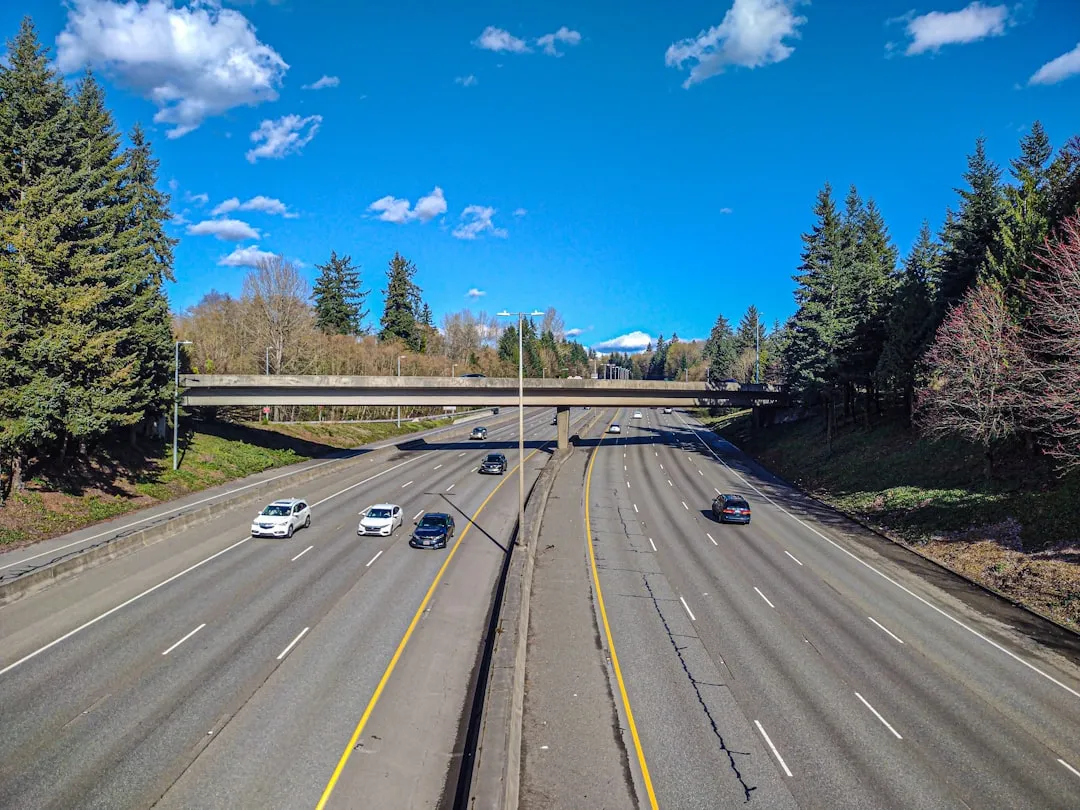
With the beginning of the interstate highway system in the 1950s, the signs lost their advertising effectiveness since they had to be installed farther from roads. At the same time, driving speeds increased, making the signs harder to read. The entire concept had been engineered around 35 mph rural driving. At 65 mph on a wide new freeway, six small boards along the shoulder barely registered.
Some also believe the signs were less effective with increased highway speeds and the interstate highway system, which made it difficult to read the signs while passing. The advent of the Interstate Highway System, along with changes in advertising strategies and the rise of television, led to the decline of Burma-Shave signs. High-speed travel made the roadside signs less readable, and the brand’s visibility diminished.
Philip Morris and the End of an Era
In 1963, Burma-Shave ended up under the control of Philip Morris, whose attorneys apparently decided that reading roadside signs while driving was a safety hazard. No new signs were created after that, and they disappeared entirely by 1966.
When the company was acquired by Philip Morris, the signs were discontinued on advice of counsel. It was a decision made in a boardroom, by lawyers who never sat in the back of a station wagon counting down the signs to the punchline. By 1966, every last sign had disappeared from America’s highways.
Philip Morris sold Burma-Shave to the American Safety Razor Company in 1968, and the brand disappeared until 1997, when a line of shaving cream and brushes under the Burma-Shave name was reintroduced. The irony of that revival did not go unnoticed: the American Safety Razor Company reintroduced the Burma-Shave brand with a nostalgic shaving soap and brush kit, though Burma-Shave’s own roadside signs had frequently ridiculed “Grandpa’s old-fashioned shaving brush.”
Where the Signs Ended Up
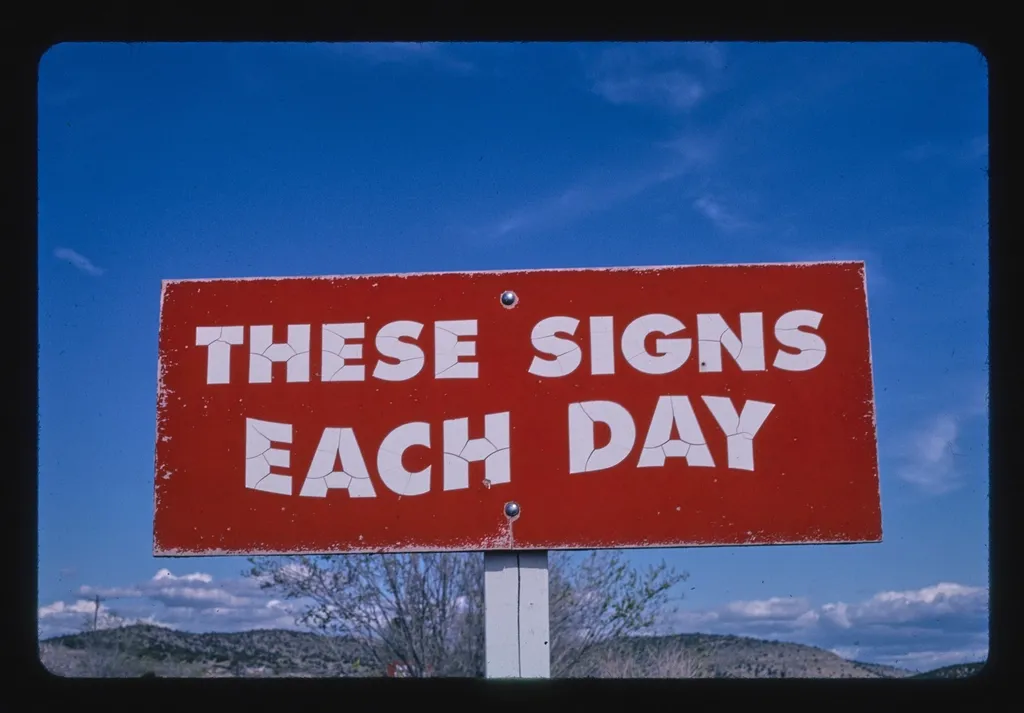
A few signs ended up in museums, including a couple of sets donated to the Smithsonian Institution. Only one complete set of original signs remains, and those are housed at the Smithsonian. For something that once numbered in the thousands across the American landscape, what survived is strikingly small.
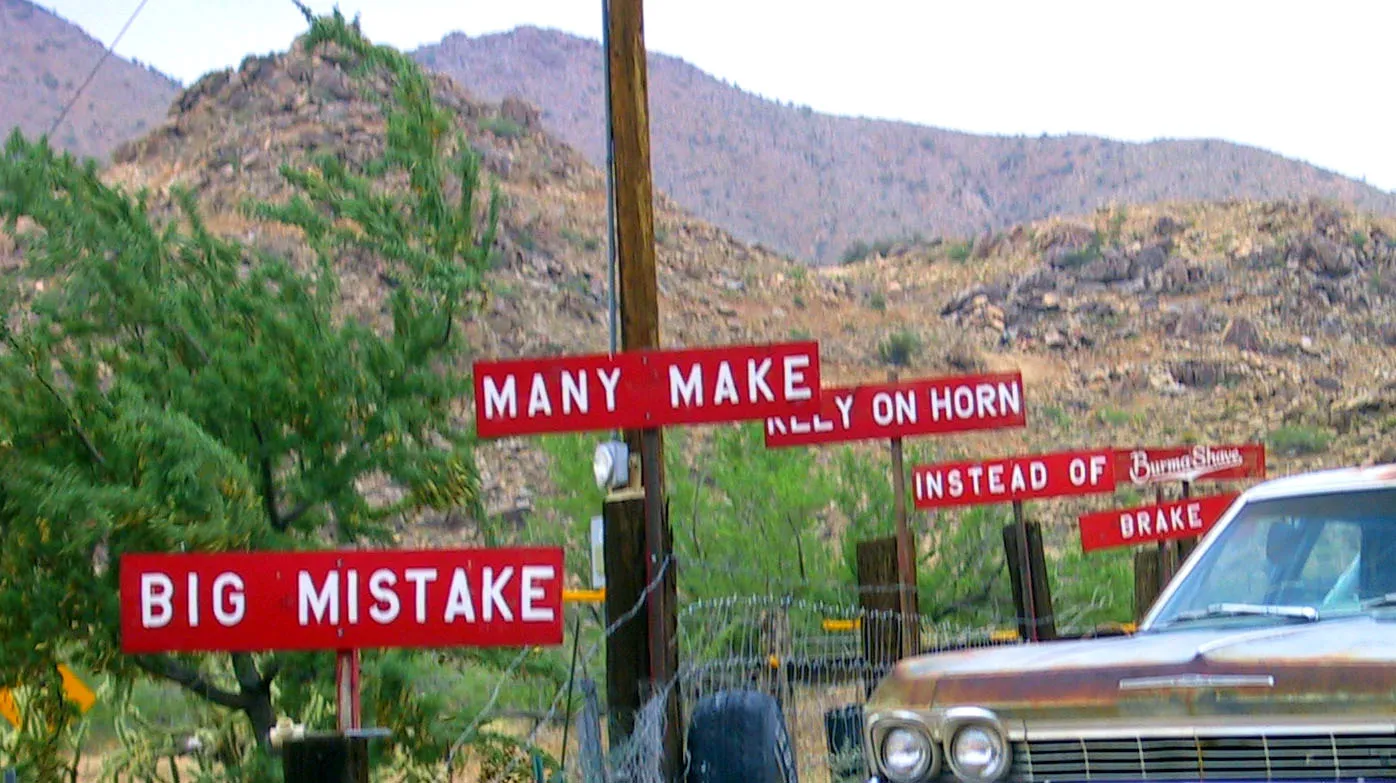
Examples of Burma-Shave advertisements can be found at The House on the Rock in Spring Green, Wisconsin. Re-creations of Burma-Shave sign sets also appear on Arizona State Highway 66, part of the original U.S. Route 66, between Ash Fork and Kingman, Arizona. Other examples are displayed at The Henry Ford museum in Dearborn, Michigan.
Re-creations also appear on Old U.S. Highway 30 near Ogden, Iowa, and on Arizona State Highway 66. Historians note that no signs were ever installed on Arizona State Highway 66 by Burma-Shave during its original campaigns. The replicas are lovingly placed, even if they represent a gentle historical revision.
The Centennial and Why People Still Care
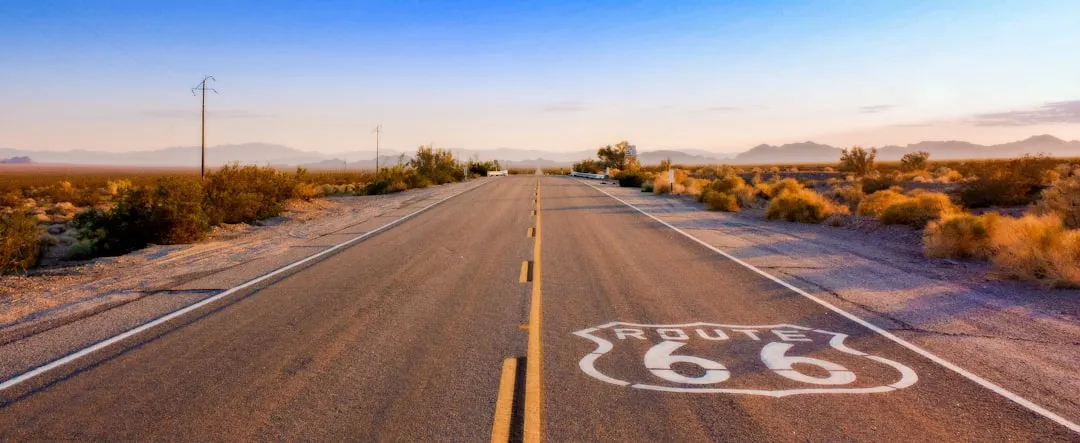
This year marks the centennial of Route 66, and it is also the 100th anniversary of the introduction of the Burma-Shave signs, a series of five or six simple signs that entertained motorists with rhyming poems. A hundred years later, people still write about these little red boards with genuine warmth, which says something about what they represented beyond shaving cream.
Though the signs disappeared, the nostalgia for Burma-Shave and its unique advertising campaign did not. Collectors and historians have preserved the rhymes and stories of Burma-Shave, and the brand is often cited as a quintessential example of Americana.
The term “Burma-Shave sign” is commonly used in the sign industry today, with the same concept applied to share features of a product or a community. In recent years, replicas of the Burma-Shave signs can be found along Route 66 in Arizona, where Route 66 enthusiasts have posted them to renew the feeling of the road. The spirit, it turns out, is harder to remove than the signs themselves were.
A Quiet Lesson That Outlasted the Product
There’s a reason people remember Burma-Shave with such genuine fondness, even people who were never anywhere near a highway in the 1950s. The signs worked because they respected the traveler. They asked for your attention by offering something in return, a small laugh, a groan, a moment of shared delight with whoever was in the car beside you.
Families eagerly anticipated seeing the rhyming signs along the roadway, with someone in the car excitedly proclaiming, “I see Burma-Shave signs!” breaking up the monotony of long trips. That kind of simple, unforced joy is rare in any era of advertising, which may be exactly why the signs have outlasted both the company and the product itself in the public memory.
What’s left of Burma-Shave lives in museums, in reproductions along old Route 66, and in the stories people still tell. Sometimes the most enduring things are the ones that never tried to be permanent. They just showed up, six signs at a time, and made the drive a little better.
AI Disclaimer: This article was created with the assistance of AI tools and reviewed by a human editor.