
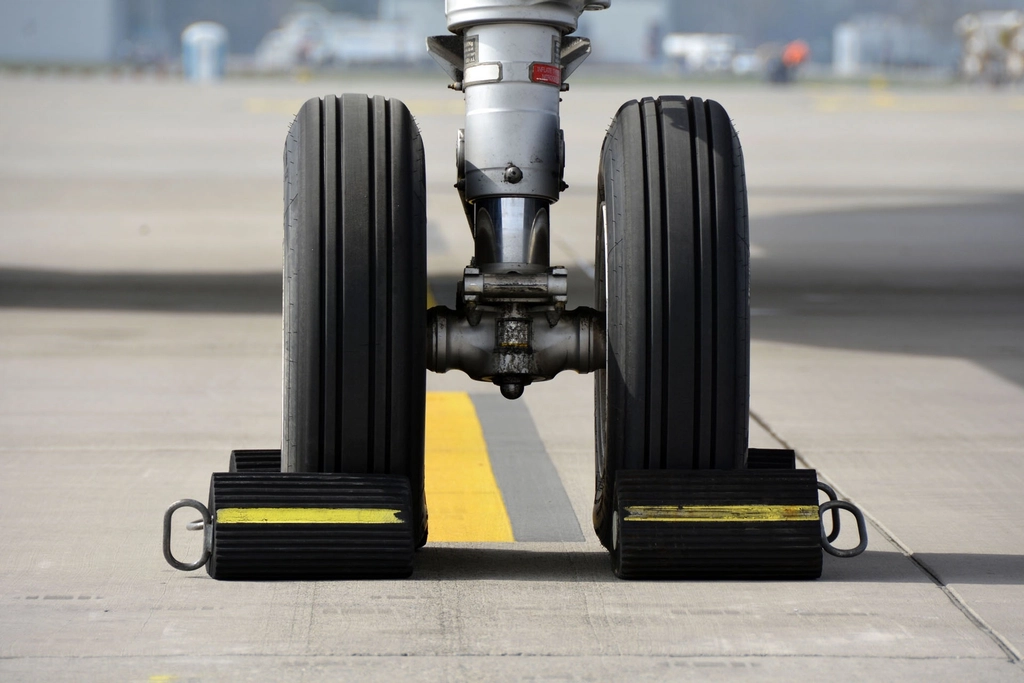

Most people never give airplane tires a second thought. They’re hidden behind landing gear doors, only visible for a few seconds during takeoff and landing. Yet the gas inside them is one of the quietest and most consequential safety decisions in all of commercial aviation.
It’s not regular air. It’s nitrogen, specifically dry nitrogen, and it’s been that way by federal requirement for decades. Here’s why that matters more than it might first seem.
It Started With Real Accidents, Not Just Theory
The requirement that an inert gas, such as nitrogen, be used instead of air for inflation of tires on certain transport category airplanes was prompted by at least three cases in which the oxygen in air-filled tires had combined with volatile gases given off by a severely overheated tire and exploded upon reaching autoignition temperature. These were not hypothetical risks invented in a lab. They were real incidents that forced a fundamental rethink of how aircraft tires are inflated.
The use of an inert gas for tire inflation eliminates the possibility of tire explosion. That’s a direct, concrete engineering outcome, and the entire policy traces back to it.
The FAA Made It the Law
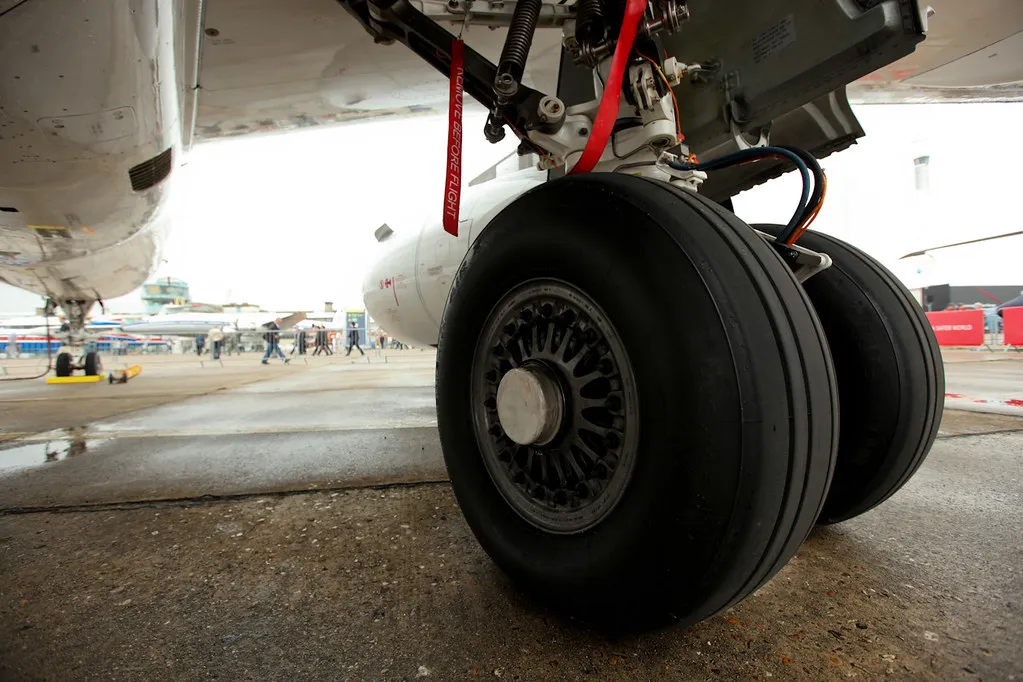
Unlike the tires on an automobile filled with compressed air, those on a commercial airplane are filled with inert nitrogen, which has been the case since the late 1980s, when the U.S. Federal Aviation Administration (FAA) first made the mandate. This wasn’t a voluntary industry best practice. It became a codified regulation.
The Federal Aviation Administration (FAA) has required commercial airplanes to use nitrogen in their tires rather than air or oxygen, because nitrogen keeps moisture out of airplane tires and eliminates humidity-related problems. The FAA’s Advisory Circular AC 20-97B, still the guiding document for aircraft tire maintenance, specifies exactly how this must be carried out on commercial fleets.
Nitrogen Is Chemically Inert, and That Changes Everything
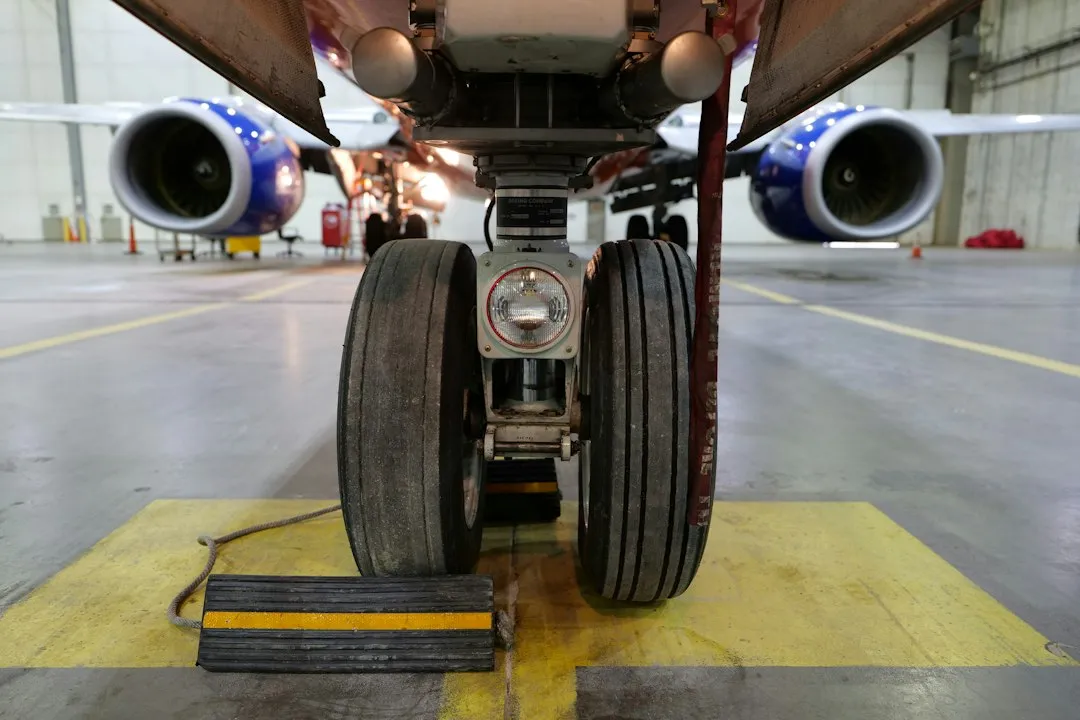
Nitrogen is an inert gas, meaning it doesn’t react with other substances. This helps reduce the oxidation of tire materials, extending their lifespan. In simpler terms, it just sits there. It doesn’t participate in chemical reactions the way oxygen does, which is precisely what you want inside a tire operating under enormous stress.
The triple bond between two nitrogen atoms makes the gas very stable and relatively unreactive under normal and some extreme conditions. That molecular stability is the foundation of nitrogen’s value in this application. It’s the chemistry behind the engineering logic.
Oxygen Inside a Hot Tire Is Genuinely Dangerous
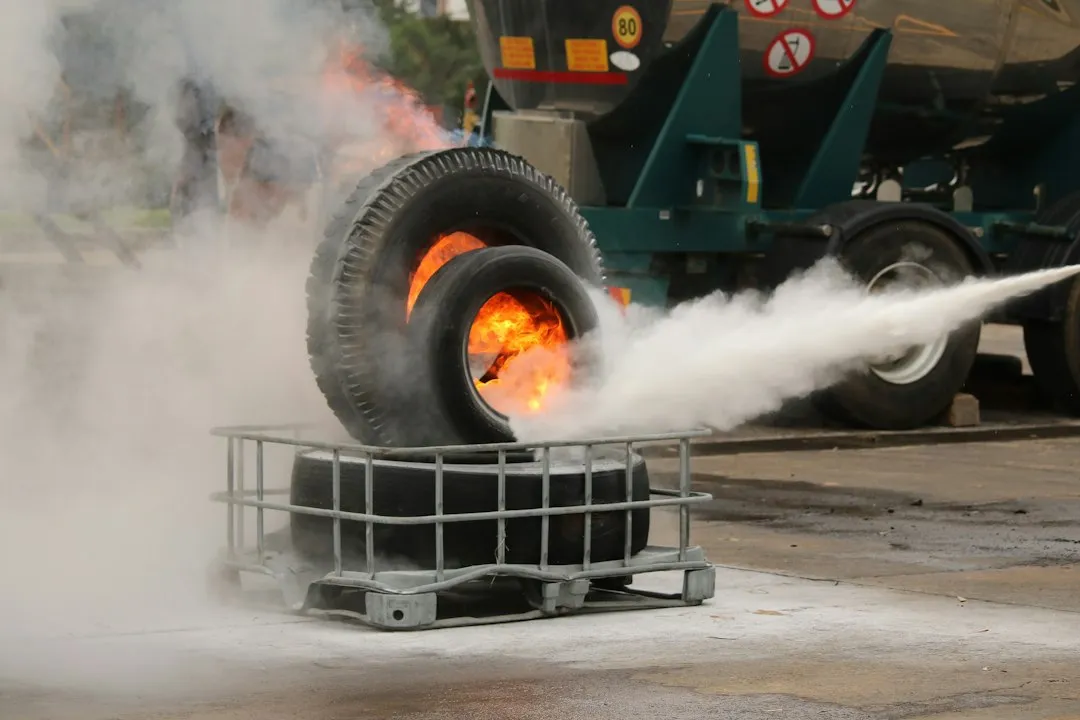
While oxygen is not itself flammable, the gas will fuel and potentially sustain combustion, so it was considered a good idea to start filling tires with an inert gas that wouldn’t contribute to a massive explosion. This distinction matters. People sometimes assume oxygen is safe because it doesn’t ignite, but that misses the point entirely.
At nitrogen concentrations greater than 95 percent, there was no pressure increase in the test chamber, even at a chamber temperature of 670 degrees Fahrenheit, indicating that there was no ignition. Based on these tests, it was concluded that any concentration of oxygen in a tire in excess of 5 percent of the total gas will support a reaction. That threshold, five percent oxygen, is now embedded in FAA regulation.
The Temperature Extremes Airplanes Encounter Are Extreme

Since planes have a cruising altitude between 31,000 and 42,000 feet, the tires would have to adjust to vastly different altitudes and incredibly contrasting temperatures consistently. While it can be nearly 120 degrees Fahrenheit at certain airports, at typical cruising altitudes of around 36,000 feet, the air temperature is around minus 65 degrees Fahrenheit.
Nitrogen eliminates moisture and oxygen, preventing interior tire fires during high-speed abortive takeoff braking where brakes can heat up to 800 degrees Celsius, while also preventing internal tire ice formation at minus 55 degree Celsius cruise altitudes. That range from deep freeze to extreme braking heat is a swing no regular compressed air system could handle as reliably.
Moisture Is a Hidden Problem Regular Air Carries
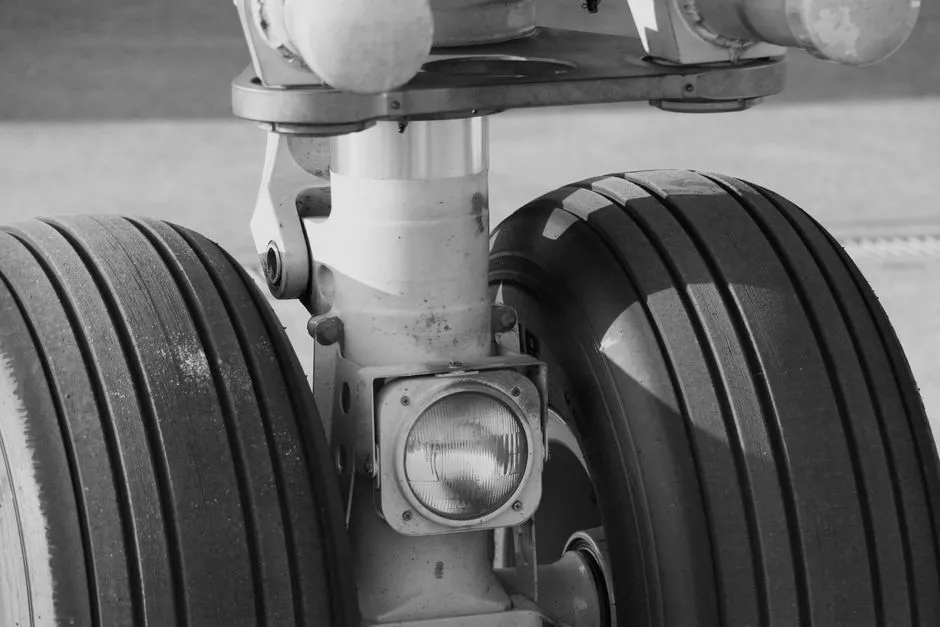
Aircraft tires are usually inflated with dry nitrogen to minimize expansion and contraction from extreme changes in ambient temperature and pressure experienced during flight. Dry nitrogen expands at the same rate as other dry atmospheric gases, but common compressed air sources may contain moisture, which increases the expansion rate with temperature.
Water vapor can make up as much as five percent of the volume of air under worst-case conditions. That moisture, once sealed inside a tire, behaves differently across altitude and temperature. It freezes at high altitude, thaws on descent, and makes pressure readings far less predictable. Dry nitrogen sidesteps all of that.
The Pressure Inside These Tires Is Staggering

Aircraft tires generally operate at high pressures, up to 200 psi for airliners, and even higher for business jets. For context, typical pressures for commercial aircraft tires range from 150 to over 200 psi, compared to 30 to 35 psi for car tires.
Tests of airliner aircraft tires have shown that they are able to sustain pressures of maximum 800 psi before bursting. The fact that nitrogen is the gas under that enormous pressure isn’t incidental. It’s the reason those tires can be trusted to perform without combustion risk during the most stressful moments of any flight.
Nitrogen Keeps Tire Pressure More Consistent
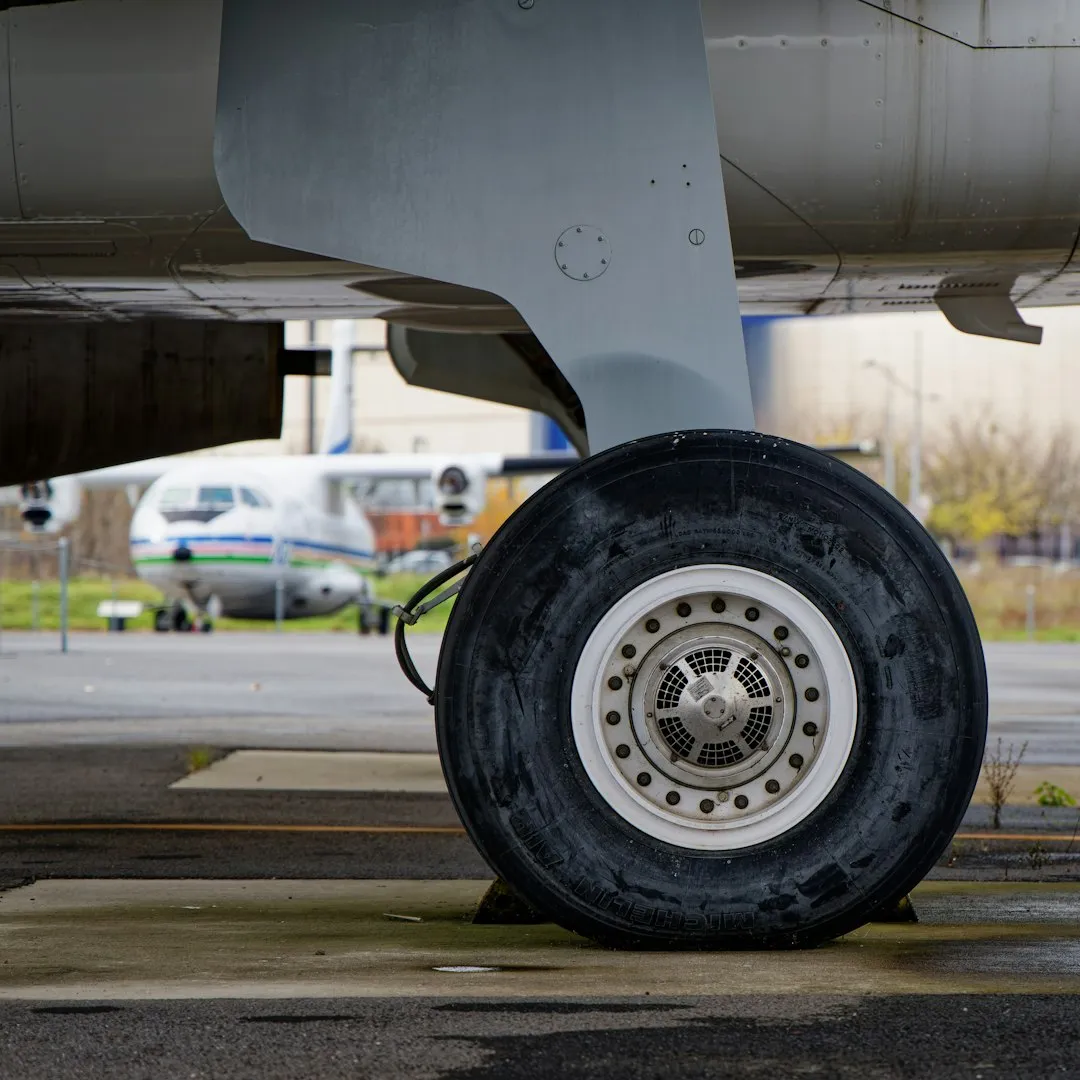
Nitrogen is used in airplane tires because it stabilizes pressure and reduces pressure variation with altitude. As the airplane ascends, pressure in the tires changes, yet dry nitrogen minimizes expansion and contraction from extreme ambient temperature and pressure changes. Consistent tire pressure reduces risk of blowouts at high altitudes or during rapid descent.
Nitrogen doesn’t contain moisture, so it promotes consistent pressure. Airplane tires filled with nitrogen may experience some minor fluctuations in tire pressure, but the PSI will remain relatively stable. For aviation, “relatively stable” isn’t a vague comfort. It’s an engineering requirement.
It Extends Tire Life and Prevents Corrosion
Oxygen at high temperatures and pressures can oxidize metals in the tire as well as the rubber, which can result in additional leakage, while dry nitrogen does not corrode the metal or the tire rubber. Over repeated flight cycles, that difference accumulates significantly in terms of maintenance costs and tire longevity.
Because it keeps out moisture, nitrogen protects airplane tires against corrosion. Airplane tires can succumb to corrosion. Moisture will facilitate oxidation within airplane tires, thus causing them to corrode from the inside out. Nitrogen quietly prevents that internal degradation on every single flight.
The 2024 Atlanta Incident Brought This Back Into Focus
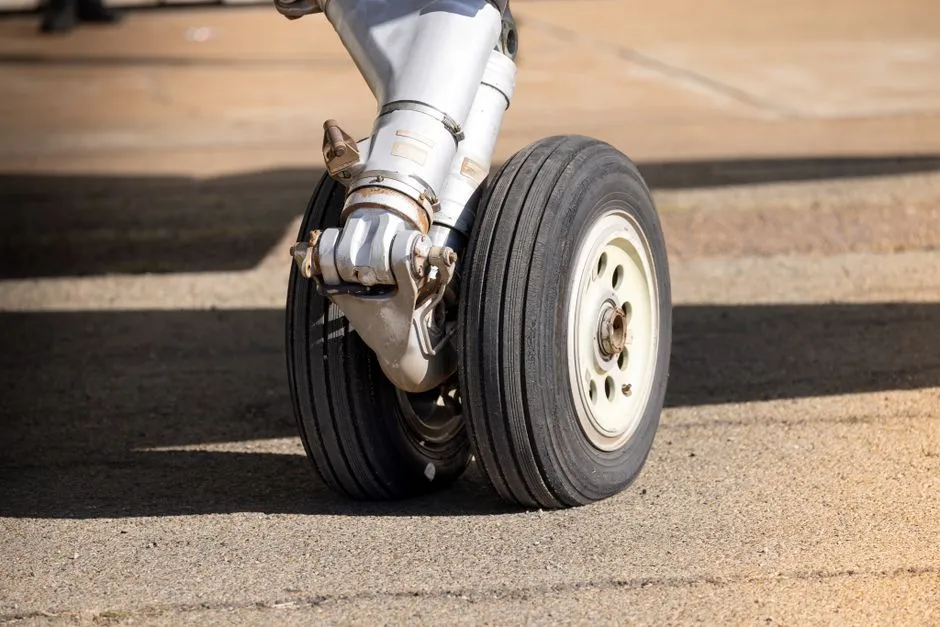
A tragic incident at Hartsfield-Jackson Atlanta International Airport has highlighted the inherent risks associated with airport ramps and maintenance operations. Two people lost their lives, and another was seriously injured when a tire on a Delta Air Lines aircraft exploded while it was being serviced.
Aviation safety practices include filling aircraft tires with nitrogen instead of compressed air, which plays a critical role in ensuring the safety and reliability of aircraft operations. Since the late 1980s, the U.S. Federal Aviation Administration has required commercial airplanes to use nitrogen in their tires rather than air or oxygen. Events like this serve as a reminder that tire servicing, not just flight operations, carries real risk, and that proper nitrogen inflation protocols are part of a broader safety culture on the ramp.
Final Thoughts
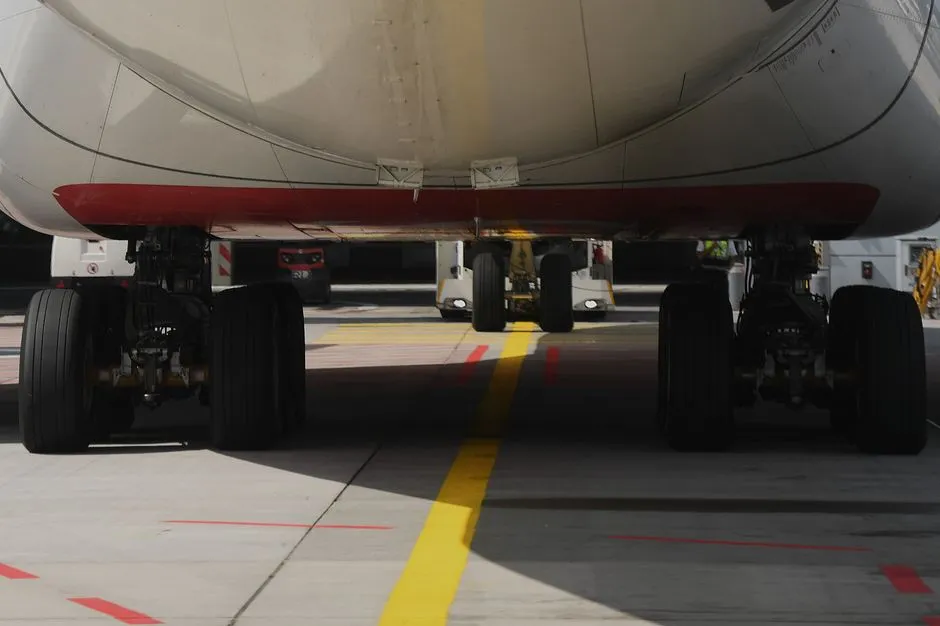
Nitrogen in airplane tires isn’t a quirky engineering preference. It’s a response to real accidents, grounded in chemistry, validated by FAA testing, and enforced by federal regulation. The gas that fills those tires does several things simultaneously: it stays non-reactive under heat, stays dry across altitude swings, keeps pressure predictable, and keeps the rubber from corroding from the inside.
The next time a plane touches down at high speed and the tires absorb that impact without incident, some of the credit belongs to a colorless, odorless gas that most passengers never knew was there. Sometimes the safest solutions are the ones you simply never notice.
AI Disclaimer: This article was created with the assistance of AI tools and reviewed by a human editor.