

Pull back any lavatory door on a modern commercial aircraft and you’ll find it: a small, unassuming metal ashtray mounted directly on the door or panel. It looks ancient, a little out of place, and completely contradictory given that smoking was banned on most flights a generation ago. Yet it is very much intentional, very much required, and its story touches on safety disasters, stubborn human behavior, and the enduring logic of planning for the worst.
When Smoking Was Simply Part of Flying
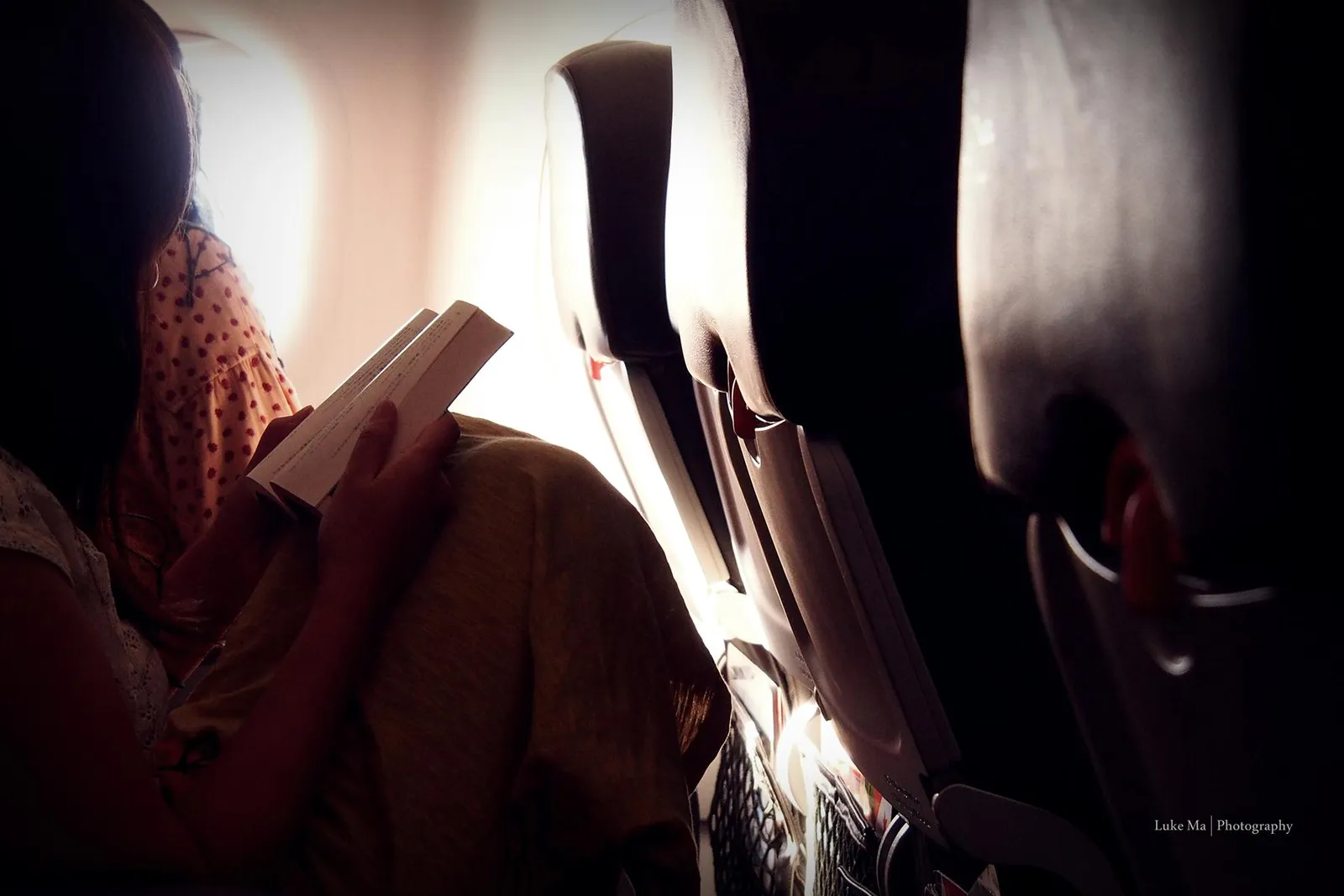
In the early days of commercial aviation, smoking was a standard practice during air travel. In fact, since flying was considered a luxury at the time, the use of cigarettes and alcohol was considered part of the socialization norm onboard flights. Flight attendants even offered passengers cigarettes as part of their standard in-flight service.
It was around the 1970s when growing concerns over the effects of secondhand smoke began to shift the industry’s perception. United Airlines created a non-smoking section in 1971, the first airline to do so. The cultural shift had begun, though it would take decades to complete.
The Long Road to a Complete Ban

Following concerted lobbying efforts by health advocates, Congress passed legislation banning smoking on U.S. domestic flights of less than two hours, which became effective in 1988. The law was made permanent and extended to flights of less than six hours in 1990.
The United States banned smoking on international flights to and from the country in 2000, a move that followed smoking bans on domestic flights that started in the 1980s. Also in 1997, the European Union banned smoking on flights in member states. The bans did not happen overnight. They were the result of decades of advocacy, legal friction, and mounting health evidence.
The Tragedy That Changed Aviation Safety Forever
Probably the most notorious case happened in 1973 with Varig Flight 820. The Boeing 707 was flying from Rio de Janeiro to Paris when it suffered a cabin fire after a cigarette was thrown into a lavatory waste bin. Smoke quickly filled the cabin. The pilots made an emergency landing near Orly Airport, but 123 of the 134 people onboard died, many from smoke inhalation.
A decade later, Air Canada Flight 797 caught fire in the rear lavatory of a DC-9 in 1983. The crew landed in Cincinnati, but 23 passengers died after smoke and flames engulfed the cabin during the evacuation. That accident led directly to the installation of mandatory lavatory smoke detectors and fire-resistant trash bins. These two disasters were not footnotes. They became the foundation of aviation fire policy.
The FAA’s Clear and Deliberate Reasoning

The FAA continues to require lavatory ashtrays on airplanes as a critical fire-safety precaution. Federal regulations specify that the ashtrays must be self-contained, fire-resistant, and removable. Lavatory ashtrays address the potential that a passenger may violate the law and smoke on board in a lavatory in an effort to avoid discovery, according to the FAA.
The logic is that even though ashtrays are no longer needed at each seat, there still must be a safe place to put out a cigarette should someone illegally light up. Garbage cans and bathroom bins don’t fit the bill because something could catch on fire if the butt is not completely extinguished. The ashtray, in other words, exists precisely because the trash bin does not.
Why New Aircraft Still Include Ashtrays
Even the most modern Boeing 787 or Airbus A350, designed many years after the international smoking ban on board, must have this small, outdated metal component to fly legally. Even new aircraft built today include lavatory ashtrays, not as a holdover from the past but as a concession to reality: regulators can’t assume every passenger will obey.
The ashtray is not an accessory. It’s a required safety device written into international airworthiness standards. That distinction matters. It is not there because anyone forgot to remove it. It is there because engineers, regulators, and safety boards collectively decided it must stay.
Minimum Equipment: A Grounding Offense If Missing
The rule is taken so seriously that a missing or broken lavatory ashtray can delay or even ground a flight. It is listed by both the FAA and EASA, and subsequently on all airlines’ Minimum Equipment Lists, a checklist of items on an aircraft that are allowed to be inoperative while the plane remains airworthy.
In 2009, a British Airways flight from London Heathrow was reportedly delayed due to a “vital” part being missing. The Boeing 747 jumbo jet scheduled to fly to Mexico City was delayed after maintenance had to find an appropriate replacement for an ashtray that was out of service on the aircraft. Few passengers would guess that a piece of metal smaller than a smartphone could hold up a 400-seat jet.
What Happens When Someone Actually Lights Up
The FAA can impose hefty fines of up to $25,000, as can other international agencies and governments. Even tampering with a smoke detector can trigger a penalty of up to $2,000 on a U.S. airline. In January 2021, a passenger on an Allegiant Air flight was fined $16,700 by the FAA for allegedly smoking in the lavatory. A $10,300 fine was proposed for a passenger on an Alaska Airlines flight who was accused of smoking an e-cigarette that same year.
The installation of an ashtray on or near the lavatory door ensures that uninformed persons who find themselves with lighted smoking materials on the airplane will have an obvious location to dispose of them. Cabin crew members have reported catching people smoking over the years, even on modern flights. People still try. The rules account for that.
Vaping and E-Cigarettes: The New Frontier

There is no overarching international body that governs all airlines and international flights, but today, nearly every carrier bans smoking completely, including vaping and e-cigarettes, which were widely prohibited in 2016 because the mechanism’s lithium batteries could overheat and cause a fire. E-cigarettes have been banned on U.S. commercial flights since 2012, and a 2016 DOT rule formalized the classification of vaping as smoking for the purpose of in-flight rules.
E-cigarettes cannot be used on board and typically cannot be placed in checked luggage because of fire risk from lithium-ion batteries. The category of risk has evolved, even if the underlying danger – a fire in a confined, pressurized cabin at altitude – has not changed at all.
The Philosophy Behind the Rule
The aviation industry’s philosophy is “assume failure, mitigate risk,” not “trust perfection.” That mindset runs through every layer of aircraft design, from redundant hydraulic systems to backup altimeters. The lavatory ashtray is a small but precise expression of the same thinking.
Aviation safety planning assumes the worst-case scenario, that someone will ignore the rules and light up anyway. If that happens, the regulation ensures there’s a designated place to extinguish a cigarette safely. Without it, the smoker might flick the butt into a paper-filled trash bin, an act that has, historically, led to catastrophic results. The history is not hypothetical. It already happened. Twice.
The Broader Legacy of the In-Flight Smoking Era
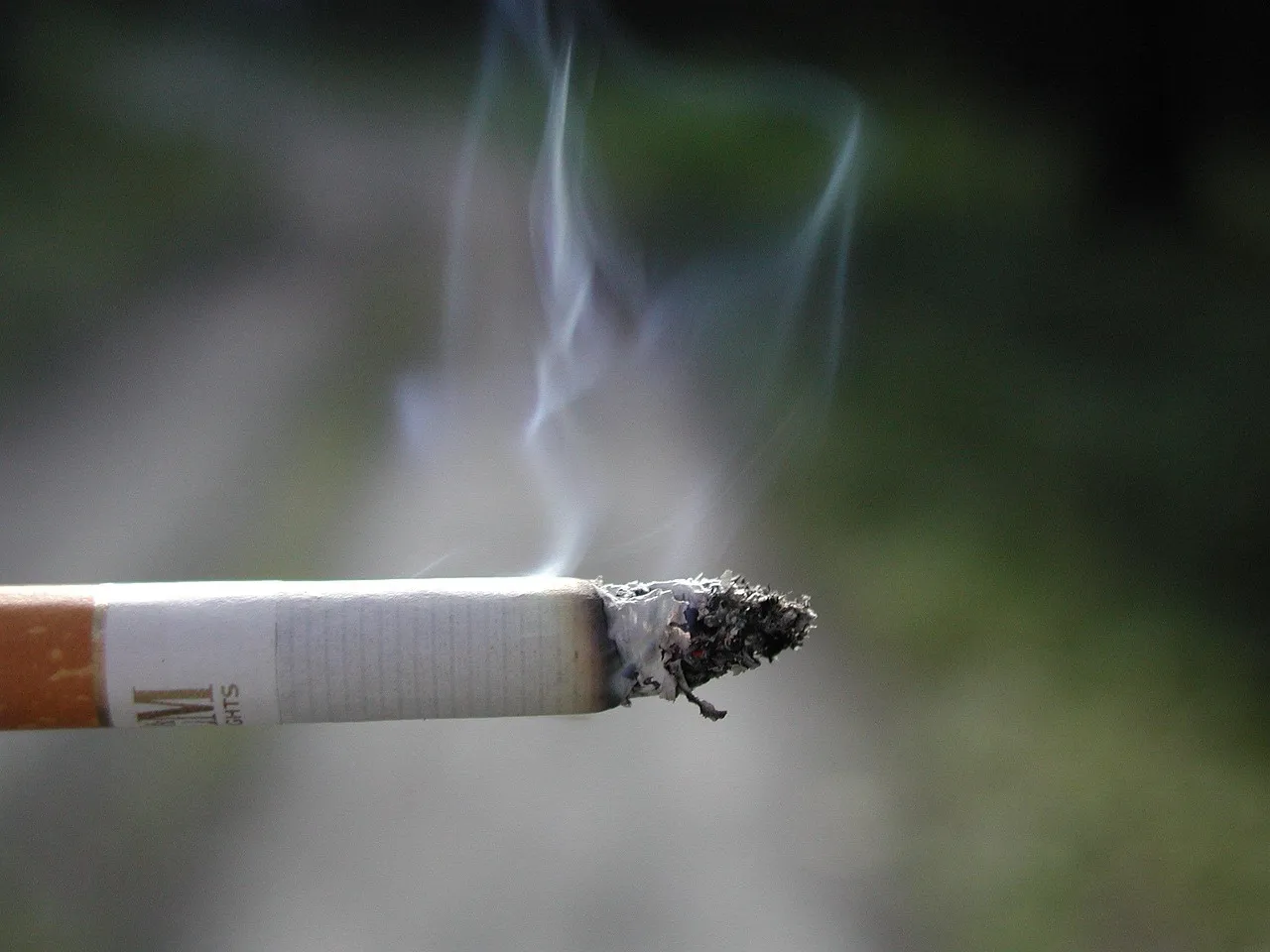
The complete ban on smoking on airplanes has had a lasting impact on air travel. The prohibition has made air travel significantly safer and more comfortable for passengers and crew alike. These bans also paved the way for smoking bans in other public places worldwide, including land transport and restaurants.
This landmark legislation propelled the adoption of similar rules internationally, both by airlines and their industry’s governing bodies. Though the tobacco industry succeeded in stalling efforts to create smoke-free airways, it was ultimately unable to muster sufficient grassroots support or scientific evidence to convince the general public or policymakers that smoking should continue to be allowed on airlines. The skies changed, and so did the ground.
The Quiet Takeaway
That small metal fixture on the back of a lavatory door is one of the more honest things you’ll find on a commercial aircraft. It doesn’t pretend everyone follows the rules. It simply prepares for the moment someone doesn’t. In a way, it reflects something quietly admirable about aviation safety culture: it is designed not around ideal behavior, but around real human nature.
The next time you notice an ashtray on a plane, it’s worth a pause. It represents two catastrophic fires, decades of regulatory evolution, and a fundamental safety principle that the industry has never abandoned. Small object, long memory.
AI Disclaimer: This article was created with the assistance of AI tools and reviewed by a human editor.