


The Shortcut Your Brain Takes for Smell

Every other sense you have takes a longer route to reach your memory centers. Most of what your brain takes in on a trip arrives through sight and sound, both of which travel through the thalamus before reaching the cortex and then memory centers, with every handoff creating a chance for the memory to be edited, compressed, or quietly discarded. Smell is fundamentally different. Odor molecules enter the nose, bind to receptors, and fire directly into the olfactory bulb, which sits underneath the frontal lobe and connects almost immediately to memory-processing areas.
Smell is the only sense that bypasses the thalamic relay and has primary access to regions of the brain typically found to be active during emotional processing, long-term memory formation, and higher-order cognitive reasoning and evaluation. That direct line is the key to everything. It is this unusual neural makeup that has led many to speculate on the unique role olfaction plays in memory, emotion, and higher-order cognition.
The Proust Phenomenon: What It Actually Is

Odors evoking vivid and intensely felt autobiographical memories are known as the “Proust phenomenon,” delineating the particularity of olfaction in being more effective at eliciting emotional memories than other sensory modalities. The term is borrowed from novelist Marcel Proust, whose famously detailed account of a childhood memory triggered by a tea-soaked biscuit became one of literature’s most enduring descriptions of involuntary memory. Science has since caught up with what he was intuiting. Research has investigated the capacity of olfactory stimuli to trigger emotion and memory effectively, with most studies in humans pointing to the capacity of odors to serve as significant context cues underlying the formation and later retrieval of content-dependent autobiographical memories.
The Proust effect is not rare. It is the baseline of how scent and memory interact. Most travelers have simply never been taught to notice it.
The Amygdala and Hippocampus: Your Memory’s Inner Team
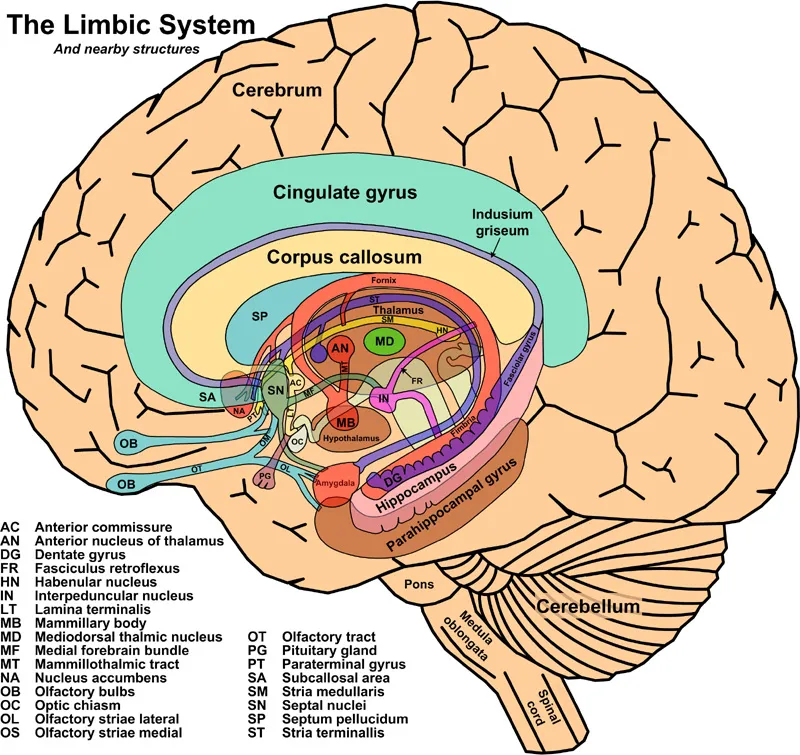
Two brain structures sit at the heart of why smells feel so personal and so loaded. The mechanism underlying why odor-evoked autobiographical memories are so emotional is the direct neural communication between the olfactory system and the amygdala-hippocampal complex of the limbic system, and neuroimaging studies have shown that the amygdala is strongly activated when autobiographical memories are evoked by olfactory cues compared to visual ones.
The olfactory bulb is located next to the hippocampus, the part of our brain that creates and sets memories. The proximity is not accidental. There is clear evidence demonstrating the power of smells in triggering autobiographical memories and emotions, given the close relationship between olfaction, memory, and emotional processes at the neuroanatomical level.
Why Smell Memories Feel More Emotional Than Visual Ones
Odor-evoked memories were found to be particularly emotional as measured by both self-report and heightened heart rate responses, especially in comparison to memories elicited by other modalities such as visual, tactile, and auditory cues. That elevated heart rate is not poetic license. It’s a measurable physiological response that researchers can track in the lab.
Rachel Herz, the Brown University neuroscientist who has spent much of her career on olfactory memory, has shown in study after study that the same memory triggered by a smell will be rated as more emotional, more personal, and more transportive than when triggered by a photo or a word. That distinction matters enormously. Because smell is so closely tied to emotional memory, one fragrance can bring back a specific season, relationship, trip, or chapter of your life.
Odor Cues Are More Vivid Than Word Cues

A 2024 study published in JAMA Network Open found that odor cues led to more detailed memories than word cues in adults with major depressive disorder. This is a significant finding. It confirms that the richness of scent-triggered recall is not just a subjective feeling. The study’s lead researcher, Kymberly Young, an Associate Professor of Psychiatry at the University of Pittsburgh, suggests this could open new avenues for therapy, using carefully selected scents to help patients access and process difficult memories in a more detailed, emotionally rich way.
Research by Willander and Larsson found that odor-evoked autobiographical memories triggered mental time travel better than memories evoked by verbal or visual cues. The phrase “mental time travel” is precise. When a vacation smell hits you, it isn’t just a pleasant association. You’re briefly there again.
Why These Memories Often Come From Early in Life

Willander and Larsson found that autobiographical memories triggered by olfactory stimuli tend to be older than memories evoked by other sensory cues, and that most olfactory memories are from the first ten years of life, which is when people encounter the majority of the odors they will ever encounter. This explains why the scent of a foreign market or a particular coastal air can feel so strangely deep-seated, especially if it echoes something from early childhood travel.
Associative odor learning begins very early in life, with events and experiences that may become accessible in old age through exposure to event-congruent olfactory information. So a smell from a beach holiday at age seven may lie dormant for decades before it surfaces, vivid and intact, triggered by the same notes in a different city. That’s the olfactory system quietly maintaining records you didn’t know it was keeping.
Why Scent Memories Are So Resistant to Fading

Studies have found various characteristics of common memories of odor memory, including persistence and high resistance to interference. This is one of the more counterintuitive facts about how memory works. You’d expect more-practiced senses like sight to retain things better. They don’t.
Researchers describe olfactory memories as relatively resistant to the normal decay that affects other cues. While a photograph prompts a visual search that can gradually erode the memory underneath, a scent recovers the experience more completely. Olfactory memory refers to the ability of our brain to record, store, and reactivate memories through smells, and unlike images or sounds, a scent does not need to be consciously analyzed or interpreted to bring back a memory, as it acts directly, almost instinctively.
The Role of First Encounters: Why Travel Smells Stick

The set of smells present in an area triggers emotions in us that generate pleasant or unpleasant memories, taking us back to the past and affecting our mood. New environments are particularly fertile ground for this process. When you arrive somewhere unfamiliar, your brain is on high alert, encoding everything more intensely than it would in a routine setting.
Wearing a fragrance during a trip, or associating a fragrance with a personal ritual, can anchor an emotion in time. The smell then becomes a marker, a sensory reference capable of instantly bringing back an atmosphere or a state of mind. This is precisely why the sunscreen, the local coffee, or the particular humidity of a city you once loved can stop you cold in your tracks years later.
Olfactory Tourism: A Growing Approach to Intentional Travel

Olfactory tourism means traveling and visiting a place guided by the sense of smell, with scent at the center of everything, determining the direction of itineraries, shaping what will become memories, and influencing how we come into contact with the world during our travels. It sounds niche, but the underlying idea is grounded in solid neuroscience.
This approach makes vacations into multisensory moments guided by a kind of emotional geography, where the scent of mint can lead to visiting a certain monument or the aroma of a specific food can cause a traveler to meet one person rather than another. Travelers who slow down enough to notice smell are essentially giving their brains better material to work with. Travelers who deliberately build scent triggers into a trip come home with a palette of returnable memories, not just a camera roll.
Smell Training Can Actually Strengthen These Pathways

Smell training, exposing yourself to diverse scents regularly, can actually strengthen memory pathways and may slow cognitive decline, according to recent neuroscience research. This finding has implications beyond nostalgia. It suggests that actively engaging your sense of smell during travel isn’t just poetic. It’s neurologically beneficial.
Researchers say the finding transforms the long-known tie between smell and memory into an easy, non-invasive technique for strengthening memory and potentially deterring dementia. For travelers, the practical application is simple. Notice smells intentionally. Pause at the bakery, step into the market, sit near the harbor. Giving your hippocampus a verbal handle to grip a smell with makes the eventual Proust effect stronger later.
The Takeaway

The next time a smell ambushes you with a vacation memory you thought you’d half-forgotten, that’s not sentimentality. It’s neuroscience doing exactly what it’s built to do. The human olfactory system is intimately connected to the memory centers of the brain, and that connection is older, faster, and more direct than any other sensory pathway we have.
Travel will always leave traces. Some land in photographs, some in journals. The quietest traces are the ones you carry in your nose without knowing, waiting for the right moment to pull an entire world back into view. The science is clear on this much: smell is the sense most loyal to where you’ve been. Perhaps that’s reason enough to pay more attention to it while you’re still there.
AI Disclaimer: This article was created with the assistance of AI tools and reviewed by a human editor.