


The Brain Doesn’t Just Listen – It Remembers
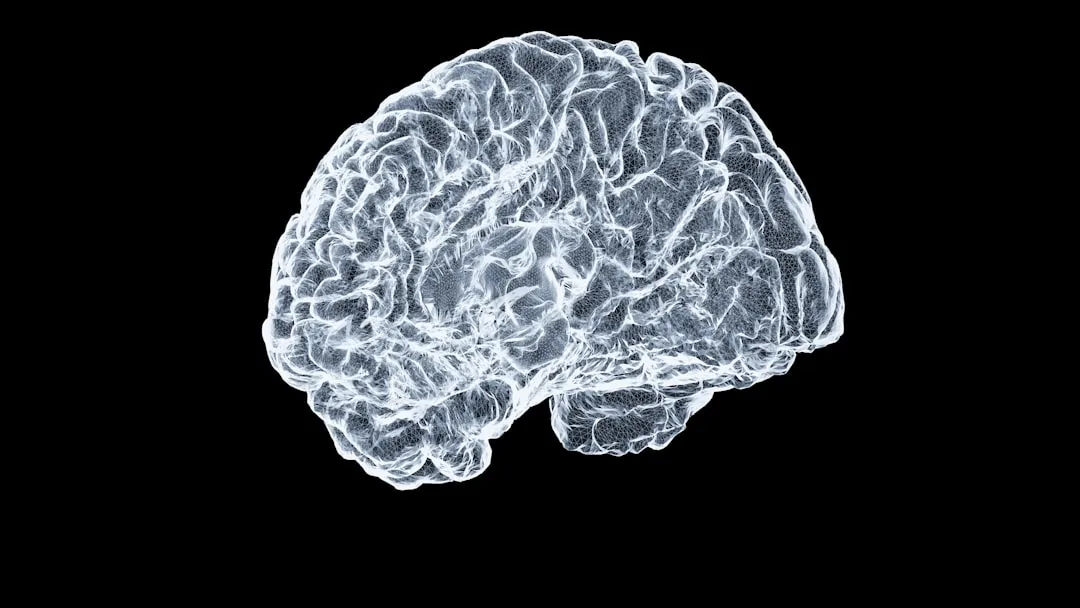
When you hear a familiar song, your brain doesn’t treat it as background noise. Music enhances activity in the hippocampus and the amygdala, the regions most central to memory formation and emotional processing. These two areas working together is a big part of why music feels so tied to specific moments rather than general periods of life.
Studies show that music activates brain regions associated with autobiographical memory, such as the medial prefrontal cortex – an area that integrates self-relevant information, emotions, and memories, making music a powerful tool for reconnecting with one’s personal history.
Using functional MRI to monitor participants’ brain activity as they listened to songs tied to meaningful life events, researchers uncovered a neural signature that may explain music’s unique ability to evoke vivid, autobiographical memories. A road trip, with all its heightened sensory detail, is exactly the kind of event that creates those strong signatures.
Music-Evoked Autobiographical Memories Are Their Own Category

Listening to music can trigger memories of past experiences, and these are formally known as music-evoked autobiographical memories, or MEAMs – a concept that has received increasing attention within the social and behavioral sciences, as well as clinical and neurological research.
Researchers have shown that MEAMs can stimulate long-term memory mechanisms while requiring little retrieval effort. That’s the key difference between remembering a road trip because you saw an old photo versus hearing the song that played during it. The song does much of the cognitive heavy lifting for you.
MEAMs include associations with autobiographical knowledge, such as references to persons, places, lifetime periods, and specific events. A single song can encode all of those at once – the friend riding shotgun, the stretch of coastline, the particular moment you turned the volume up.
Songs Are More Powerful Memory Cues Than Words Alone

New research shows that full songs are far more effective than spoken lyrics in evoking personal memories. By comparing reactions to popular pop songs and spoken-word versions, researchers found that music helps anchor memories to specific times and emotions.
Song cues were significantly more likely to evoke autobiographical memories – close to half of all instances – than spoken cues, which triggered memories in roughly a third of cases, even when controlling for familiarity. That difference is meaningful. Melody, rhythm, and timbre do something that language alone cannot replicate.
The study also revealed that more positive and upbeat songs were associated with a greater likelihood of triggering positive memories. Which may be one reason road trip playlists tend to feel so euphoric on repeat listens – the music and the mood reinforce each other bidirectionally.
Music Doesn’t Just Retrieve Memories – It Can Reshape Them
People often think of musical memories as fixed snapshots of the past, but recent research suggests music may do more than just trigger memories – it might even change how you remember them. This is a relatively new and striking finding in the field.
Research from Georgia Tech, conducted in collaboration with music experts at the University of Colorado Boulder, uncovered intriguing connections between music, emotion, and memory – specifically, that listening to music can change how you feel about what you remember.
This helps explain something that many travelers have quietly noticed: the same road trip, revisited through its music years later, can feel different than it did at the time. Happier, perhaps, or bittersweet in ways it wasn’t before. The song doesn’t just unlock the memory – it colors it.
The Reminiscence Bump and Why Teen Road Trips Hit Differently

Music heard during what researchers call the “reminiscence bump” – the period roughly between ages 10 and 30 when many autobiographical memories are formed – has heightened recall strength. Songs from that window tend to stick with unusual intensity.
Several studies have analyzed the autobiographical salience of songs by their release date, finding that older individuals disproportionately recall events from adolescence and early adulthood compared to other life stages. This is linked to the large number of significant life events that typically occur during that window, such as leaving home, completing studies, and starting a family.
Songs from formative years have an outsized impact because these periods are often emotionally intense and socially significant, imprinting memories with exceptional strength. A road trip taken at 19 with people you loved will remain encoded far more vividly than a similar drive taken at 40 under comparable circumstances.
The Role of Dopamine and Emotional Intensity

Neurologically, songs that stimulate dopamine release in the brain’s reward system create stronger memory traces, making them more memorable and easier to retrieve. Road trips are already high-dopamine environments – novelty, freedom, anticipation, and social bonding all elevate the brain’s reward response.
Researchers found that songs linked to personal memories engage both the default mode network and the brain’s reward circuitry. When music triggers both systems at once, the memory that forms is richer and more durable than a memory formed without a strong emotional soundtrack.
The personal significance of a song, its emotional intensity, the timing of its original exposure, and the context in which it was experienced all shape its mnemonic power. Songs linked to strong emotions or major life events are more likely to be potent memory triggers.
Context Is Everything: Why the Car Matters

The car itself is a surprisingly powerful memory container. It’s an enclosed, shared space that isolates you from the outside world while simultaneously moving you through it. That combination of intimacy and motion creates an unusual psychological state – one that’s particularly receptive to emotional encoding.
A 2024 survey among drivers in the United States revealed that the leading reason why they took road trips was to see new landscapes and scenery, while nearly half of respondents said listening to music was their primary reason for taking a road trip. Music isn’t incidental to the road trip experience. For a large share of travelers, it’s the point.
Musical excerpts are extended in time and can influence the trajectory of a memory or imagining dynamically as it develops. Because music’s uses and contextual associations are culturally constrained, autobiographical memories cued by music can show surprising similarities among individuals from the same culture. Shared playlists create something close to shared memory.
Familiarity Deepens the Connection Over Time
Recent research suggests that emotional music clips can serve as a highly successful tool for eliciting rich autobiographical memories, and that the utility of these cues may be related to their subjective familiarity. The more you’ve heard a song, the more reliably it retrieves the memory anchored to it.
Song familiarity was associated with increased activity in the dorsomedial prefrontal cortex, alongside higher ratings of temporal specificity and positivity across participants. In plain terms: the songs you know best are the ones most likely to take you somewhere specific, not just somewhere vague.
This is worth sitting with for a moment. It means every time you replay a road trip playlist at home, you are actually strengthening the neural bond between that music and those memories. You’re not just reminiscing – you’re reinforcing.
Shared Playlists, Shared Memories

Road trips are rarely solo. They’re almost always shared, and the music that plays is a collective experience. When a group of people hears the same song at the same heightened moment, each person encodes it individually – but they also carry a version of each other’s memory forward.
Research has revealed that music-evoked autobiographical memories are common everyday experiences that often occur involuntarily and evoke primarily positive emotions. That involuntary quality is part of what makes a road trip song feel so uncanny when it surfaces years later. You didn’t choose to remember. The song remembered for you.
There’s something quietly communal about that. Two people who took the same trip can hear the same song in different cities, years apart, and be transported to the same stretch of road at the same moment – without ever speaking a word about it.
Why Road Trips Are Uniquely Good at Creating Sonic Memories

Not every listening context produces memories with equal staying power. Road trips are unusual because they stack so many memory-forming conditions simultaneously: novel environments, emotional stakes, social bonding, sensory richness, and extended time together moving through space. Music played in that context gets tagged differently by the brain.
Older adults tend to recall autobiographical memories when listening to music from their adolescence and young adulthood, while young adults’ mental imagery is often triggered by pieces that were popular during their childhood. Road trips taken during transitional life periods – moving away for college, a post-graduation trip, a last summer with old friends – are especially fertile ground for these kinds of lasting sonic anchors.
Participants in research studies not only recalled events more quickly, but also experienced stronger feelings of re-living those moments with song cues compared to other types of cues. Re-living is the right word. It’s not just remembering. With the right song, you can briefly inhabit those miles again.
The Takeaway

There’s no mystery to fix here. The fact that a song can drop you back into a specific afternoon on a specific highway, with the same feeling in your chest, is one of the more remarkable things the human brain does quietly and without effort.
The science behind it – dopamine, the hippocampus, MEAMs, the reminiscence bump – gives useful language to something most people have always known intuitively. Your road trip playlist isn’t just music. It’s a time machine with a speaker and a volume dial.
The next time a song from an old trip surfaces unexpectedly, you don’t have to wonder why it hits so hard. You already know. You encoded it that way – driving through somewhere new, windows down, fully present – and the brain filed it exactly where it belongs.
AI Disclaimer: This article was created with the assistance of AI tools and reviewed by a human editor.