
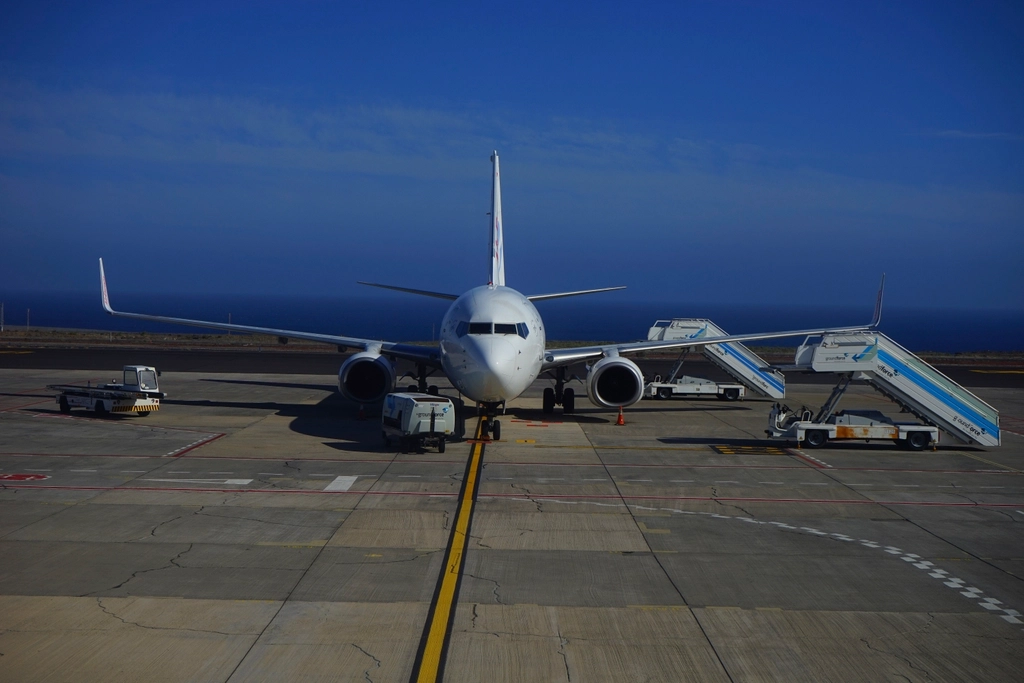
The giant painted numbers at the end of an airport runway look straightforward enough. They’re not street addresses, codes, or branding. They’re something more practical and, once you understand the logic, almost elegant in its simplicity. Every runway number in the world is a direct read from a compass.
For anyone who’s ever looked out an airplane window during taxi and wondered what “Runway 27” actually means, the answer connects magnetic fields, wind physics, pilot safety, and a surprising amount of planetary geology. It’s a system built on the physics of flying, not on convention.
The Basic Idea: Numbers as Headings
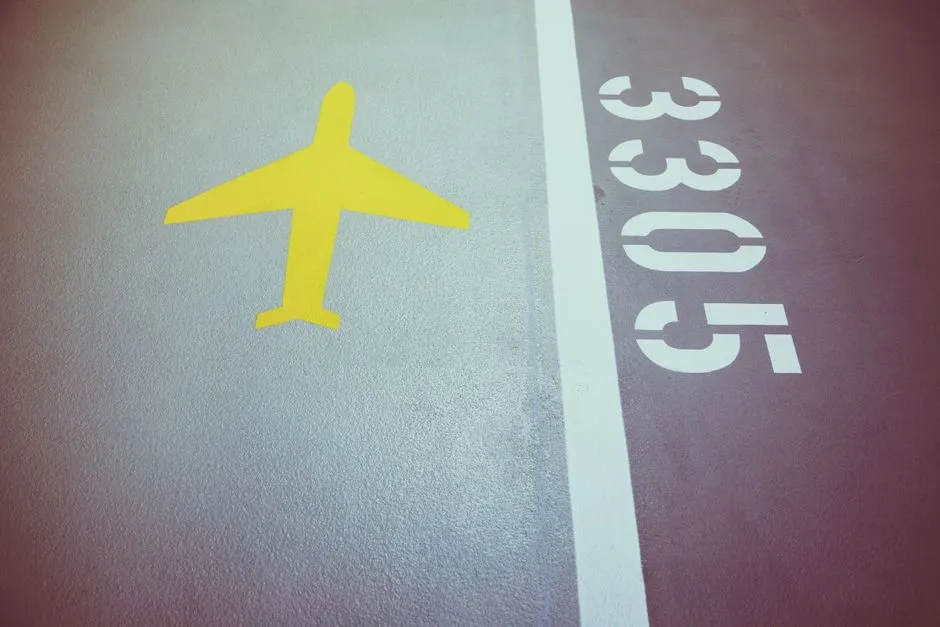
The giant numbers painted at the end of an airport runway are not random labels. They’re short compass clues. When a pilot sees Runway 27, the number is pointing toward a direction close to 270 degrees, or west. A runway number turns a long strip of pavement into a clear direction that pilots, air traffic controllers, airport signs, and charts can all share quickly.
By FAA rules, runways are numbered according to the points on a compass, from 1 to 36, reflecting the magnetic compass reading to the nearest 10 degrees and dropping the last digit. As runway markings are based on the compass direction, 360 represents north (runway 36), 90 represents east (runway 09), 180 represents south (runway 18), and 270 represents west (runway 27).
How the Rounding Works
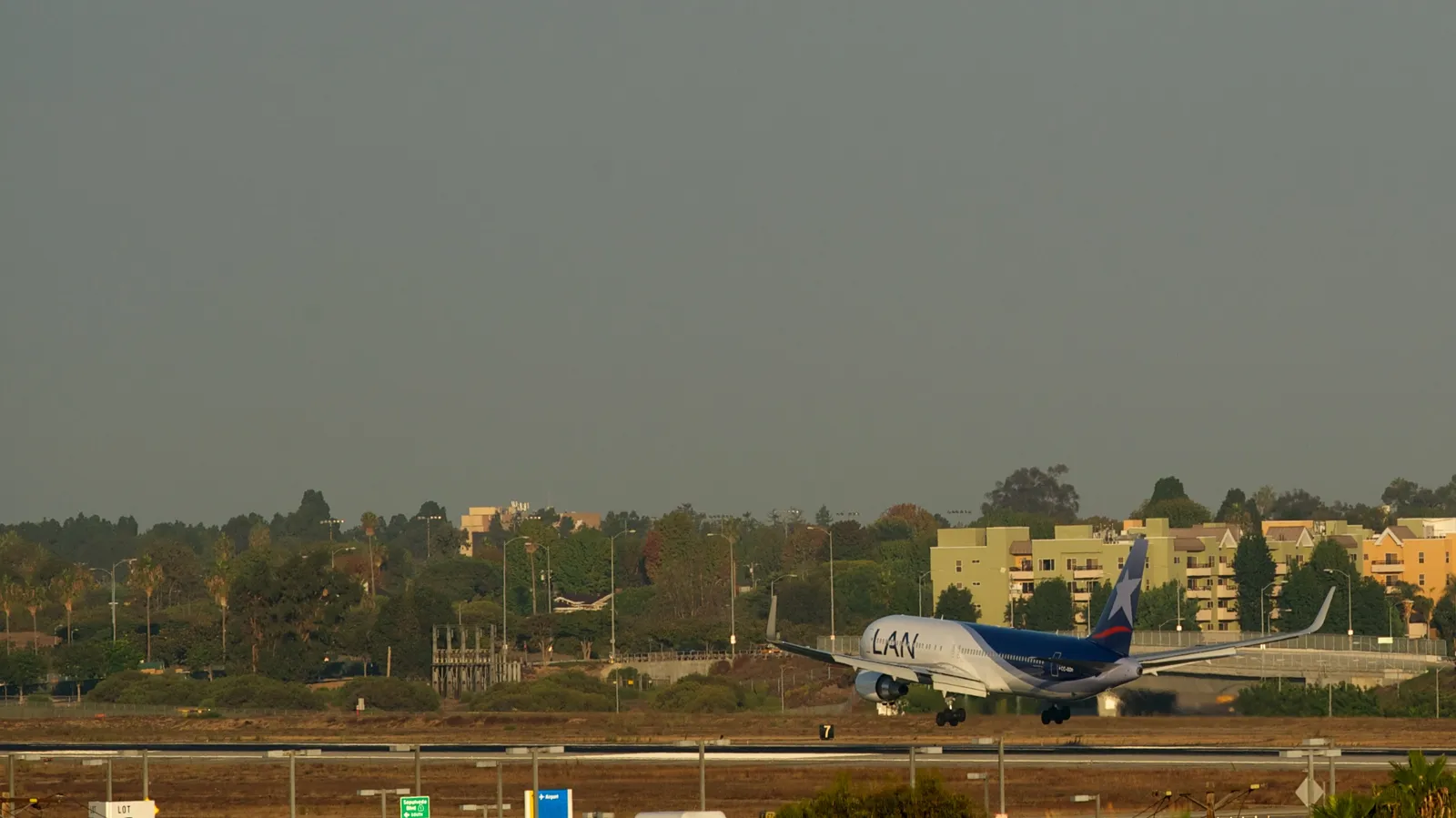
The runway number is the whole number nearest one-tenth the magnetic azimuth of the centerline of the runway, measured clockwise from the magnetic north. In plain language, the actual compass heading gets trimmed down to its first two digits and that becomes the runway’s name.
For the sake of simplicity, the FAA rounds headings to the nearest ten, so even if the heading is 308 degrees, the runway would be called three one instead. For simplicity, only a maximum of two numbers are painted on each end of the runway. The magnetic heading of the runway is rounded to the nearest tenth of a degree and the third digit is dropped. For example, a heading of 342 degrees means the runway will be labeled Runway 34.
Why Magnetic North, Not True North
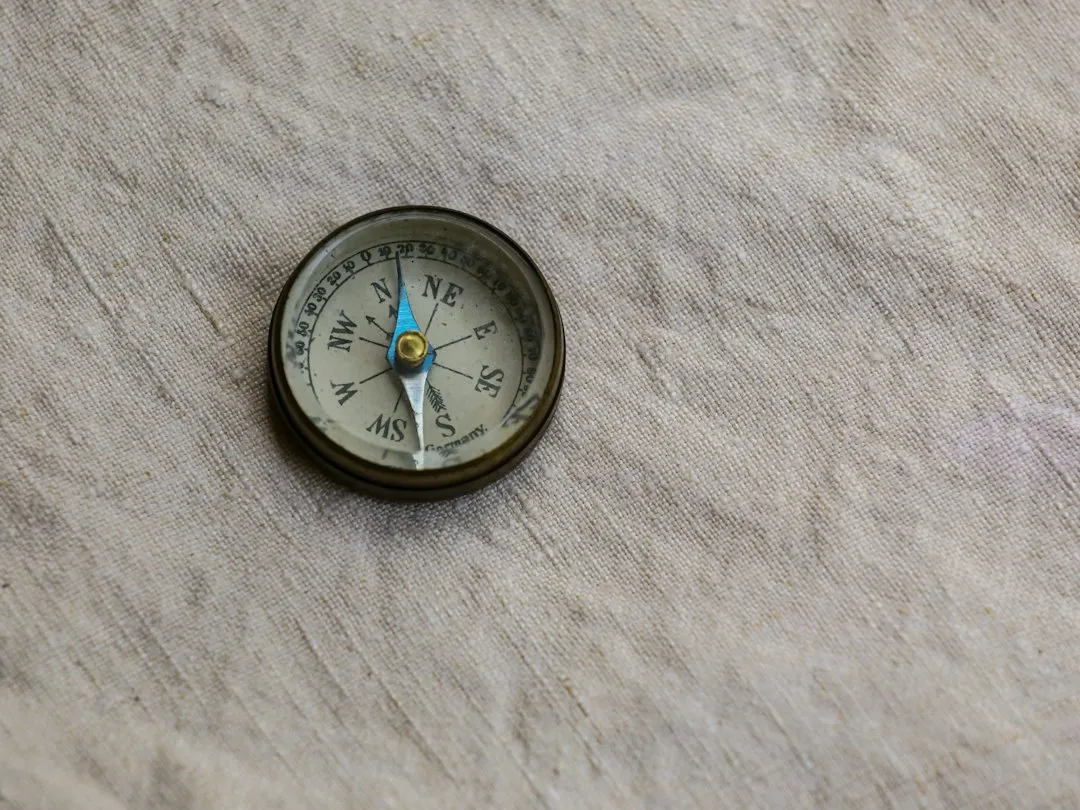
Runway numbers are based on magnetic north rather than true north because airplanes rely on magnetic compasses for navigation. This ensures consistency between what pilots see on their instruments and the physical markings on the ground. Aviation has long used compasses, which require no power, only the earth’s magnetic field.
The angle between true north and magnetic north is called magnetic declination, and it varies from place to place. It also changes over time as Earth’s outer core keeps moving and reshaping the magnetic field. This matters enormously for runway naming, because what a compass reads in Chicago is not exactly what it reads in Tokyo.
Every Runway Has a Mirror Number
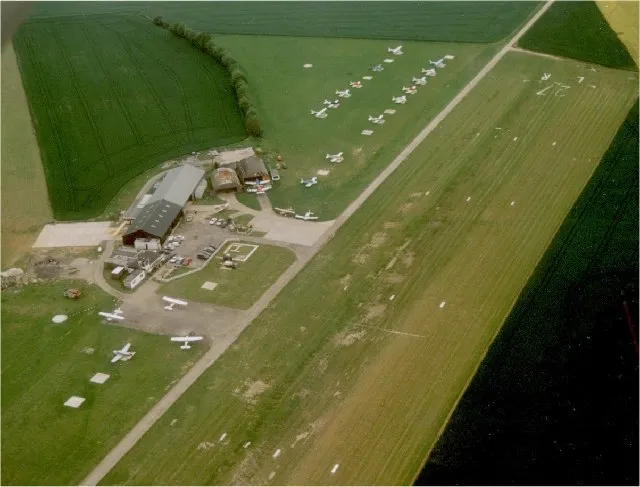
The opposite end of any given runway (180 degrees away) will be plus or minus 18 in the runway number, which is basically 180 degrees reciprocal of the given number. For example, runway 08 in one direction and runway 26 in the other direction. You’re always landing on or taking off from the same strip of asphalt; only the direction you’re traveling changes.
Runway 03L becomes runway 21R when used in the opposite direction, derived from adding 18 to the original number for the 180-degree difference when approaching from the opposite direction. It’s a clean, reversible logic that applies at every airport on earth. Pilots can decode any runway number in seconds.
Parallel Runways Get Letters Too
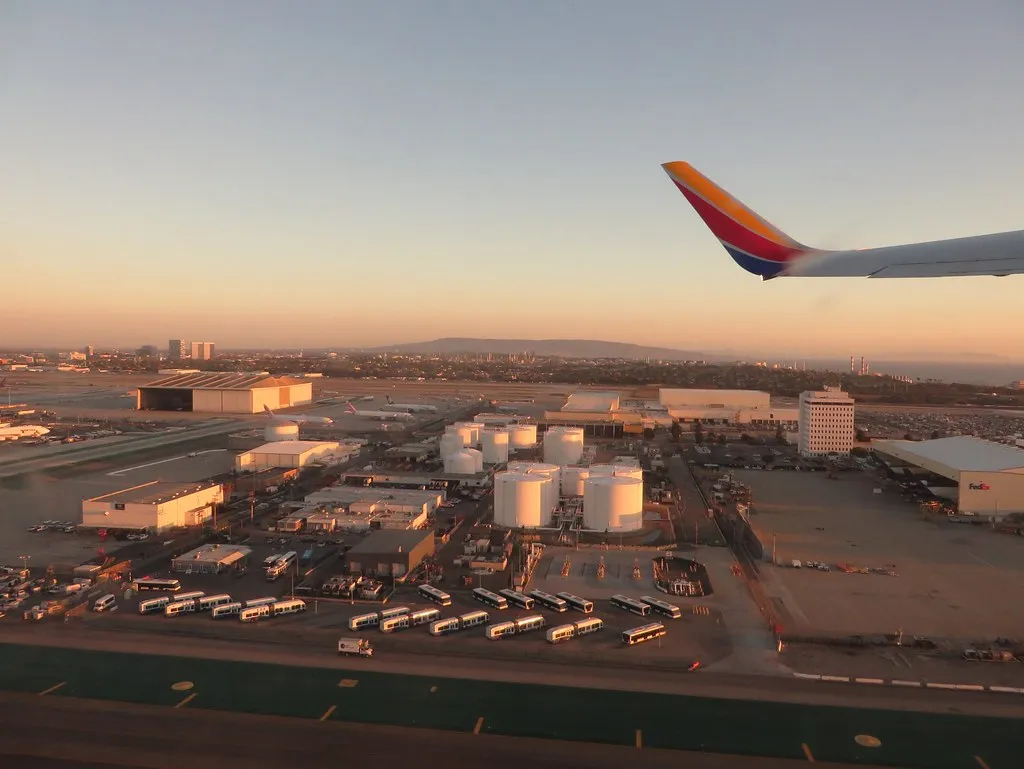
Runway letters are used to differentiate between runways that point in the same direction. There are only three to remember: “L” for the left-hand runway, “C” for the center runway when there are three parallel runways, and “R” for the right-hand runway. So, for example, “36L” and “36R.”
Atlanta is the busiest airport in the world, and it has five parallel runways. In this case, there is a runway 26L and 26R, a runway 27L and 27R, and a runway 28. Each of these runways is oriented to 274.4 degrees magnetic, but are given different runway designations. At that scale, the letter system becomes essential for separating dozens of simultaneous operations.
Wind Is Why Orientation Matters So Much

Ideally a runway should be aligned with the prevailing wind in order to minimise the crosswind components. In aviation, a crosswind is the component of wind blowing across the runway, making a landing more difficult than if the wind were blowing straight down the runway. If a crosswind is strong enough, it may exceed an aircraft’s crosswind limit and an attempt to land under such conditions could cause structural damage to the aircraft.
The Flight Safety Foundation Approach-and-Landing Accident Reduction Task Force found that adverse wind conditions, including strong crosswinds, tail winds, or wind shear, were involved in about 33 percent of 76 approach-and-landing accidents and serious incidents worldwide between 1984 and 1997. Knowing compass orientation at a glance lets air traffic controllers assign the safest runway for current wind conditions in real time.
According to FAA standards, the minimum wind coverage considering all observations is 95 percent. This means that for 95 percent of the time, the crosswind component must be smaller than the maximum crosswind component of the aircraft landing at a specific airport.
When Magnetic North Moves, Runways Get Renamed

The Earth’s magnetic field is constantly shifting, which occasionally necessitates updates to runway numbers to reflect changes in magnetic heading. This is not a minor technical footnote. It actually forces airports to repaint their runways and update all associated charts, signs, and air traffic procedures.
For example, Fairbanks International Airport in Alaska renamed runway 1L-19R to 2L-20R in 2009, when magnetic north shifted enough to mandate a change. Airport operators know, from NCEI’s World Magnetic Model and other sources, that they’ll likely need to update the name again in 2033. Tampa International Airport in Florida similarly renumbered its runways in 2011 when magnetic drift crossed the rounding threshold.
Airport runway numbers change from time to time. Due to changes in the earth’s molten iron core, the earth’s magnetic north pole is on the move, which causes the numbers to change, and the FAA rechecks them every five years.
The World Magnetic Model Keeps It All Accurate

The World Magnetic Model is a data-based, mathematical representation of Earth’s large-scale magnetic field used for navigation, orientation, and heading references. It’s critical to virtually every smartphone’s map apps and is the standard navigation tool for the Federal Aviation Administration as well as the U.S. Department of Defense, NATO, and more.
The aviation industry relies on magnetic compasses as primary instruments for navigation, alongside GPS instruments, so shifts in Earth’s magnetic field affect many aspects of aircraft navigation, including instrument landing systems, air traffic procedures, and runway designations. Airport runways are perhaps the most visible example of a navigation aid updated to match shifts in Earth’s magnetic field.
Some Special Cases: True North and Military Airfields
Some airports may use true north for runway numbers due to high magnetic variation. This applies mainly to airfields located at very high latitudes, where the gap between magnetic and geographic north becomes large enough to create practical problems for navigation. It’s a rare exception, but it exists.
Military airbases may include smaller paved runways known as “assault strips” for practice and training next to larger primary runways. These strips eschew the standard numerical naming convention and instead employ the runway’s full three-digit heading. Examples include Dobbins Air Reserve Base’s Runway 110/290 and Duke Field’s Runway 180/360. The civilian world keeps it shorter for speed and clarity.
A Universal Language Across Every Airport

These are simplified by the FAA to avoid any confusion and to allow pilots from anywhere in the world to quickly decipher the numbers, ensuring clear communications and safety. These runway designations are mostly standardized throughout every major airport in the world. A pilot trained in Oslo reads a runway sign in Cape Town with the same instant understanding.
The aviation industry relies on magnetic compasses as primary instruments for navigation alongside GPS instruments, so shifts in Earth’s magnetic field affect many aspects of aircraft navigation, including instrument landing systems, air traffic procedures, and runway designations. The compass-based numbering system ties all of those elements together into one shared reference point from the moment a crew receives taxi clearance to the moment the wheels leave the ground.
The Quiet Genius of the System

Runway numbering is one of those systems that sounds almost too simple to matter, until you consider what it replaces. Without it, pilots and controllers would need a far more complex verbal shorthand to distinguish one strip of concrete from another, especially in poor visibility or at unfamiliar airports.
Runway numbers are tied to magnetic direction, not ordinary street-style numbering. They depend on compass headings, Earth’s magnetic field, and the approach direction of the aircraft. They can even change over time because magnetic north slowly moves. Once the system makes sense, a runway sign starts looking less like a code and more like a practical language for motion.
It’s a system rooted in pure practicality, shaped by physics, maintained by planetary science, and quietly relied upon by hundreds of thousands of flights every single day. The numbers are not bureaucratic labels. They’re directions, written in the only language that truly crosses every border: a compass bearing.
AI Disclaimer: This article was created with the assistance of AI tools and reviewed by a human editor.