

Something quiet but meaningful has been shifting in family cars across the country. Parents who once handed over a tablet at the start of a long drive are starting to think twice. Not because screens have suddenly become forbidden, but because more families are rediscovering something they lost along the way: the art of just talking, playing, and laughing together in a moving car.
The numbers behind this shift are hard to ignore. Parents believe roughly nine hours per week is ideal for their child’s screen time, but in reality, kids are clocking in 21 hours, more than double the preferred amount. That gap is exactly where simple, zero-cost word games have found new life. None of these five games require a charge cable, a password, or a Wi-Fi signal. They only need willing voices and a little imagination.
The Screen Time Problem Families Are Quietly Reckoning With

More than two in three parents say they would like to reduce their child’s screen time. That’s a meaningful majority, and it speaks to something deeper than just worrying about hour counts. Top concerns include reduced attention spans, disrupted sleep, behavioral issues, lower levels of physical activity, and weakened social skills linked to screen use.
Most parents, roughly 86 percent, say they have rules around screens, but far fewer, only 19 percent, say they stick to those rules all the time. Road trips create a natural, low-pressure moment to actually follow through. The car is contained. There’s nowhere else to be. It’s the ideal setting to try something different.
Why the Car Is Actually a Perfect Learning Space

Researchers have measured it for decades: children in grades K through 5 lose an average of about two months of reading progress over the summer, and that loss compounds year after year. Long drives can quietly make that worse if the hours are simply filled with passive scrolling. The car, though, has real potential in the other direction.
The single biggest driver of vocabulary and later reading comprehension isn’t flashcards, it’s talking. Children who hear and use rich language through back-and-forth conversation learn to read and write with greater ease than peers with smaller vocabularies, according to the American Library Association. A long road trip, treated right, becomes an effortless vocabulary session that nobody even notices they’re in.
Game 1: I Spy
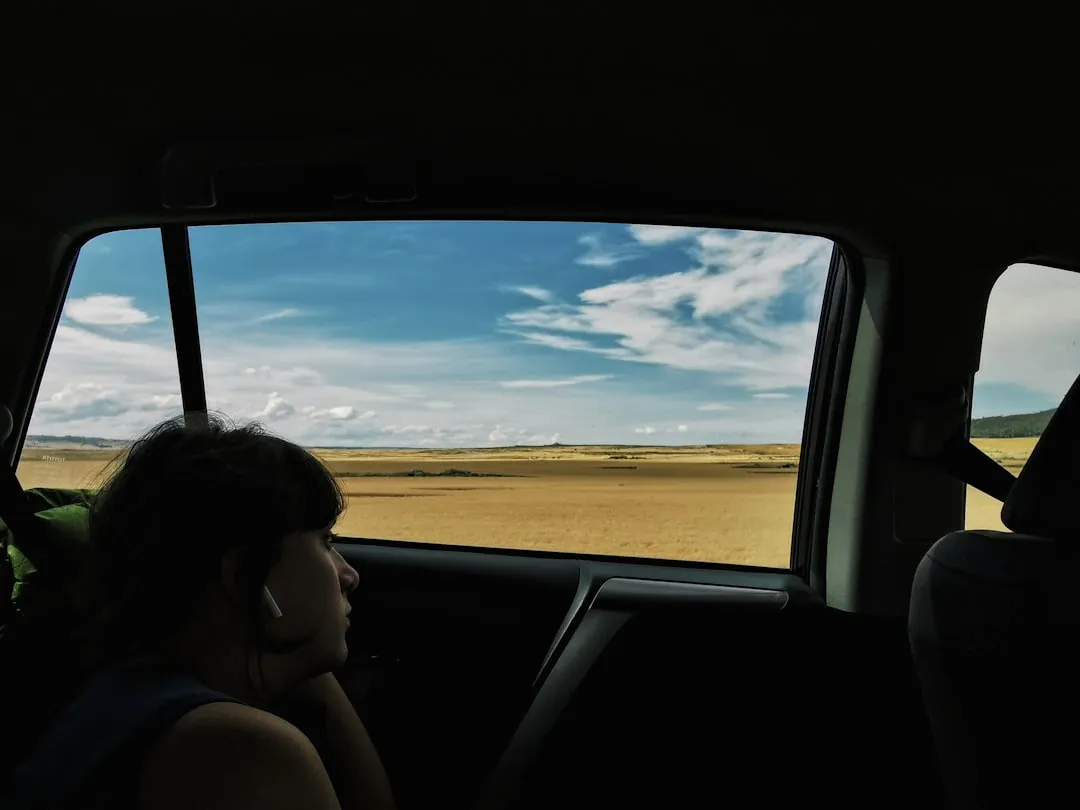
Few games have survived as many decades as I Spy, and there’s a reason it keeps showing up on packing lists. To begin, one person chooses something they can see and keeps the item secret. It must be something all players can see and something that will stay in sight for a while. The spy then states a descriptive clue, such as “I spy with my little eye, something that is blue” or something that begins with a specific letter. The other players take turns asking yes-or-no questions until they narrow it down.
What makes I Spy genuinely good for younger children is the observational thinking it quietly demands. Kids have to scan their environment, filter by category, and hold multiple clues in mind at once. Social skills benefit too, with improvements in turn-taking and patience, a deeper understanding of good sportsmanship, heightened active listening, and stronger family bonds through shared activities. For a game that needs nothing but eyes and a voice, the returns are surprisingly rich.
Game 2: 20 Questions

20 Questions is the kind of game that scales beautifully with the age of your kids. The first player thinks of an object, person, or place, and the other players take turns asking up to 20 yes-or-no questions to guess what it is. The game continues until someone correctly guesses or all 20 questions are used up. Young children can keep it simple with animals and colors. Older kids will dive into abstract thinking fast.
20 Questions offers endless opportunities for road trip entertainment and is a great choice for long car rides, especially once the scenery becomes flat and repetitive. There’s a genuine cognitive workout happening here. Players have to reason systematically, eliminate categories, and formulate precise questions, which is exactly the kind of structured thinking that builds strong comprehension skills over time.
Game 3: The Alphabet Game

The Alphabet Game turns the highway itself into a classroom without anyone feeling lectured. Players scan road signs, billboards, and license plates to find words starting with each letter of the alphabet, in order. It sounds straightforward until you hit Q, X, or Z, at which point the whole car starts leaning toward windows with surprising focus.
Remember to look for hard-to-find letters on road signs, like “train Xing” for the letter X, and you can also have a child practice their writing skills by recording found letters on a piece of paper. That optional writing element makes it even more useful for early readers. Naming items rapidly within a category builds quick word retrieval, which is the exact skill that speeds up reading fluency.
Game 4: The License Plate Game
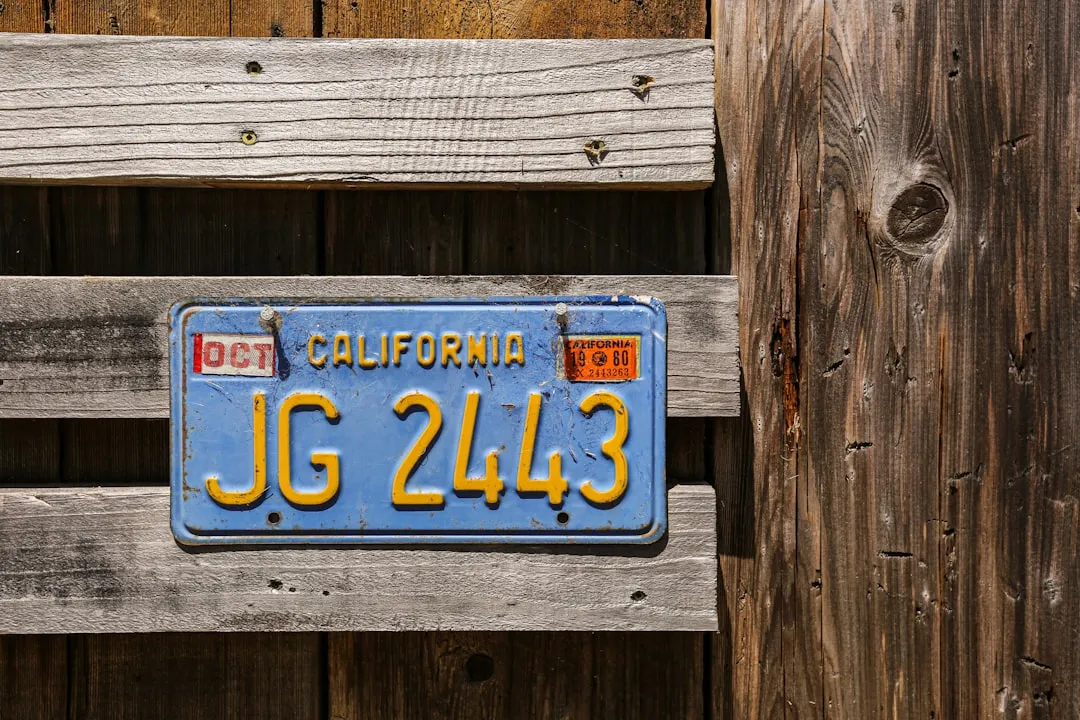
The License Plate Game has been a staple of American road trips for generations, and it adapts well to modern travel. Players try to spot license plates from different states or provinces, keeping track of which states they’ve seen and trying to find as many as possible during the trip. It’s competitive enough to hold everyone’s attention but relaxed enough that nobody feels stressed.
You can also sneak in a little geography and abbreviation lesson while you’re at it. For families who want to push the creativity further, participants can use the letters on a plate to create an acronym and come up with a short sentence. For example, if you spot “32E DGC,” you might say that stands for “Thirty Two Elephants Drive Golf Carts.” Quick thinking is key, and the stranger or funnier your sentence, the more laughs you’ll have. That variation alone can keep older kids genuinely engaged for miles.
Game 5: The Collaborative Storytelling Chain
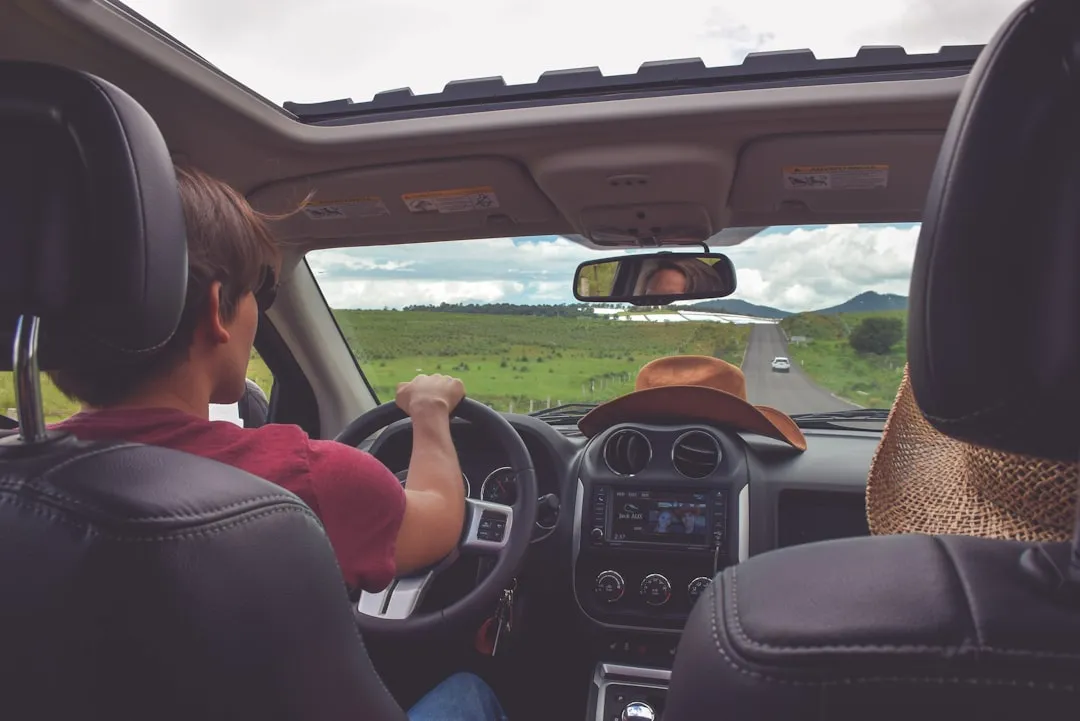
Of all the word games families can play on the road, the storytelling chain may be the most quietly powerful. One person starts a story with a sentence, and each passenger adds the next line, building an increasingly ridiculous tale. The story can go anywhere, and that open-endedness is precisely what makes it so compelling for all ages.
One person starts a story with a single sentence, the next person adds a sentence, and you keep passing it around. Kids practice sequencing, narrative structure, and listening, which are the backbone of reading comprehension. A livelier variation is the “Fortunately/Unfortunately” format: each sentence alternates between starting with “unfortunately” and “fortunately,” creating a story that twists back on itself in unexpected ways. Families who try this one often end up laughing harder than any in-car movie could manage.
What Research Says About Conversation-Based Play

The case for these games isn’t just sentimental, it has a grounding in research. Research shows that too much screen time is linked to attention and mood problems, while certain kinds of active engagement can support memory and thinking skills. The key distinction researchers keep returning to is passive consumption versus active participation, and every word game on this list falls firmly in the active column.
A review of 23 studies conducted across many countries examined interactions between nature exposure, screen use, and parent-child relationships. The findings offer insight into the roles families play in shaping children’s perceptions and routines, and highlight the potential of family-focused activities to shift parental attitudes and support family cohesion while encouraging children’s healthy development. While that review focused on nature exposure specifically, the underlying mechanism, shared attention without a screen, maps directly onto what road trip word games provide.
The Social Glue Nobody Talks About

There’s a dimension to these games that statistics don’t fully capture: what they do for the feeling inside a car. Road trip games help promote bonding and interaction between passengers, providing a fun, low-cost way to keep everyone entertained during the journey. Most require minimal props or supplies, making them easy to play anywhere. That accessibility is part of the appeal, no setup, no batteries, no forgotten charger.
When a nine-year-old confidently stumps the whole family in 20 Questions, or when a collaborative story reaches an absurd plot twist that has everyone in tears laughing, something real happens. Turn-taking, patience, active listening, and stronger family bonds through shared activities aren’t byproducts of these games. They’re kind of the whole point. Screens can entertain a child. These games actually connect people.
How to Make the Swap Without a Fight

In 2025, parents are navigating a complex digital relationship, with screens serving as education tools, entertainment, and even stand-in babysitters during busy moments. Nobody is suggesting that tablets disappear entirely. The swap works best when it’s framed as an addition rather than a removal. Start one game before you even leave the driveway. If it catches, you may not need to reach for a device at all.
Pediatricians at Lurie Children’s recommend that families designate screen-free times of day or areas to promote uninterrupted connection. The car during a road trip is one of the most natural and low-resistance places to do exactly that. The destination is fixed. Everyone is together. The only variable is how you fill the time between here and there.
The Takeaway

None of these five games are new. That’s actually the point. I Spy, 20 Questions, the Alphabet Game, the License Plate Game, and storytelling chains all survived for so long because they genuinely work. They hold attention, they build language, and they make the miles feel shorter in the best possible way.
Families don’t need a curriculum or a strategy to get started. Each of these road trip games is family-friendly and convenient to play. They don’t require a special deck of cards or any game pieces in order to have fun. All it takes is one willing adult to say the words “I spy with my little eye…” and see what happens next. Chances are, the tablets will stay in the bag for a while.
AI Disclaimer: This article was created with the assistance of AI tools and reviewed by a human editor.