

It Starts With a Regulatory Requirement
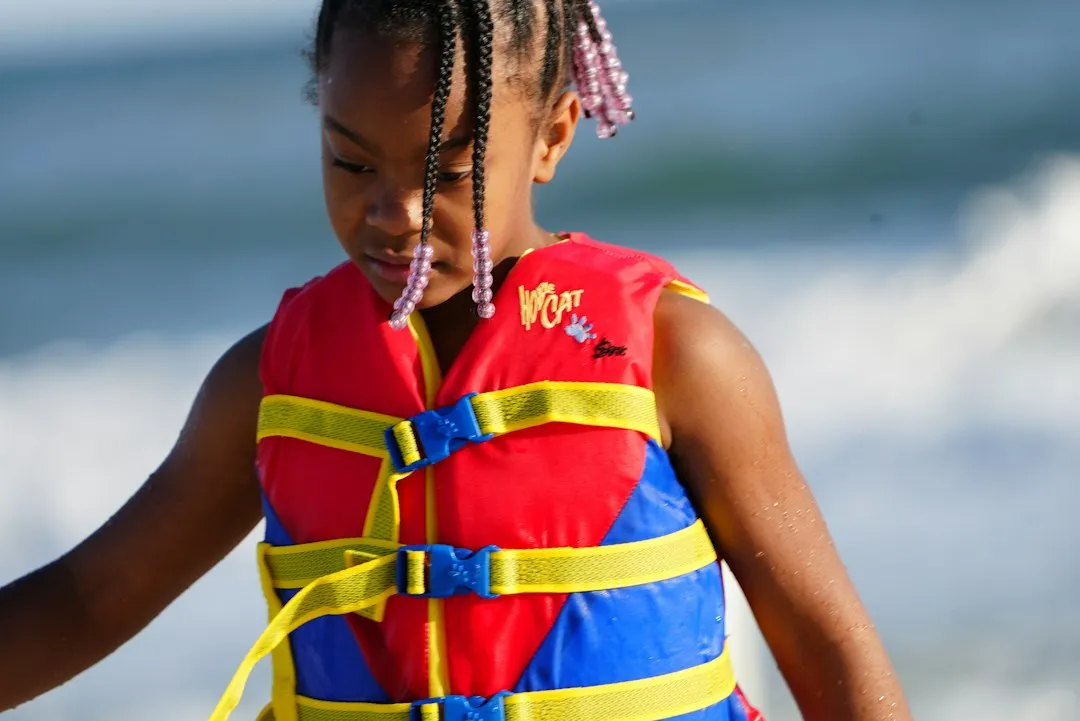
The FAA requires an approved life vest or life preserver, readily accessible, for every occupant aboard commercial aircraft operating over water, under FAR 91.509 and Part 135. This isn’t optional guidance. It’s a hard rule with teeth, and the whistle is part of the package.
For a life vest to count toward FAA overwater equipment requirements, it must carry a valid Technical Standard Order (TSO) approval, such as TSO-C13 or TSO-C72, depending on aircraft category and application. Every component on that vest, including the whistle, is part of a certified design.
Each lifejacket must have a whistle of the ball type or multi-tone type and of corrosion-resistant construction. The whistle must be securely attached to the lifejacket by a lanyard, and that lanyard must be long enough to permit the whistle to reach the mouth of the wearer. These specifications exist in federal code, not as suggestions but as enforceable standards.
Sound Carries Far Over Open Water
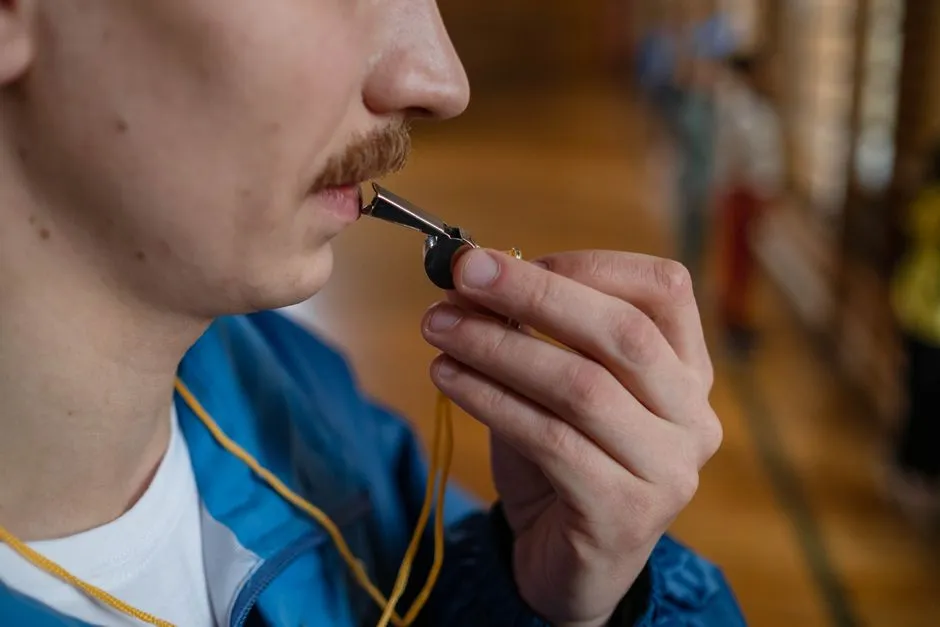
Field testing shows that a high-quality whistle can be heard up to a mile or more over open water or flat terrain. More importantly, the frequency of a whistle is designed to cut through ambient environmental noise like rushing water, heavy wind, or dense forest canopy.
The human voice simply cannot compete with that. Yelling across a rough ocean surface, into the wind, while treading water, is exhausting and largely ineffective. A whistle requires almost no energy and produces a sharp, distinctive sound that cuts through conditions a voice cannot.
An important feature found in modern airplane life jackets is the integrated whistle. It allows passengers to attract attention by creating a distinctive sound that can be heard from a distance. Simple as that sounds, it represents one of the most practical decisions in survival kit design.
Survivors at Water Level Face a Unique Problem
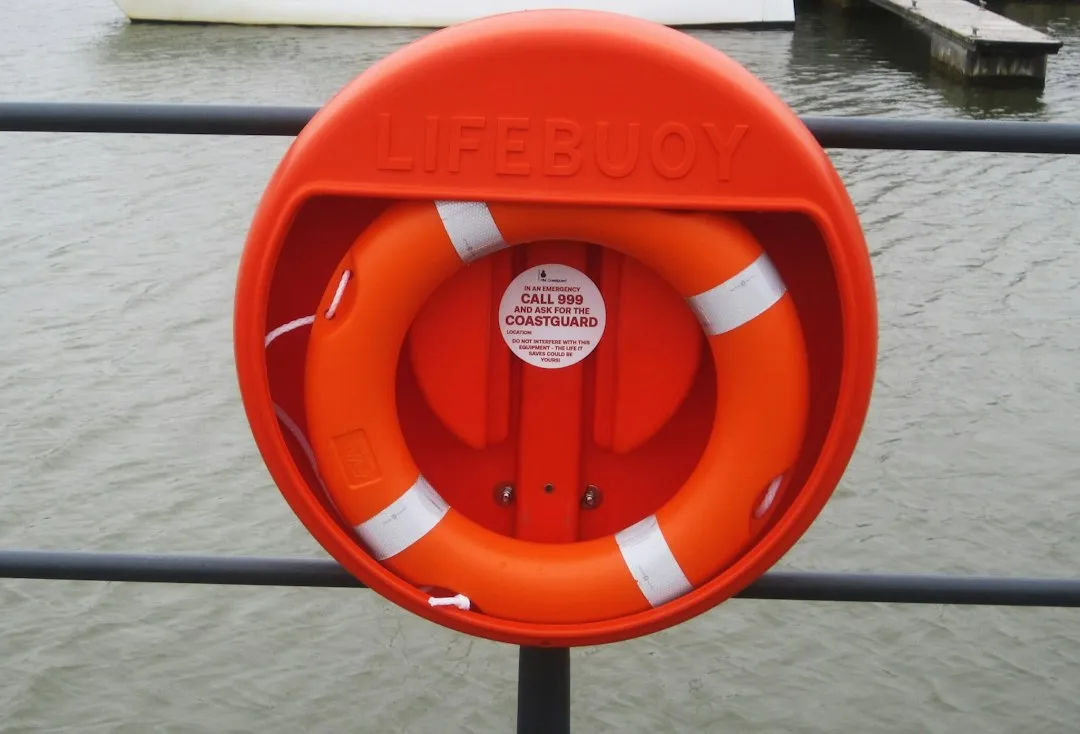
The whistle helps because everyone who is floating in water is at the same level, so even an ocean wave of a foot will obscure someone from view. This is a problem that people rarely think about until they’re in the water. Even calm-looking seas have constant surface movement that swallows a floating person from sight within seconds.
It’s very difficult for rescuers to spot individual survivors in a large body of water, especially at night or if large waves are present. A whistle doesn’t fix visibility, but it creates an audible signal that can reach a rescue boat or crew member who may never see you directly.
The main purpose of the whistle is for banding many passengers together or to alert someone on a life raft to your location. In a commercial aircraft ditching scenario, dozens or even hundreds of people may be in the water at once. The whistle helps survivors find each other, not just rescuers.
It Complements the Light, Not Replaces It

Life vests have one or two buoyancy chambers inflated by CO2 cartridges when the red toggle is pulled down. They can also be inflated by mouth, and there is a whistle and light for attracting attention. These two features, light and whistle, work in tandem across different conditions rather than duplicating each other.
Aircraft life jackets are equipped with a closed-circuit battery-driven light that automatically turns on contact with water. That light helps rescuers spot you visually, particularly at night. The whistle works in daylight, through fog, and in situations where the light might not be visible at the right angle.
Additional features like water-activated lights, reflective tape, and whistles can significantly improve a survivor’s visibility and chances of rescue, especially in low-light or nighttime water emergencies. No single tool covers every scenario, which is exactly why the vest carries several.
The Vest Is Designed to Be Used Outside the Plane
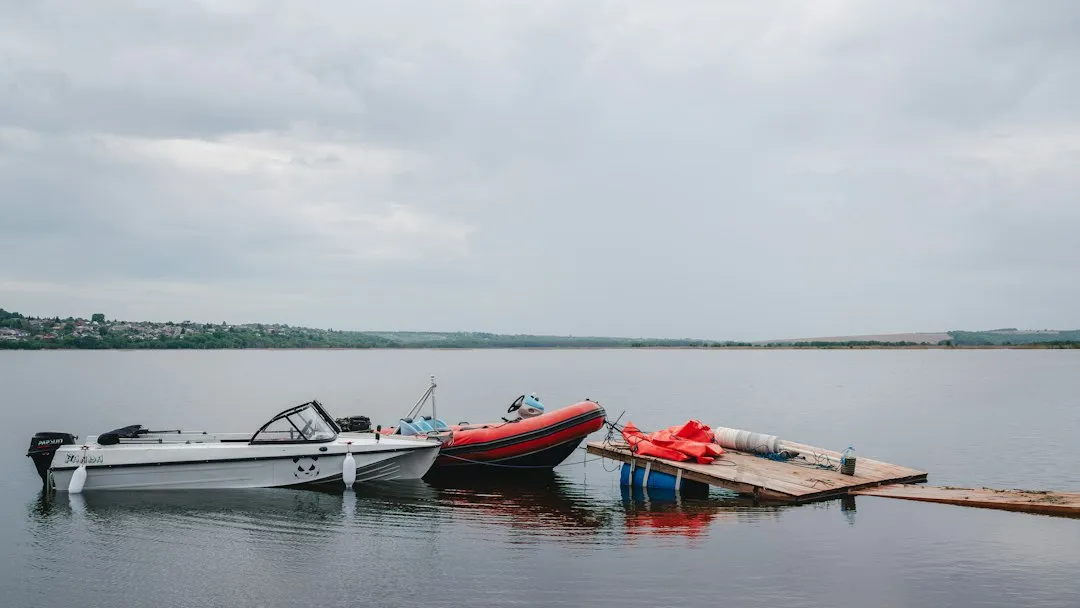
Don’t inflate the vest inside the cabin. A puffed-up vest in a flooding or crowded aisle can trap you and slow your exit. Put it on when the crew tells you to, keep it loose, and pull the tabs only once you’re outside the aircraft. This is one of the most commonly misunderstood instructions in aviation safety.
Life jackets on aircraft are always inflatable. This is because if a plane lands in water, you might need to swim down to get out. Once you are on the surface, you can inflate the vest. The whistle only becomes useful after this process, once you’re on the surface and need to signal.
The life jackets are also fitted with backup oral inflation tubes so that their wearer can top up the air supply should it be needed. Vests must remain uninflated while still in the aircraft. Understanding this sequence matters, because using the vest correctly is what puts you in a position to use the whistle at all.
Crew Vests Are a Different Color for a Reason
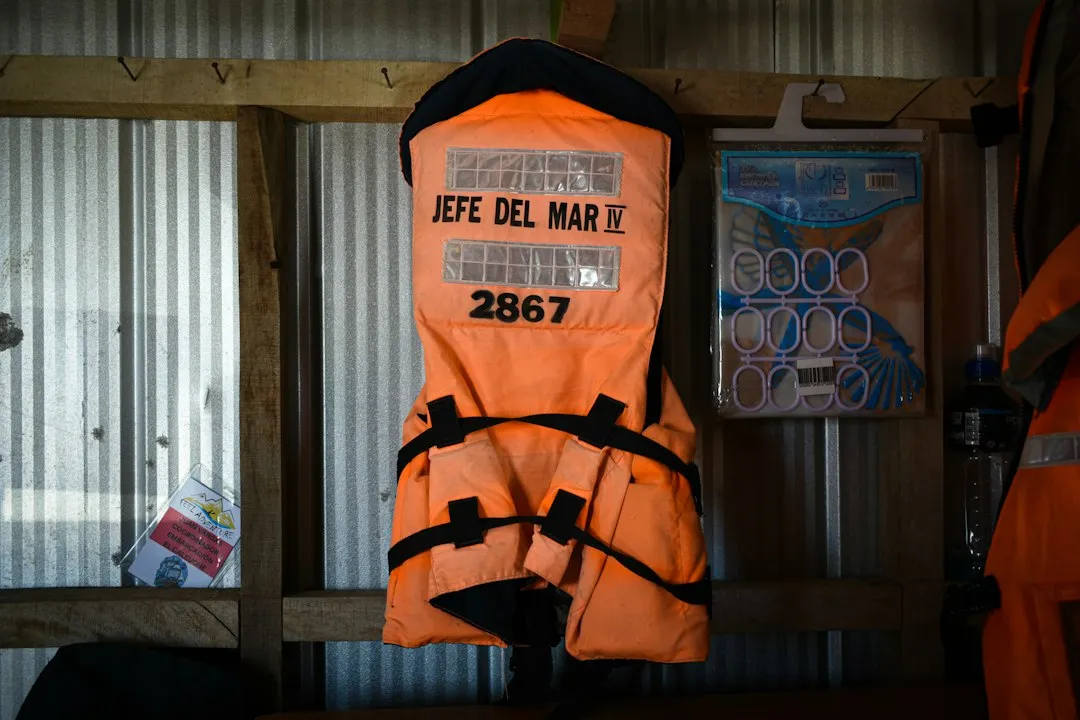
While the life vests of passengers will in most cases be bright yellow, the crew will have orange ones to tell them apart. This color distinction isn’t arbitrary. In a chaotic post-ditching scenario, rescuers and passengers alike need to identify crew members quickly so they can coordinate evacuation and survival efforts.
The whistle on each vest, regardless of color, serves the same function. Tether straps are used to connect to other survivors and prevent separation in open water. Combined with the whistle, these features help groups of survivors stay together and stay found during the critical window before rescue arrives.
Each feature is carefully designed to maximize the chances of survival in the rare event of a ditching scenario. From the orange versus yellow distinction to the specific lanyard length of the whistle, nothing on that vest is accidental.
Real Ditching Events Show Both the Limits and the Value of Signaling
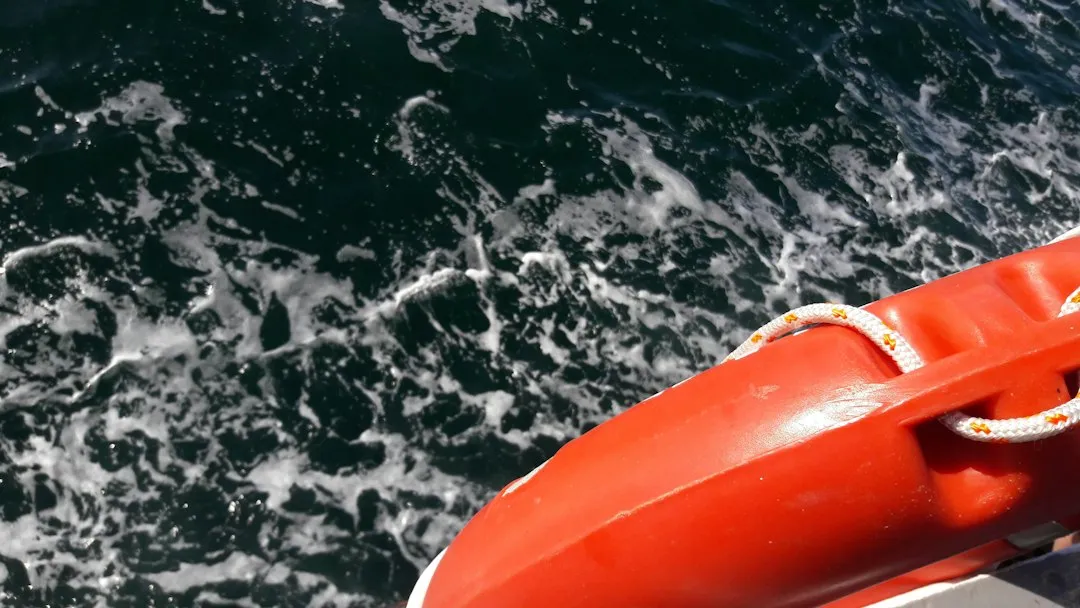
Three survivors whistled as loud and long as they could, but there was no response. All they could do was watch helplessly as the vessel moved back and forth in an obvious search pattern of some sort. Then the light went out and the sound of the engine diminished as it moved away. This account from a documented ditching near Hawaii illustrates a painful truth: a whistle alone isn’t always enough.
If the survivors had a personal size ELT or EPIRB, they would have been much more easily and quickly located. This is why aviation authorities treat the whistle as one layer within a wider system of signaling tools, not as a standalone solution.
The most famous modern example, US Airways Flight 1549 on January 15, 2009, achieved 100% survival with 155 aboard on the Hudson River. That outcome was driven by proximity to shore, rapid response, and effective evacuation. The whistle’s role is most significant in open-water scenarios where rescue takes longer and survivors need every tool available.
Maintenance and Inspection Keep It Functional
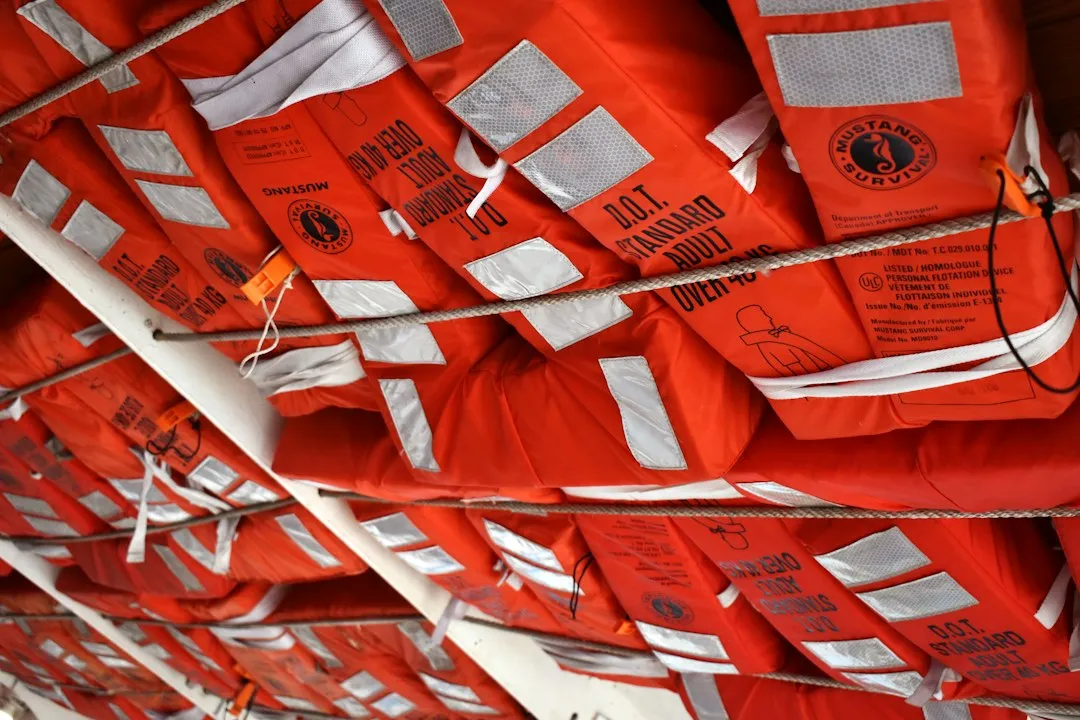
FAA regulations require all aircraft flying over water to carry an approved life vest for each occupant, with operators responsible for maintaining detailed inspection and service records for every unit. This extends to every component on the vest, including the whistle and its lanyard.
Aviation life vests should be inspected regularly, with inspection frequency based on vest type, usage conditions, and FAA guidance. A cracked or corroded whistle that fails in an emergency has the same value as no whistle at all, which is why material standards require corrosion-resistant construction.
Other regulations require inflatable lifejackets to be serviced at approved facilities at 12-month intervals. This annual cycle ensures that everything, including the whistle, the CO2 cartridge, and the inflation mechanism, meets functional standards before the vest returns to service under a seat.
The Safety Briefing Matters More Than Most Passengers Realize

When US Airways Flight 1549 came down in the Hudson River in 2009, 101 life vests stayed stowed under seats, according to the Flight Safety Foundation’s review of the NTSB findings. Passengers forgot them, or didn’t want to waste time in the evacuation. Everyone survived, but the lesson holds: the equipment is only useful if you know it’s there.
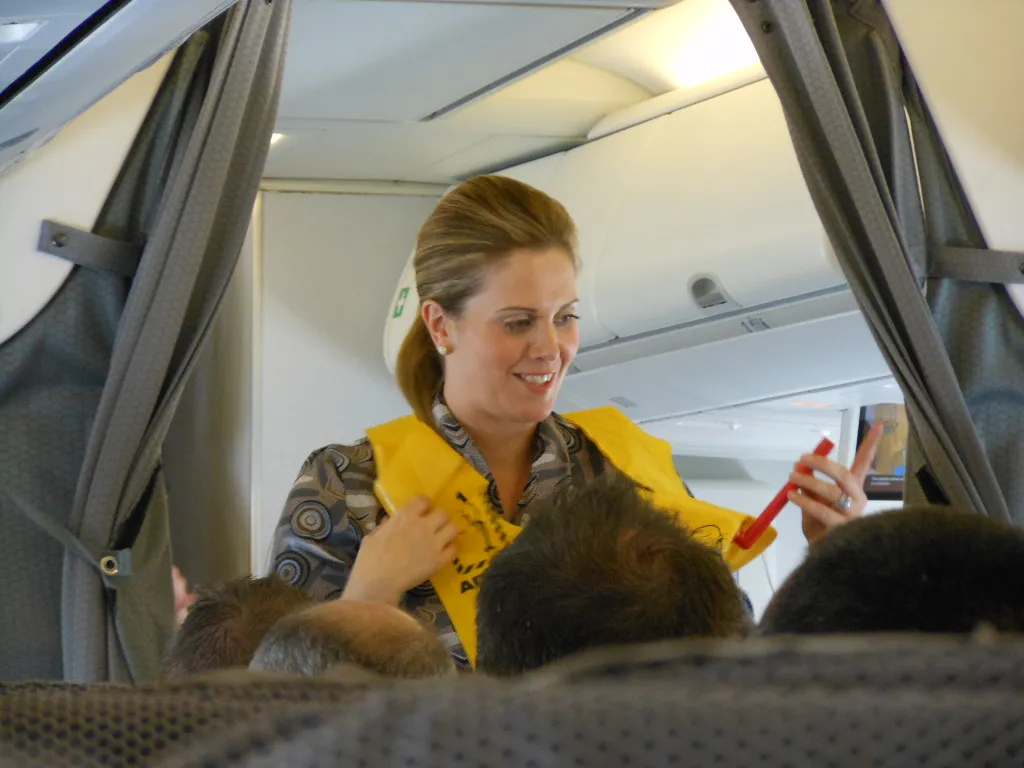
A pre-flight safety demonstration is an explanation given to airline passengers before takeoff outlining the aircraft’s safety features and emergency procedures. Aviation regulations generally require that passengers be orally briefed before departure. The life vest and its features, including the whistle, are part of that required briefing for a reason.
Airlines must demonstrate proper usage in pre-flight safety briefings. Knowing where the vest is, how to put it on, and that the whistle exists and works is not trivia. In an emergency with limited time and high stress, pre-loaded knowledge is the only kind that reliably surfaces.
It Reflects a Broader Philosophy of Layered Survival
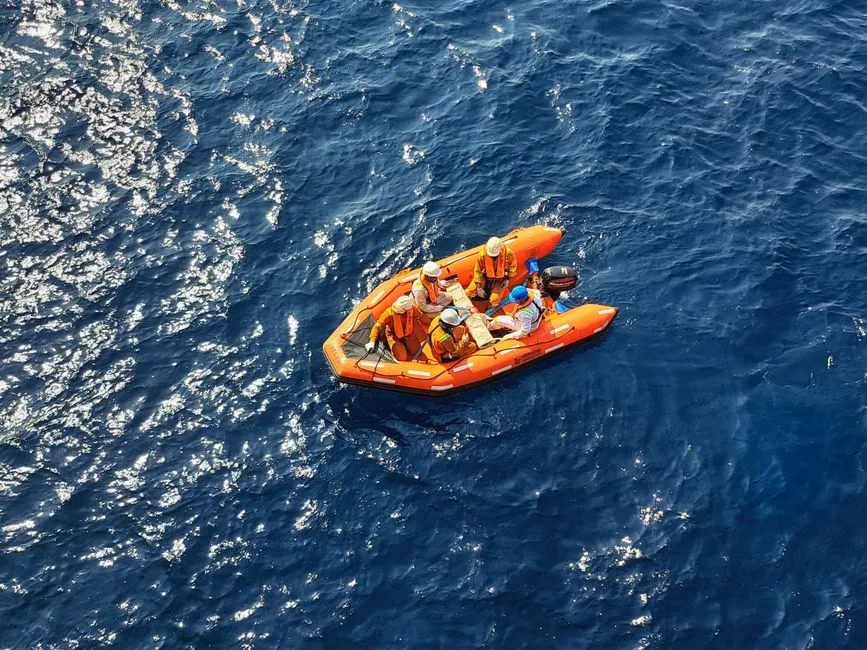
Most life rafts include a survival pack with items such as a sea anchor, an inflation pump, and a repair kit. There is a bailing bucket and sponge for removing water from the raft. Signaling devices include flares, a mirror, and sea markers. The whistle on the life vest sits within this larger ecosystem of survival tools, each designed to cover a gap the others might miss.
Ditching events beyond coastal waters are rare, but experience suggests that if the aircraft impacts the water under control, the chance of survival is high. The challenge is not surviving the initial impact in most cases, it’s surviving the time between ditching and rescue.
Keeping warm in the water is crucial, so techniques are covered during survival training. On the raft and on the ground, survival is broken down into protection from the environment, location for signaling, water collection, and food in order of priority. Signaling ranks second only to environmental protection, and the whistle is the most immediate signaling tool a passenger has in the water.
A Small Detail That Earns Its Place
AI Disclaimer: This article was created with the assistance of AI tools and reviewed by a human editor.