


Something is quietly shifting across Europe’s transport landscape, and it’s showing up in booking data, government policy, and the way people talk about getting from one city to another. Trains, once dismissed as a slow and dated alternative to budget airlines, are drawing serious interest again. Not just from environmentally conscious travelers, but from business commuters, solo adventurers, and anyone who has spent one too many hours in an airport queue.
The reasons behind this shift are layered. Some are practical, others are emotional, and a few are rooted in hard policy. Together they paint a picture of a travel culture that is genuinely rethinking how we move.
The Numbers Tell a Clear Story
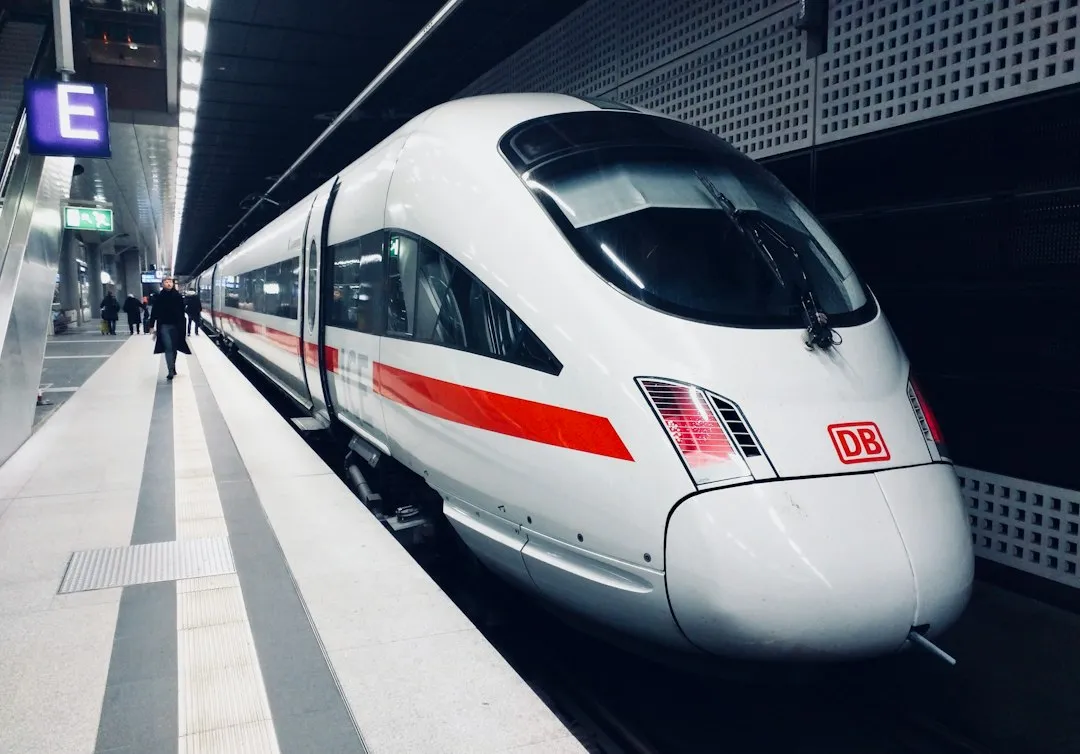
In 2024, Europeans travelled 443 billion kilometres by train, a 5.8% increase over the previous year. That is not a marginal bump. It reflects a steady, sustained shift in behavior that rail operators have been tracking for several years now.
Recent data from Visa Business and Economic Insights reveals that international rail travel spending increased by an impressive 59% from 2019 to 2024. That growth far outpaces overall cross-border tourism spending in the same period, which suggests train travel is not just recovering from the pandemic. It is actively gaining ground.
In the United States, Amtrak had a record year in 2024 with over 32 million passengers. The trend is not confined to Europe, even if Europe remains the most visible arena for the rail renaissance.
The Carbon Argument Is Compelling
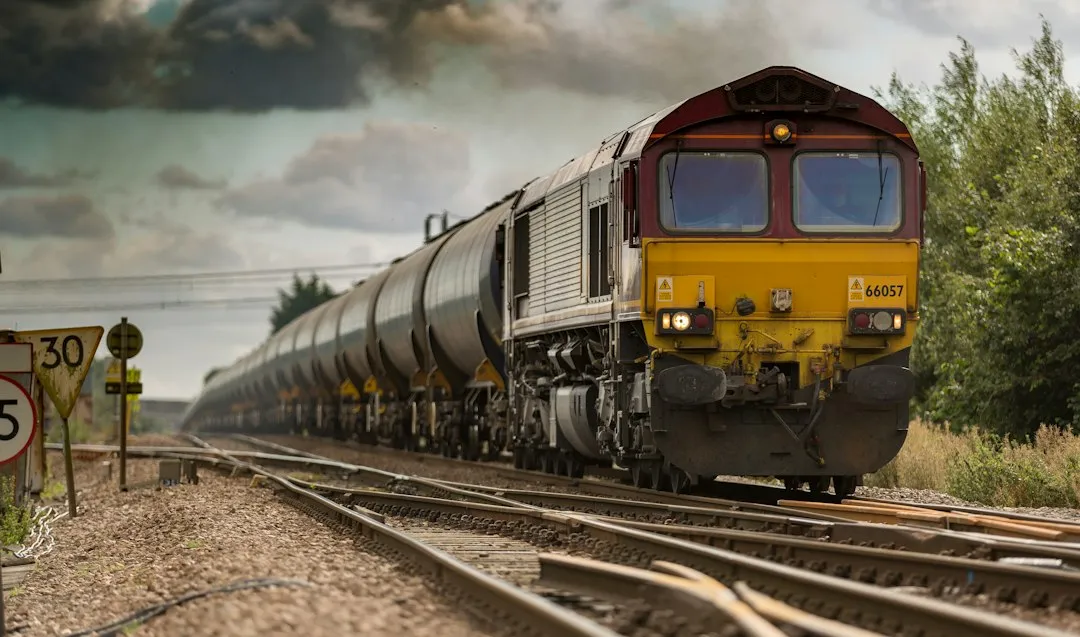
Travelers concerned about their environmental footprint have good reason to look at the emissions data carefully. National rail emits around 35 grams of CO2 per kilometer, while a domestic flight emits 246 grams. The carbon footprint of taking the train is roughly 14% of a flight.
Taking the Eurostar emits around 4 grams of CO2 per passenger kilometer, compared to 154 grams from a short-haul flight. So the footprint of Eurostar is around 4% of a flight. Those numbers are hard to ignore.
For instance, a journey from London to Amsterdam emits 36kg of CO2 by train, compared to 250kg by air. By shifting half of UK domestic flights to rail, nearly 410,000 tonnes of carbon annually would be saved, equivalent to removing 283,000 cars from the road. The scale of the potential impact is considerable.
Sometimes the Train Is Actually Faster
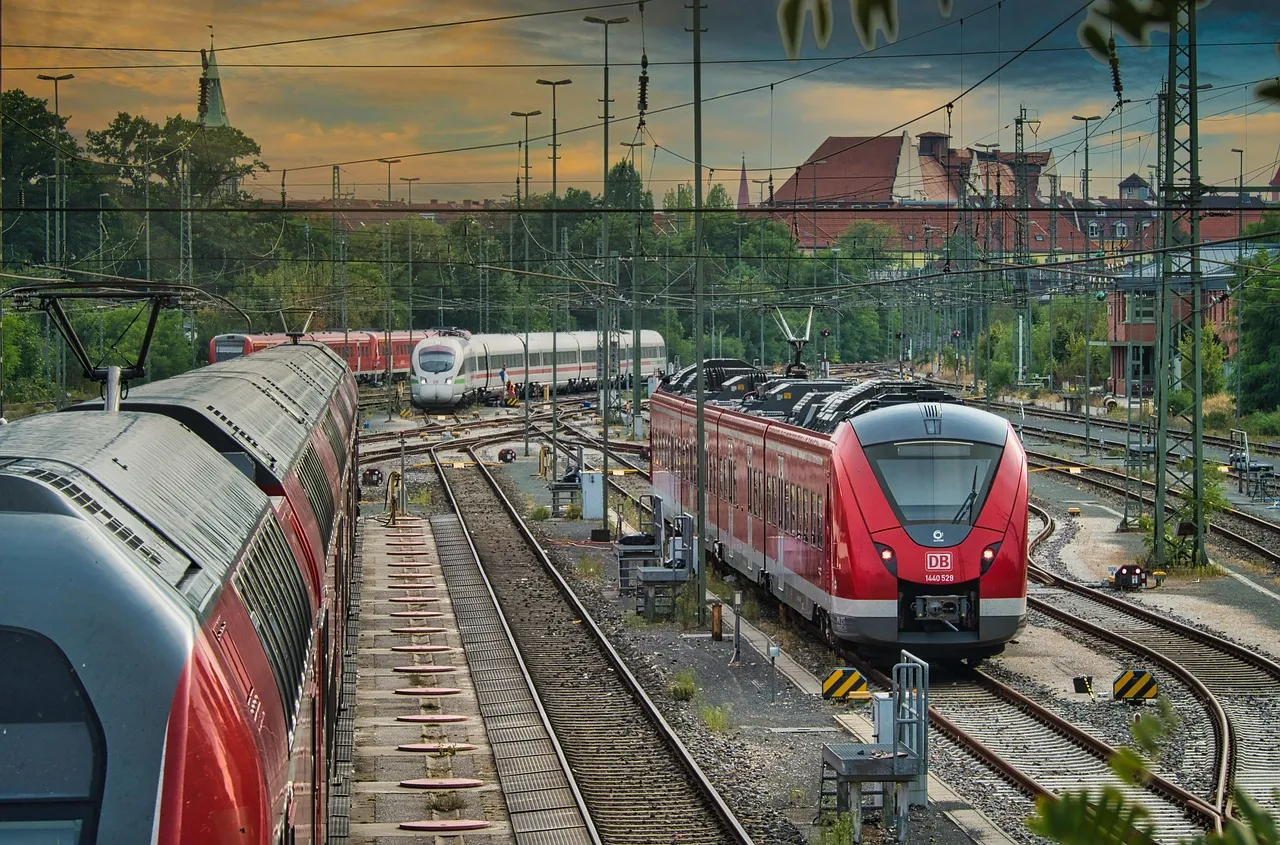
This is the one that surprises most people. The assumption that flying is always quicker simply does not hold up once you factor in the full door-to-door experience. For many short- to medium-haul trips, trains are cost-effective and even faster when accounting for airport procedures and the time it takes to get into the city centre from an airport.
Taking the train is faster than flying for some short journeys within France. In 2023, France introduced a ban on domestic short-haul flights where there is a rail alternative of under two and a half hours. This policy was partly inspired by exactly that kind of time comparison.
Research from Trainline compared five national journeys for which the air option is soon expected to disappear and found that some intercity trips are made twice as fast by choosing rail transport. When you add security lines, boarding, and the taxi from a distant airport into the equation, the math changes dramatically.
Convenience Is Quietly Winning the Argument

Ask frequent travelers what they genuinely dislike about short-haul flying, and the answers cluster around the same frustrations: early check-in requirements, baggage restrictions, crowded terminals, and long transfers from airports located well outside city centers. Trains sidestep most of that friction entirely.
The top reasons travelers prefer rail include easy accessibility of railway stations, cited by 49%, overall convenience at 46%, and the ability to work while traveling at 41%. These are deeply practical motivations, not ideological ones.
For some travelers, overnight rail also appeals because it means arriving in city centres, with fewer baggage restrictions and a potentially more relaxing journey. You step off the train in the heart of the destination. No shuttle bus, no waiting for luggage, no hour-long taxi ride just to reach the hotel.
Productivity on the Move

For business travelers especially, the train offers something a plane simply cannot: a genuinely productive work environment. Stable Wi-Fi, fold-down tables, power sockets, and no seatbelt sign interrupting your workflow make a real difference over a two- or three-hour journey.
Productivity is seen as the biggest upside of riding a train compared to other types of transit. Ninety-two percent of surveyed travelers use their time on the train to get work done, and 41% spend more than half of their train ride working.
The first quarter of 2025 saw a 28% year-over-year rise in train bookings on the Amex Egencia platform in the United Kingdom. Corporate travel managers are clearly paying attention to where their people prefer to sit and what they can actually accomplish during the journey.
Governments Are Starting to Legislate the Shift

Individual traveler preference is one thing. Policy is another. Several European governments have moved to formalize the transition away from short-haul flights, giving rail a structural advantage it has not enjoyed for decades.
France introduced a ban on domestic short-haul flights where there is a rail alternative of under two and a half hours. It was brought in to curb carbon emissions, but swapping a plane for a train can also be the cheaper and faster option.
France’s ban on short-haul flights where rail alternatives are available led to a 12% reduction in domestic aviation. The EU’s Fit for 55 package includes measures targeting transport emissions, signaling that rail-friendly policy is moving from national experiments toward a broader continental framework.
A New Generation of Sleeper Trains Is Arriving
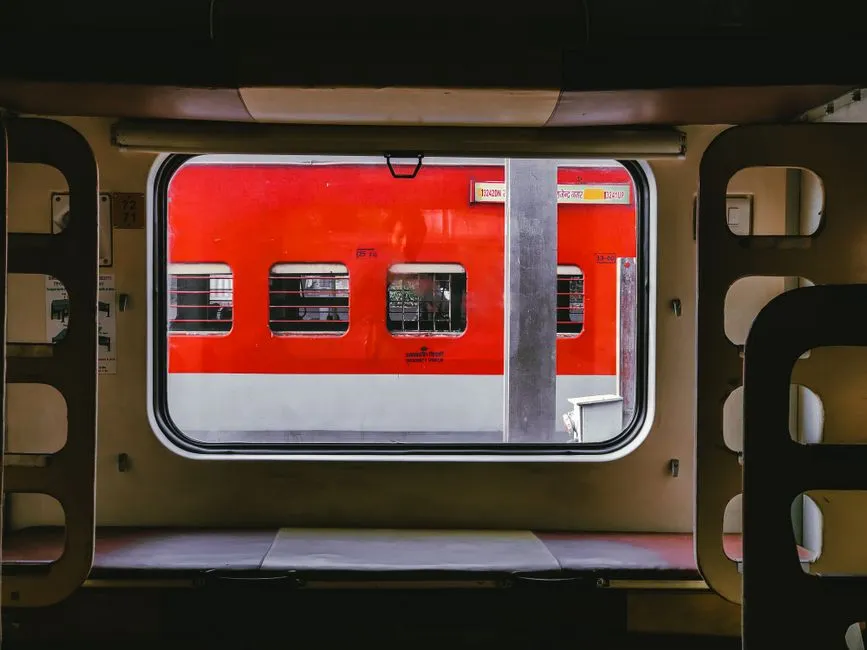
Perhaps the most tangible sign of rail’s revival is the sudden expansion of overnight train services across Europe. Night trains had largely disappeared by the mid-2010s, squeezed out by cheap flights. Their return is one of the more remarkable transport stories of this decade.
Europe’s rail network is poised for a major renaissance in 2026 with the launch and planning of at least five new train services designed to expand connectivity, boost sustainable travel, and offer alternatives to short-haul flights. These new routes include everything from revived overnight sleepers between Paris and Berlin to a fresh daytime link between Prague and Copenhagen, a new night train from Basel to Malmö, a faster Paris–Munich connection, and a much-anticipated link between London and Stirling in Scotland.
A flight from Amsterdam to Rome produces roughly 150 to 200 kg of CO2 per passenger, while the equivalent overnight train journey produces approximately 15 to 20 kg, around 90% less. For a growing number of travelers, that trade-off is becoming impossible to rationalize away.
Traveler Sentiment Is Shifting Meaningfully
Surveys from multiple sources now point in the same direction: people are genuinely more open to choosing rail, and a sizeable portion are already acting on that openness. Of 11,000 survey participants spanning the U.S., U.K., European Union, and key cities like Toronto and Dubai, 62% responded positively to forgoing short-haul flights so long as there was a train alternative.
A 2025 survey commissioned by Hitachi Rail and conducted among approximately 11,000 respondents revealed that nearly half of all surveyed passengers indicated they intend to travel more frequently by train and less frequently by plane over the next five years.
The share of travelers who relied mainly on human-powered or electric transport, including trains, public transit, walking, cycling, and electric vehicles, rose from 13% in 2024 to 18% in 2025, indicating growing demand for intra-European travel that does not involve flying. Intention is translating into actual behavior, which is exactly what makes this trend credible rather than aspirational.
The Slow Travel Philosophy Is Adding Momentum

There is a broader cultural undercurrent here worth acknowledging. Train travel fits naturally into a growing desire for slower, more intentional journeys. The journey itself becomes part of the experience rather than an inconvenient gap between departure and destination.
What was once dismissed as a relic of pre-budget-airline travel has quietly transformed into one of the most exciting developments in European tourism, driven by a combination of environmental awareness, rising flight costs, airport frustration, and a growing appetite for the kind of slow, atmospheric travel that only a night train can provide.
According to 2024 to 2025 survey data from major travel platforms and international organizations, approximately 70% of global travelers express a desire to make more sustainable choices, though only about 40% consistently act on them. Rail travel offers a route to close that gap between intention and action in a way that feels genuinely rewarding rather than sacrificial.
The Challenges Are Real and Shouldn’t Be Understated
It would be misleading to present this shift as smooth or universal. Rail networks face real structural limitations, and not every city pair has a viable train alternative. Cross-border ticketing remains complicated in many parts of Europe, and pricing inconsistencies still frustrate potential converts.
While five new sleeper routes are launching across the network in 2026, ten established services are vanishing, victims of an equipment crisis that threatens to derail the entire sustainable rail movement. The aging rolling stock problem is a genuine constraint that enthusiasm alone cannot solve.
Despite the momentum, Europe’s high-speed rail network remains limited. Significant investment in infrastructure is still needed before rail can realistically replace short-haul flights on the majority of European routes. The direction of travel is clear, but the pace of change is uneven.
The Bigger Picture

What is unfolding is not simply a trend. It is a gradual realignment of how people weigh their travel options, driven by real frustrations with flying, genuine concern about emissions, and a growing appreciation for what a well-designed rail journey actually offers. The data, the policy shifts, and the wave of new routes all point in the same direction.
Train travel is not going to replace aviation entirely. Long-haul flights, remote destinations, and time-critical journeys will always require alternatives. Still, for journeys of a few hours, the calculus has changed considerably, and millions of travelers are noticing.
Perhaps the most honest summary is this: trains have not become the future of travel by accident. They have become a serious choice again because, for a growing number of journeys, they are simply the better one.
AI Disclaimer: This article was created with the assistance of AI tools and reviewed by a human editor.