
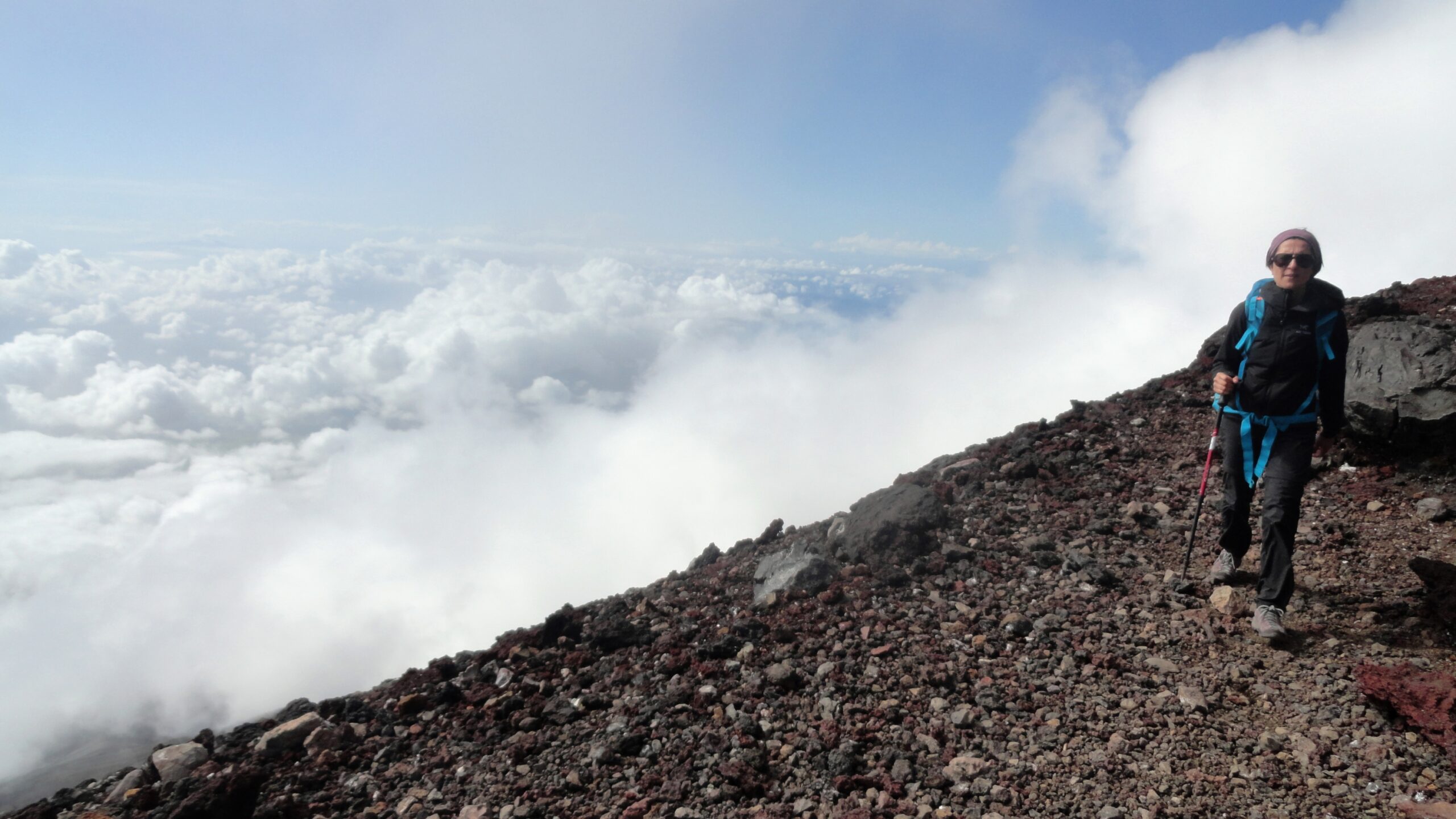

Few mountains stop people in their tracks quite the way Mount Fuji does. There is something almost uncanny about it – a peak so evenly shaped that it seems less like a geological accident and more like something carefully designed. Most mountains are ragged, asymmetric, worn by time and tectonic chaos. Fuji is different.
The question of why it looks the way it does turns out to have a layered, fascinating answer. Geology, chemistry, time, and the precise location of the mountain beneath the Earth’s crust all play a role. Here is what the science actually says.
A Mountain Built on Three Buried Volcanoes
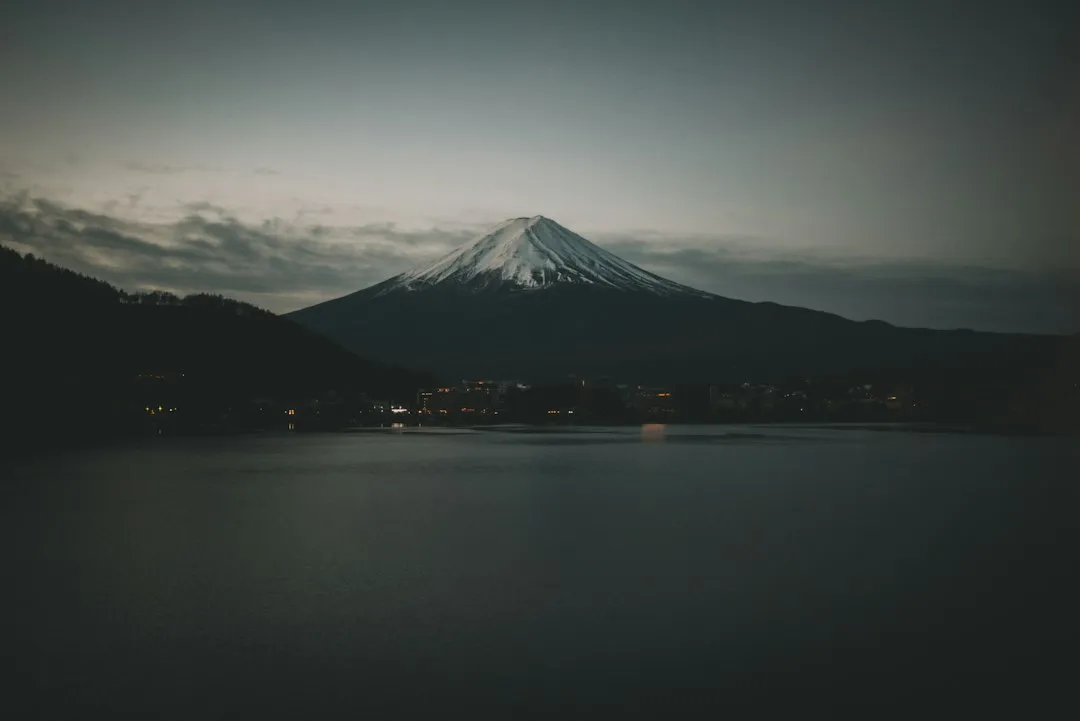
Mount Fuji’s gracefully symmetrical cone actually conceals three volcanoes buried within. This is one of the most counterintuitive facts about the mountain. What looks like a single clean form is, in reality, the result of successive volcanic generations stacking on top of one another over hundreds of thousands of years.
The present-day mountain is a composite of three successive volcanoes: Komitake, Ko-Fuji (Old Fuji), and Shin-Fuji (New Fuji). Each phase left its mark on the mountain’s internal structure, even if the surface we see today reflects primarily the most recent and youngest of the three.
The Four Phases That Shaped the Mountain
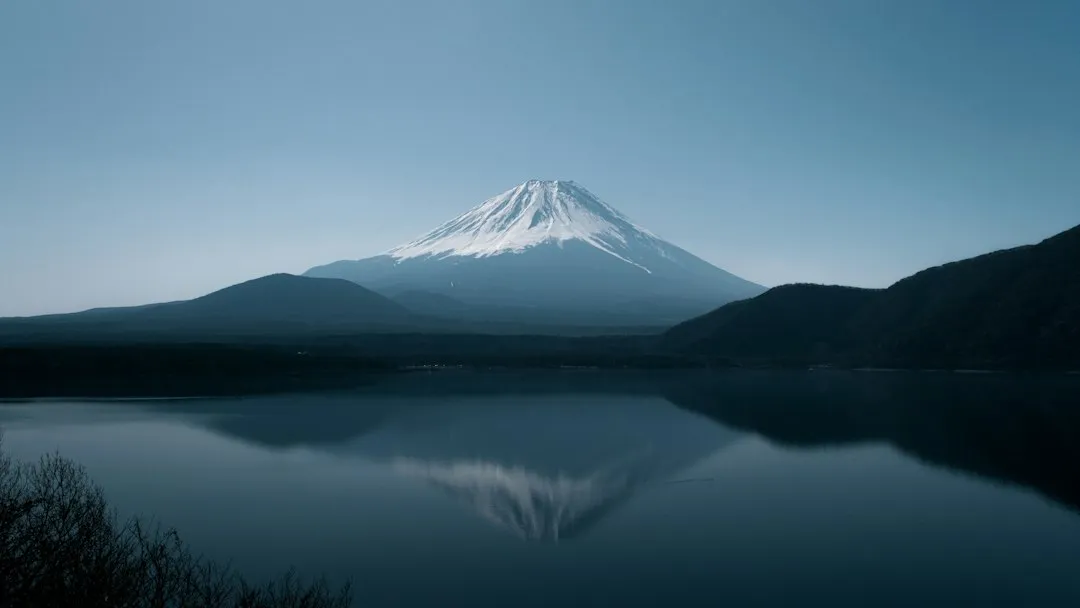
The oldest layer is Sen-Komitake, a volcanic foundation that began forming around 700,000 years ago. The first phase, known as Sen-komitake, included an andesite core discovered deep within the mountain in 2004. That discovery was relatively recent, which tells you something about how much we are still learning about Fuji’s interior.
Komitake Fuji, a basalt layer that originated hundreds of thousands of years ago, is now mostly buried beneath younger materials. Old Fuji (“Ko-Fuji”) formed 100,000 to 17,000 years ago, resulting in a large mountain that now serves as the mountain’s deeper structural basis. Each of these older cones contributed material that the newer eruptions would eventually cover and smooth over.
New Fuji: The Phase That Created the Cone We Know
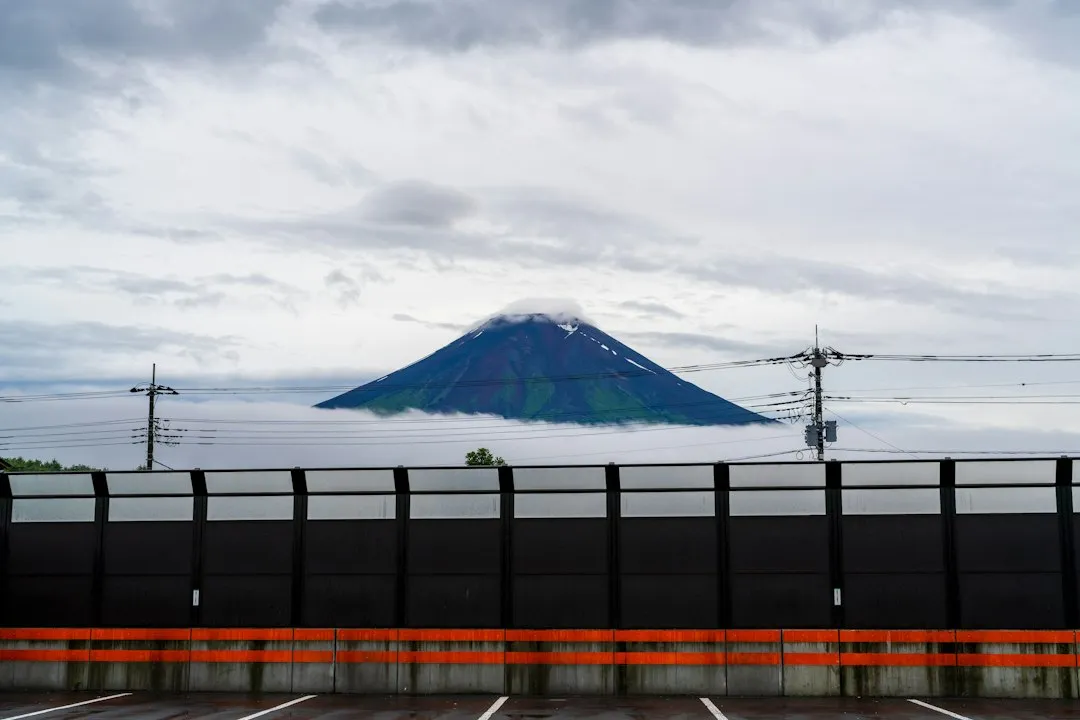
New Fuji (“Shin-Fuji”) began to form as the highest layer around 10,000 years ago, creating the summit region and making the nearly flawless tapering cone evident today. This youngest phase is the key to the mountain’s remarkable appearance.
Fuji’s perfect symmetry is a result of the most recent “New Fuji” phase completely enveloping older structures. Think of it as a fresh coat of volcanic material smoothing out the irregularities of everything beneath it. The older, rougher forms are still there – just hidden.
The Role of Basalt: Lava That Flows Evenly
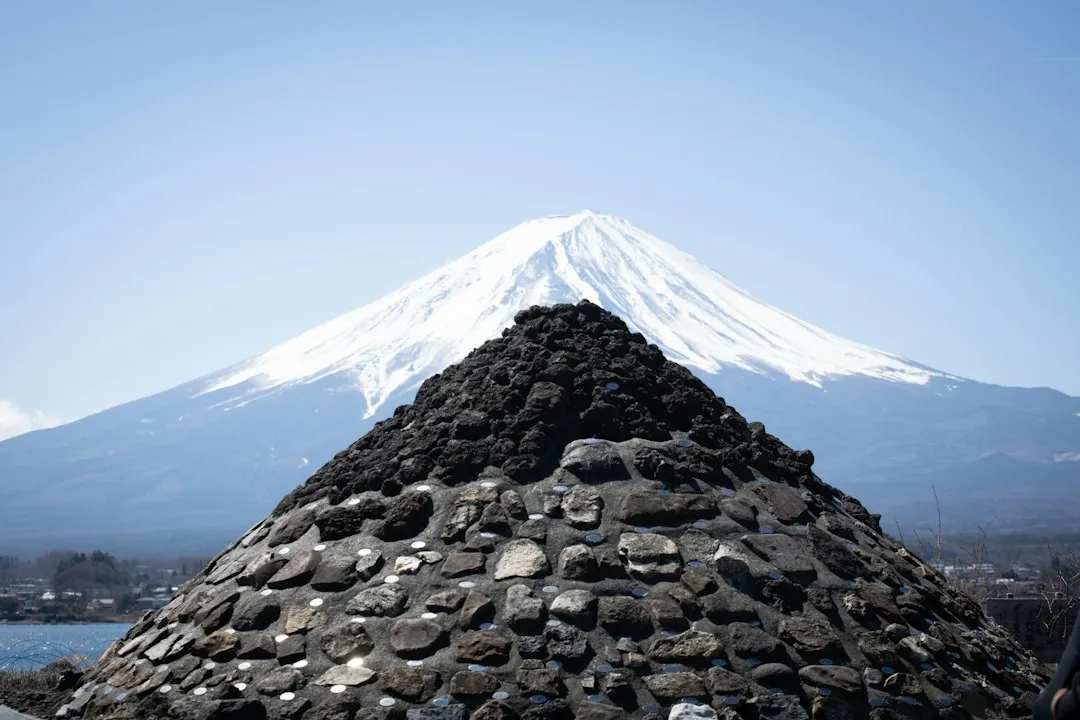
While most composite volcanoes are formed from thick, viscous andesite, Mount Fuji is primarily composed of basalt. The presence of basalt means the lava was once fluid enough to travel long distances before cooling. This is one of the most important geological reasons for the mountain’s symmetry.
According to GSJ data, Fuji’s magma ranges from basaltic to dacitic, but the dominant Shin-Fuji eruptions produced basaltic lava – relatively fluid material that flows evenly down all sides of the cone before solidifying. When lava spreads equally in all directions around a central vent, the result, over thousands of eruptions, is a cone that is balanced almost like a mathematical model.
Layered Eruptions: Nature’s Repetitive Architecture
The symmetry is not accidental. Fuji is a stratovolcano, which means it was built layer by layer through alternating lava flows and ash deposits. Each eruption added a coat. Over roughly 100,000 years, those coats stacked into one of the most geometrically regular cones on the planet.
The mountain’s iconic symmetry is the result of its basaltic lava flows and consistent layering process. Over thousands of years, these uniform layers of lava and volcanic ash have built the balanced, conical profile that Mount Fuji is famous for. Repetition, in geology as in architecture, produces order.
Where Three Tectonic Plates Meet
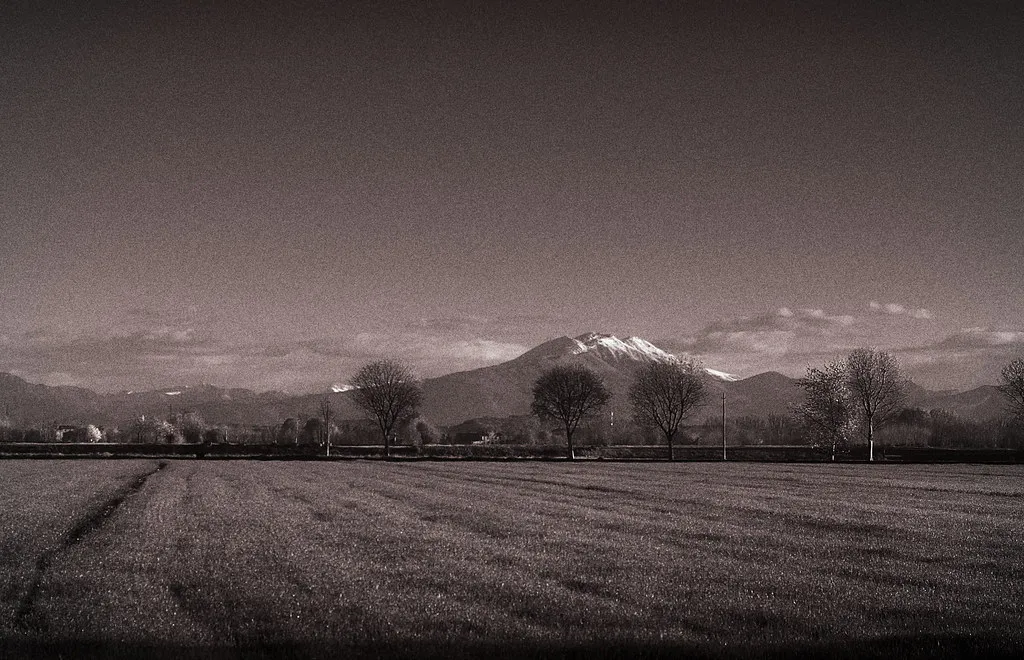
According to the Geological Survey of Japan, the mountain is positioned near the junction of three tectonic plates: the Eurasian Plate, the North American Plate, and the Philippine Sea Plate. This location is not incidental to Fuji’s shape. It is essential to why the mountain exists and why it looks the way it does.
Mount Fuji is internationally known for its attractive landscape, which resulted from the repeated basaltic eruptions near the junction of the four major tectonic plates since the Middle Pleistocene. The convergence of plates creates a concentrated, stable source of magma feeding upward through a single, relatively centered vent – a condition that supports symmetric cone growth.
The Slope Angle and Angle of Repose
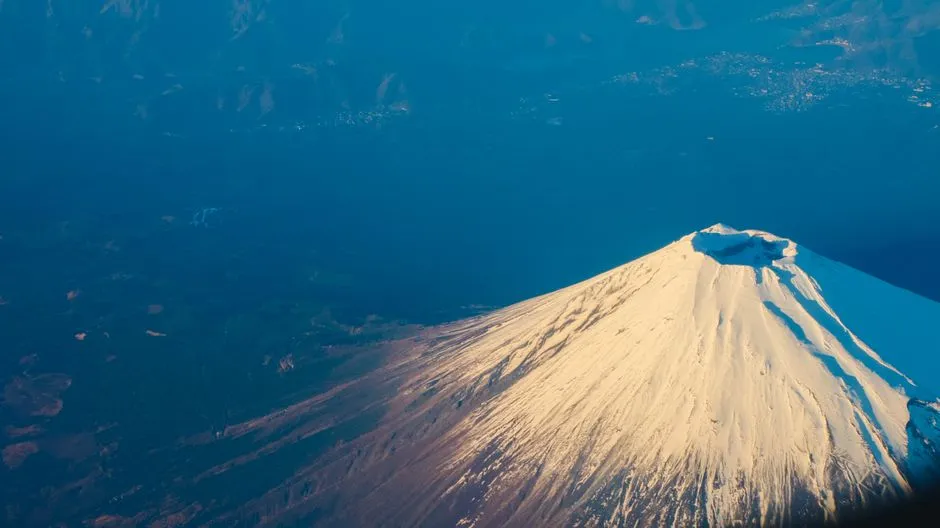
Mount Fuji’s crater is approximately 780 meters (2,560 feet) in diameter and 240 meters (790 feet) deep, with slopes ranging from 31 to 35 degrees – exactly the angle of repose for dry gravel. This is a telling detail. The slope of the mountain is not random. It reflects the physical behavior of volcanic material settling under gravity.
The shape of a volcano is primarily determined by hydraulic resistance to the flow of magma in a porous medium, with Mount Fuji in particular considered an ideal example of the model. When the physics of fluid dynamics and the angle of repose align over geological timescales, the result is a cone that approaches geometric perfection.
The One Visible Flaw: The Hoei Crater
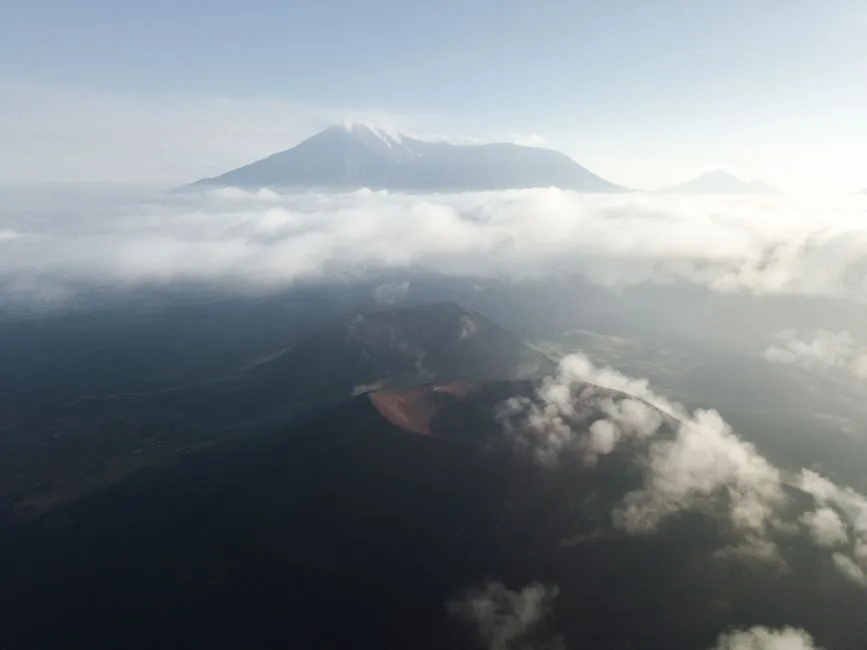
The Hoei crater on the southeast flank is one of the few visible breaks in this symmetry, created during the 1707 eruption. It is a useful reminder that the mountain is not a completed sculpture. It remains a living, active geological structure, and its last eruption left a scar that is visible to this day.
The Hōei eruption released 800 million cubic meters of volcanic ash, which spread over vast areas around the volcano. That event was triggered partly by a massive earthquake just 49 days before the eruption began, according to research published in peer-reviewed scientific literature. The ash reached as far as present-day Tokyo.
Still Active, Still Monitored
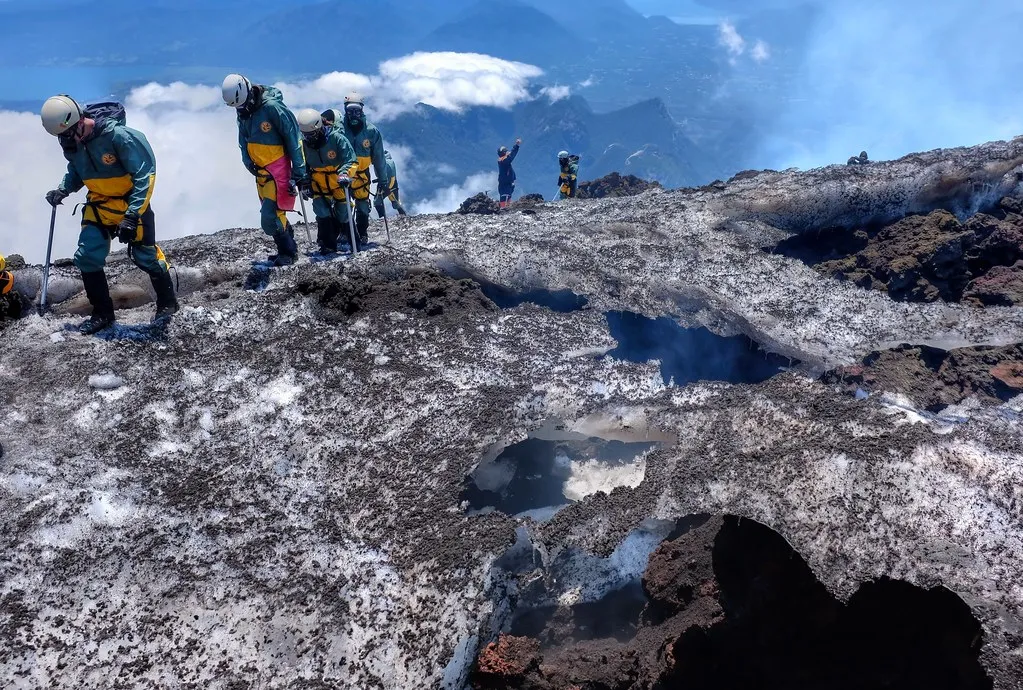
As a stratovolcano – a steep-sided cone built from alternating layers of lava and volcanic ash – Fuji is classified as an active volcano by the Japan Meteorological Agency (JMA). The mountain has not erupted since 1707, but that does not mean it is dormant in any permanent sense.
It has not erupted since 1707, but Japanese authorities classify it as potentially active and monitor it continuously. A future eruption is considered possible over geological timescales, though there are no current signs of an imminent event. Scientists also noted that the 2011 Tohoku earthquake triggered increased seismic activity beneath Fuji, underscoring how sensitive the mountain remains to regional tectonic shifts.
Why Fuji’s Isolation Makes Its Shape So Striking
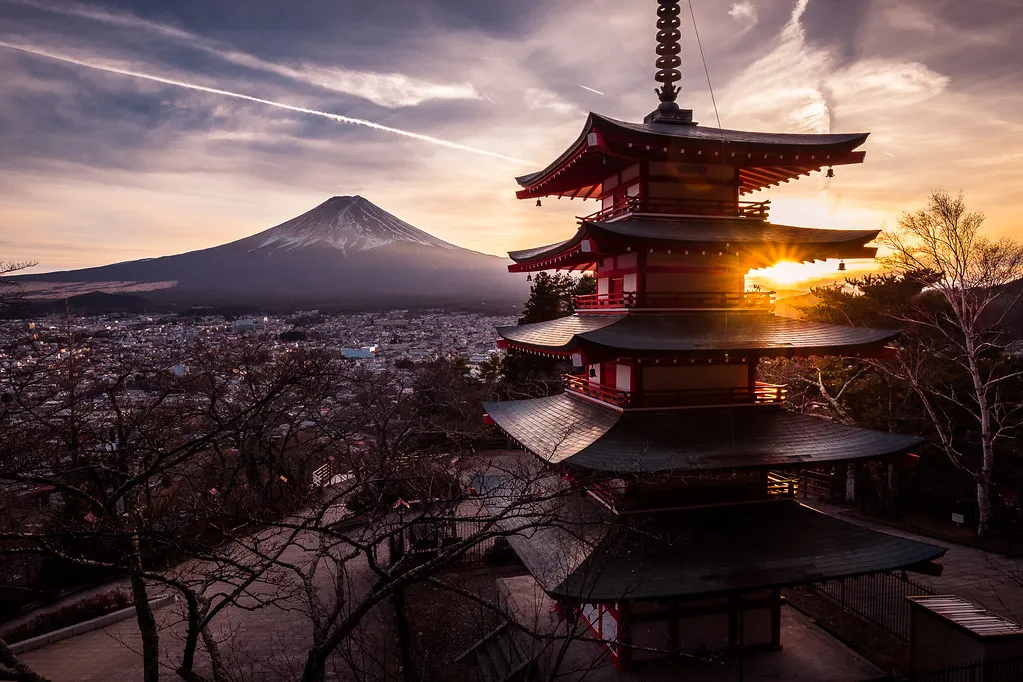
Fuji’s isolation on a relatively flat plain makes its symmetry even more visible from a distance. Most symmetrical peaks are surrounded by other mountains, which dilute the visual impact of their cone. Fuji rises almost alone from its surrounding landscape, which means there is nothing to interrupt your view of its form from any angle.
The stratovolcano’s symmetrical cone has served as an inspiration for artists for centuries and more recently for scientists studying the geometrical evolution of volcanoes. That dual legacy – cultural and scientific – says a great deal. The mountain’s shape isn’t just beautiful. It is a natural case study in how geological processes, given enough time and the right conditions, can produce something that feels almost intentional.
The Takeaway
Mount Fuji’s near-perfect symmetry is the product of four intersecting forces: the specific chemistry of its basaltic lava, the layered accumulation of eruptions over tens of thousands of years, its position at the junction of major tectonic plates, and the enveloping smoothness of the Shin-Fuji phase that coated everything before it. No single factor explains the shape alone.
What makes Fuji remarkable is that all of these conditions happened to align in one place, over a long enough stretch of time, to produce a mountain that challenges what we expect geology to look like. Nature tends toward disorder. Fuji, quietly, chose otherwise.
AI Disclaimer: This article was created with the assistance of AI tools and reviewed by a human editor.