
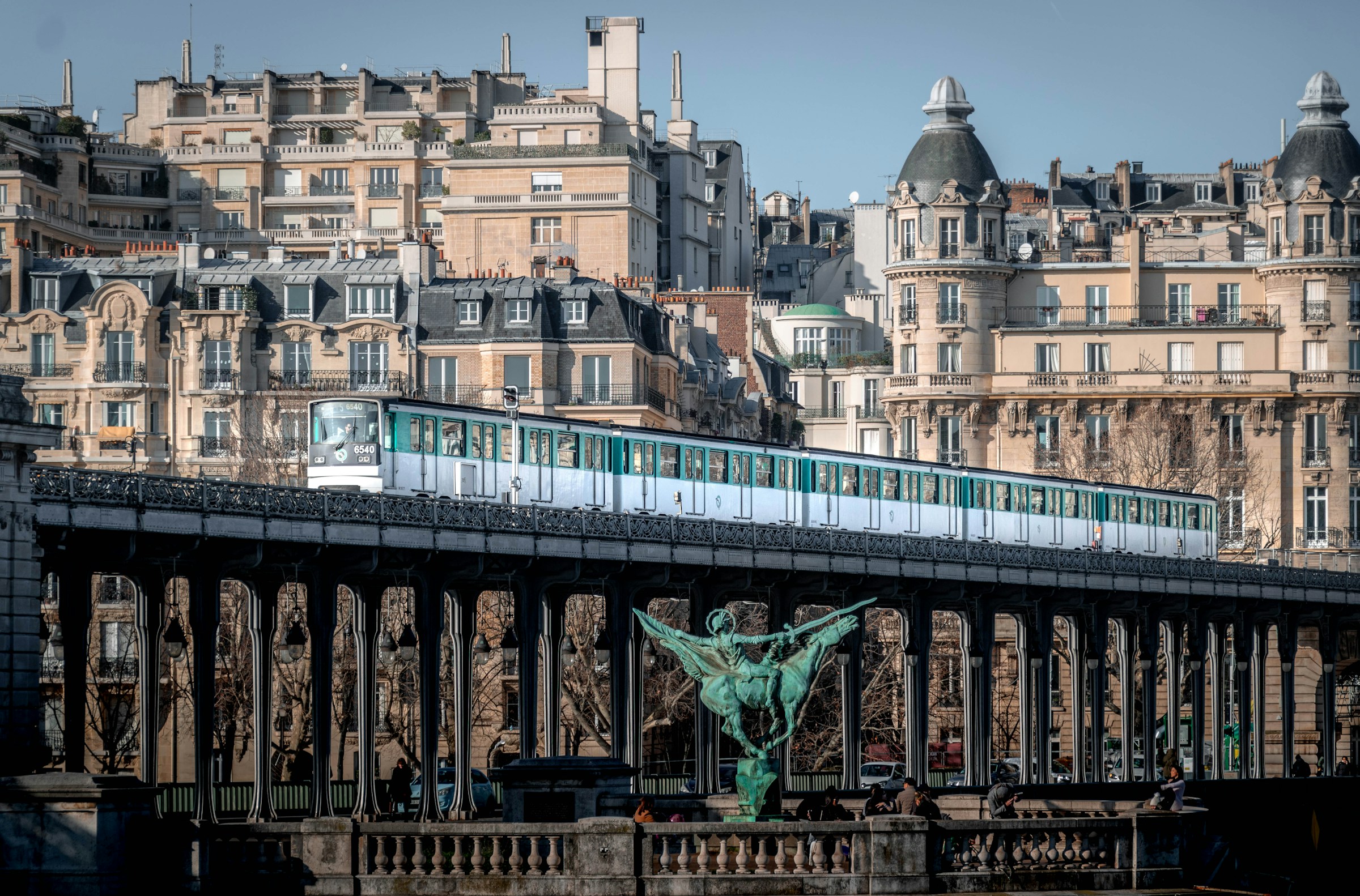
Walk up to almost any Paris Metro station and something immediately catches your eye. The entrance doesn’t look like a machine. It doesn’t look industrial or functional in any cold way. It curls. It branches. It almost breathes. Those sinuous green tendrils arching over the stairwell could pass for the stem of a lily, or the neck of a dragonfly, or some species of iron flora that only grows on Parisian sidewalks.
The plant-like quality isn’t accidental. It was chosen, carefully and deliberately, by one man at a very specific moment in history. Understanding why takes you straight into the heart of one of the most beautiful collisions between art and urban infrastructure the world has ever seen.
The City That Needed a Subway but Feared Ugliness
Paris was not the first city to build an underground train system – London already had one – but the approaching Paris Exposition of 1900 accelerated the need for an efficient and attractive means of mass transportation. The challenge wasn’t just engineering. It was aesthetic and deeply political. The French were so opposed to the idea of a metro that the first line had to be built entirely underground without ripping up surface streets, which meant the entrances had to look good but not overwhelm the surrounding areas. After several designs were refused by citizens, a compromise was made to make the metro’s above-ground components a work of art rather than an industrial eyesore.
A design competition was held for the above-ground components, to alleviate the public’s fear that they would mar the cityscape with an industrial appearance. The city was clear about one thing above all: beauty mattered.
Hector Guimard: The Architect Who Wasn’t Even in the Contest
Although Guimard never formally entered the competition for the design of the system’s entrance gates, launched in 1898 by the Compagnie du Métropolitain, he won the commission with his avant-garde schemes, which all employed standardized cast-iron components to facilitate manufacture, transport, and assembly. That is a remarkable fact to sit with. The most recognized subway entrance in the world was designed by someone who didn’t technically compete for the job.
Adrien Bénard, the financier whose bank was underwriting the construction, liked the new Art Nouveau style and persuaded the Compagnie du chemin de fer métropolitain de Paris to appoint the still-young Hector Guimard to design the entrances to the underground stations. One patron’s taste changed the visual identity of an entire city.
What Art Nouveau Actually Means
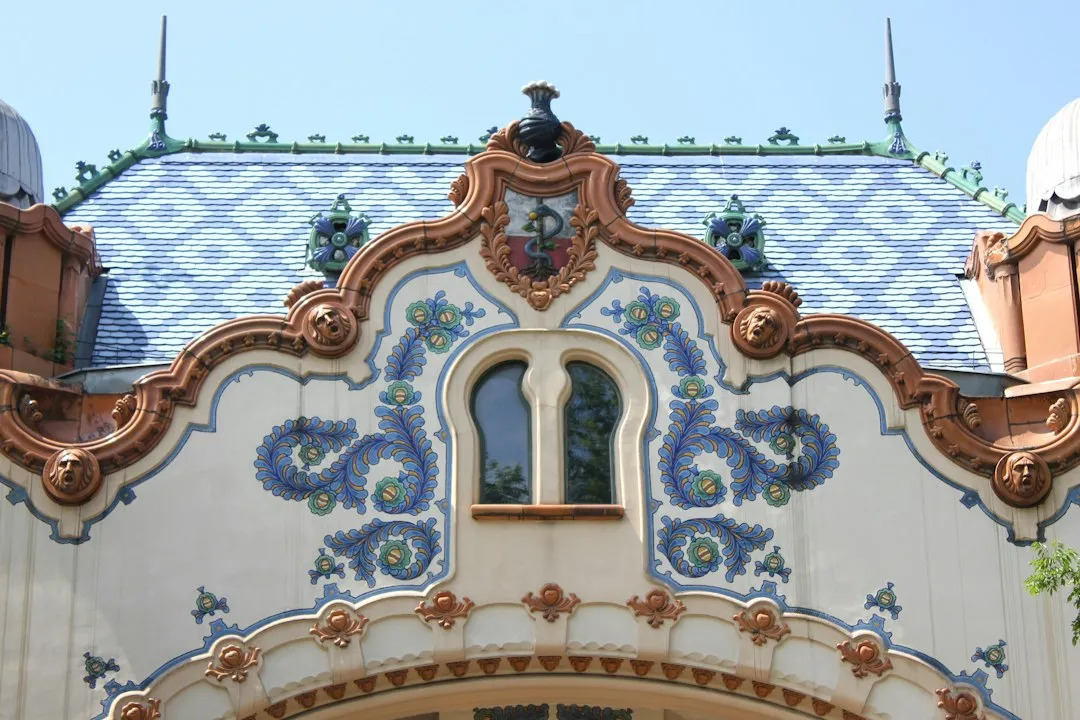
Guimard’s work is associated with Art Nouveau, a style of art and architecture that is based largely on organic forms from nature. The movement rejected the rigid geometry of classical design and looked instead to plants, insects, and flowing biological shapes for inspiration. Guimard had pioneered the Art Nouveau aesthetic in the 1890s with important Paris-based commissions, incorporating elements intrinsic to the movement including an aesthetic interest in nature, the use of curved lines and sinuous silhouettes, and a preference for balanced yet asymmetrical forms.
Hector Guimard challenged all the established conventions of Parisian architecture by designing entrance pavilions and surrounds with plant-like forms, skillfully exploiting the plastic qualities of cast iron. Cast iron, it turned out, was the perfect medium for imitating nature.
Why Cast Iron Could Mimic a Living Thing
Cast iron was far better suited to the sinuous, naturalistic and slender curves that embody Art Nouveau. Rather than the masonry designs presented by the winners of the competition, Guimard proposed that the Metro entrances be built in cast iron and glass. The decision had practical benefits: iron entrances took up far less space than stone, a necessity in many chosen sites for Metro stations. Iron was also cheaper and easier to produce and transport, and allowed for greater ease of mass production than masonry.
Guimard opted to craft his entrances out of cast iron set in concrete and painted a shade of green evocative of oxidized brass. The use of cast iron allowed him to construct the curved forms characteristic of his style, and concrete enabled him to incorporate sculpted details throughout each design. The result was something that felt grown rather than built.
The Lily Stems, the Femurs, and the Dragonfly Canopy
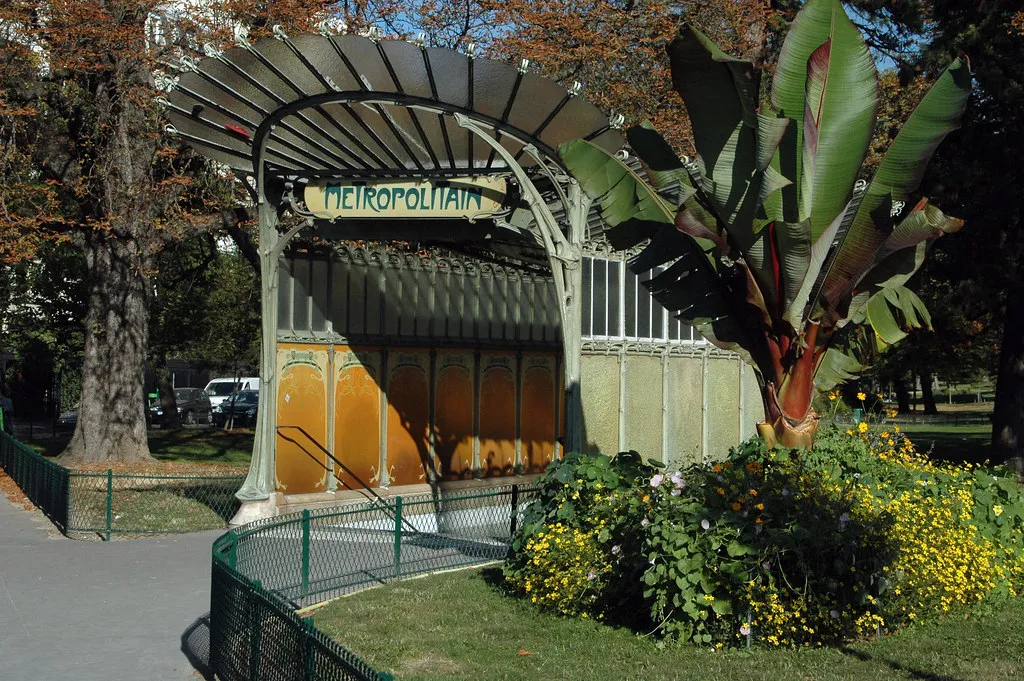
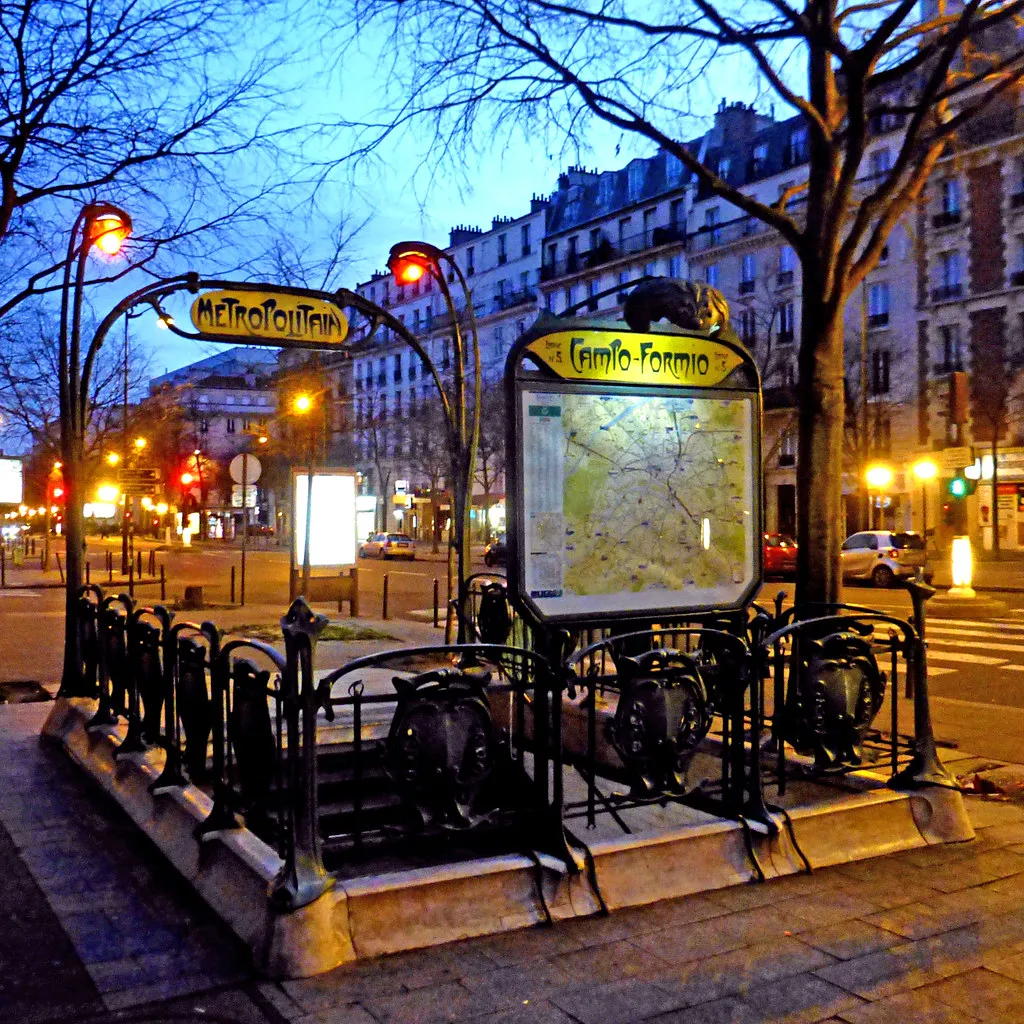
For the more common stations, Guimard designed cast iron surrounds twisted into contorted shapes, painted in a very distinctive green, and framed by the famous “lily of the valley stems.” The bases of the surrounds, made from Comblanchien stone, are carved into rounded forms, and the posts resemble human femurs. Nature was everywhere in the details, even in the structure of the human body itself.
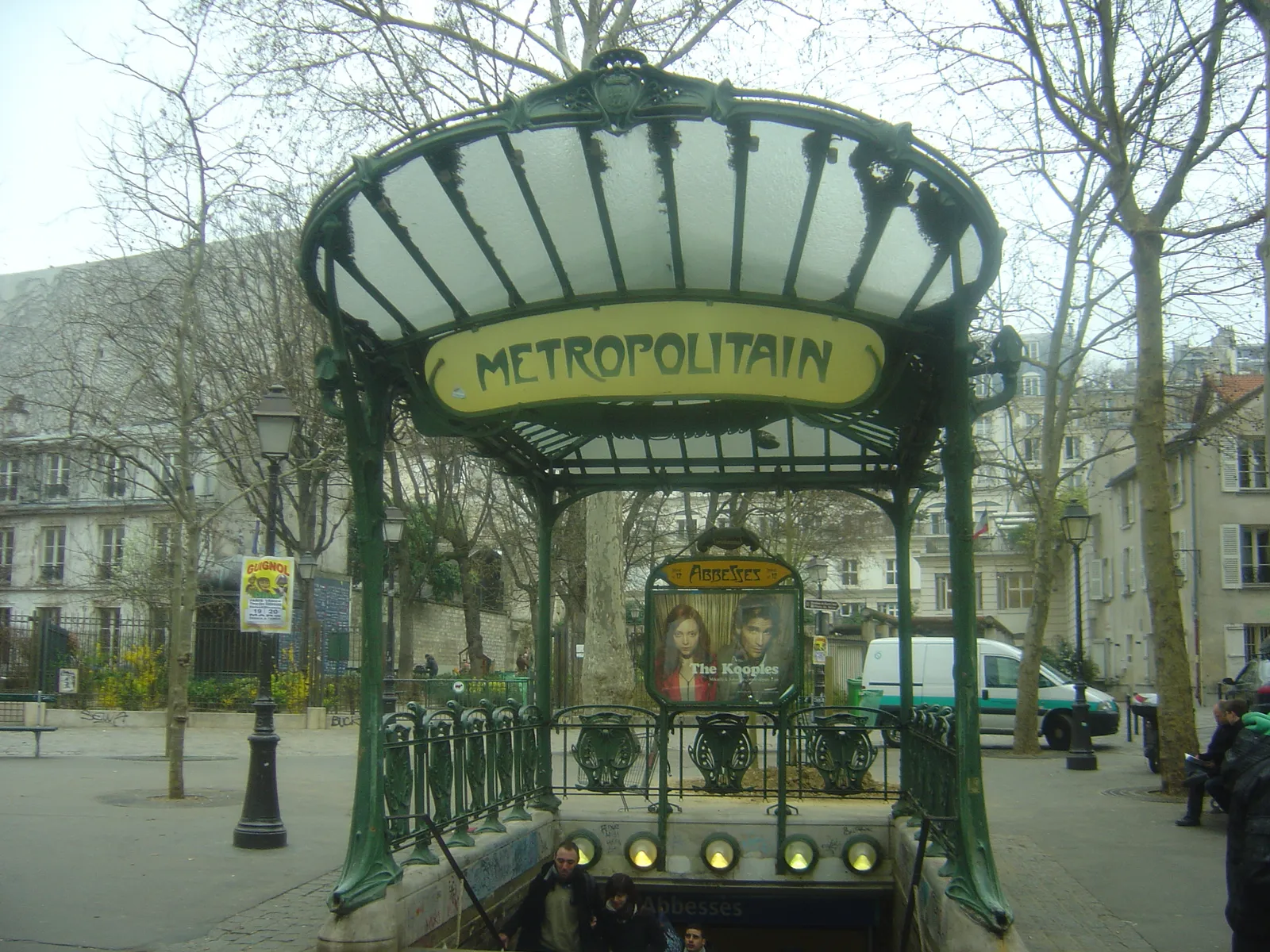
Guimard created his metro entrances according to two principal styles: those with roofs and those without. The only remaining example of the roofed style, what Guimard called his “dragonfly design,” can be found at Porte Dauphine, which is unchanged since it opened in 1900. Standing beneath it still feels like sheltering under the wing of an enormous insect.
The Signature Green: A Deliberate Reference to Living Things
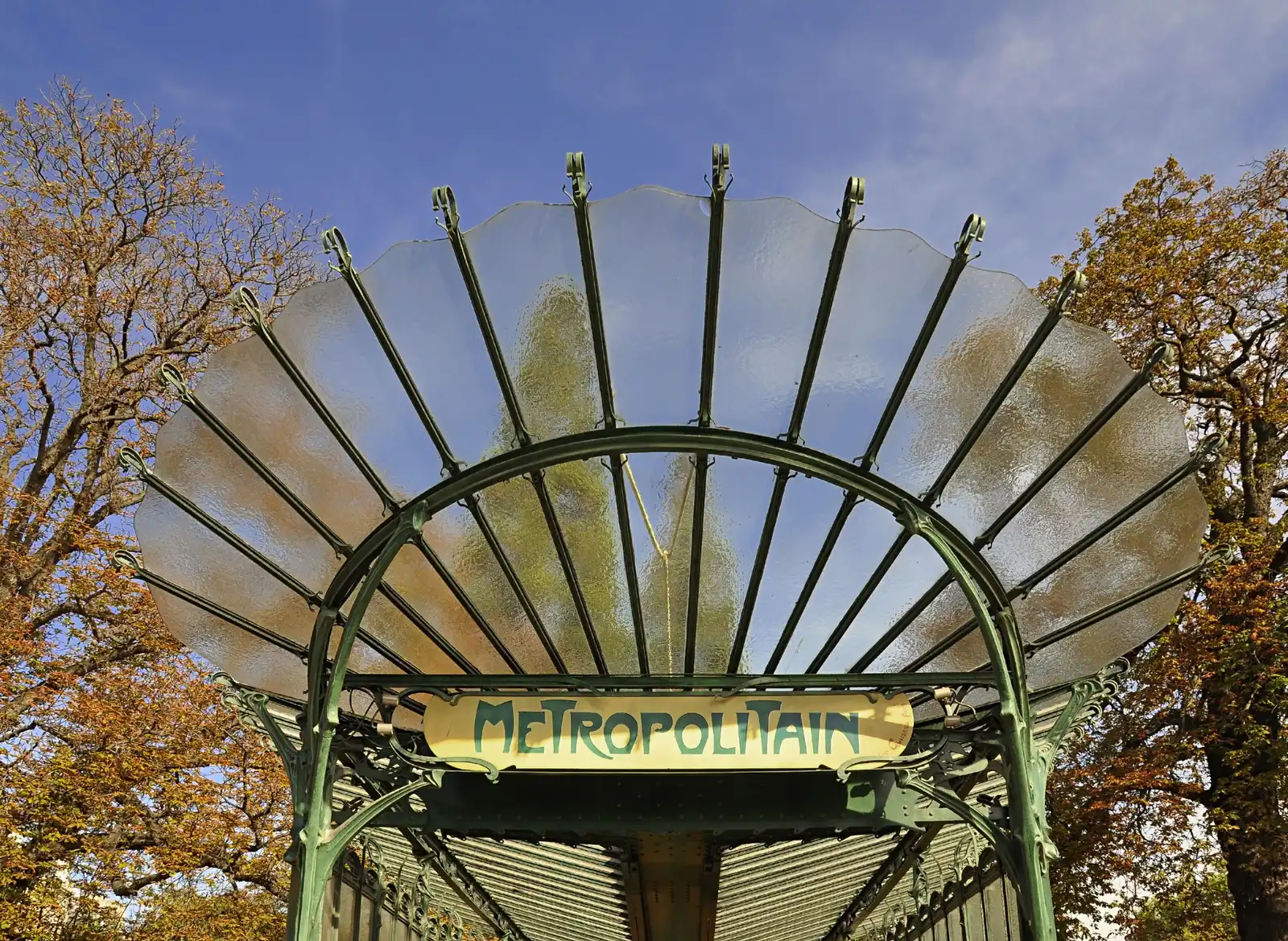
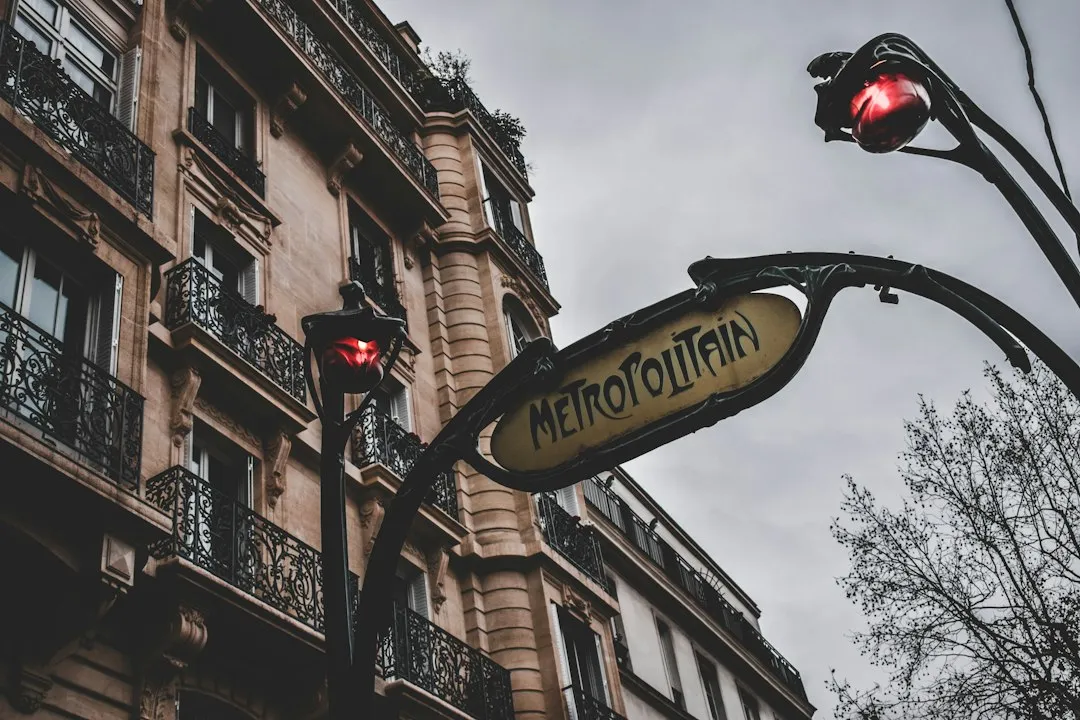
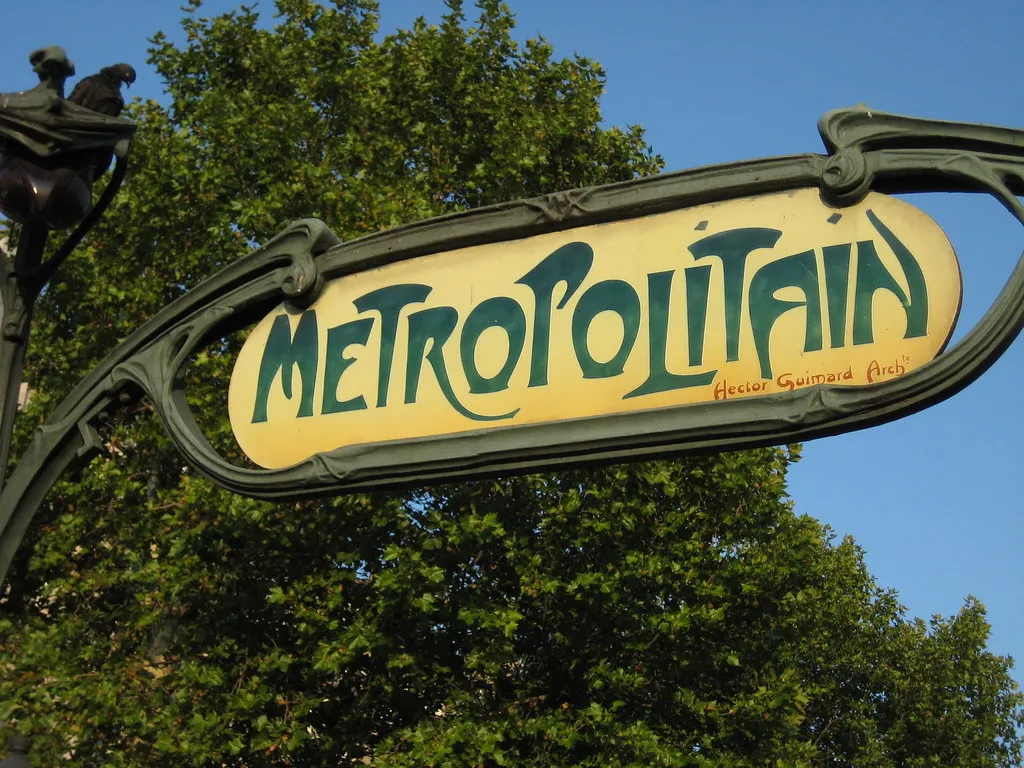
Each station entrance shared the same green paint, meant to resemble bronze patina, and a sign bearing the word “Métropolitain” in a typeface designed by Guimard himself. The choice of green was not simply decorative. It bridged the gap between the industrial material and the organic world it was meant to evoke. For a renovation that began in 1999, the RATP restored the entrances to two slightly different shades: at sites with a lot of vegetation, “vert wagon” – the dark green used for Parisian public works at the turn of the 20th century – and at fully urban sites, a slightly bluer shade called “vert allemand.”
Even in modern restorations, the commitment to that living, botanical quality of the color was deliberately preserved. The green was never arbitrary. It was part of the idea.
141 Entrances, a Modular System, and Remarkable Speed
Between 1900 and 1912, 141 of Guimard’s entrances were installed all over Paris. That is a significant number to design, produce, and install in just over a decade. The first set of entrances were installed within six months of their design, and the relatively low cost of manufacture and adaptation to different sizes and locations gave the system a consistent stylistic identity.
The construction relied on a clever modular system that adapts to various entrance sizes thanks to escutcheons – cast iron elements that can be infinitely reproduced. Guimard essentially industrialized his organic forms, which is a quietly brilliant achievement. Nature, made repeatable.
Not Everyone Loved Them at First
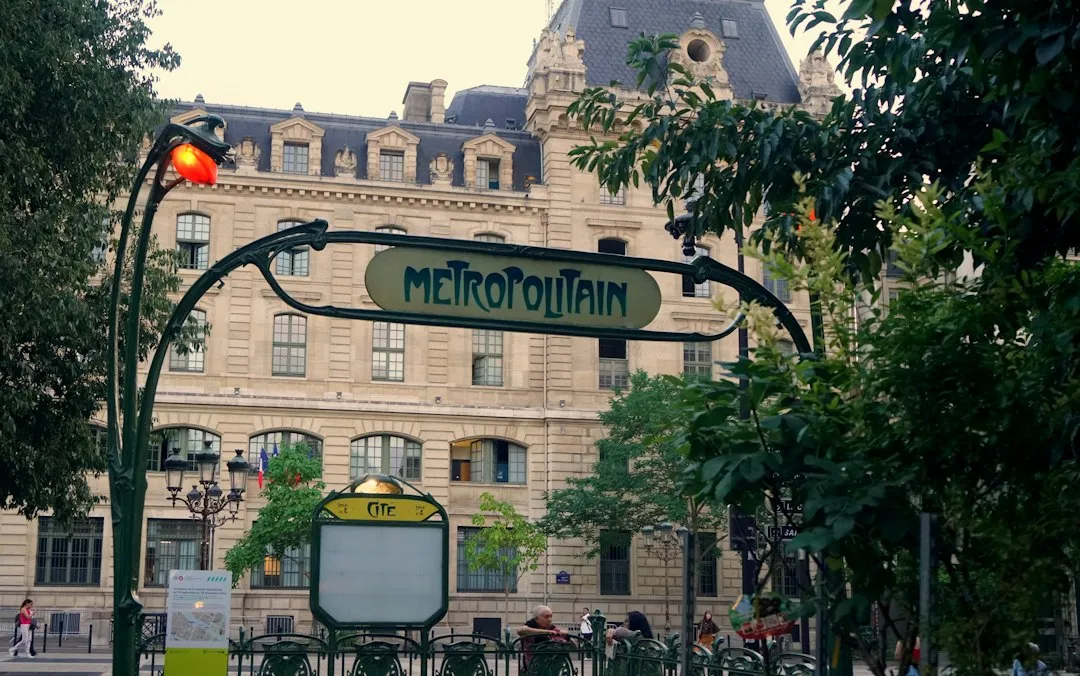
While Guimard’s entrances are now celebrated as icons, they didn’t always enjoy universal acclaim. Considered too “outdated” or “eccentric” in the post-war period, many were dismantled or replaced with simpler, more functional entrances. There is a recurring irony in design history: the things that feel most timeless were often the most contested in their own moment. Some critics disliked their ornate style and complex fonts, and many were dismantled or shipped abroad.
Between the 1930s and 1960s, the Metro removed a number of Guimard entrances in poor condition and sold some to collectors and museums who restored and displayed them. What was once dismissed as excess became a museum piece.
Protected, Exported, and Honored Around the World
A total of 167 Guimard metro entrances were created, of which 88 still exist today. Of these, 86 have been protected as Historic Monuments since 1978, and they have become symbols of Paris, transcending the identity of the metro itself. That protection arrived relatively late, but it has held firm ever since.
In the spirit of cultural exchange, several of the iconic Guimard entrances have been given to other cities. Replicas cast from the original moulds have been given to Lisbon, Mexico City, and Chicago. The plant-like forms of a Parisian sidewalk now grow on three other continents. Paris’s Hôtel Mezzara, designed by Hector Guimard in 1910 to 1911, is also set to become a museum dedicated to the architect.
Why the Plant Form Was the Right Choice for a City Like Paris
Guimard’s designs were meant to clearly mark the new subway entrances and make the novel form of mass transportation more attractive to riders. There was real psychology in the decision to reach for nature’s vocabulary. Guimard saw the Metro as a source of freedom of movement for workers and a place where social classes would mingle. Something soft, alive-looking, and beautiful at the entrance could soften the anxiety of going underground.
His Art Nouveau designs in cast iron and glass, dating mostly to 1900, and the associated lettering he also designed, created what became known as the Métro style and popularized Art Nouveau. The entrances weren’t just gates. They were an argument for how a city could treat its everyday infrastructure with the same care it gave to monuments.
The Takeaway
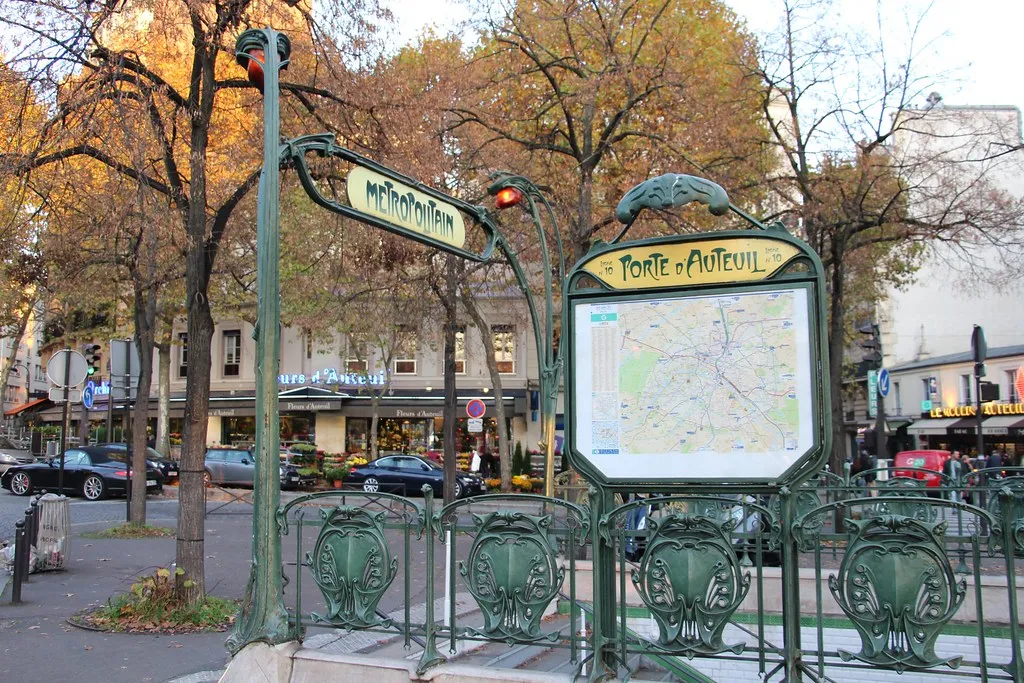
The Paris Metro entrances look like giant plants because a single architect believed that going underground didn’t have to feel like disappearing into an industrial hole. Guimard borrowed from nature because nature, at the turn of the twentieth century, felt like the most honest alternative to cold, utilitarian modernity. He was right, and the evidence is still standing on the sidewalk.
Despite the short-lived prominence of Art Nouveau and the initial disgust of some of the city’s residents, Guimard’s remaining Metro entrances have – like their distant cousin, the wrought iron Eiffel Tower – become an integral, even beloved, symbol of Paris. Some cities build infrastructure. Paris, at least once, built something that looked like it had grown there naturally, and over a century later, nobody wants to pull it out of the ground.
AI Disclaimer: This article was created with the assistance of AI tools and reviewed by a human editor.