

Few words in the English language carry the same weight as “Mayday.” The moment a pilot utters it into a radio, the entire aviation system responds. Frequencies go quiet, controllers shift focus, and rescue services begin to mobilize. It happens in seconds, and it happens because of one word.
Most people have heard it in movies or news reports, yet almost no one outside of aviation truly understands what it means, where it came from, or why those seven letters have the power they do. The story, it turns out, stretches back over a century and begins with a problem on a rainy English airfield.
The Word That Started It All

The “Mayday” procedure word was conceived as a distress call in the early 1920s by Frederick Stanley Mockford, officer-in-charge of radio at Croydon Airport, England. He was given a specific challenge: find a single word that anyone, regardless of their native tongue, could immediately understand as a cry for help.
He had been asked to think of a word that would indicate distress and would easily be understood by all pilots and ground staff in an emergency. Since much of the air traffic at the time was between Croydon and Le Bourget Airport in Paris, he proposed the term “Mayday,” the phonetic equivalent of the French m’aider.
At that time there was a great deal of aircraft traffic between Croydon and Le Bourget in France. There were often problems over the Channel, and a distress call which could be easily understood by both the French and the English was vital. Mockford’s solution was elegantly simple: borrow a phrase that worked in both languages at once.
The French Connection

The word Mayday is actually an anglicization, or in simple words, the English approximation of a French phrase “m’aidez” or “m’aider,” which literally means “help me.” It’s one of those rare cases where a borrowed word crossed a linguistic border so smoothly that most people never realized it wasn’t English to begin with.
The phrase itself does sacrifice grammatical accuracy, meaning literally “to help me,” in favour of communicability and recognition. Looking through the lens of French grammar, it may be a short form of “venez m’aider,” meaning “come help me.” In an emergency, communicability matters far more than grammar.
Why SOS Was No Longer Enough

The previous distress call had been the Morse code signal SOS, but this was not considered suitable for voice communication, “owing to the difficulty of distinguishing the letter ‘S’ by telephone.” When aviation shifted to radio voice communications, the old code simply didn’t hold up.
SOS was already in use for telegraphic communications, but the system used on aircraft was radio and it was felt the letter “S” on its own was too easily confused with other letters when it was said over the airwaves. Any pilot in difficulties would not have the time to make sure he was understood by saying “S for Sierra, O for Oscar, S for Sierra.”
Static, accents, and the sheer noise of a cockpit under stress all conspired against clarity. A brand new word, one that was short, distinctive, and impossible to confuse, was the only real answer. Mockford delivered exactly that.
From Croydon to the World
Following tests, the new procedure word was introduced for cross-Channel flights in February 1923. It wasn’t an overnight global adoption. The word needed time to travel, to be tested, and eventually to be recognized by international bodies as the standard.
This distress signal used in radio communications was officially adopted in 1927 during the International Radiotelegraph Convention, solidifying its place as an internationally recognized distress signal alongside SOS in Morse code. That moment in Washington, D.C. gave “Mayday” its permanent place in global aviation and maritime law.
It is used to signal a life-threatening emergency primarily by aviators and mariners, but in some countries local organizations such as firefighters, police forces, and transportation organizations also use the term. What started as a cross-Channel fix became a truly universal signal.
Why It’s Always Said Three Times

Convention requires the word be repeated three times in a row during the initial emergency declaration (“Mayday, Mayday, Mayday”). This isn’t a quirk or a tradition born of superstition. It’s pure communication engineering.
Both signals are transmitted three times in succession. This repetition is standard protocol, not emphasis. It is the internationally defined format. Repeating the word three times dramatically reduces the chance that static, interference, or a momentary lapse in attention will cause the call to be missed or misunderstood.
On early radio equipment, transmissions were often choppy and unreliable. Saying “Mayday” once left too much room for error. Saying it three times in a row made it nearly impossible to overlook, even on a crowded, noisy frequency.
What Happens When a Pilot Declares Mayday
It is not a cry for help in any emotional sense. It is a procedural instrument: a word that, under international rules, clears a frequency and reassigns priority in the space of about two seconds. The moment it’s spoken, everything else on that radio frequency stops.
The initial communication, and if considered necessary, any subsequent transmissions by an aircraft in distress should begin with the signal MAYDAY, preferably repeated three times. The signal PAN-PAN should be used in the same manner for an urgency condition.
Flight crews may require special assistance from air traffic control, such as clearing airspace for an immediate landing or notifying and preparing fire and rescue crews. A crew calling Mayday will receive full attention from air traffic control, assistance, and resources. The aviation system is specifically designed to respond immediately, without hesitation and without bureaucratic delay.
Mayday vs. Pan-Pan: Two Different Alarms
Mayday declares that you are in immediate danger right now. Pan-Pan signals urgency: something is wrong or developing, and you need priority handling before it becomes critical. The distinction matters enormously because each call triggers a different level of response from controllers and rescue services.
Mayday calls indicate grave and imminent danger requiring immediate assistance and priority handling. Pan-Pan calls communicate urgent situations that are serious but not immediately life-threatening. Think of it as the difference between a building already on fire versus smelling smoke in the hallway.
Pan-Pan, said “pahn-pahn,” is the rung below and is the urgency call. Like Mayday, it comes from French, but the parent word here is “panne,” meaning a breakdown or mechanical failure. Both words are French in origin, both are repeated three times, and both have very precise meanings under international aviation rules.
The Emergency Frequency and Transponder Code
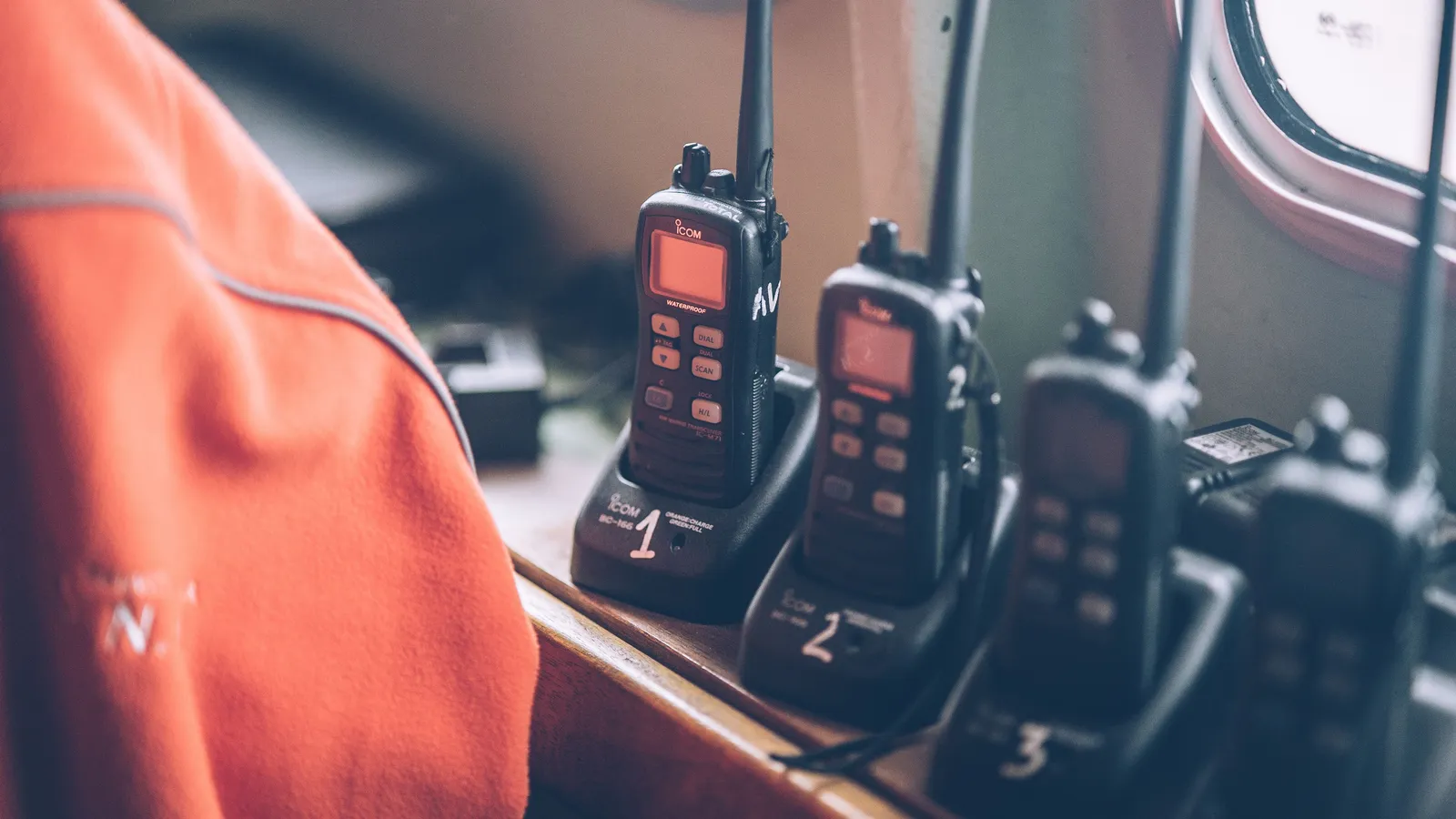
Emergency frequencies include 121.5 MHz for civil aviation and 243.0 MHz for military. Emergency squawk codes include 7500 for unlawful interference, 7600 for radio failure, and 7700 for a general emergency. When a pilot declares Mayday, setting the transponder to 7700 simultaneously alerts radar controllers even if radio contact is lost.
Always transmit Mayday on the frequency you are currently working. If no response, try 121.5 MHz, the international distress frequency, monitored around the clock by ATC and aircraft. This layered system means a pilot in trouble almost always has multiple ways to reach someone who can help.
ICAO Annex 10, Volume V states that “the emergency channel (121.5 MHz) shall be used only for genuine emergency purposes.” Misuse of this frequency carries serious legal consequences, which reflects just how seriously the international aviation community treats its integrity.
What a Pilot Must Say After “Mayday”
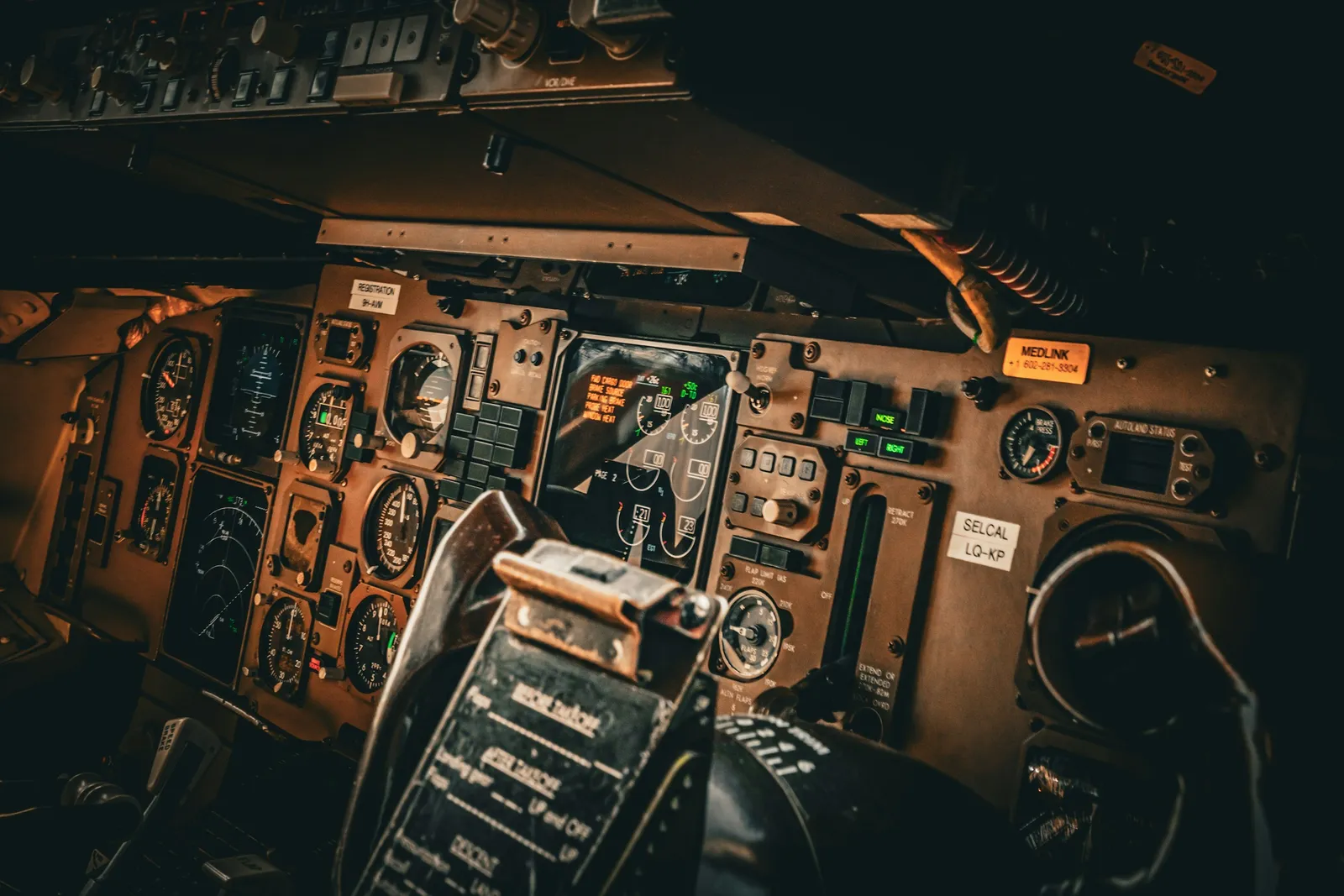
The International Civil Aviation Organization says that after three Maydays, the caller must, in this order, give the name of the station addressed, identify the aircraft, give the nature of the problem, weather, the pilot’s intentions and request, and present position. The structure is designed so that even a partial transmission gives rescuers the information they need most.
Effective emergency reports should include aircraft identification, nature of the emergency, position, altitude, intentions, and assistance required. Pilots train for this sequence repeatedly because in a real emergency, the mind can go blank. Muscle memory and practiced procedure are what keep communication clear when it matters most.
In a real emergency, aviate first and maintain aircraft control. Then navigate and communicate. Do not allow radio calls to distract from flying the aircraft. This sequence, “aviate, navigate, communicate,” is one of the most fundamental principles in emergency pilot training.
Making a False Mayday Call Is a Crime

Making a false distress call is a criminal offence in many countries, punishable by a fine, restitution, and possible imprisonment. This isn’t simply about wasted resources. A false Mayday diverts rescue crews, ties up emergency frequencies, and can endanger the very people those crews were meant to protect.
The weight attached to the word is intentional. Because “Mayday” carries so much authority, the law treats its misuse as a serious matter. Every false call chips away at the system’s reliability, and in aviation, reliability is everything.
One Word, a Century of Trust
It’s worth pausing to appreciate how remarkable it is that a word invented by one person at a small English airport in 1923 now commands instant obedience from air traffic controllers, rescue crews, and pilots across every continent. Frederick Mockford likely didn’t imagine the permanence of his contribution when he first proposed it.
“Mayday” endures not because of tradition for its own sake, but because it works. It’s short, it’s distinctive, it crosses language barriers, and it is universally understood to mean one thing: someone’s life is in immediate danger and help is needed right now. No other word in aviation carries that combination of simplicity and gravity.
The next time you hear it, even in a film or a news report, you’ll know its full story: a practical solution to a real problem, tested over a century of aviation emergencies, and still doing exactly the job it was designed to do.
AI Disclaimer: This article was created with the assistance of AI tools and reviewed by a human editor.