
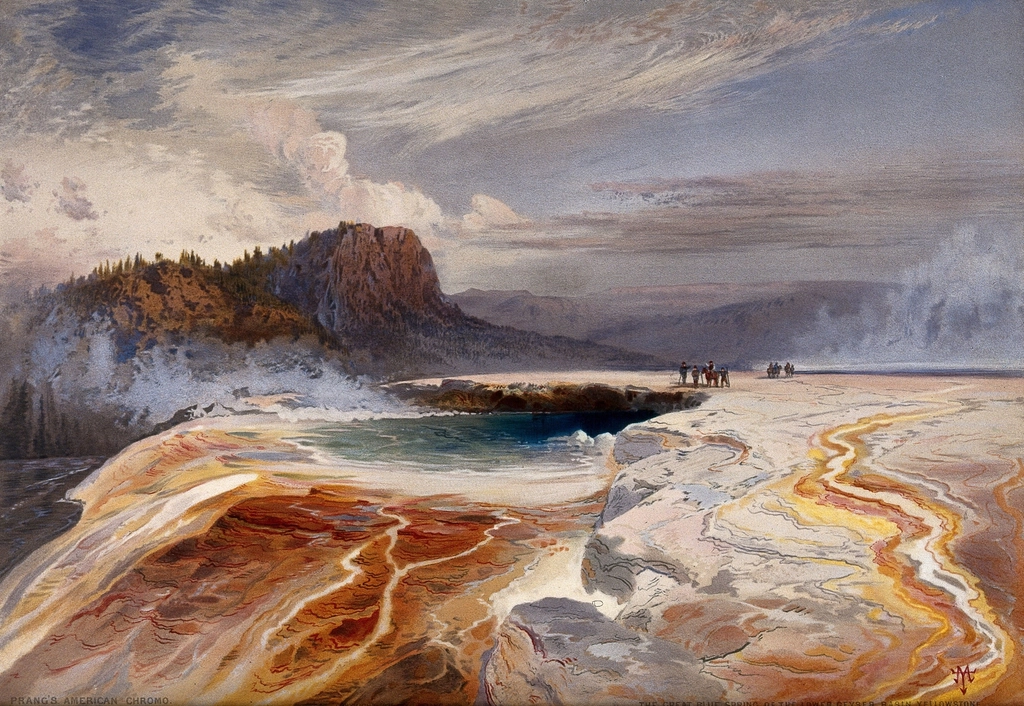

There are places on Earth where the ground opens up and offers something that looks almost too vivid to be real. Hot springs ringed in bands of deep blue, burning orange, yellow, and red have stopped travelers in their tracks for centuries. The colors feel painted on, theatrical even, yet there’s no paint involved at all.
The explanation sits at the crossroads of geology, biology, and optics. It’s a story told by living things that thrive where almost nothing else can, and understanding it changes how you see these places entirely.
The Earth’s Heat Is the Starting Point
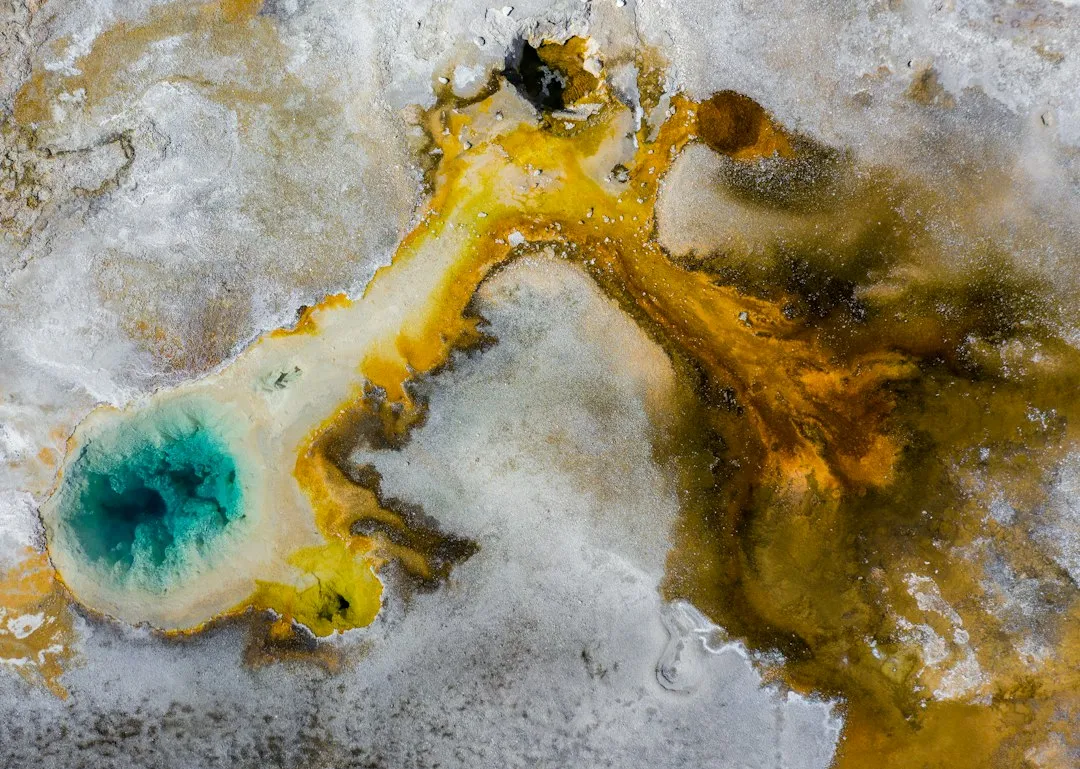
When heated water seeps through surface fissures, hot springs are created. The water is pushed upward by geothermal energy deep beneath the crust, often reaching the surface after traveling through rock layers rich in minerals. The Grand Prismatic Spring alone discharges an estimated 560 gallons of water at 160°F every minute.
Yellowstone National Park contains the most concentrated array of hot springs and geysers in the world. But colorful hot springs are not exclusive to Yellowstone. They appear wherever geothermal energy and the right microbial conditions align, from Iceland to New Zealand to the volcanic landscapes of Chile and beyond.
The Role of Temperature Zones
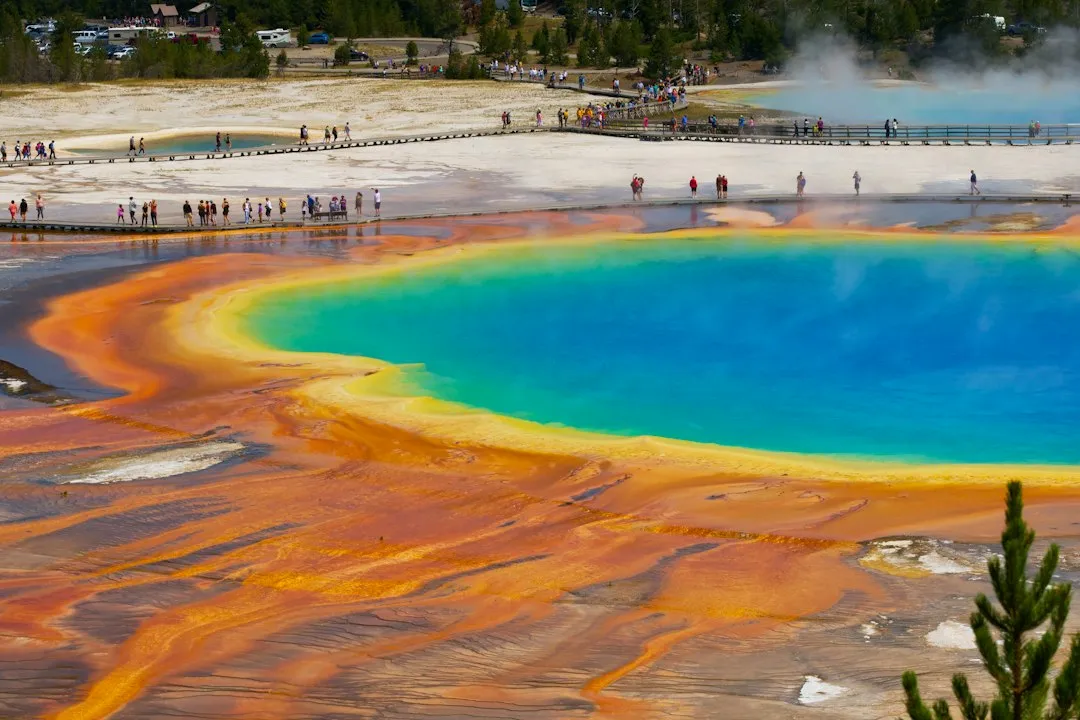
The continuous cycle in the Grand Prismatic Spring produces rings of varying temperatures around the center, with extremely hot water bubbling out from the middle and progressively cooling as it spreads out across the huge surface of the spring. This thermal gradient is the engine behind everything that happens visually. Each zone of temperature creates a completely different livable environment.
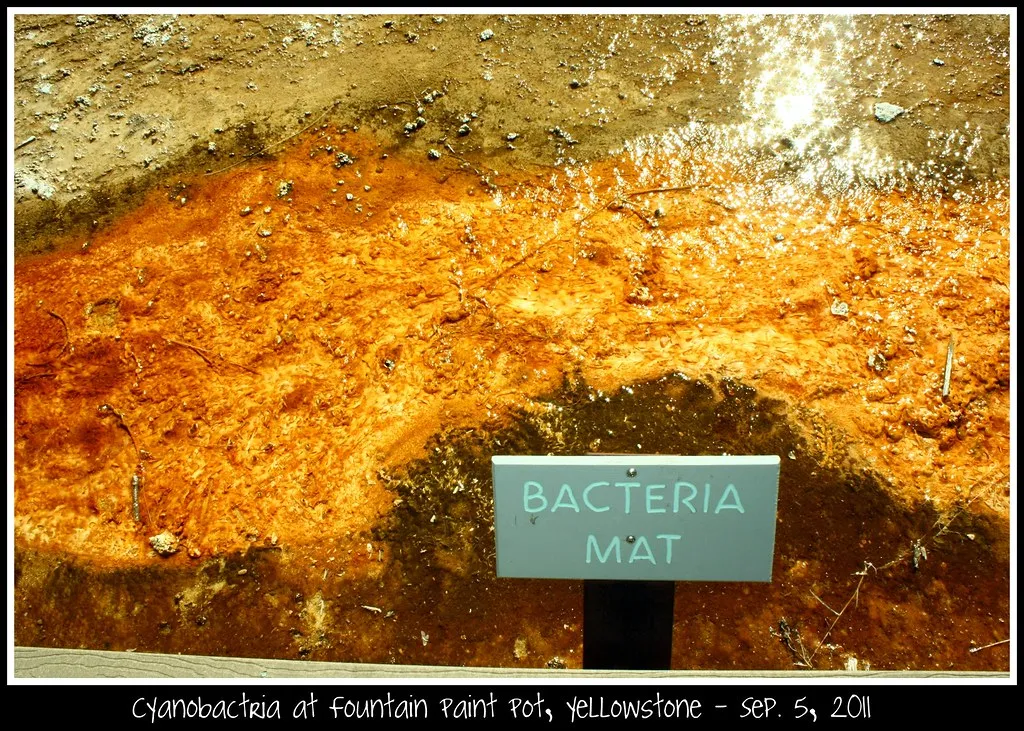
Where you see rings of color, there are most of the time rings of different bacteria, each group adapted to conditions such as temperature and pH of their environments, according to the National Park Service. It’s essentially a living map, drawn in pigment, of which organisms can survive where.
Why the Center Glows Deep Blue
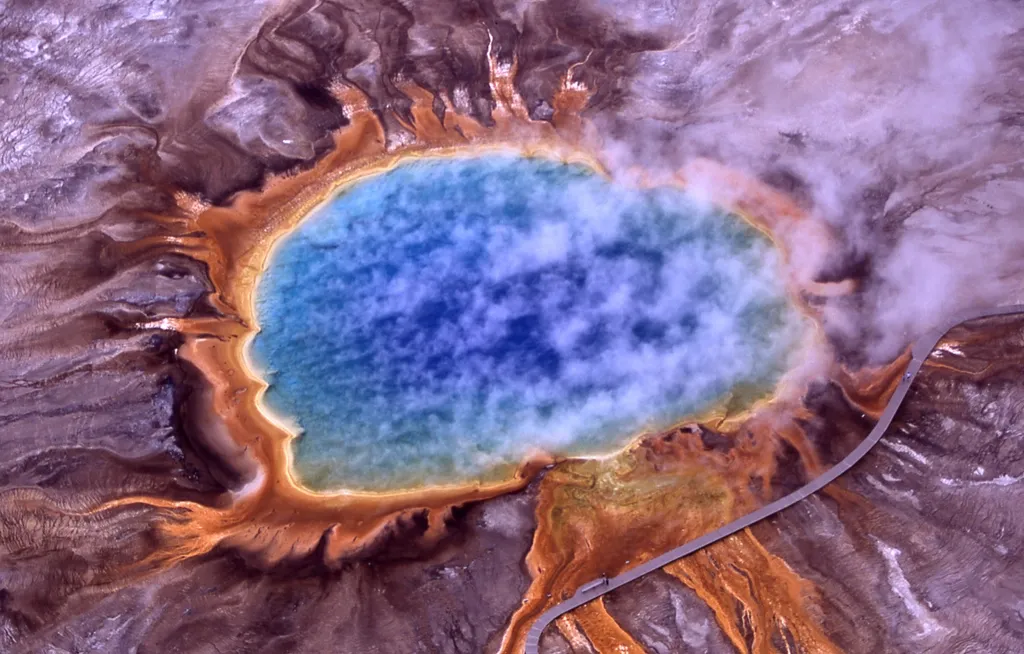
The center of the spring is just above its underground water source, and it’s where temperatures are the highest, up to 189 degrees Fahrenheit. There, the water is too hot for most microbial growth. It is, therefore, mostly clear water.
The center of the spring is blue for the same reason the sky is blue: when sunlight hits the water’s surface, the light scatters, and blue light scatters the most, meaning that’s what reflects back to your eyes. The deep blue color in the center also results from water’s selective absorption of red wavelengths of visible light, an effect that is particularly intense in Grand Prismatic Spring because of the high purity and depth of the water in the middle.
Meet the Thermophiles
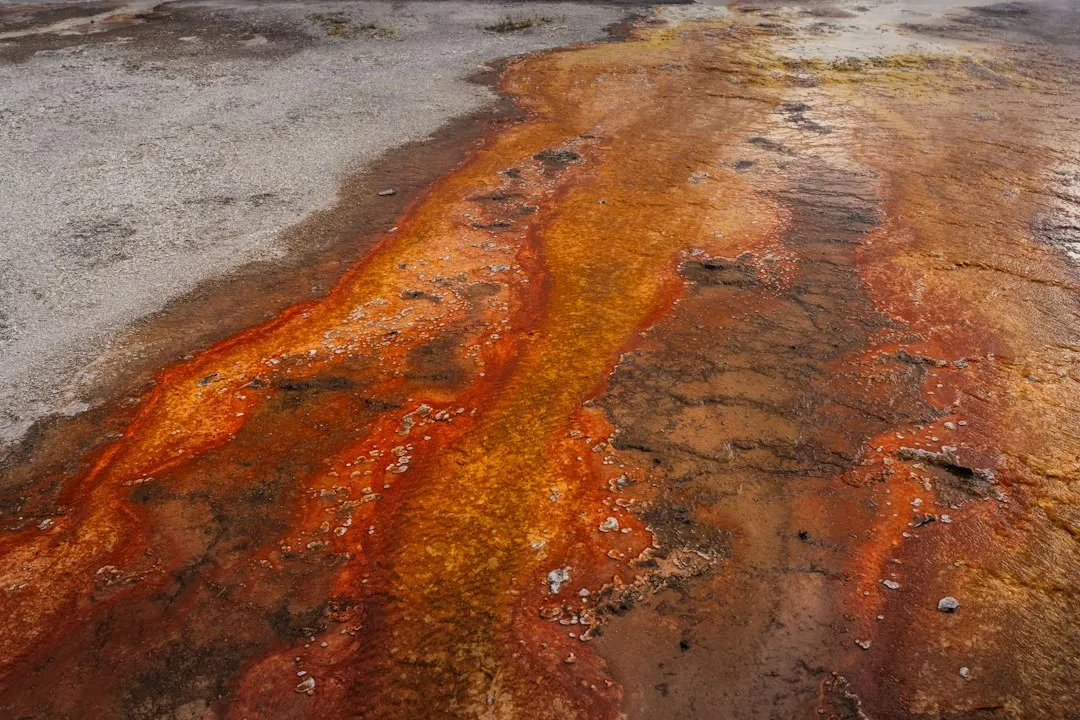
Hydrothermal features are habitats for microscopic organisms called thermophiles: “thermo” for heat, “phile” for lover. These are some of the most resilient organisms on the planet. All microorganisms living within the spring are considered thermophiles, meaning they can survive and thrive at high temperatures, although most cannot tolerate the heat at the very center of the pool.
These microorganisms are tiny, single-celled bacteria that contain special chemicals called pigments, which give them their color. The pigments absorb certain wavelengths of light and reflect others, and the wavelengths they reflect determine their visible color. It’s the same principle behind why leaves look green or why a ripe tomato looks red.
Yellow Rings and the Cyanobacteria Connection
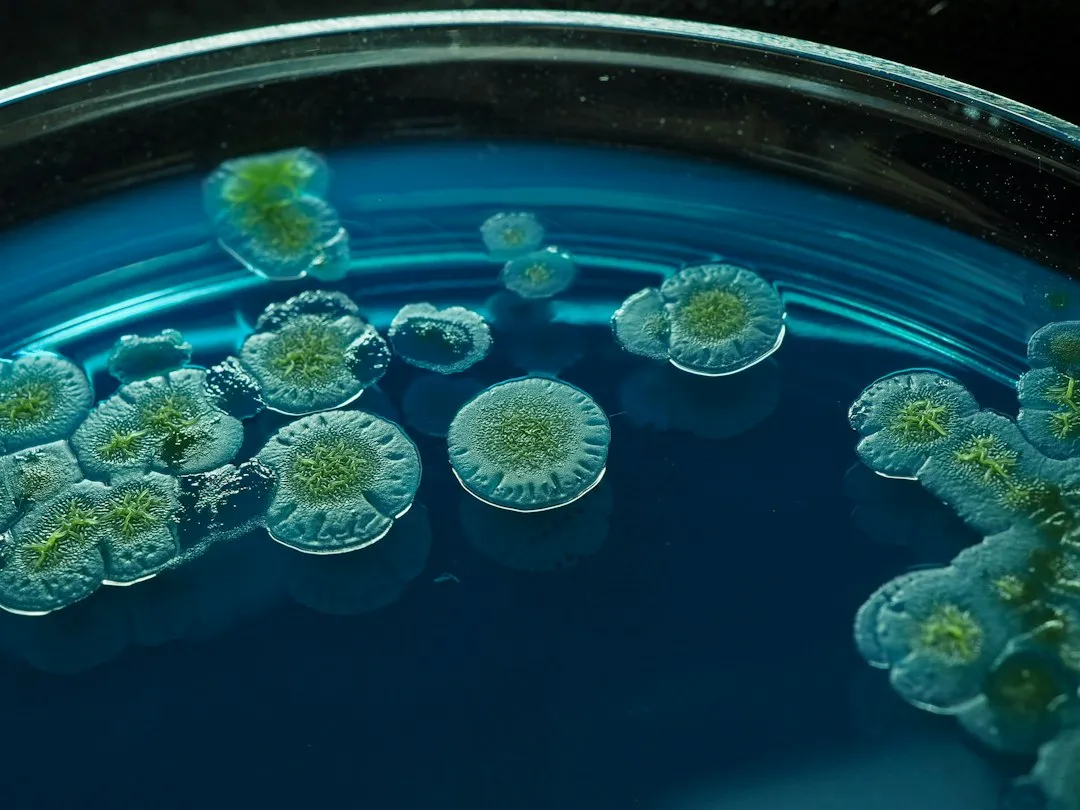
Moving outward from the blue center, a yellow ring appears within the pool when the temperature is around 163°F. This yellow ring is due to Synechococcus, a type of photosynthetic bacteria within the Cyanobacteria phylum. Synechococcus contains carotenoids, which give the bacteria a yellow appearance.
Even as an extremophile, this microscopic bacteria struggles with the bright sun and hot temperature. That’s why it produces carotenoids, the same pigment that makes carrots orange, as a sort of sunscreen. It’s a remarkable adaptation: color as survival strategy.
Orange and Red: The Outer Rings
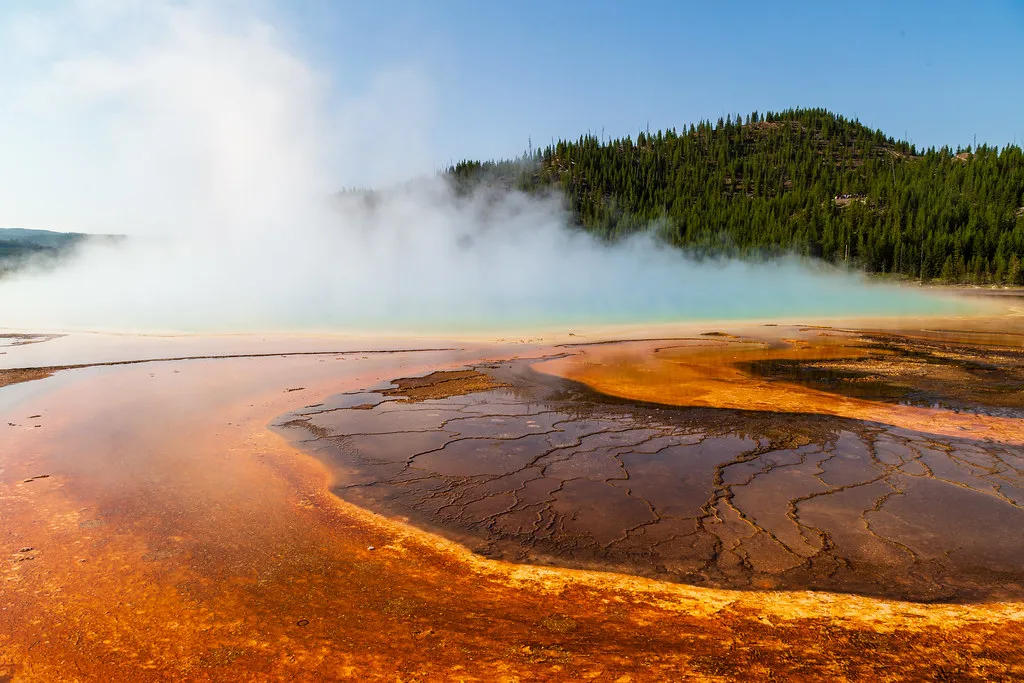
Moving outward, the water cools down to about 65°C and Chloroflexi become the most common microbe. Like Synechococcus, these bacteria also have carotenoid pigments, but in this case they appear orange. In the outermost regions of the spring, where the temperature falls below 113°F, reddish-brown bacteria dominate, adding the final layer of color.
Yellow, orange, and red pigments are produced by the bacteria as a natural sunscreen. As a result, the pool displays a spectrum of colors from the bright blue of the center to the orange, red, and brown algal mats along the edges. The color sequence closely mirrors the visible spectrum of light refracted through a prism, which is exactly where the Grand Prismatic Spring gets its name.
The Seasonal Color Shift
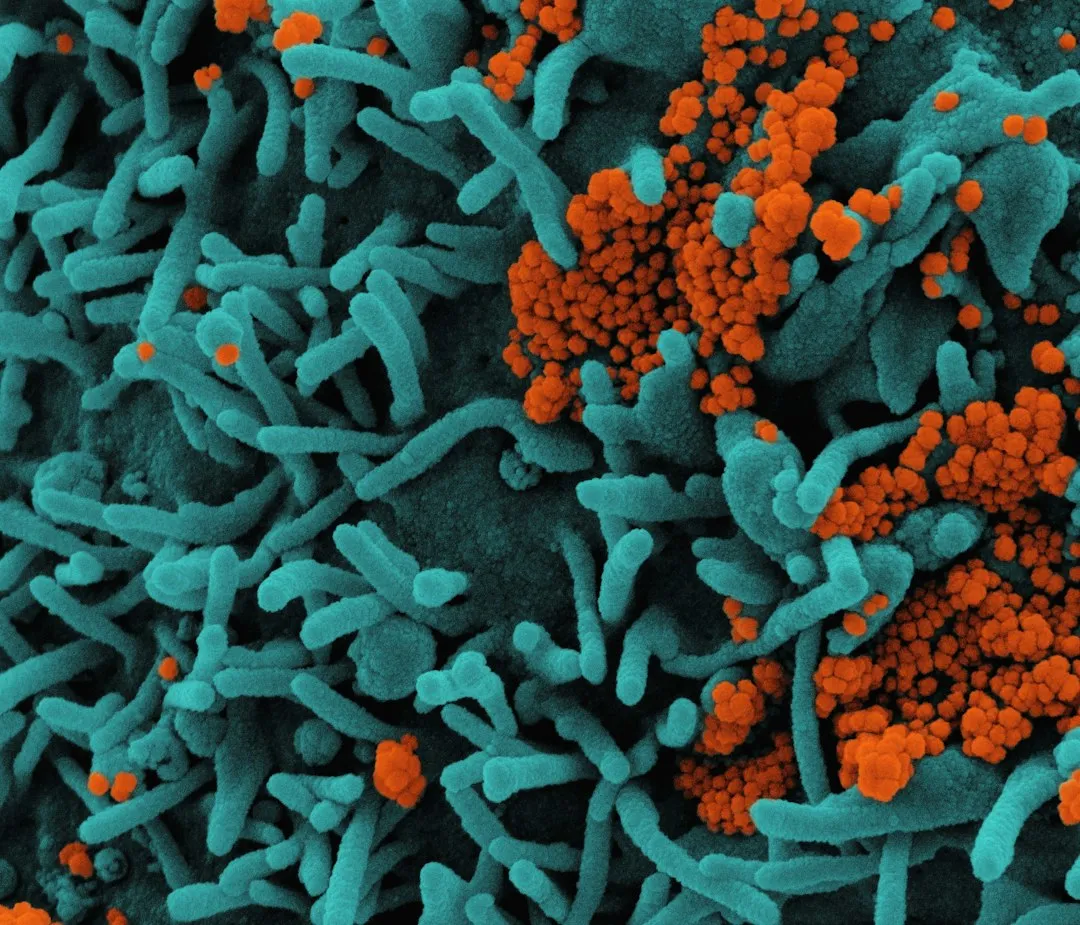
Visitors who return to the same spring in different seasons often notice it looks strikingly different, and that’s not an optical illusion. The bacteria produce colors ranging from green to red, and the amount of color in the microbial mats depends on the ratio of chlorophyll to carotenoids and on the temperature of the water, which favors one bacterium over another. In summer, the mats tend to be orange and red, whereas in winter the mats are usually dark green.
This seasonal shift happens because sunlight intensity drives carotenoid production. In summer, more intense sunlight triggers greater pigment output as a protective response. In winter, reduced light means less need for that protection, and chlorophyll green dominates instead. The spring is essentially repainting itself twice a year.
Minerals Add a Separate Layer of Color
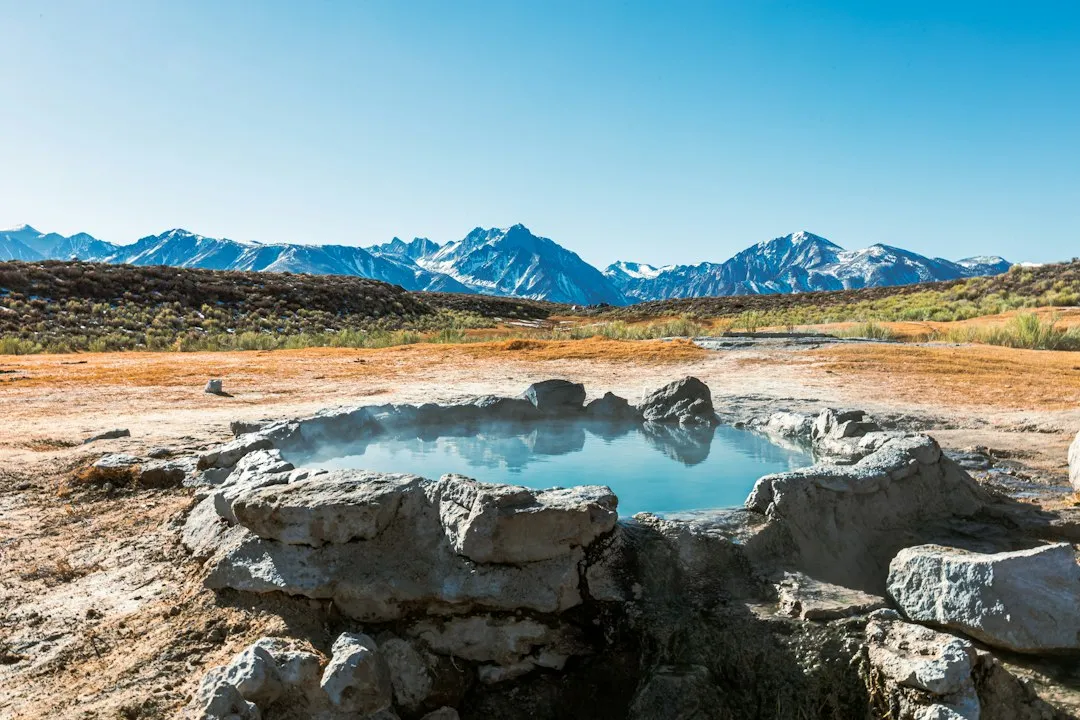
Not every colored hot spring owes its hue entirely to bacteria. Minerals dissolved in geothermal water can also produce striking and unexpected colors. At Yellowstone’s Emerald Spring, another factor joins with light refraction to give the spring its color. The pool is lined with yellow sulfur deposits, and that yellow color combines with the reflected blue light, making the hot spring appear a magnificent emerald green.
Hot spring water can dissolve and transport sulfur from underground, and the mineral can deposit and crystallize at the earth’s surface, sometimes in hot spring pools. Iron oxides can produce rusty reds and browns, while silica deposits create brilliant white terraces. The full palette of a hot spring is often a combination of both biology and mineralogy working together.
Specific Bacterial Genera Responsible for the Colors
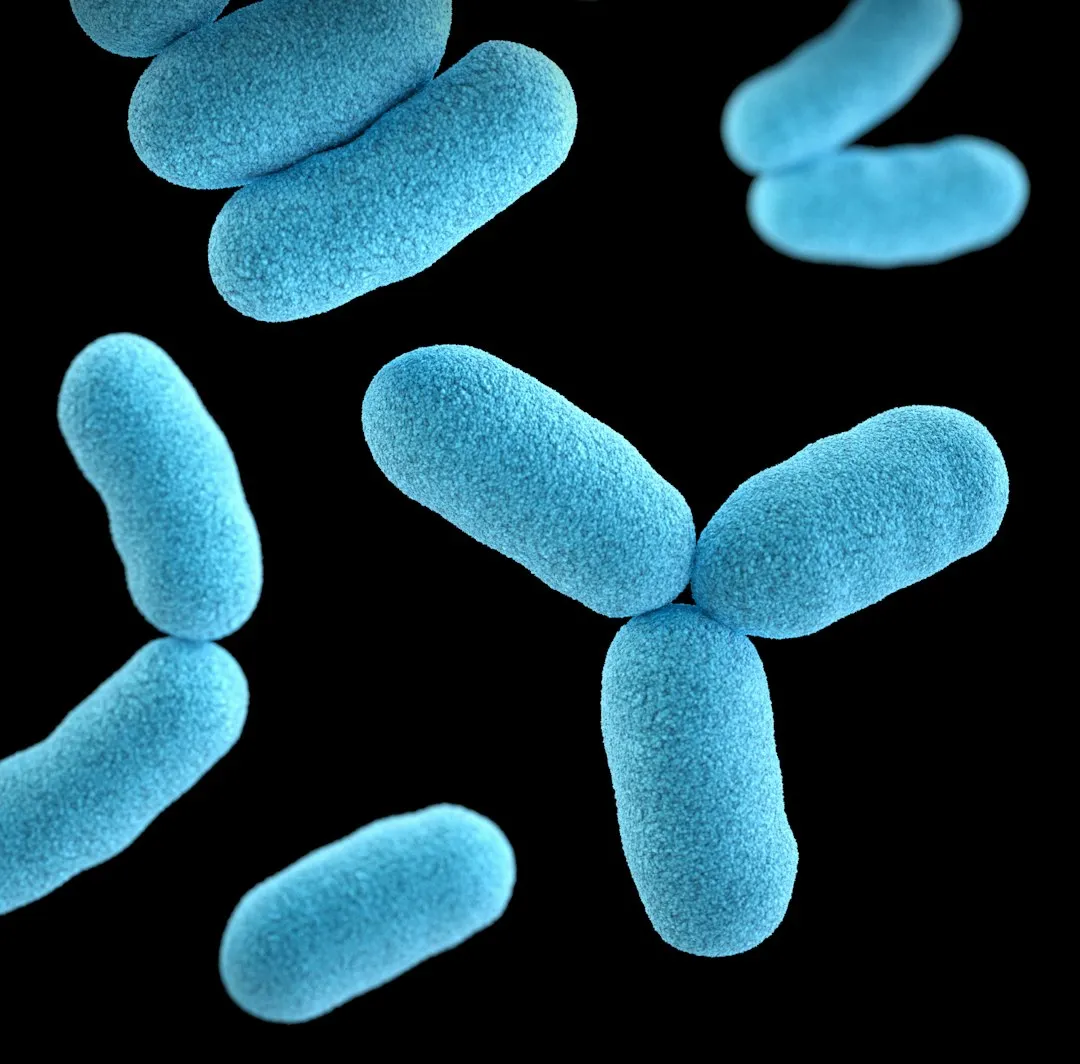
The Grand Prismatic Spring’s beautiful rainbow configuration is mostly derived from the bacterial phylum cyanobacteria, which includes the individual genera Calothrix, Phormidium, and Synechococcus. The cyanobacteria genus Oscillatoria produces the orange mats seen on the Mammoth Hot Springs where the water temperature is between 96 to 113 degrees Fahrenheit.
Carotenoids are molecules that can be used to harvest light energy by phototrophic bacteria and have colors of yellow to red, the same pigments that give us yellow squash, orange carrots and pumpkins, red shrimp, and pink flamingos. Seeing that connection between flamingos and hot springs puts the biochemistry in a surprisingly familiar light.
Active Research Is Still Uncovering New Life
Researchers from South Dakota Mines visited Yellowstone National Park in August 2025 to conduct initial sampling of thermophilic cyanobacteria from hydrothermal features in Yellowstone’s Lower Geyser Basin, measuring water temperature and pH at multiple sites and collecting samples of thermophilic cyanobacteria to analyze with high-resolution microscopes and mass spectrometers. The science here is genuinely ongoing.
Chlorophyll pigments give cyanobacteria the vibrant green color observed in many of Yellowstone’s hot springs and runoff channels, and unlike plants, thermophilic cyanobacteria efficiently perform photosynthesis at high temperatures ranging from 45 to 73°C, hot enough to cause humans second- and third-degree burns within seconds of exposure. Studying how they manage this feat holds real promise for fields like biotechnology and astrobiology.
What This Means for the Search for Life Beyond Earth
The organisms living in these springs matter well beyond Yellowstone. Thermophilic bacteria able to survive extreme temperature stress are of great biotechnological interest due to their extracellular production of bioactive molecules as a part of a survival strategy. Scientists studying them are essentially looking at a template for how life might persist in extreme environments elsewhere in the solar system.
For the photosynthetic microorganisms in hot springs, the colors depend on the types of microorganisms present and whether they produce chlorophyll or carotenoids. When you see color changes as temperatures decrease down a hot spring outflow channel, you are seeing changes in which types of photosynthetic microorganisms are present, a change in the microbial community. In that sense, color functions as a kind of biological fingerprint, one that could theoretically be detected even at a distance.
The Takeaway
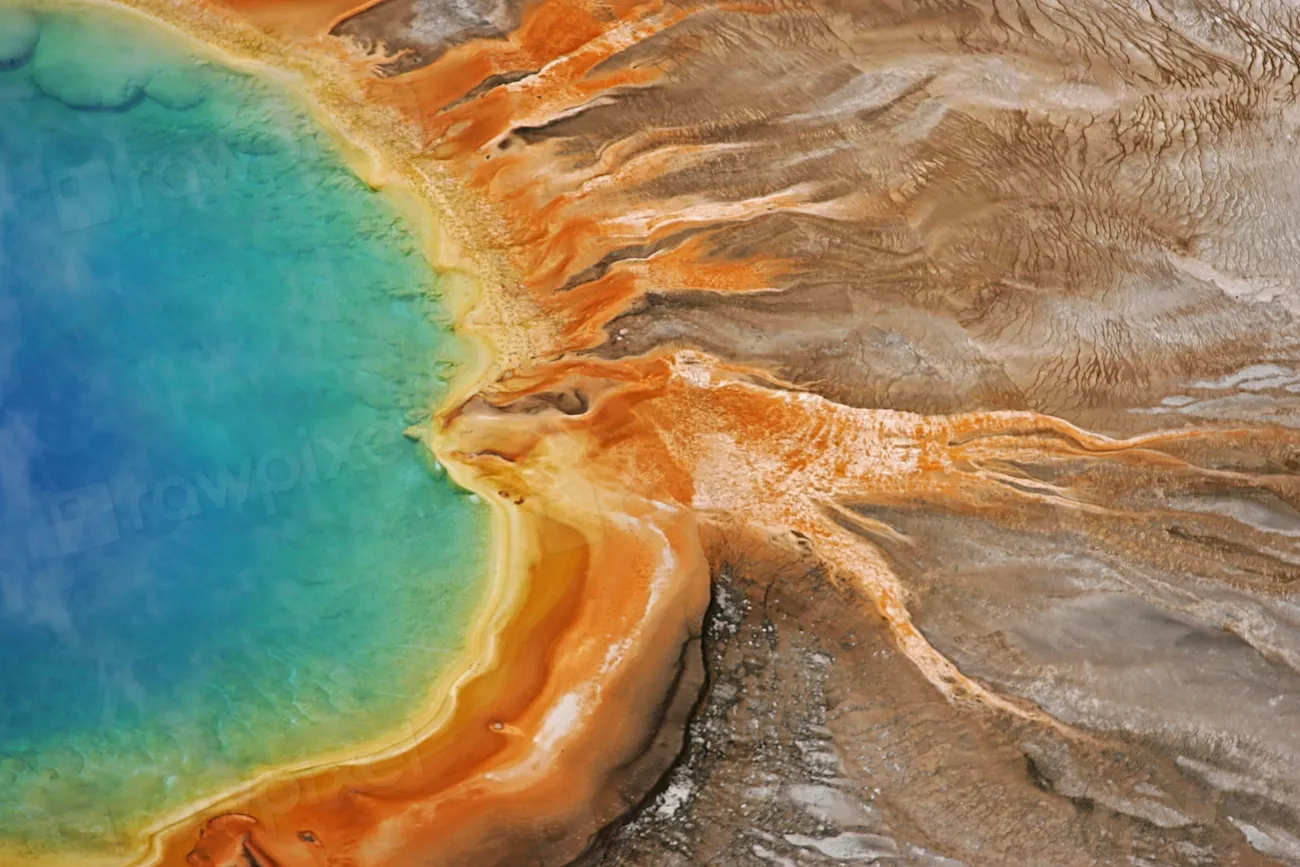
Those glowing bands of blue, yellow, orange, and red are not decorative. They are the direct visual signature of living communities organized by temperature, each one thriving at its precise edge of tolerance. The color is, in the most literal sense, life announcing itself.
Hot springs like the Grand Prismatic are reminders that some of the most visually stunning places on Earth are also among the most scientifically profound. Visiting them with that understanding makes the experience richer. The colors aren’t just beautiful. They mean something.
AI Disclaimer: This article was created with the assistance of AI tools and reviewed by a human editor.