

The Two States That Sit Out the Clock Change

There are two states that don’t observe daylight saving time: Hawaii and Arizona. While the rest of the country adjusts twice a year, residents of both states wake up each morning without ever having to reset a single clock. Both states stay on standard time year-round, meaning residents never “spring forward” or “fall back” with the rest of the country.
The territories of American Samoa, Guam, the Northern Mariana Islands, Puerto Rico, and the Virgin Islands also do not observe daylight saving time. So while Arizona and Hawaii are the only full states that opt out, they’re not entirely alone in keeping a consistent clock throughout the year.
How Daylight Saving Time Became Federal Law
Daylight saving time was first introduced in the United States during World War I in 1918 as a way to conserve energy by extending daylight hours in the evening. During World War II, President Franklin Roosevelt instituted year-round daylight saving time, calling it “War Time” from 1942 to 1945. Once the war ended, the national mandate disappeared again.
Congress passed the Uniform Time Act in 1966 to bring order to the mess. The law established a single national daylight saving time schedule. The current schedule was introduced in 2007 and follows the Energy Policy Act of 2005. That means the version of DST Americans follow today is actually younger than many people assume.
The Opt-Out Clause That Made It All Possible

The Act also gave states a legal way out. Any state could exempt itself from daylight saving time by passing its own legislation. This exemption provision is exactly what Arizona and Hawaii used to permanently opt out.
Today, the system remains widely used across the country, but the Uniform Time Act of 1966 allows states to opt out if they choose. Importantly, though, that opt-out only works in one direction. States cannot permanently switch to year-round daylight saving time on their own. Opting out means staying on standard time, not locking in an extra hour of evening light permanently.
Arizona’s Decision: The Heat Made It Simple
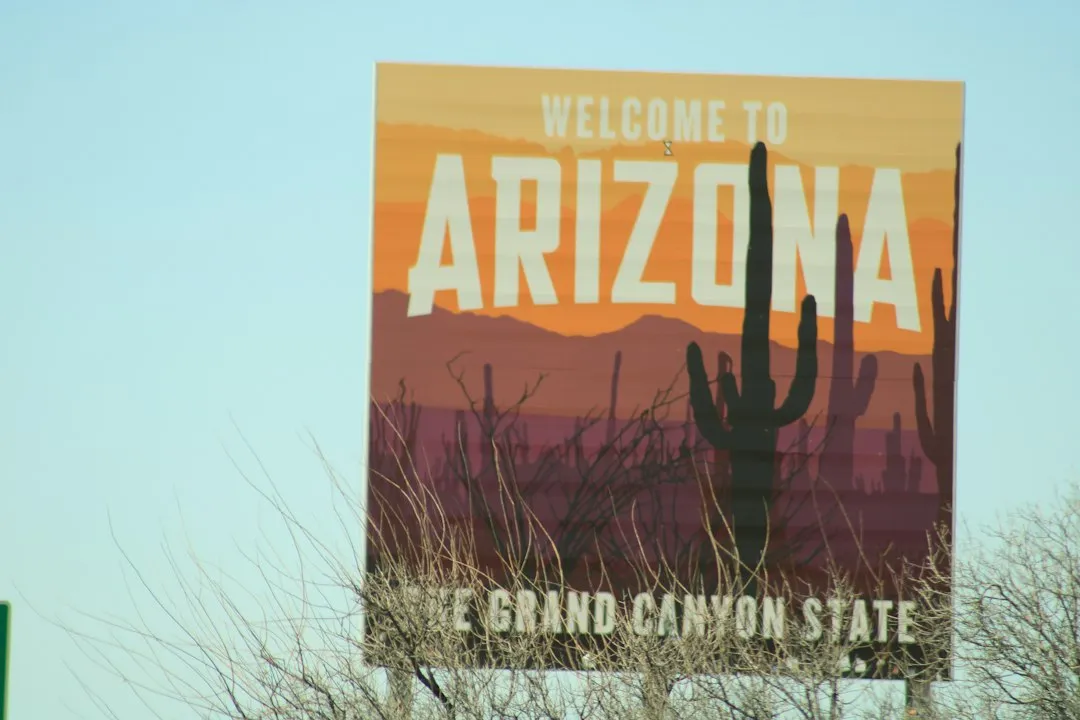
Arizona stopped observing daylight saving time in 1968, mainly because of its desert climate and extremely hot summers. Arizona, including Tucson, went on daylight saving time on April 30, 1967 for the first time since World War II. Daylight saving time was then rejected by the Arizona legislature in 1968.
If the state followed daylight saving time, the extra hour of daylight in the evening would push sunset later into the night. That would keep temperatures high for longer periods and could increase the use of air conditioning, raising energy consumption instead of reducing it. In cities like Phoenix, summer temperatures often remain above 100°F (38°C) even after sunset. By staying on Mountain Standard Time year-round, Arizona avoids extending those hot daylight hours into the evening.
Hawaii’s Reason: Geography Tells the Story

Unlike Arizona, the state of Hawaii has never observed DST since it opted out of the Uniform Time Act in 1967. Hawaii has never really had a need for DST because of its tropical latitude, which means that the variation in daylight in winter and summer is not that great.
Hawaii abandoned daylight saving time in 1967 because, quite simply, it doesn’t gain much from it. As one expert puts it, “Hawaii is at a low enough latitude that the length of the day doesn’t change all that much, so the shift wouldn’t make a big difference.” With only about an hour of variation between summer and winter daylight in Hawaii, there’s little reason to adjust the clocks.
The Navajo Nation: A Fascinating Exception Within Arizona

Not all of Arizona opts out: the Navajo Nation in the northeastern part of the state does observe daylight saving time to stay consistent with nearby Navajo lands in Utah and New Mexico. This creates a genuinely unusual situation where two different time practices exist within the same state’s borders.
There is one notable exception within the state. The Navajo Nation, which stretches across parts of Arizona, Utah, and New Mexico, does observe daylight saving time so the entire tribal nation remains on the same schedule. For travelers driving through northern Arizona, it means the clock can actually change multiple times in a single road trip.
The Public Is Growing Tired of Clock Changes

About 63% of Americans would prefer to get rid of daylight saving time altogether, according to surveys from the American Academy of Sleep Medicine. That’s a significant majority, and it reflects a conversation that has been building for years across the country.
Daylight saving time is a hot topic, and several more states would also like to switch up the long-standing protocol that allows for people to make use of more daylight hours in the spring and summer. Two states, Massachusetts and Maine, commissioned studies on the daylight saving topic, according to the NCSL. The debate is no longer just about Arizona and Hawaii. It’s becoming a national conversation.
States Already Preparing to Change Course

Congress holds exclusive authority to change the DST schedule. States cannot unilaterally adopt permanent time changes without federal authorization, though 19 states have already enacted conditional legislation that would implement permanent DST if Congress authorizes it. These states are Alabama, Colorado, Delaware, Florida, Georgia, Idaho, Louisiana, Maine, Minnesota, Mississippi, Montana, Oklahoma, Oregon, South Carolina, Tennessee, Texas, Utah, Washington, and Wyoming.
That’s nearly two-fifths of all US states already poised to lock the clock, waiting only for Washington to act. The political momentum is real, even if the legislative process remains slow.
The Sunshine Protection Act: Where Things Stand in 2026

The House passed with broad bipartisan support legislation that would make daylight saving time permanent nationwide. The lower chamber voted 308-117 for the Sunshine Protection Act of 2025, which would make daylight saving time the permanent standard time. President Trump also expressed support for the Sunshine Protection Act of 2025.
As of the latest update, the Sunshine Protection Act of 2025 has passed the House but remains pending in the Senate. The House approved the measure 308-117 on July 14, 2026, and it was referred to the Senate Commerce, Science, and Transportation Committee the following day. Several competing proposals remain in circulation, including the Daylight Act of 2026, which would repeal DST and advance standard time by 30 minutes, and the Sunshine for Our Kids Act of 2026, which would implement year-round standard time instead.
What a Federal Change Would Mean for Arizona and Hawaii

The Sunshine Protection Act would not mandate that states and territories that currently observe permanent standard time, such as most of Arizona, Hawaii, and several territories, switch to permanent daylight saving time. However, it would repeal the section of law that currently provides for state-level self-exemption. That’s a consequential detail buried in the legislation that gets far less attention than it deserves.
In July 2026, the House passed the measure 308-117, sending it to the Senate for consideration. The bill would mean Americans would remain on Daylight Saving Time year-round rather than returning to standard time each winter. However, it has not become law, and Senate approval is still required. For now, Arizona and Hawaii residents can keep their clocks exactly where they are.
The Practical Reality of Living Without the Clock Change

For residents of Arizona and Hawaii, the absence of DST isn’t some philosophical stance. It’s just the texture of ordinary life. Schedules stay predictable, and there are no bleary-eyed Monday mornings in March spent wondering if a meeting is now an hour off.
The trade-off, particularly in Arizona, is that the state does shift in and out of alignment with the rest of the country depending on the time of year. Arizona’s hot climate means people prefer to avoid extended daylight hours in the evening, while Hawaii’s consistent sunrise and sunset times make time changes irrelevant. Both realities are deeply local, shaped by geography and climate rather than any abstract preference.
A Quiet Argument for Rethinking the Whole System
The fact that Arizona and Hawaii have operated for decades without DST and functioned perfectly well raises a fair question: what exactly are the other 48 states getting out of the twice-yearly change? Experts say “falling back” can disrupt health, and the public’s appetite for reform has clearly reached a tipping point given the breadth of congressional activity in 2025 and 2026.
What Arizona and Hawaii figured out more than fifty years ago, the rest of the country is only now beginning to seriously debate. Whether the Senate acts on the House-passed bill or the issue stalls again, the two holdout states offer a living proof of concept that a consistent clock is entirely workable. The question now is whether the rest of America is ready to follow.
AI Disclaimer: This article was created with the assistance of AI tools and reviewed by a human editor.