

Earth’s Orbit Is Not a Perfect Circle
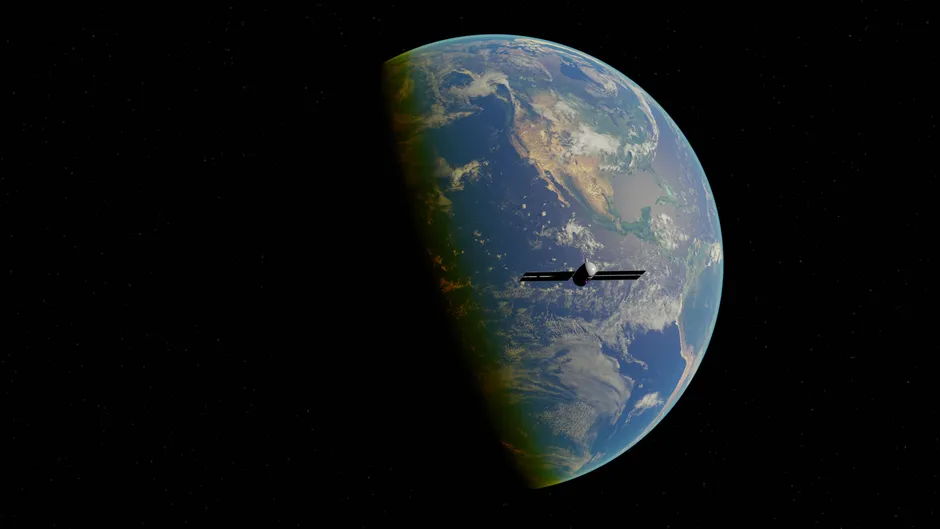
The starting point for this whole story is geometry. Earth makes a complete revolution around the sun once every 365 days, following an orbit that is elliptical in shape. That ellipse is subtle but consequential. It is so very nearly circular that the seasons have essentially nothing to do with the distance between the Sun and Earth, yet the Sun-Earth distance still varies by about 3.4% over the year.
Earth’s orbit is like a circle someone sat down on. This mild flattening means that at certain points in the year, Earth is noticeably closer to the Sun, and at other points, noticeably farther away. The distance between Earth and Sun averages 93 million miles, but during the first week in January, Earth is about 1.6 million miles closer to the sun, while in the first week in July, it is about 1.6 million miles farther away.
Perihelion and Aphelion: The Two Extremes

The point of closest approach to the Sun is called perihelion, and the point when Earth is farthest from the Sun is called aphelion. The terms originate from ancient Greek: “peri” means “close,” “apo” means “far,” and “helios” means “Sun.”
In modern times, Earth’s perihelion occurs around January 3, and aphelion around July 4. For reference, in 2026, perihelion falls on January 4, with Earth at a distance of approximately 147,100,564 km from the Sun, while aphelion on July 3 places Earth about 152,101,837 km away. That gap of roughly five million kilometers is what sets the seasonal clock ticking unevenly.
Why Distance from the Sun Does Not Cause the Seasons

Earth’s axial tilt is the dominant driver of seasons, not Earth’s distance from the sun. As Earth orbits the sun, its tilted axis causes each hemisphere to alternately lean toward or away from the sun. When a hemisphere tilts toward the sun, days grow longer, and sunlight strikes the surface more directly. When it tilts away, days shorten, and sunlight arrives at a shallow angle.
This point genuinely surprises many people. Earth is closest to the sun every year in early January, when it is winter for the Northern Hemisphere, and farthest away in early July, during Northern Hemisphere summer. So proximity to the Sun and warmth, at least for the Northern Hemisphere, run in opposite directions. Earth’s seasons are determined by its axial tilt, not its distance from the Sun.
Kepler’s Second Law: The Law That Explains Everything
Kepler’s Second Law states that the imaginary line joining a planet and the Sun sweeps equal areas of space during equal time intervals as the planet orbits. Planets do not move with constant speed along their orbits; rather, their speed varies so that the line joining the centers of the Sun and the planet sweeps out equal parts of an area in equal times.
By Kepler’s Second Law, a planet is moving fastest when it is at perihelion and slowest at aphelion. In plain terms: when Earth is closer to the Sun in January, it moves faster through space. When it is farther away in July, it slows down. The orbital velocity varies from a maximum of 30.29 km/s at perihelion to a minimum of 29.29 km/s at aphelion. That one kilometer-per-second difference is the engine behind the unequal seasons.
The Actual Numbers: How Long Each Season Lasts

The elliptical shape of Earth’s orbit around the sun causes the lengths of the astronomical seasons to vary between 89 and 93 days. Those four days make a surprisingly clear difference when you look at the specific figures. Earth moves more rapidly in early January, when it is closer to the Sun, which means we spend less time in winter, about 88 days, 23 hours, and 37 minutes, currently.
In contrast, the Earth is farther from the Sun and moves more slowly in early July, making northern summer the longest of the seasons at about 93 days, 15 hours, and 50 minutes. In the Northern Hemisphere, the summer season from the June solstice to the September equinox lasts nearly five days longer than the winter season. Winter is the shortest season in the Northern Hemisphere, lasting about 89 days due to faster orbital speed near perihelion.
A Counterintuitive Consequence: Earth Is Warmer When It’s Farther Away

Earth is nearest the Sun in January and farthest in July, so the Northern Hemisphere is coldest when Earth is nearest and warmest when it is farthest. This seems to defy common sense, and yet it is one of the cleanest demonstrations of just how powerful axial tilt really is. The average temperature of the whole Earth at aphelion is about 4°F or 2.3°C higher than it is at perihelion.
The changing Earth-Sun distance results in an increase of about 7% in total solar energy reaching the Earth at perihelion relative to aphelion. Since perihelion happens in January, that extra energy primarily affects the Southern Hemisphere, which is tilted toward the sun at the time. While that means Southern Hemisphere summers are slightly more intense than Northern Hemisphere summers, the impact on temperature remains modest.
The Flip Side: What This Means for the Southern Hemisphere

During perihelion, when Earth is closest to the Sun, the Northern Hemisphere experiences winter while the Southern Hemisphere is in summer. Conversely, during aphelion, the Northern Hemisphere is in summer while the Southern Hemisphere experiences winter. This means the orbital asymmetry affects the two hemispheres in opposite ways.
During Southern Hemisphere summer, Earth is at perihelion and moves more quickly in its orbit, leading to a shorter summer and longer winter. This holds true for the corresponding seasons in the Southern Hemisphere as well, so the Southern Hemisphere winter is nearly five days longer than the Southern Hemisphere summer. Due to these orbital dynamics, the Northern Hemisphere summer is approximately four days longer than the Southern Hemisphere summer.
The Year-to-Year Variation in Summer’s Length

The length of any given summer is not perfectly fixed. One of the consequences of aphelion is that summer lasts longer in the Northern Hemisphere, and will get longer still over the coming centuries. Yet even within that long trend, small year-to-year differences exist. For a variety of complex reasons, the Northern Hemisphere summer in 2025 was about 15 minutes shorter than in 2024.
The calendar is a human invention, and it doesn’t perfectly match Earth’s orbit, meaning the exact start and end dates of astronomical seasons can shift by a day or two each year. Solstices and equinoxes are caused by Earth’s tilt and are not connected to Earth’s distance from the Sun. The two systems, orbital distance and axial tilt, each play their own role, and they overlap in ways that keep the precise numbers shifting slightly from one year to the next.
The Slow Drift of Perihelion Over Millennia
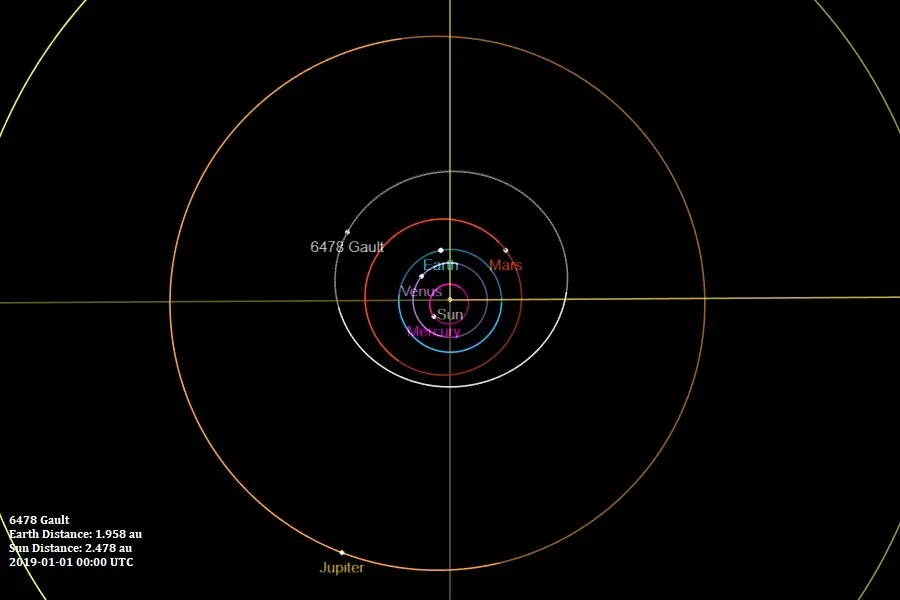
The current arrangement, with perihelion falling in early January, is not permanent. Due to apsidal precession, these dates shift by about one day every 58 years. Around the year 1246, perihelion occurred on the December solstice, and in about 10,000 years, it will coincide with the March equinox.
Earth’s polar axis, and hence the solstices and equinoxes, precess with a period of about 26,000 years in relation to the fixed stars. As perihelion drifts, the seasonal imbalance will gradually shift too. The phenomenon of the precession of the equinoxes and the long-term variations in the shape of Earth’s orbit mean that seasonal durations change gradually over centuries and millennia. The northern summer is currently the longest of the seasons, and its duration will continue to lengthen until the 37th century, at which point it will reach close to 94 days.
What Kepler’s Law Means for Our Understanding of Climate

The interaction between the anomalistic and tropical cycle is important in the long-term climate variations on Earth, known as the Milankovitch cycles. These cycles describe how subtle shifts in Earth’s orbit and axial orientation accumulate over thousands of years to influence ice ages and warm periods. The precession of Earth’s axis can affect the severity of the seasons in each hemisphere.
From Kepler’s second law, Earth’s orbital velocity is greatest at perihelion and least at aphelion. This means that one hemisphere can experience more intense summer insolation if it occurs during perihelion, but that summer will also be shorter. The trade-off between intensity and duration turns out to be one of the key levers driving Earth’s long climate cycles, connecting a simple orbital rule to the history of glaciers and ecosystems across geological time.
The Quiet Elegance of an Unequal Year
There is something quietly satisfying about this. The seasons we mark with solstices and equinoxes, with festivals and weather shifts, are not equal parcels of time. They are shaped by the same physics that governs every planet in the solar system, from the way a skater spins faster when pulling their arms inward to the long march of ice ages. Kepler’s second law states that a body in orbit traces equal areas over equal times, so orbital velocity is highest around perihelion and lowest around aphelion, meaning Earth spends less time near perihelion and more time near aphelion, and the lengths of the seasons vary as a result.
For those of us living in the Northern Hemisphere, this means summer genuinely is a little more generous than winter, not because of mood or memory, but because the universe is doing the math. The next time a long July evening stretches out past nine o’clock, it’s worth knowing that Earth itself is moving a little more slowly than usual, and that slowness is a gift written into the geometry of the orbit.
AI Disclaimer: This article was created with the assistance of AI tools and reviewed by a human editor.