

Built from Iron, Not Steel
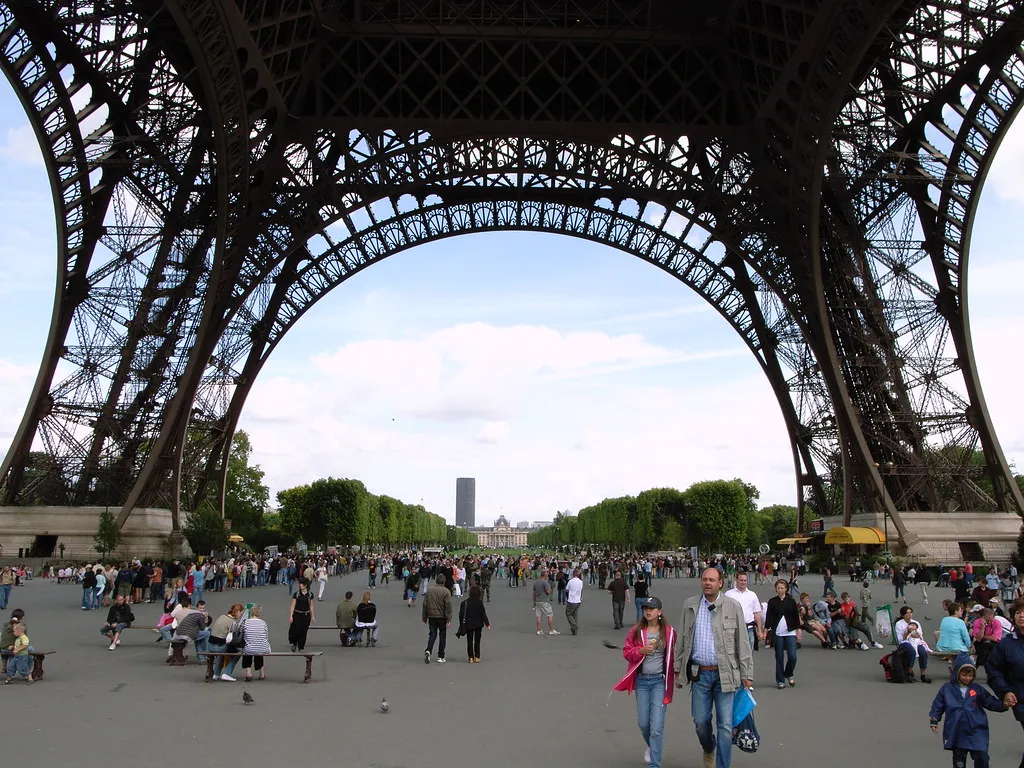
The Eiffel Tower was erected at the 1889 World’s Fair to commemorate the centenary of the French Revolution. Gustave Eiffel chose puddled iron for its construction, a material he knew well and had used in previous projects with good results.
The tower was built using approximately 7,300 tonnes of puddled iron, assembled from 18,038 individual pieces connected by 2.5 million rivets. This was a deliberate and considered choice.
In the 1880s, Bessemer and open-hearth steel existed, but its quality was still variable. Wrought iron was a known, homogeneous, ductile material that Eiffel’s firm had mastered in a decade of railway bridges. Reliability mattered far more than novelty at that height.
What Thermal Expansion Actually Is
Like all metals, iron exhibits a property known as thermal expansion, meaning it expands when heated and contracts when cooled. This behavior is due to the structure of metals: as the temperature rises, the atoms vibrate more and occupy more space, leading to an expansion of the metal.
The seasonal variation in the height of the Eiffel Tower illustrates the physical law of linear thermal expansion, a fundamental thermodynamic phenomenon observed across metallic solid structures.
The amount of expansion depends on the material’s coefficient of thermal expansion, a material-specific constant that describes how much the material expands per degree of temperature increase per unit of length. For iron, this coefficient of linear thermal expansion is approximately 12 × 10⁻⁶ per degree Celsius.
How Much Taller Does It Actually Get?
Specialists have estimated that the Eiffel Tower actually grows between 12 and 15 centimeters when comparing its size on cold winter days with the hottest days of summer. That’s a meaningful, measurable shift in a structure that people assume is completely fixed.
The official published figure from the organization managing the Eiffel Tower is approximately 15 centimeters of summer growth.
To put that in perspective, consider the math. For every degree Celsius of temperature increase, a one-meter length of iron grows by 0.000012 meters, or 12 micrometers. The coefficient of thermal expansion for iron is about 12 parts per million per degree Celsius. Multiply that by the tower’s 324-meter height and a 30-degree temperature swing, and you get roughly 15 centimeters of vertical growth.
Paris Temperatures Make It Possible
Paris has recorded winter lows below minus 20 degrees Celsius and summer highs near 40 degrees Celsius, a spread of roughly 100 degrees Celsius. That’s an extraordinary temperature range for a single structure to experience across a calendar year.
If we estimate how much a simple 100-meter-long metal bar expands when the temperature fluctuates by 100 degrees Celsius, and a one-meter bar expands by 0.000012 meters when the temperature rises by one degree, a 100-meter bar expands by 0.12 meters when the temperature rises by 100 degrees. That is 36 centimeters. The actual tower grows less than this theoretical maximum, because its lattice design distributes the thermal response rather than channeling it purely upward.
The Tower Also Tilts
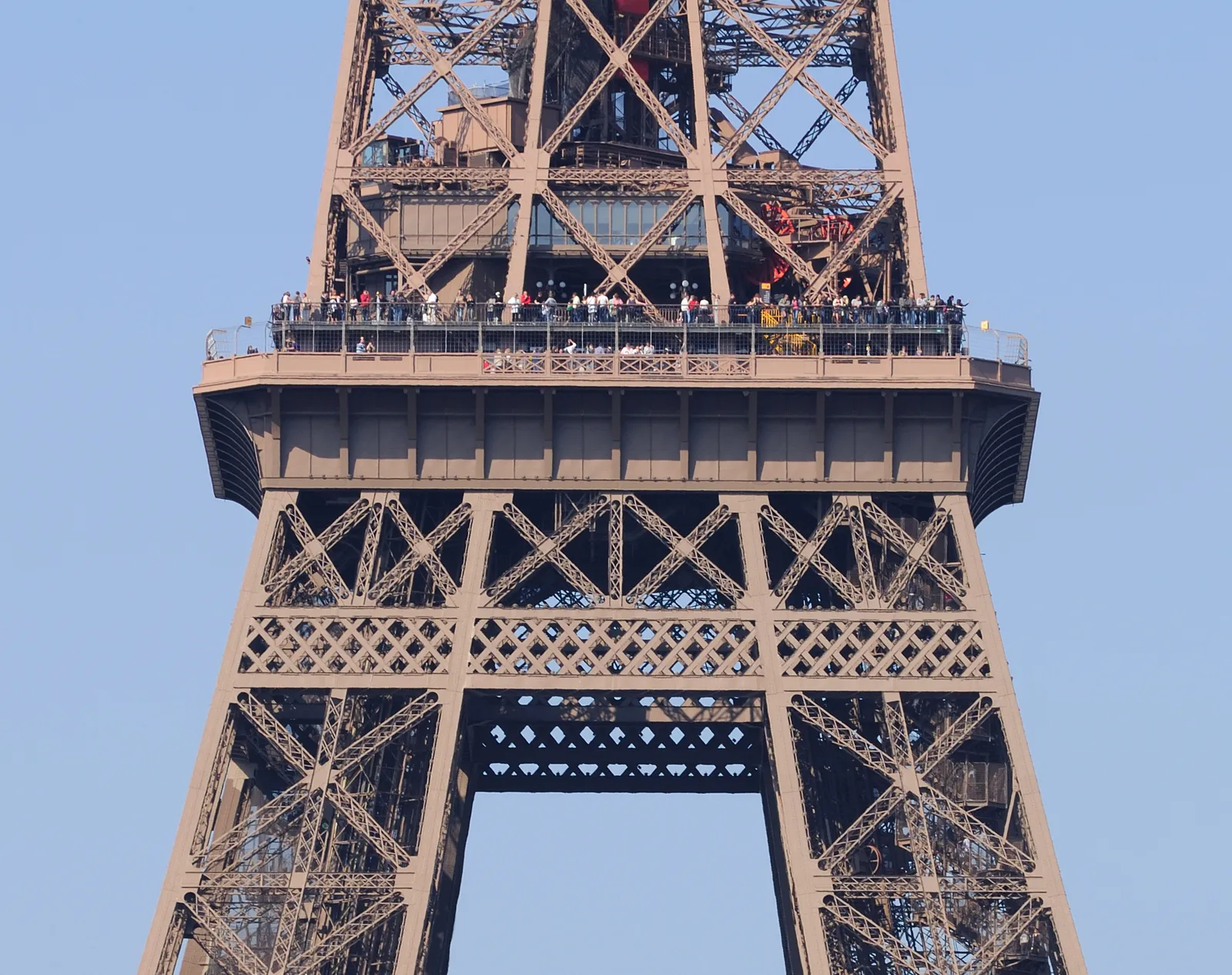
Thermal expansion also causes the tower to tilt slightly away from the sun. This is because sunlight heats one face of the structure more intensely than the shaded side, creating uneven expansion across the iron latticework.
When summer sun beats down on the iron lattice, thermal expansion causes the entire structure to grow measurably taller, leaning slightly away from the sun as the heated side expands more than the shaded side.
The magnitude of this tilt is small, on the order of a few centimeters, but it is detectable with precision instruments and represents a reminder that thermal expansion is a three-dimensional phenomenon that creates stresses and deformations throughout a structure, not just uniform changes in overall height.
Gustave Eiffel Designed for This from the Start
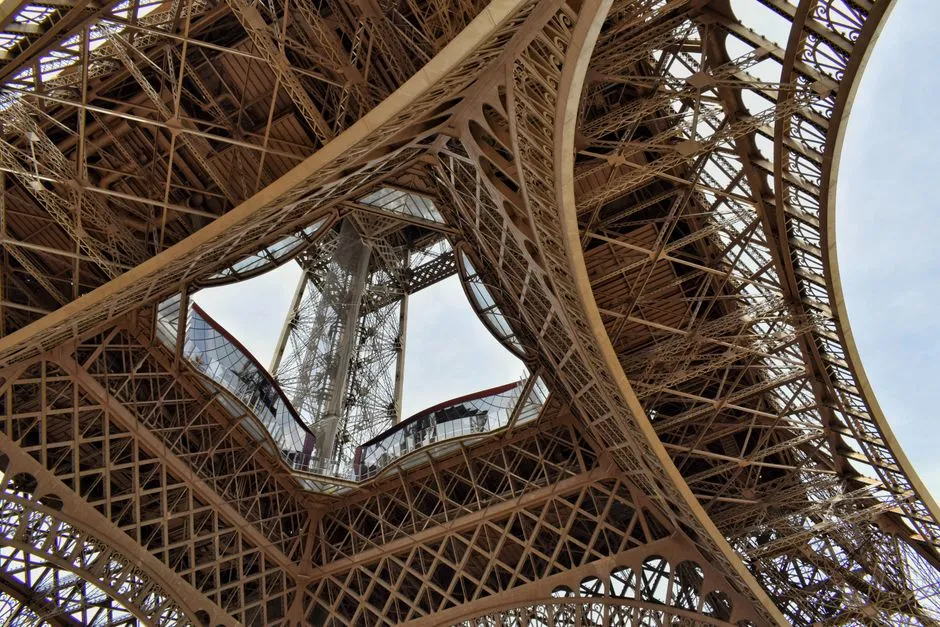
It would be easy to assume this seasonal stretching is an unexpected consequence of such a tall metal structure. It was not. Gustave Eiffel and structural engineers Maurice Koechlin and Emile Nouguier deliberately accommodated these thermal fluctuations within the tower’s open lattice girder configuration.
Comprising over 18,000 iron components joined by 2.5 million rivets, the open-work geometric design permits distributed thermal breathing without generating destructive internal mechanical stress or structural buckling.
Gustave Eiffel’s team tested metal samples at various temperatures, documenting expansion rates that informed their blueprints. Modern researchers at the Ecole des Ponts ParisTech recently revisited those original notes, confirming that Eiffel’s allowance for up to 20 centimeters of movement across the entire structure was both prudent and accurate.
It Contracts Just as Reliably in Winter
This thermal expansion is fully reversible. The tower contracts back to its original height when temperatures cool. Nothing is permanently altered. The process simply repeats with the seasons.
While summer heat can add up to 15 centimeters to the tower’s height, winter cold produces the opposite effect. This means the tower’s height varies by as much as 30 centimeters between extreme temperatures, nearly a foot of total variation.
Measurement markers and surveying equipment must account for this when establishing the official height, typically using average temperatures as the standard. The official figure of 330 meters is therefore a kind of snapshot, not an absolute constant.
Maintenance Teams Take the Movement Seriously
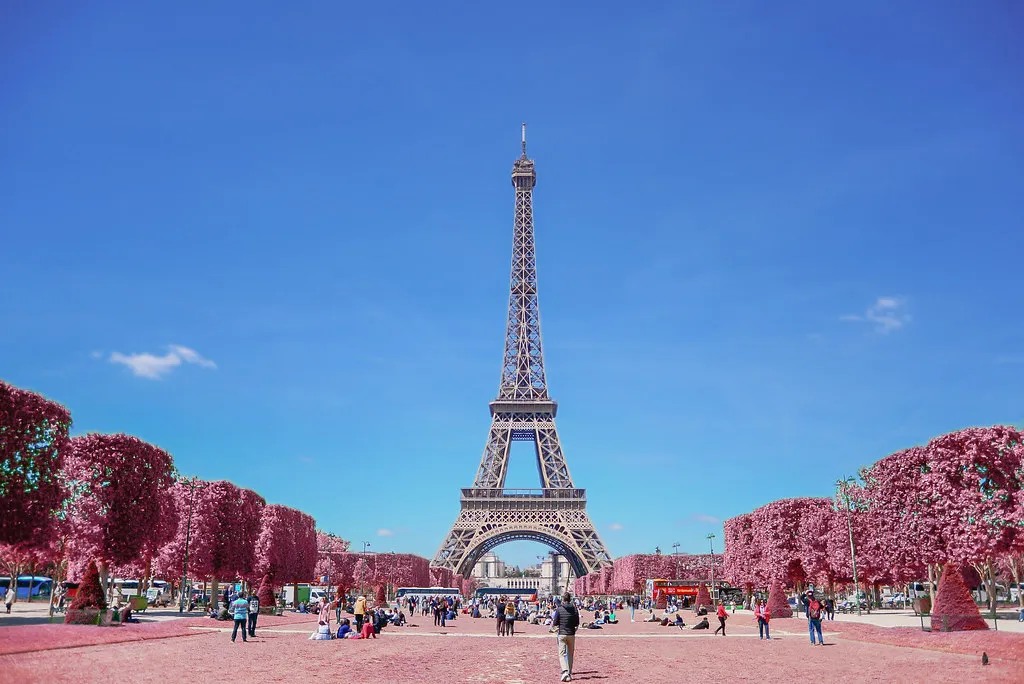
For the teams responsible for maintaining the structure, thermal movement matters. Expansion joints, bolt tolerances, and paint adhesion all depend on accounting for the fact that the tower is a slightly different shape in August than it is in January.
Modern sensors continuously track the tower’s movements, providing valuable data about structural behavior under thermal stress. This kind of monitoring goes well beyond routine inspection.
In addition to being a landmark, a communications tower, and a symbol of Paris itself, the Eiffel Tower is also, in effect, a giant thermometer. The analogy is more literal than it first sounds.
Wind Adds Another Layer of Movement
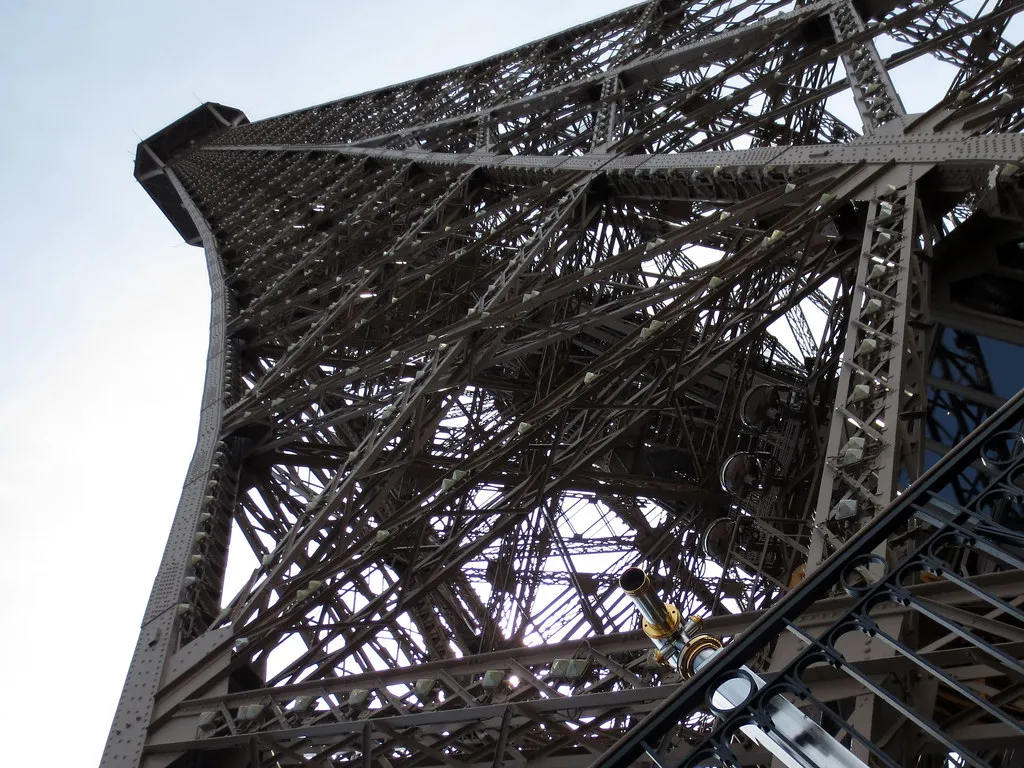
Temperature is not the only force shifting the tower’s position. Alongside thermal expansion, wind loads deflect the top of the tower by up to nine centimeters during severe atmospheric storms.
Combined with thermal expansion, the tower’s top can be in significantly different positions depending on weather conditions, several inches taller and several inches to the side on a hot, windy summer afternoon.
The ferrous material can withstand high levels of stress, which allowed for the construction of a large, very light tower that would be safe from horizontal wind forces. Unlike bridges, which behave in a more complex manner, the Eiffel Tower experiences mainly vertical growth and shrinkage due to changes in temperature.
The Same Physics Governs Bridges and Railways
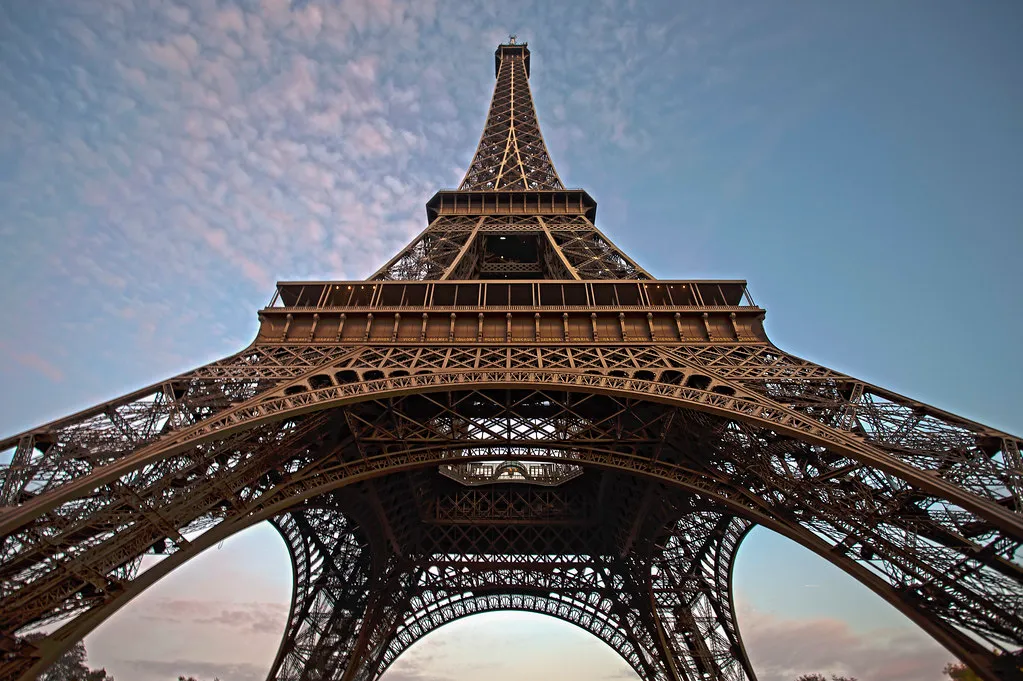
Thermal expansion is a routine consideration in engineering. The same equations govern Eiffel’s Garabit Viaduct, the Scottish Forth Bridge, and even ordinary railway tracks, but the Eiffel Tower offers the most visible demonstration.
The Eiffel Tower is one of the most precisely measured and studied structures in the world. That makes it unusually well-suited as a physical case study that continues to be referenced in engineering education worldwide.
This interesting phenomenon isn’t unique to the Eiffel Tower, but its height and careful monitoring make it one of the best-documented examples. Few structures in the world have been watched this closely, for this long, in so much detail.
A Living Structure in Plain Sight
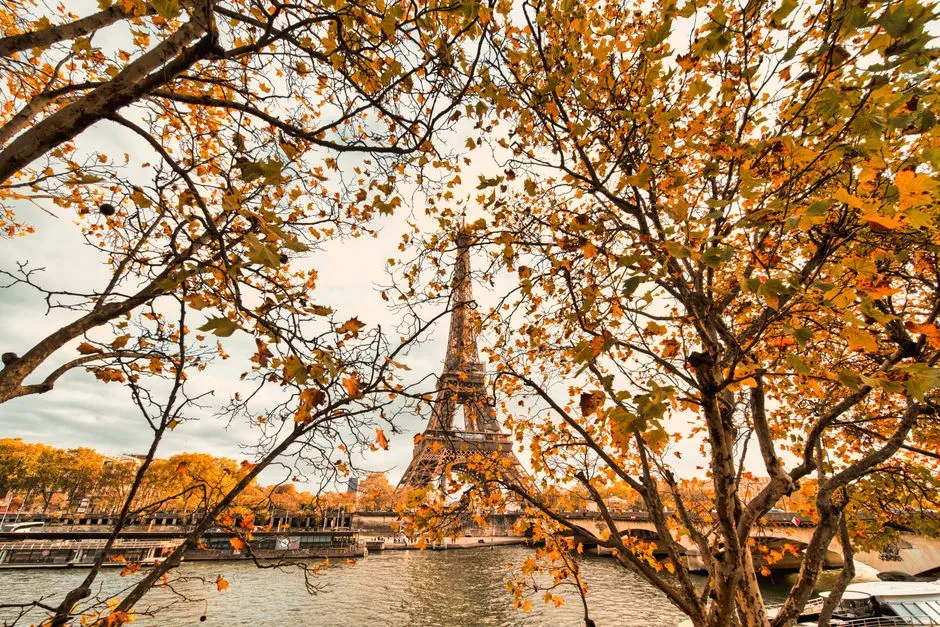
There is something quietly wonderful about the fact that one of the most photographed structures on earth is never quite the same height in any two seasons. It doesn’t announce this. Visitors standing at its base in July have no idea they’re looking at a tower that is measurably taller than it was in January.
Each summer, the iconic outline seen on postcards is a little taller and a touch more tilted than in winter, a living reminder that even seemingly rigid monuments are quietly responsive to the temperature of the world that surrounds them.
The Eiffel Tower was designed to endure, and part of what makes it so enduring is that it was never designed to be rigid in the brittle sense. It was designed to breathe. That flexibility, baked in from the very first blueprint, is exactly what has allowed it to stand for well over a century without distress. Physics and foresight, working together in iron.
AI Disclaimer: This article was created with the assistance of AI tools and reviewed by a human editor.