
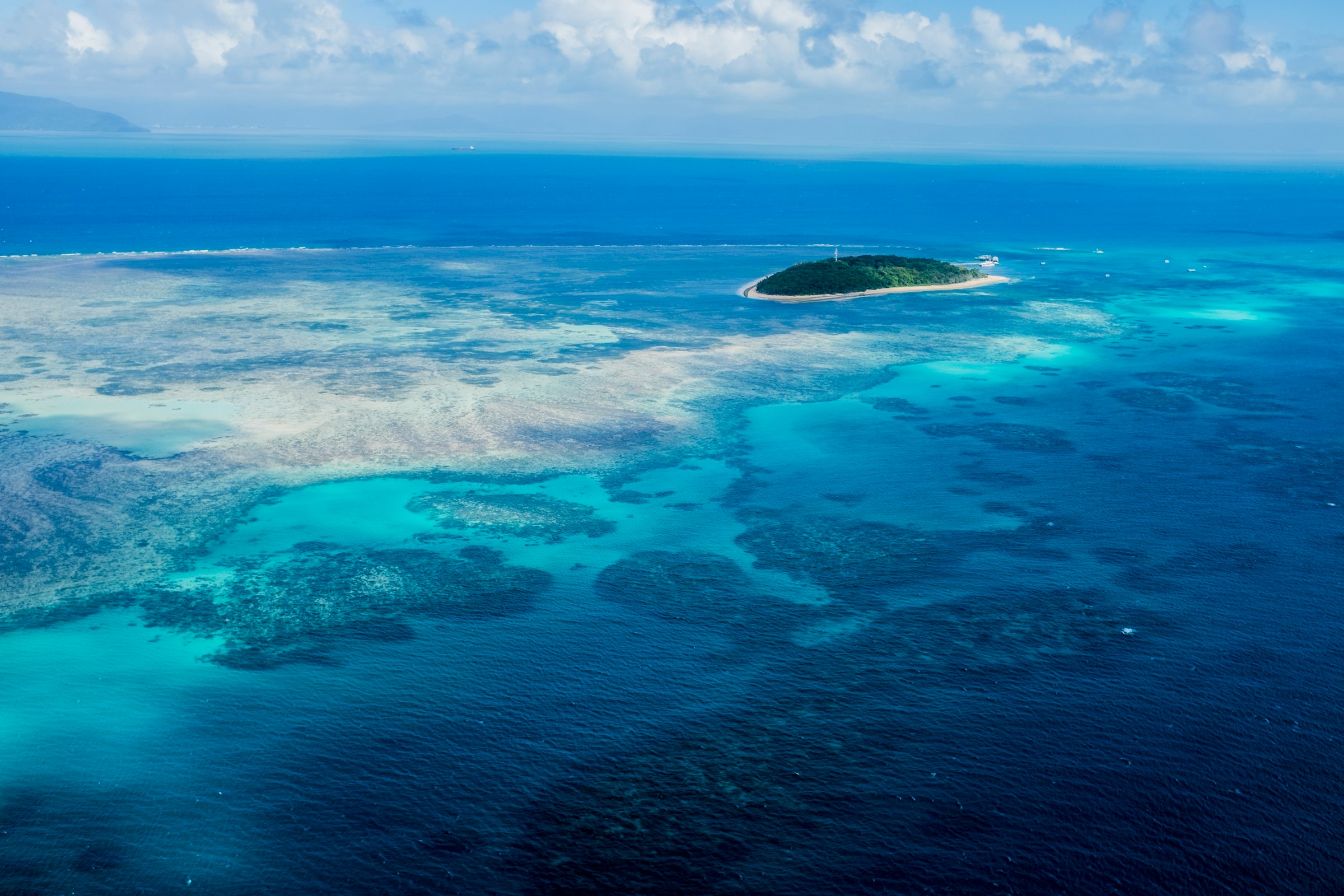

A Structure Unlike Anything Else on Earth
The Great Barrier Reef is the largest living structure on the planet, so big it’s visible from space. That distinction is not shared with any mountain range, forest, or desert. It is the only feature on Earth that is both biological in origin and large enough to be seen from orbit.
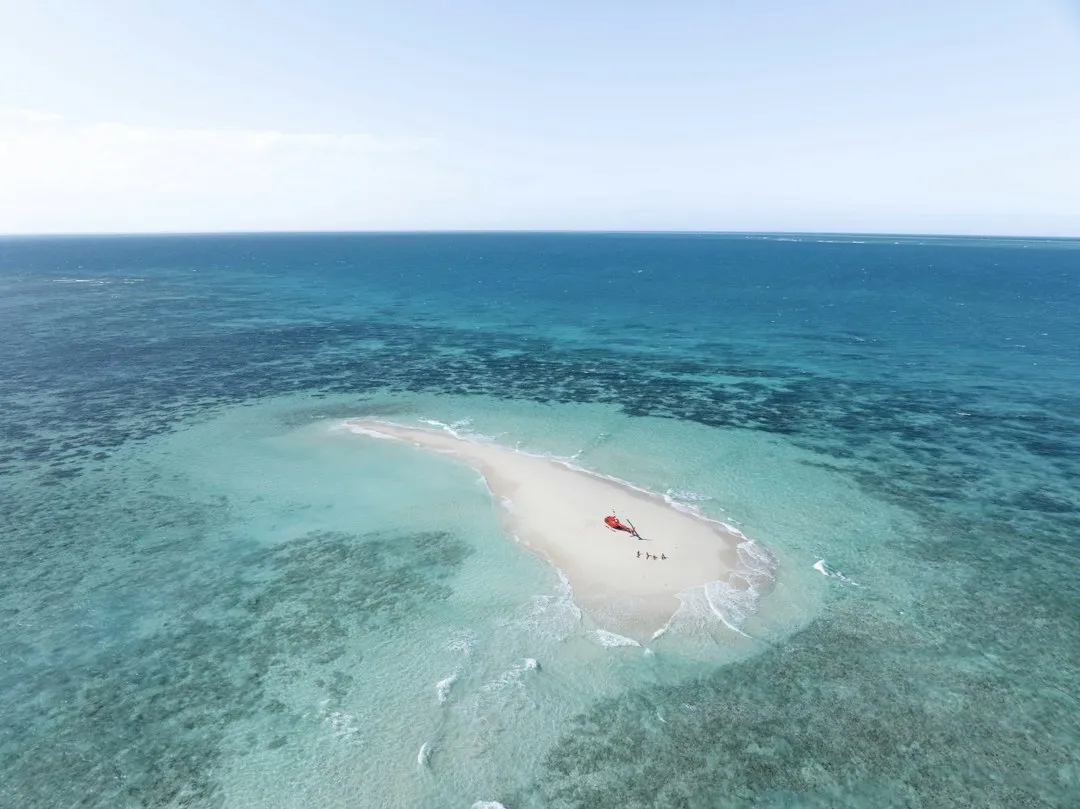
It is the largest living organism on Earth and the only living thing the naked eye can see from space. Despite its name, the Great Barrier Reef is not a single reef, but an interlinked system of about 3,000 reefs and 900 coral islands, divided by narrow passages.
It is one of a few living structures visible from space, appearing as a complex string of reefal structures along Australia’s northeast coast. That continuous linear form along the Queensland coastline is what makes it so visually legible from above.
The Staggering Scale Behind the Visibility
The Great Barrier Reef extends for nearly 2,300 kilometers and covers an area of more than 344,000 square kilometers, approximately the size of Italy. To cover that distance by car would take longer than driving the length of the entire eastern seaboard of the United States.
The reef ranges between 60 and 250 kilometres in width and stretches over 2,300 kilometres from the northern tip of Queensland to just north of Bundaberg.
The Great Barrier Reef is greater in size than the United Kingdom, Holland and Switzerland combined. It is approximately the same area as Italy, Germany, Malaysia or Japan. Scale comparisons like these help explain why it registers from orbit in a way that most natural features simply cannot.
What Astronauts Actually See From the ISS
The reef is so large that it can be seen from space, both in satellite imagery and in photographs that astronauts have taken from the International Space Station. This is not theoretical. It is a regularly documented visual observation.
A structure so massive that astronauts can spot it from the International Space Station, 250 miles above Earth. At that altitude, most rivers, roads, and cities disappear entirely. The reef does not.
Astronauts of many nations have used their time on the ISS to capture fantastic shots of our planet from space, including of the Great Barrier Reef. The Great Barrier Reef has been captured by astronauts including Kjell Lindgren from the International Space Station. These images are archived and publicly available through space agencies around the world.
The Color Contrast That Makes It Stand Out
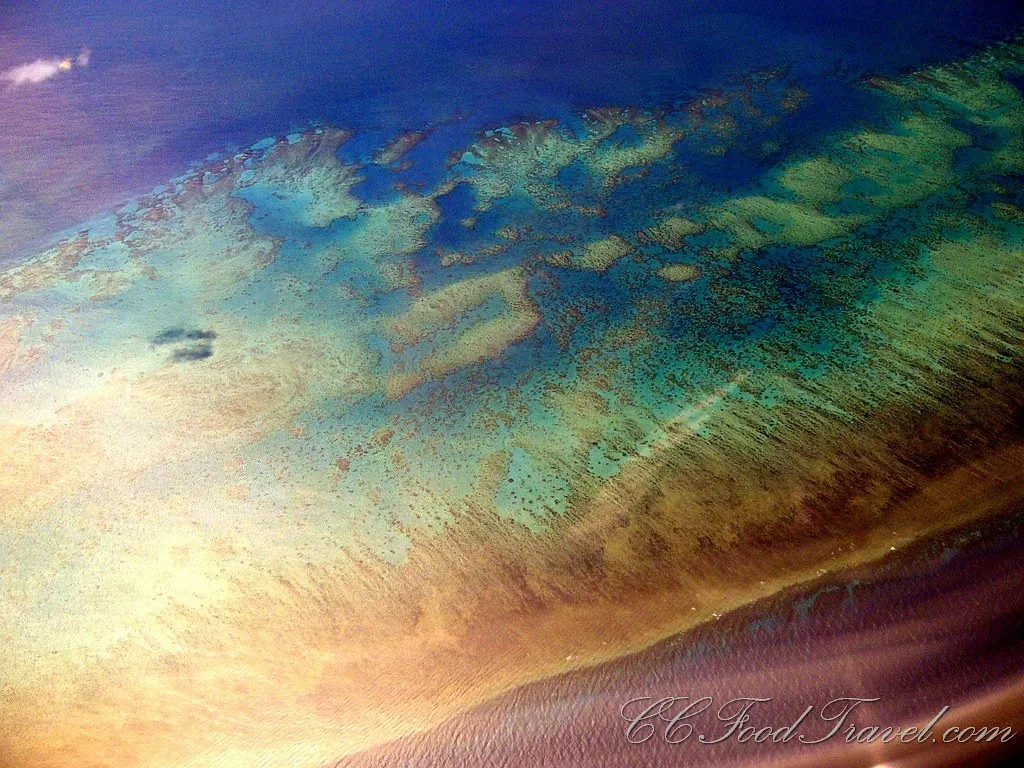
The reef is not just large. It is visually striking in a way that makes it legible from extreme distances. The blue hues of the coral contrast with the dark waters of the Coral Sea. That contrast is essentially what the eye, or a camera, locks onto from orbit.
The Copernicus Sentinel-2 image shows part of one of the world’s natural wonders: the Great Barrier Reef in the Coral Sea off the east coast of Queensland, Australia. In those satellite images, the reef appears as a pale turquoise ribbon laid against deep cobalt blue ocean, a color palette dramatic enough to be unmistakable.
The shallow water over the reef platform amplifies this effect. Sunlight penetrates the clear, relatively shallow water and reflects off the light-colored carbonate substrate beneath the coral, producing that bright turquoise tone that satellites and human eyes alike can detect from above.
The Science of Seeing It: Satellites and Remote Sensing
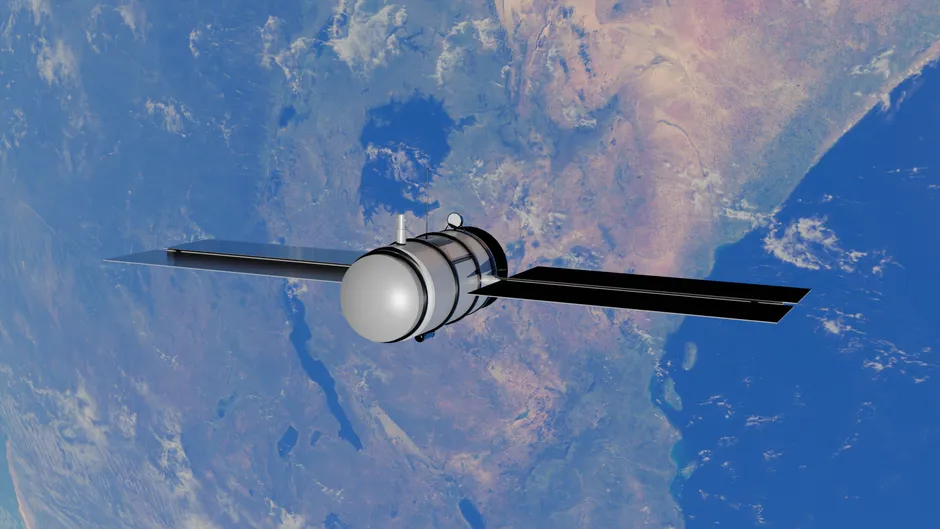
While coral reefs are difficult to map from survey vessels or aircraft because of their remote and shallow location, from their vantage point in space, Earth-observing satellites such as Copernicus Sentinel-2 offer the means to monitor the health of reefs across the globe.
The ESA’s Sentinel-2 multi-temporal imagery enables monitoring of coral bleaching events in the Great Barrier Reef in Australia. The strong optical signals reflected by bleached corals can be seen by satellite remote sensing of ocean color and have been used to investigate major bleaching events across the globe.
NASA’s Visible Infrared Imaging Radiometer Suite (VIIRS) instrument aboard the joint NASA/NOAA Suomi National Polar-orbiting Partnership satellite has also captured imagery of the Great Barrier Reef off the coast of Queensland, Australia. Multiple independent satellite programs have documented the reef from orbit, confirming its visibility across different imaging technologies.
The Biological Architecture That Built It
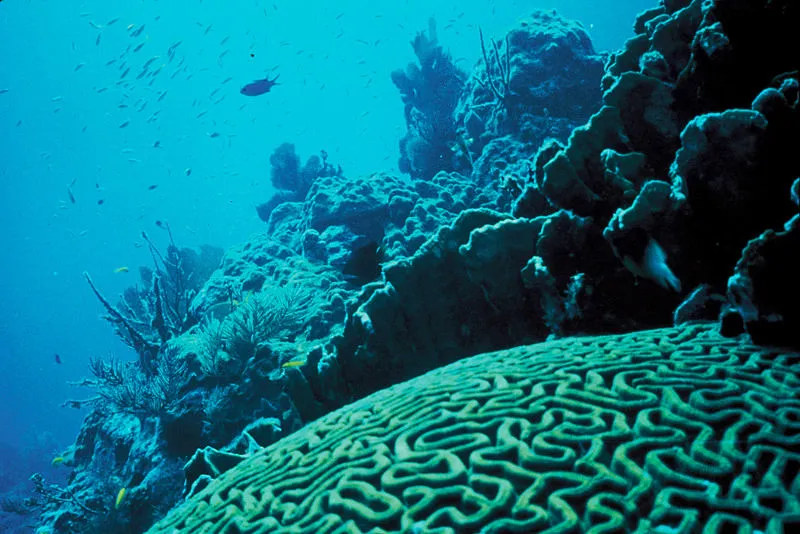
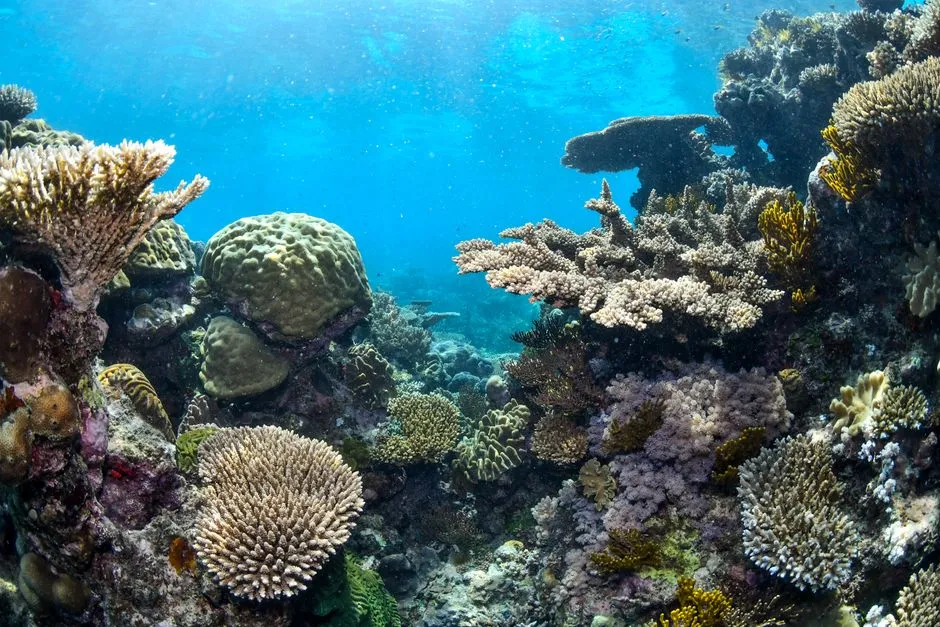
The reef is built by billions of tiny organisms known as coral polyps. These organisms are individually microscopic in significance, yet collectively they have produced the largest biological structure ever to exist on Earth.
The reef is estimated to be 500,000 years old, but it began taking shape as we know it today around 8,000 years ago. Reef systems have existed in the region for over 20 million years. What astronauts see from orbit today is therefore the product of an almost incomprehensibly long biological process.
A coral reef can grow in diameter from 1 to 2 centimeters per year. Considering that growth rate, the scale of what now exists off the Queensland coast represents millions of generations of coral polyps building, dying, and being built upon. That accumulated limestone framework is what gives the reef its breadth and its brightness from above.
The Biodiversity Packed Into That Visible Footprint
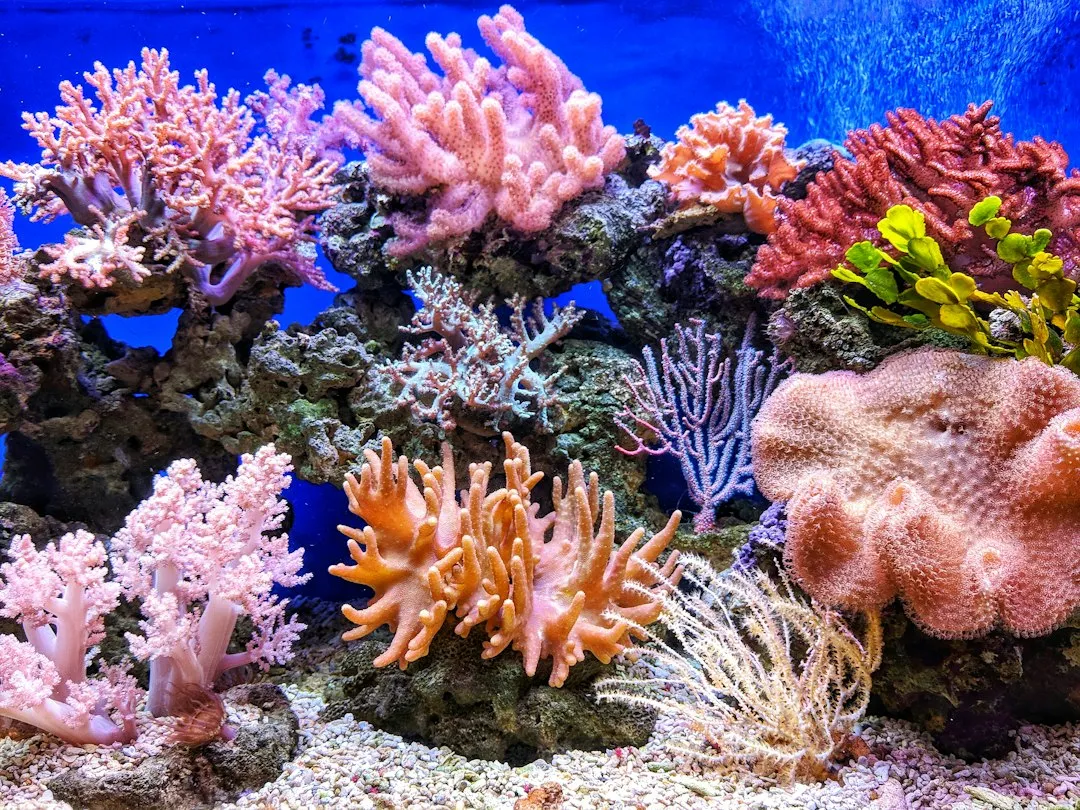
The Great Barrier Reef is home to over 1,600 species of fish, 133 shark and ray species, 30 species of whale and dolphin, 400 coral species, 4,000 species of mollusc and six out of the seven sea turtle species. From space, it appears as a stripe of color. In reality, it is one of the most species-rich ecosystems anywhere on the planet.
Globally significant marine faunal groups include over 4,000 species of molluscs, over 1,500 species of fish, plus a great diversity of sponges, anemones, marine worms, crustaceans, and many others. The enormous size and diversity of the reef means it is one of the richest and most complex natural ecosystems on earth.
The 348,000 square kilometer World Heritage Listed area makes up 10 percent of the world’s coral reef ecosystems. That single visible structure from space is responsible for a tenth of all coral reef habitat on the entire planet.
Its UNESCO World Heritage Status and Global Recognition
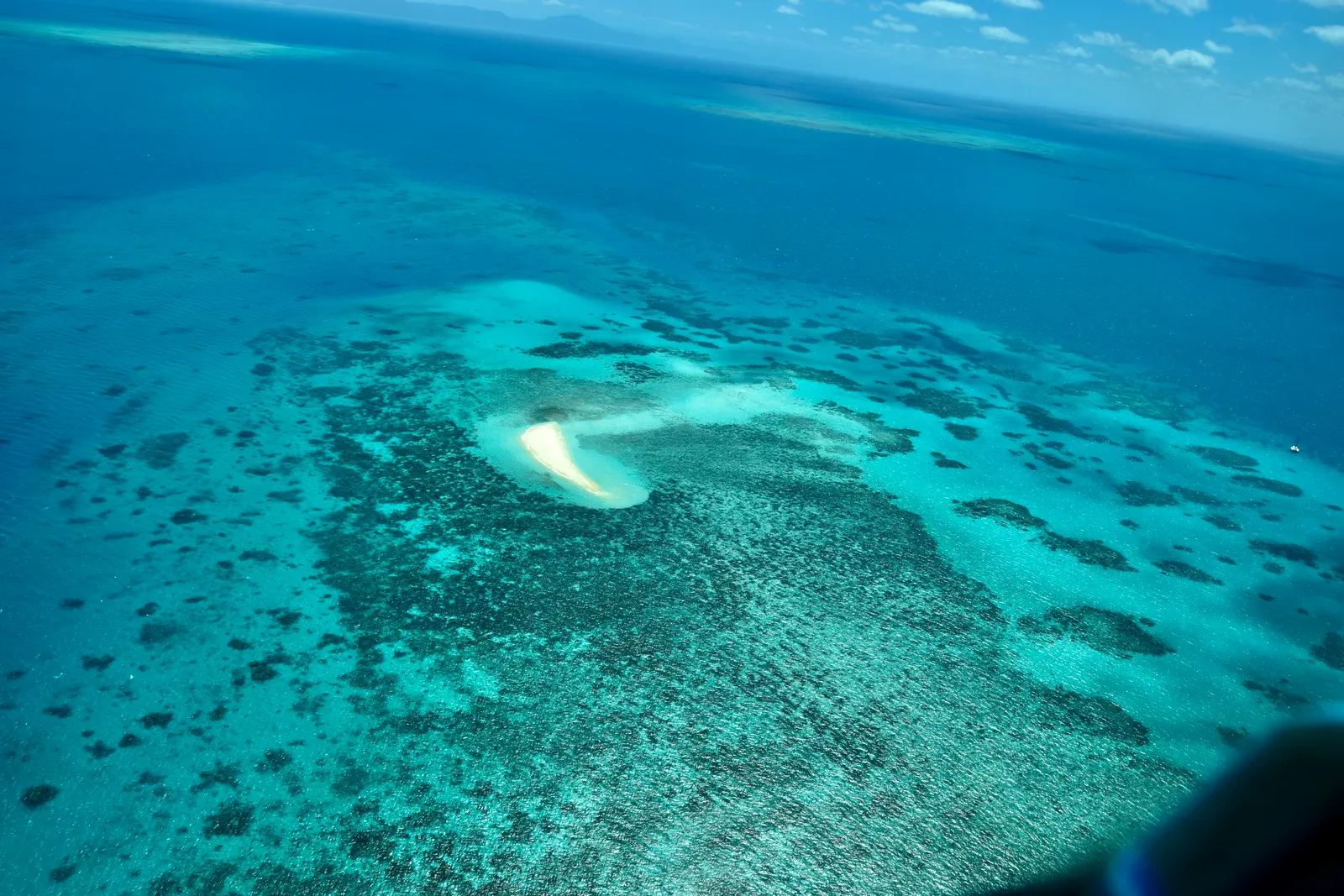
The Great Barrier Reef is the world’s largest coral reef system and a UNESCO World Heritage Site. Spanning 344,400 square kilometers, it’s home to thousands of species and supports 60,000 jobs. Its listing reflects both its ecological importance and its cultural and scientific value to the global community.
Efforts have been made to protect the reef, including the establishment of the Great Barrier Reef Marine Park Authority in 1975, and the reef being declared a World Heritage Site. That formal protection zone is itself one of the largest managed marine areas in the world.
The diversity of the reef, especially its endemic species, means the Great Barrier Reef is of enormous scientific and intrinsic importance, and it also contains a significant number of threatened species. The reef’s visibility from space is, in that sense, also a reminder of what is at stake.
The Threat Now Visible From Orbit: Coral Bleaching
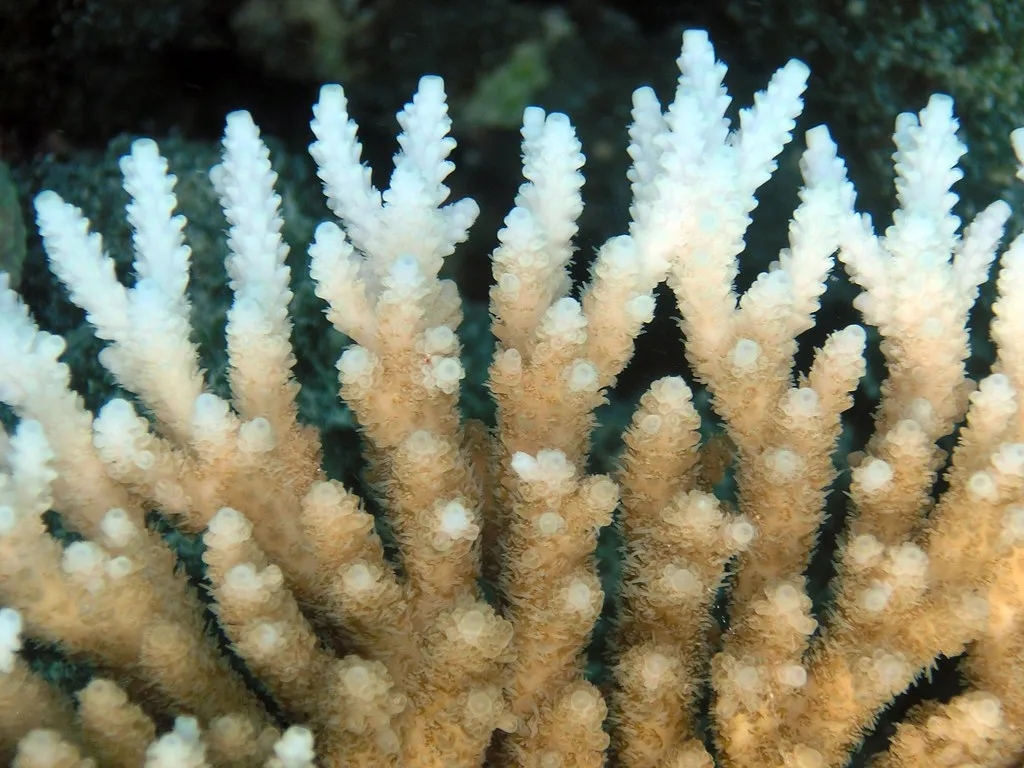
Australia’s Great Barrier Reef has been hit by widespread coral bleaching caused by heat stress, confirmed by government officials in March 2024. Aerial surveys of over 300 reefs conducted by the Great Barrier Reef Marine Park Authority found bleaching in shallow water areas spanning two-thirds of the reef.
Anthropogenic climate change is fuelling repeated marine heatwaves and triggered the fourth global mass coral bleaching event in 2023 to 2025, causing widespread coral mortality worldwide. The impacts of this event on the Great Barrier Reef saw heat accumulation peak in February and March 2024, causing mass coral bleaching for the seventh time since 1998.
In 2025, the Great Barrier Reef endured severe flooding, crown-of-thorns starfish outbreaks, and a mass coral bleaching event. While less extensive than the bleaching event in 2023 to 2024, it was the second time the reef experienced consecutive mass bleaching events, and the sixth event since 2016. Satellites now track not just the reef’s size, but its declining health.
Why No Other Living Structure Compares
The Great Wall of China, often cited in popular conversation as the structure visible from space, is actually far too narrow to register from orbit with the naked eye. While the Great Wall of China is often mistakenly cited as being visible from space, the Great Barrier Reef actually is. Width matters as much as length when it comes to orbital visibility.
The Great Barrier Reef is the largest natural formation in the world, comprising over 3,000 coral reefs, 600 continental islands, 300 coral cays and more than 150 inshore mangrove islands, spanning approximately 2,300 kilometres and spread over an area of around 348,700 square kilometres. No other biological system comes close to that combination of scale and breadth.
The reef is also optically distinctive in a way that forests and grasslands are not. Its pale limestone foundation, shallow water depth, and clear tropical sea create a color signal that stands apart from surrounding ocean even at the resolution limits of the human eye. That is ultimately why it can be seen from space when almost nothing else alive on Earth can.
A Wonder Worth Protecting Before the View Changes
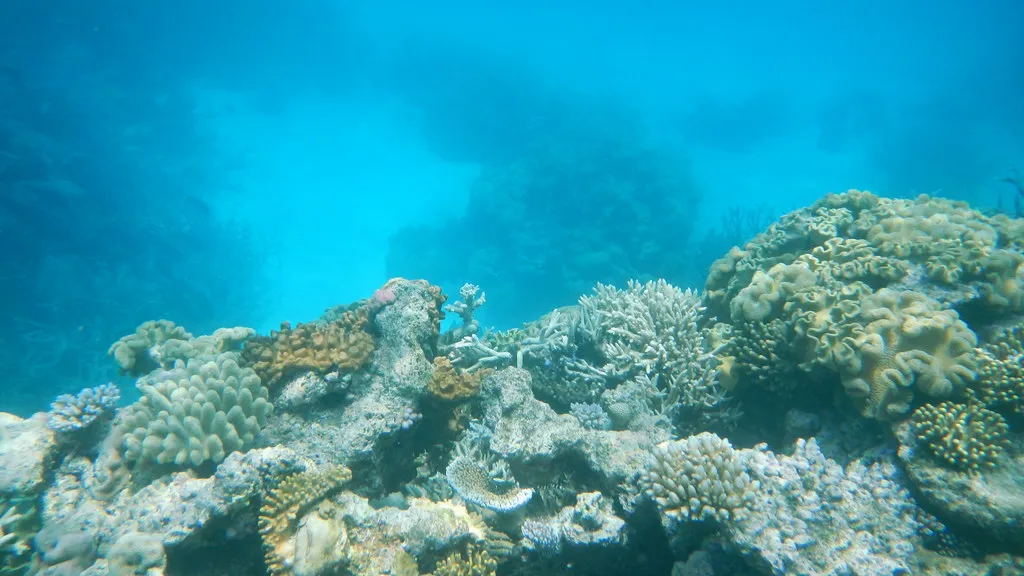
From space, the Great Barrier Reef looks permanent, serene even. A pale arc of turquoise laid along a vast continent’s edge. That image, captured repeatedly by astronauts and satellites, has become one of the defining photographs of Earth as a living planet.
Coral reefs worldwide suffer regular damage due to climate change, pollution, ocean acidification and fishing. They are increasingly under threat from coral bleaching, which occurs when the algae that makes up the coral die, causing it to turn white. This phenomenon is associated with increased water temperatures, low salinity and high sunlight levels.
What began as a question of optics, of why a coral reef can be seen from orbit while so much else cannot, turns out to be a question about survival too. The reef is visible from space because of its extraordinary scale. Whether it remains visible, and remains alive, depends on what happens at the scale of a single degree of ocean temperature. That is the more urgent question now.
AI Disclaimer: This article was created with the assistance of AI tools and reviewed by a human editor.