
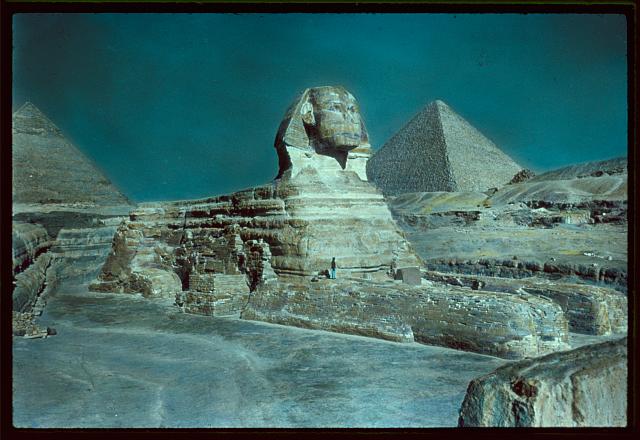

Standing guard on the Giza Plateau for roughly four and a half millennia, the Great Sphinx is one of the most immediately recognizable monuments on Earth. Yet the detail that draws people’s eyes almost before anything else is not what is there, but what is conspicuously absent: a nose.
The gap left behind sits at the center of one of archaeology’s most persistent mysteries. Over centuries, myths accumulated, blame was assigned freely, and the truth was quietly buried under layers of legend. Sorting through what we actually know is more interesting than any of the rumors.
A Colossus Born From Solid Rock
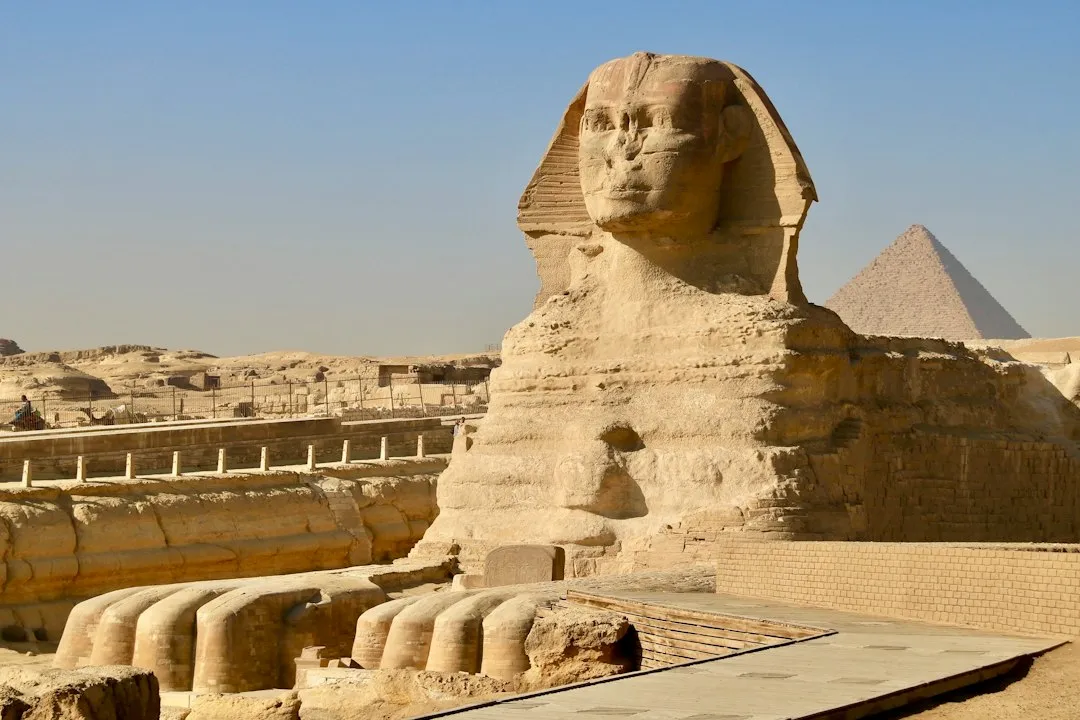
The Great Sphinx of Giza is the oldest known monumental sculpture in Egypt and the largest single-stone statue ever carved. It is a limestone lion with a human face, 73 metres from paw to tail and 20 metres tall at the head, carved from a single ridge of natural bedrock on the east edge of the Giza Plateau.
Archaeological evidence suggests the Great Sphinx was created between 2600 and 2500 BC for the king Khufu, the builder of the Great Pyramid of Giza, or his son Khafre, the builder of the second pyramid at Giza. The scale of the undertaking is hard to overstate. According to some estimates, it would have taken about three years for 100 workers, using stone hammers and copper chisels, to finish the statue.
What the Nose Looked Like Originally
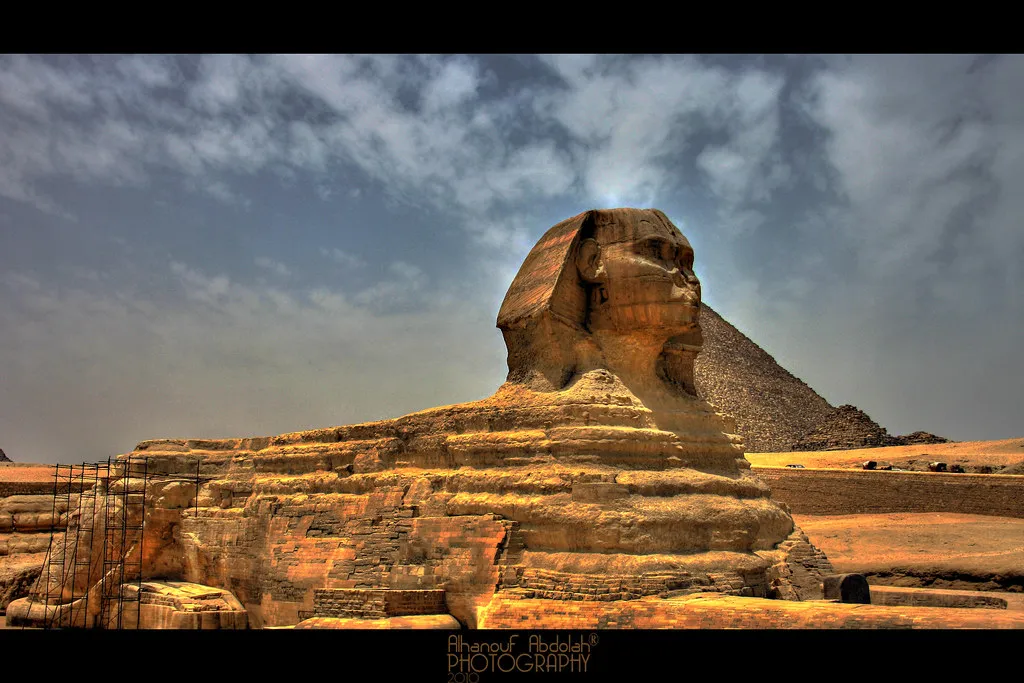
Based on detailed surveys carried out by Mark Lehner in the early 1980s, the original nose height of the Sphinx is estimated at approximately 2.2 metres. That means the nose that once defined this face was taller than most people standing upright. According to the same survey data, the original nose was 1.7 meters wide, or roughly 5.5 feet.
From flecks of paint found on the statue, archaeologists have concluded that the head and face of the Sphinx were once painted red, its headdress was yellow, and its beard was blue. The face in its prime would have been vivid, almost theatrical, nothing like the pale carved stone visitors see today.
The Physical Evidence of Deliberate Damage
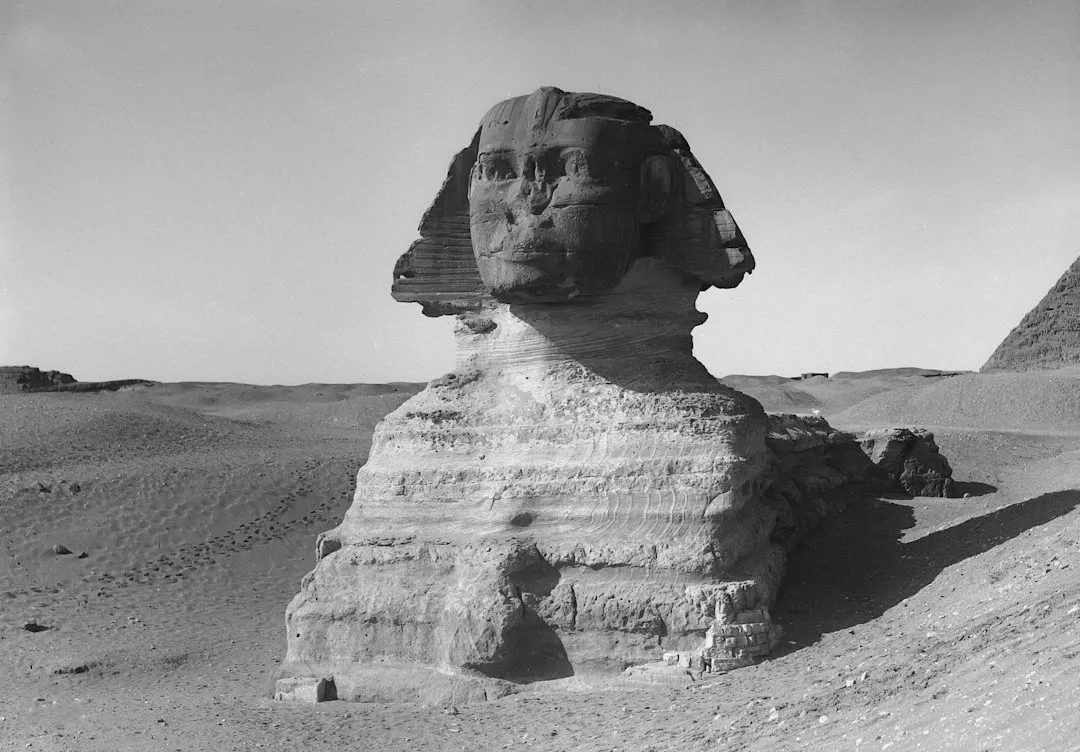
The circumstances of the destruction of the Sphinx’s nose are unknown, but examinations of the face have shown evidence of a deliberate act with rods or chisels. This detail matters enormously. Natural weathering tends to erode stone gradually and unevenly, not cleanly remove a protruding feature.
Upon examination, the Sphinx’s face shows that rods or chisels were hammered into the nose area, which were then used to pry it off. The one-metre wide nose has still never been found. Egyptologist and Sphinx expert Mark Lehner believes the existing evidence supports an intentional break, rather than a gradual decline and fall.
Muhammad Sa’im al-Dahr: The Most Credible Account
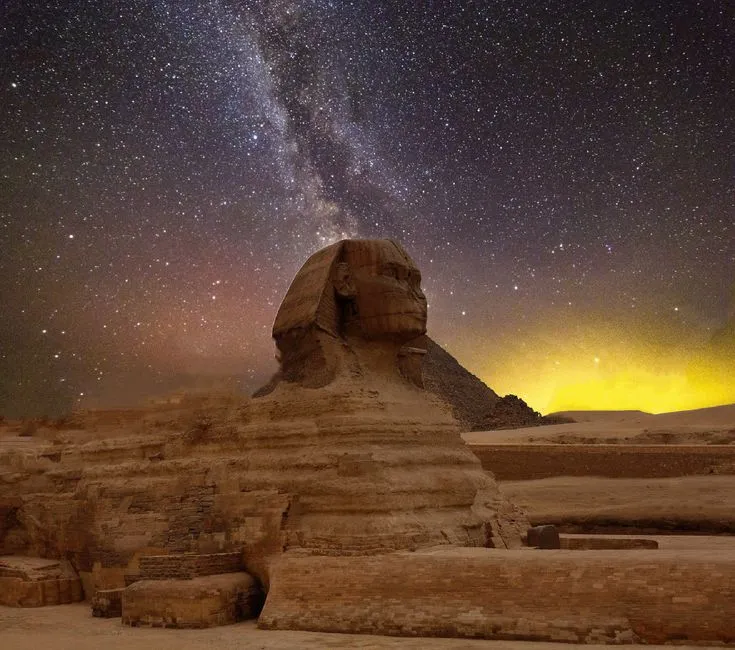
On February 8, 1378, a Sufi Muslim named Muhammad Sa’im al-Dahr destroyed the nose of the Great Sphinx of Giza. This account comes from the medieval Egyptian historian al-Maqrizi, and it remains the most widely cited explanation for the loss of the nose. Egyptian peasants would make offerings to the statue in hopes of controlling the seasonal flooding of the Nile and improving their harvest. Many scholars agree that al-Dahr was outraged by the idolatry and took a chisel to the Sphinx’s face.
According to these chronicles, Sa’im al-Dahr came to the Sphinx and saw local farmers bringing offerings to the statue, hoping it would grant them a good harvest. The accounts say he personally struck the Sphinx’s face and smashed its nose so that the statue would no longer be able to receive offerings. He was later executed for vandalism.
The Napoleon Myth, Thoroughly Debunked
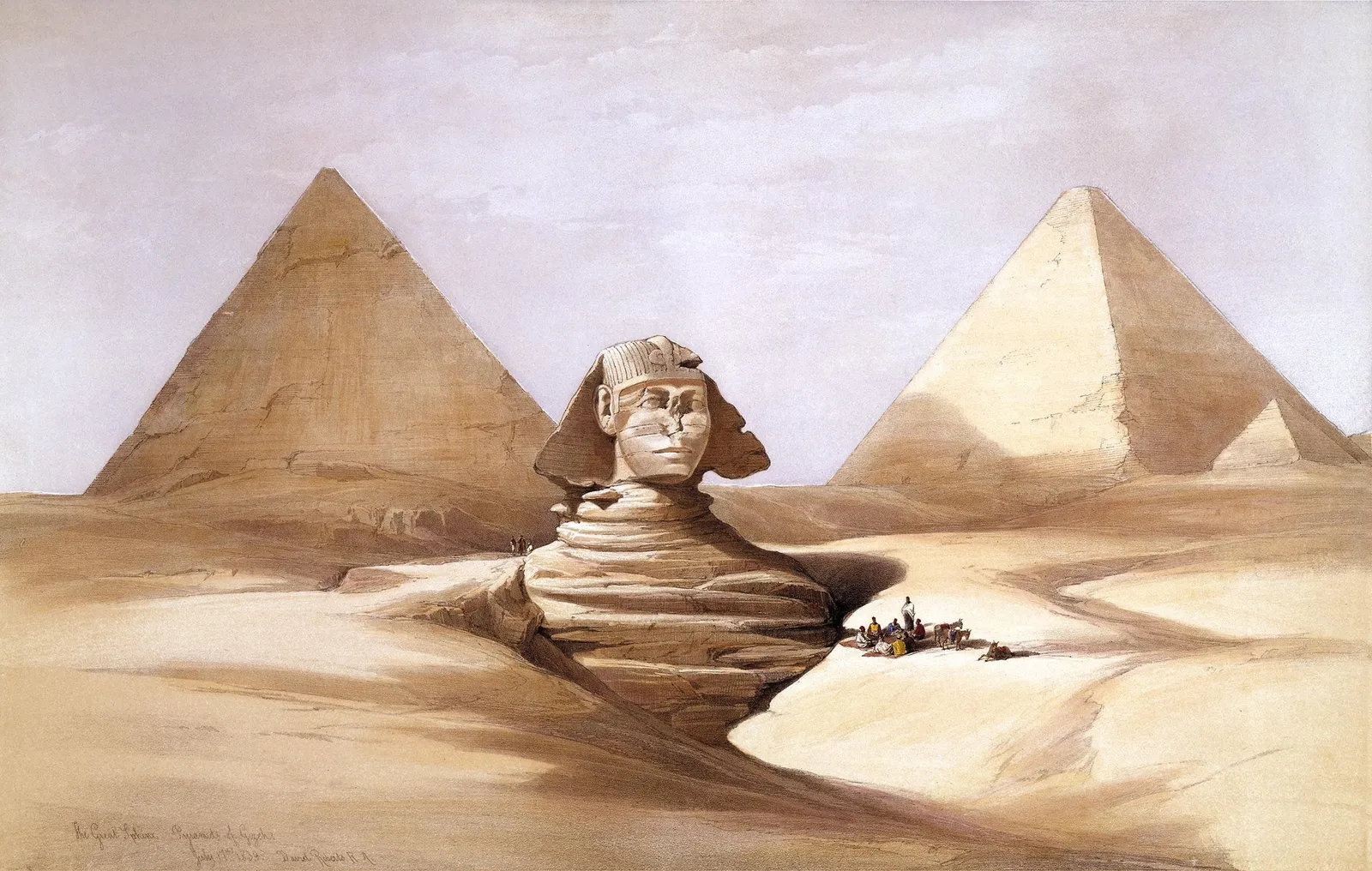
The most popular myth regarding the Sphinx’s nose is that it was broken by cannonballs fired by Napoleon Bonaparte’s army, who were in Giza during one of the military battles of the French campaign in Egypt in 1798. It is a vivid story. It is also demonstrably wrong.
An engraving by Frederik Ludwik Norden clearly shows the Great Sphinx of Giza without a nose as early as 1737. This evidence indicates that the Sphinx’s nose was missing at least 61 years before Napoleon’s forces arrived in Egypt. Napoleon did not shoot the nose off the Great Sphinx of Giza. Both pictorial and written sources from before his arrival in Egypt show that the nose was already missing.
Frederic Norden’s Drawing: The Key Document
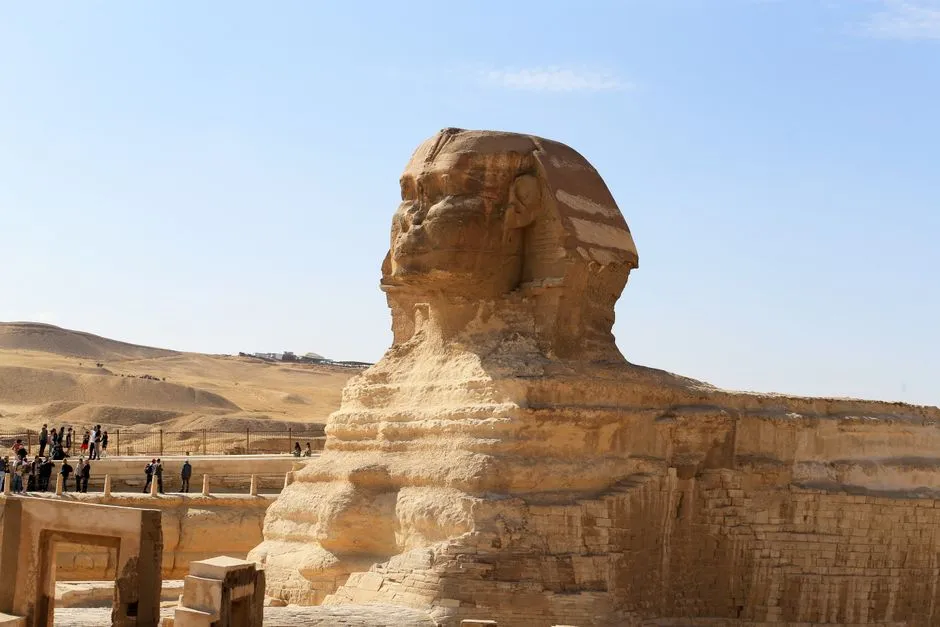
The profile of the Great Sphinx without its nose was illustrated by Frederik Louis Norden based on observations from 1737 to 1738. This illustration, published in Travels in Egypt and Nubia in 1755, is one of the earliest detailed European depictions of the Great Sphinx.
Norden’s extraordinarily detailed drawing clearly depicts the Sphinx without a nose, confirming that this feature was already missing by the early 18th century. Since Norden was one of the first Europeans to travel to Giza and document the Sphinx, his drawing suggests the nose had already been missing for some time, likely several centuries at least. There is simply no version of the Napoleon narrative that survives contact with this document.
The Role of Al-Maqrizi’s Historical Record
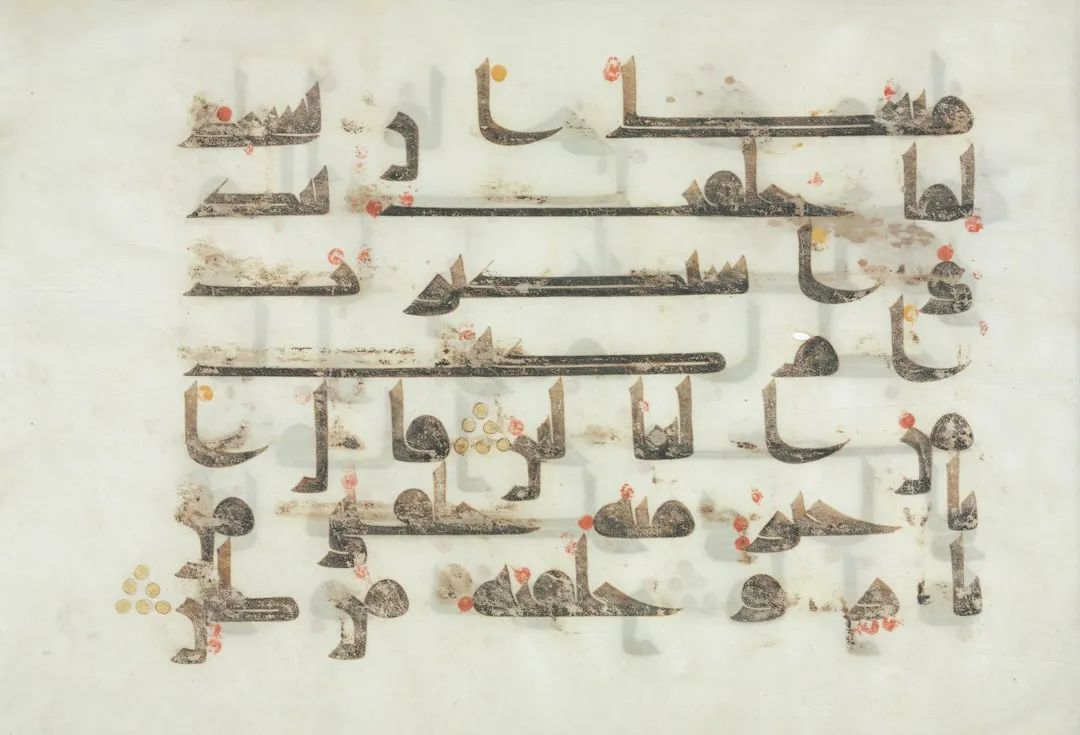
The 15th-century Arab historian al-Maqrizi provides an account of the iconoclast and Sufi leader Muhammad Sa’im al-Dahr, who defaced the Sphinx in 1378. His writings are the primary written source connecting a named individual to the act. Al-Maqrizi’s report remains the most widely cited explanation for the loss of the Sphinx’s nose.
Al-Maqrizi was writing over 50 years after the alleged incident, and there are no other known historical references to Sa’im al-Dahr or his act of defacement. Historians acknowledge this gap. Still, the written account aligns with the physical chisel marks found on the face, which is why most specialists treat it as the most plausible explanation available.
What Happened to the Ears and Beard
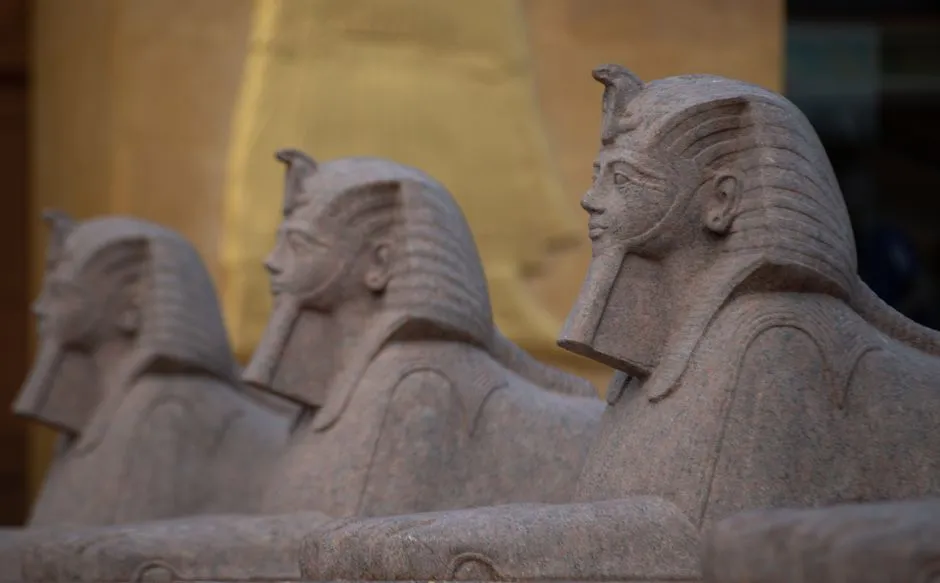
In response to his actions, Sa’im al-Dahr damaged the monument, breaking off its nose and also harming its ears. The damage was not limited to a single feature, which points to a focused and determined act rather than an accidental incident or casual vandalism.
In antiquity, someone also broke off the Sphinx’s ceremonial beard, and fragments were later recovered. Unlike the Sphinx’s beard, fragments of the statue’s broken nose have never been found. The beard fragments that survived are now held in museum collections, including the British Museum in London, while the nose remains entirely unaccounted for.
Natural Erosion vs. Intentional Destruction
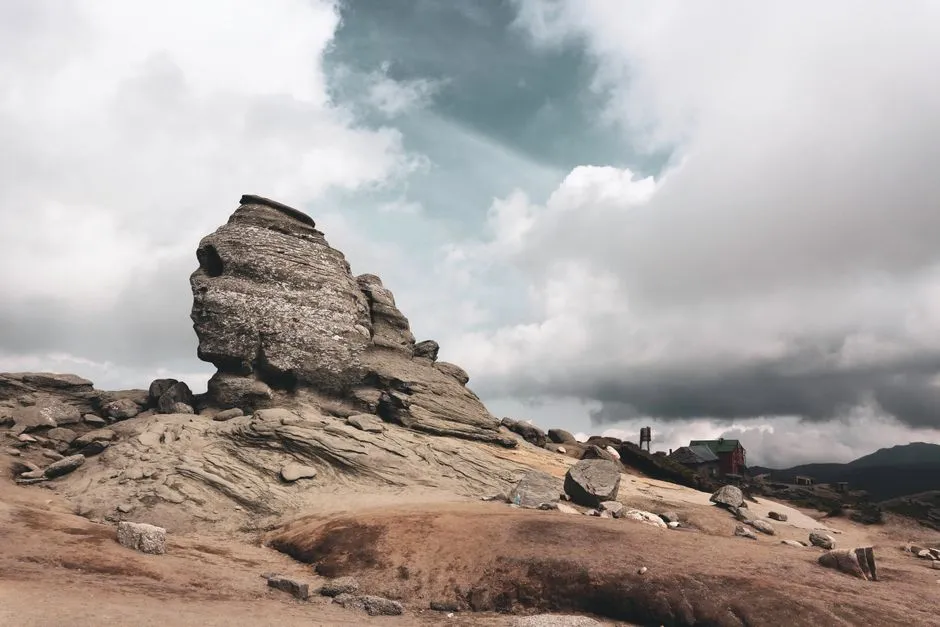
The nose, being particularly vulnerable, has suffered more than other parts of the statue, enduring the harsh desert winds, abrasive sand, and temperature fluctuations. Some researchers have asked whether erosion alone could explain the loss over thousands of years. The answer, based on the physical evidence, is no.
The nose of the Sphinx was carved from a softer layer of limestone compared to other parts of the statue. However, the breakage is attributed to intentional vandalism rather than natural erosion. In more recent times, pollution and harmful underground water leaks have further threatened the Sphinx’s structural integrity. These ongoing forces are a genuine conservation concern, even if they played no role in the original loss of the nose.
Why Modern Conservators Won’t Restore It
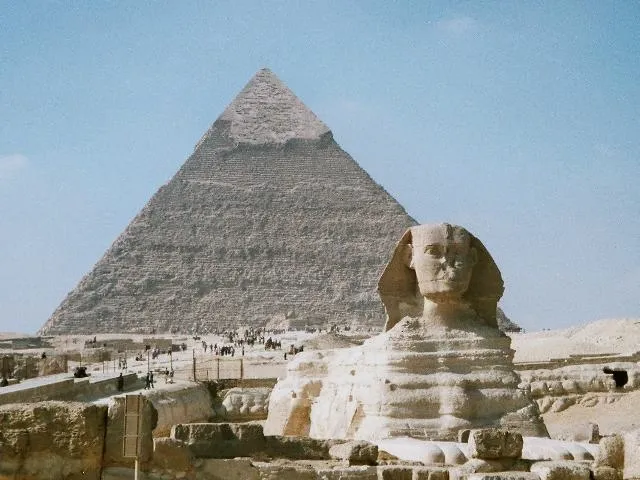
Modern conservation philosophy avoids reconstructing missing elements. Restoration focuses on stabilizing existing material rather than creating new historical features. This is a widely accepted principle in the field of heritage conservation, and the Sphinx is no exception.
Conservation work continues today; the Sphinx is closely monitored for salt and groundwater erosion, and several restoration phases have replaced damaged limestone with carefully cut blocks, visible as smoother sections on the paws and rump. The goal is preservation and structural integrity, not reconstruction. Rebuilding the nose would mean fabricating a feature whose exact original form remains uncertain, which most archaeologists consider a line not worth crossing.
The Sphinx Without Its Nose, Still Extraordinary
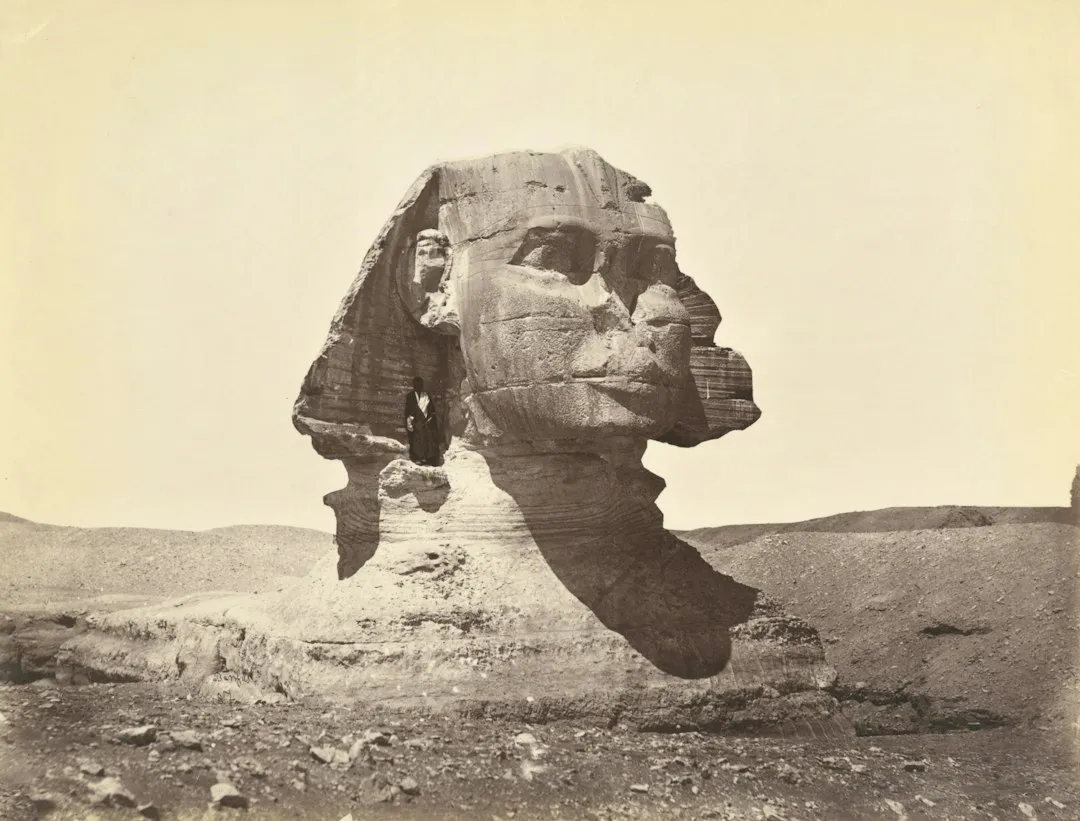
What the Sphinx has lost in symmetry, it has perhaps gained in conversation. The absent nose has prompted more sustained historical inquiry than almost any feature of the monument. Each theory that emerged, and each piece of evidence that dismantled it, has taught us something about how history gets distorted when a good story travels faster than the facts.
Most specialists agree on a balanced conclusion: the Sphinx’s nose was smashed by a human in the fourteenth century, and the most likely culprit is Muhammad Sa’im al-Dahr. This version is backed by written sources and fits the physical evidence of the break. The case is not fully closed, but it is as close to resolved as evidence allows. The Sphinx endures, noseless and magnificent, facing east each morning as it has for four and a half thousand years.
AI Disclaimer: This article was created with the assistance of AI tools and reviewed by a human editor.