

If you’ve ever been stopped at a rail crossing and heard that unmistakable sequence of blasts – two long, one short, one long – you might have assumed it was just a habit. Maybe even the engineer’s personal style. The truth is considerably more deliberate than that.
The pattern is federal law. It applies from coast to coast, on freight lines and commuter rails alike, and it has been written into the U.S. Code of Federal Regulations with very specific requirements. Understanding why that pattern exists, where it came from, and what happens when it’s absent tells a quiet but important story about public safety, sound science, and how we share space with one of the most powerful machines on Earth.
The Rule Is Federal, Not a Railroad Custom
Train horn requirements at public highway-rail grade crossings are primarily governed by federal law, specifically the Federal Railroad Administration’s Train Horn Rule, codified at 49 CFR Part 222. The FRA, a division of the U.S. Department of Transportation, published its final rule in 2005 after years of study into crossing collisions and safety measures across the country.
This federal requirement preempts any state or local laws regarding the use of train horns at public crossings. That’s a significant detail. No city ordinance or state noise regulation can override it. The rule was designed specifically to create one uniform national standard.
The Exact Pattern: Two Long, One Short, One Long
The Federal Railroad Administration’s required pattern for blowing the horn is two long, one short, and one long sounding horn, repeated as necessary until the locomotive clears the crossing. A long blast is defined as a sound lasting two to three seconds; a short blast lasts one second or less.
The rule does not stipulate the durations of long and short blasts beyond those basic definitions, which means engineers have some flexibility in how they execute the rhythm – but the sequence itself is fixed. This pattern exists so that anyone near the crossing can distinguish a train horn from other loud noises.
Why Timing Matters as Much as the Pattern

Under the Train Horn Rule (49 CFR Part 222), locomotive engineers must begin to sound train horns at least 15 seconds, and no more than 20 seconds, in advance of all public grade crossings. This specific window ensures the signal is heard long enough to be identified, but not so long that it masks other emergency sounds.
Federal law requires that if a train is traveling faster than 60 mph, engineers are required to sound the horn within a quarter mile of the crossing and at the crossing. There is a “good faith” exception for locations where engineers can’t precisely estimate their arrival at a crossing, allowing them to begin sounding the horn no more than 25 seconds before arriving.
How Loud the Horn Has to Be
The minimum sound level for the locomotive horn is 96 dB(A), while the maximum sound level is 110 dB(A). For context, 110 decibels is roughly as loud as a rock concert or a chainsaw. That volume ceiling was actually introduced as a new cap in the 2005 rule, because earlier horns could be even louder.
The horn has to be loud enough to reach someone inside a car with the windows up and the radio on, potentially hundreds of feet from the crossing. Reaching that threshold reliably is the whole point. A signal that’s audible only in ideal conditions isn’t really a safety signal at all.
The Horn Carries More Information Than Most People Realize
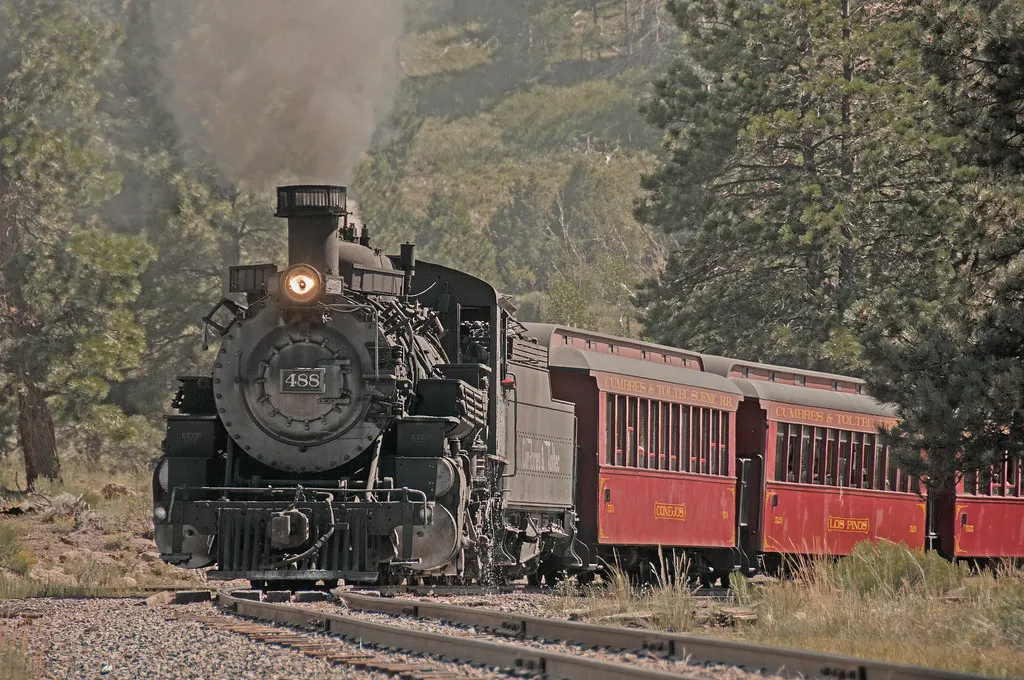
Locomotive horns alert motorists to a train’s approach and provide indications of speed, direction, and proximity. The information conveyed can be particularly important to motorists at crossings with passive warning devices such as crossbucks and at crossings where the view of the track is obstructed.
Train engineers also use other horn patterns to communicate different operational messages. A single long blast signals an approaching station or junction, two short blasts acknowledge ground signals, and three short blasts indicate the locomotive is moving backward. The crossing sequence is just one part of a broader auditory language that railroads have used for generations.
What Happens When Crossings Are Close Together
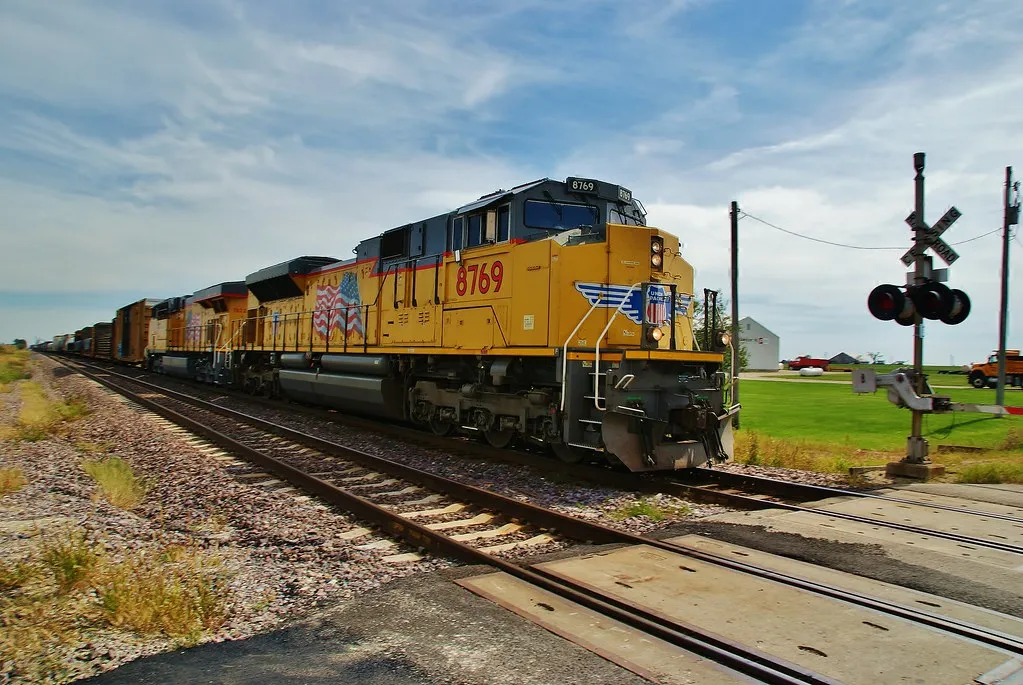
Locomotive engineers retain the authority to vary this pattern as necessary for crossings in close proximity and are allowed to sound the horn in emergency situations. When a locomotive approaches closely spaced back-to-back grade crossings, engineers must complete one full pattern before beginning the next.
A significant regulatory update finalized in August 2026 addresses a very specific scenario that had created logistical difficulty. A final rule now allows locomotive engineers to vary the locomotive horn sounding pattern to one single blast of the horn when they enter a nearby public highway-rail grade crossing after having stopped in close proximity to it. This rule became effective September 30, 2026.
The Scale of the Risk That Justifies All This
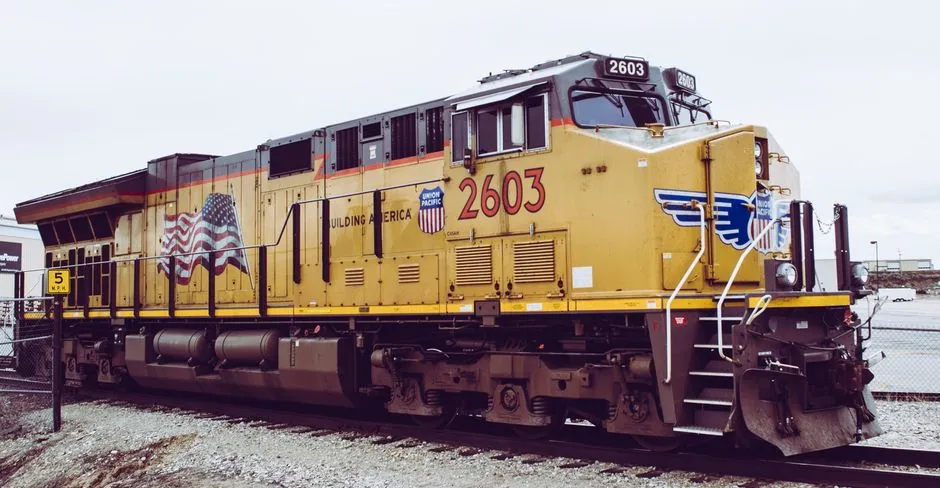
Accidents at highway-rail grade crossings are the second leading cause of rail-related deaths in the United States, with more than 2,000 incidents and 200 fatalities occurring at grade crossings each year nationally. In the five-year period from 2019 to 2023 alone, there were 10,704 accidents at highway-rail grade crossings, resulting in 3,859 injuries and 1,233 fatalities.
From 2024 to 2025, fatalities at highway-rail crossings increased nine percent. Railroad deaths totaled 959 in 2025, a four percent increase from the 2024 revised total of 924. Those numbers are a sobering reminder that crossing safety is not a solved problem, and that the standardized horn pattern continues to serve an active, not merely symbolic, function.
Quiet Zones: When Communities Push Back
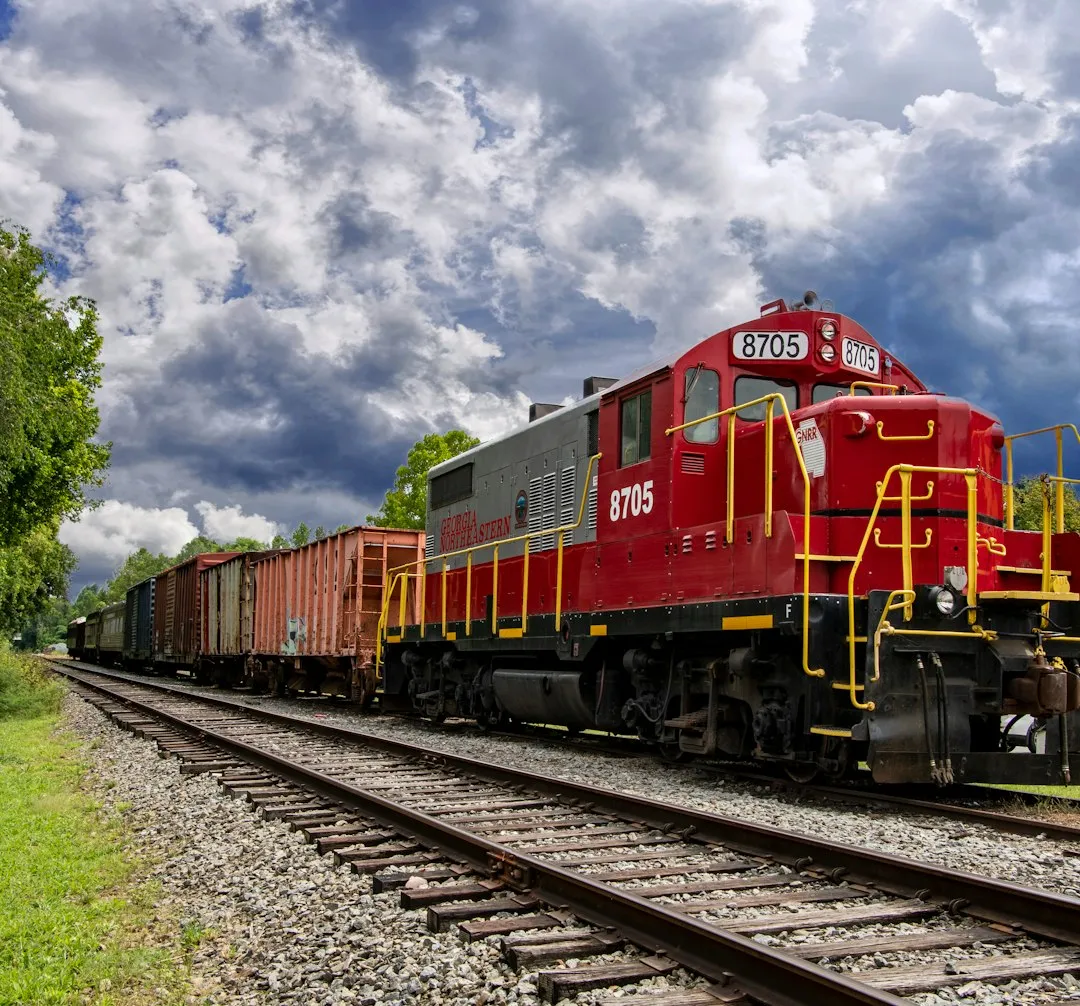
If you’ve noticed that trains don’t blow their horns at certain crossings, you’re probably in or near a quiet zone. Communities can apply to the Federal Railroad Administration for permission to restrict routine horn use at specific crossings. A quiet zone may be a section of rail line at least one-half mile in length that contains one or more consecutive public grade crossings at which locomotive horns are not routinely sounded.
There are now 1,016 quiet zones across the nation, up from roughly 700 five years ago. These quiet zones cover over 5,500 grade crossings. Every crossing in a quiet zone must have, at minimum, flashing lights, gates, and constant warning time devices, and the community must prove that the overall risk at those crossings stays at or below acceptable thresholds.
Quiet Zones Come With Real Trade-Offs
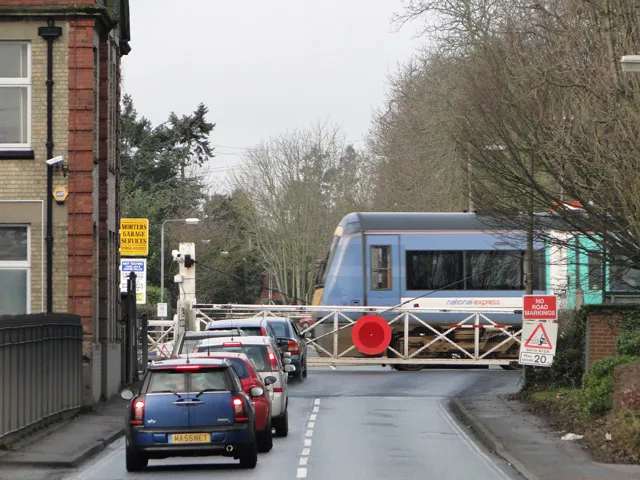
The removal of horn requirements through quiet zones has been observed to increase accident incidence. In 1991, the FRA intervened with local quiet zone administration in Florida with Emergency Order No. 15, mandating that trains blow their horns at all crossings. Following that order, the nighttime accident rate at affected crossings decreased by 68.6%, back to pre-quiet zone levels.
Research using a two-way fixed effects model has found evidence of quiet zones increasing accident incidence and accident severity, in some instances at a level far higher than believed by the Federal Railroad Administration. To offset the absence of train horns, communities implement supplementary safety measures such as four-quadrant gates, median barriers, and wayside horns. These are engineered substitutions, not casual replacements.
The Pattern Has Roots in a Longer History of Railroad Signaling
Long before federal regulation, railroads developed their own whistle codes out of practical necessity. Train crews needed to communicate across distances where voice or hand signals couldn’t reach, and a shared language of horn patterns emerged organically across the industry. The standardization that came with 49 CFR Part 222 in 2005 formalized what had already been a de facto convention at most U.S. crossings for decades.
The FRA began the rulemaking process on January 13, 2000, when it published a Notice of Proposed Rulemaking in the Federal Register addressing the use of locomotive horns at public grade crossings. The rulemaking was mandated by 49 U.S.C. 20153, which required the Secretary of Transportation to issue regulations for the use of locomotive horns at public grade crossings but gave the Secretary authority to make reasonable exceptions. Five years of deliberation preceded the rule that most Americans now hear without a second thought.
The Takeaway
The two-long, one-short, one-long sequence that echoes through neighborhoods and intersections across the country isn’t arbitrary. It’s a precisely defined, federally mandated signal built on decades of safety data, accident analysis, and hard-won rulemaking. Every blast has a reason, and every second of timing is accounted for.
What strikes you as a minor noise on a Tuesday morning is, from the engineer’s seat, a legal obligation calibrated to keep people alive. That’s worth knowing the next time you’re stopped at the flashing lights, listening to the rhythm roll past.
AI Disclaimer: This article was created with the assistance of AI tools and reviewed by a human editor.